



Description
Rifle Scope Product Details
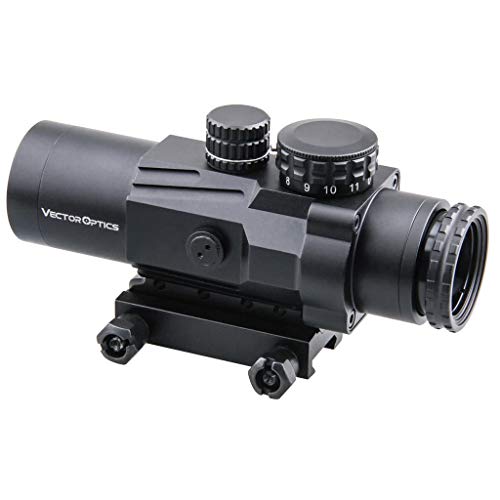
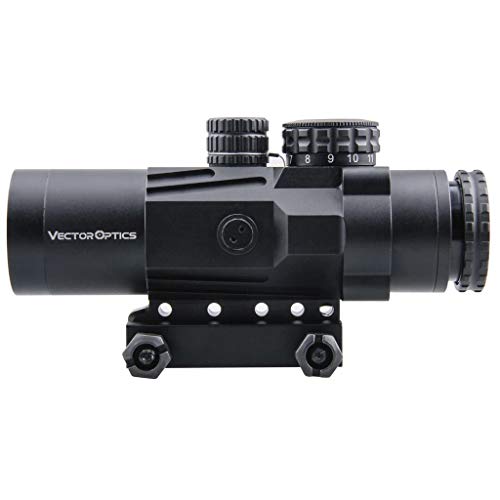
Vector Optics 3×32 1/2 MOA Compact Tactical Prism Riflescope with Red Illuminated Reticle and Picatinny Mount, Fully Multi-Coated
Specifications
Magnification: 3x
Objective Lens Dia: 32mm
Reticle: Etched VEP-CDB
Exit Pupil: 10-8mm(0.39-0.31 inch)
Field of View: 11.39 m @ 100 meters(Wider Than Most Other Similar Sights)
Eye Relief: 76mm (3.0 inch)
Click Value: 1/2 MOA
Parallax Setting: 100 yards
Illumination: 11 gears of red
Elevation Range: 90 MOA
Windage Range: 90 MOA
Length: 140mm (5.5 inch)
Weight: 435g (15.4 oz)
Optics Coating: Fully-multi coated
Battery: CR 2032 (EXCLUDED)
Featured Description
5 years warranty
1/2 MOA windage and elevation adjustments for fine-tuning accuracy.
Edge-to Edge Image.
Optics hold zero.
Etched glass Reticle.
Two eyes Open Prism Scope w/ Incredible Optical Quality.
11 gears of reticle illumination riflescope can be used in diverse lighting conditions.
Completely seeled and nitrogen filled for waterproof, fogproof and shockproof performance.
Diopter compensation from fast-focus eyepiece (+2 to -2.0)
High quality 6061 T6 aircraft grade aluminum alloy with durable black matte finish.
Fit on 21mm picatinny rail and weaver rai.
Package List:
– 1 x 3×32 SFP Riflescope
– 1 x cleaning cloth
Rifle Scope Product Features
5 years warranty. Edge-to Edge Image.
1/2 MOA windage and elevation adjustments for fine-tuning accuracy.
Optics hold zero. Etched glass Reticle. 11 gears of reticle illumination riflescope can be used in diverse lighting conditions.
Completely sealed and nitrogen filled for waterproof, fogproof and shockproof performance.
Fits on 21mm picatinny rail and weaver rail.
About the Vector Optics Brand
Vector Optics is a premium producer for weapon scopes, optics, mounts, and other accessories used for firearms like rifles and long guns. They style and supply their products by applying elements which are long lasting and resilient. This includes the Vector Optics 3×32 1/2 MOA Compact Tactical Prism Riflescope with Red Illuminated Reticle and Picatinny Mount, Fully Multi-Coated by Vector Optics. For additional shooting items, visit their website.
Scope Information
Rifle scopes permit you to specifically align a rifle at different targets by aligning your eye with the target over a range. They do this through magnification using a set of lenses within the scope. The scope’s positioning can be adapted for the consideration of numerous environmental elements like wind and elevation to account for bullet drop.
The scope’s function is to understand exactly where the bullet will land based upon the sight picture you are seeing with the optic as you align the scope’s crosshair or reticle with the intended target. Many modern rifle optics have around eleven parts which are arranged inside and outside of the scope body. These parts consist of the rifle scope’s body, lenses, windage and elevation dials or turrets, focus rings, and other parts. Learn about the eleven parts of rifle scopes.
Rifle Optic Varieties
Rifle scopes can be either “first focal plane” or “second focal plane” type of optics. Choosing the perfect type of rifle glass is based around what type of shooting you plan on doing.
About First Focal Plane Glass
Focal plane scopes (FFP) include the reticle in front of the magnification lens. These kinds of scopes are beneficial for:
- Quick acquisition, far away types of shooting
- Shooting situations where estimations are minor
- Experienced shooters who have an idea for their aim point “hold over” and “lead” ratios for their firearms
- Shooters who do not mind the reticle is enlarged and uses up more visual eyesight room than a SFP reticle
About Second Focal Plane Scopes
Second focal plane glass (SFP) include the reticle behind the magnification lens. This triggers the reticle to remain at the exact same size in relation to the quantity of zoom being used. The final result is that the reticle measurements change based upon the zoom used to shoot over greater ranges since the reticle measurements present distinct increments which fluctuate with the magnification level. In the FFP illustration with the SFP glass, the 5x “zoom” 100 yard tick would be 1/5th of the non “zoom” tick reticle measurement. These types of glass work for:
- Long distance kinds of shooting where shooters have more time to make ballistic calculations
- Shooting where most of the shots take place within much shorter distances and ranges
- Shooters who would like a clearer optic sight picture without space used up by the enlarged FFP reticle
Scope Magnification
The measure of scope zoom you need is based on the sort of shooting you wish to do. Almost every kind of rifle scope provides some amount of zoom. The amount of zoom a scope supplies is established by the diameter, density, and curvatures of the lenses within the rifle optic. The zoom of the optic is the “power” of the scope. This implies what the shooter is observing through the scope is magnified times the power aspect of what can generally be seen by human eyes.
Fixed Single Power Lens Rifle Optics
A single power rifle scope and optic comes with a magnification number designator like 4×32. This means the zoom power of the scope is 4x power and the objective lens is 32mm. The magnification of this type of optic can not adjust considering that it is fixed.
Variable Power Lens Rifle Glass
Variable power rifle scopes have adjustable power. These types of scopes will list the zoom amount in a format such as 2-10×32. These numbers mean the magnification of the scope could be set in between 2x and 10x power. This additionally incorporates the power levels in-between 2 and 10. The power shift is achieved by making use of the power ring part of the scope near the rear of the scope by the eye bell piece.
Rifle Scope Power and Ranges
Here are some advised scope power settings and the distances where they may be effectively used. Always remember that high magnification scopes will not be as efficient as lower magnification level optics and scopes because increased zoom can be a bad thing. The same concept applies to extended ranges where the shooter needs enough power to see precisely where to properly aim the rifle at the target.
Rifle Scope Lens Coating
All contemporary rifle optic and scope lenses are coated. There are various types and qualities of glass lens coatings. Lens coating is an essential element of a rifle when looking into luxury rifle optics and targeting units. The glass lenses are among the most critical parts of the optic given that they are what your eye looks through while sighting a rifle in on the point of impact. The coating on the lenses safeguards the lens exterior as well as assists with anti glare from excess sunrays and color exposure.
HD Versus ED Lens Coatings
Some optic producers additionally use “HD” or high-definition lense coatings which use various procedures, elements, polarizations, and chemical applications to extract separate colors and viewable definition through the lens. This high-definition coating is frequently used with higher density lens glass which decreases light’s potential to refract by means of the lens glass. Some scope brands use “HD” to refer to “ED” implying extra-low dispersion glass. ED handles how colors are presented on the chromatic spectrum and the chromatic difference or aberration which is also called color distortion or fringing. Chromatic aberration can be visible around items with well defined outlines as light hits the item from various angles.
Scope Lens Single Finish Versus Multi-Coating
Different optic lenses can likewise have various coatings used to them. All lenses normally have at least some type of treatment or coating used to them before being used in a rifle scope or optic.
This lens treatment can safeguard the lens from scratches while lowering glare and other less helpful things experienced in the shooting environment while sighting in with the scope. The quality of a single covered lens depends on the scope producer and how much you paid for it.
Some scope makers also make it a point to specify if their optic lenses are layered or “multi” covered. This implies the lens has multiple treatments applied to the surfaces of the glass. If a lens receives multiple treatments, it can show that a producer is taking numerous steps to fight different natural elements like an anti-glare finishing, a scratch resistant anti-abrasion finishing, followed by a hydrophilic finish. This also does not necessarily imply the multi-coated lens is better than a single coated lens. Being “much better” is dependent on the maker’s lens treatment innovation and the quality of components used in building the rifle optic.
Anti-water Lens Covering
Water on a lens does not help with preserving a clear sight picture through a scope at all. Many top of the line and military grade optic makers will coat their lenses with a hydrophilic or hydrophobic finish.
Rifle Glass Installing Choices
Installing options for scopes can be found in a few options. There are the basic scope rings which are individually installed to the scope and one-piece mounts which cradle the scope. These different kinds of mounts also typically come in quick release versions which use manual levers which enable rifle shooters to rapidly mount and remove the optics.
Rifle Optic Mounting Solutions with Hex Key Rings
Normal, clamp design mounting scope rings use hex head screws to mount to the flattop style Picatinny scope installation rails on rifles. These types of scope mounts use two separate rings to support the optic, and are made from 7075 T6 billet aluminum which is designed for long distance accuracy shooting. This type of scope install is wonderful for rifles which need a long lasting, sound mounting solution which will not move no matter how much the scope is moved or abuse the rifle takes.
Glass Mounting Solutions with Quick-Release Cantilever Rings
These types of quick-release rifle scope mounts can be used to quickly detach a scope and attach it to a different rifle. Numerous scopes can even be switched out if they all use a similar style mount. These types of mounts are handy for rifle platforms which are transported a lot, to remove the optic from the rifle for protection, or for scopes which are used in between multiple rifles or are situationally focused.
Scope Tube Sealing and Gas Purging
Wetness inside your rifle optic can destroy a day of shooting and your expensive optic by triggering fogging and producing residue inside of the scope tube. A lot of scopes avoid wetness from entering the scope tube with a system of sealing O-rings which are waterproof.
Rifle Scope Gas Purging
Another element of avoiding the accumulation of moisture within the rifle scope’s tube is filling the tube with a gas like nitrogen. Because this area is already taken up by the gas, the optic is less influenced by condition changes and pressure distinctions from the outside environment which could possibly enable water vapor to permeate in around the seals to fill the vacuum which would otherwise exist. These are good qualities of a good rifle scope to look for.


