Description
Rifle Scope Product Details
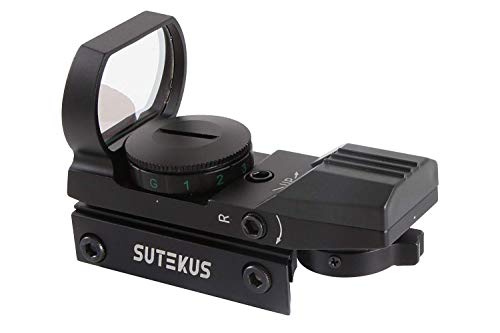
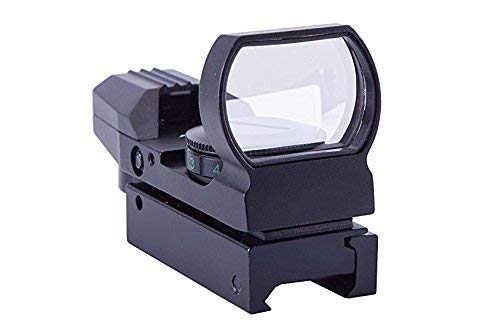
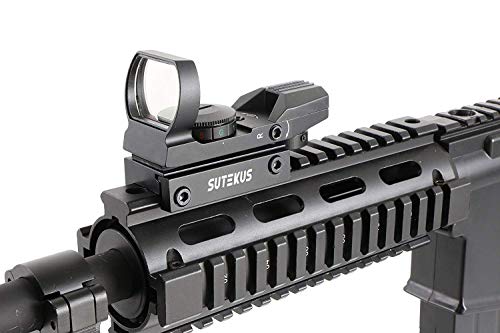
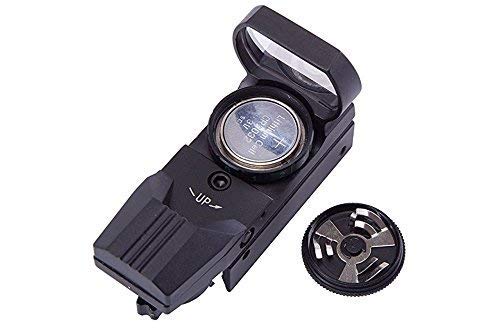
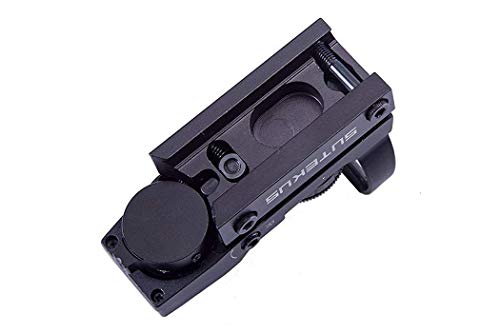
Sutekus Red&Green Dot Sight Reflex Holographic Tactical Riflescope Point Location 2 Colors 4 Retical Patterns with 0.8inch(20mm) Rail Mount
Rifle Scope Product Features
It is a multi-mask finder sighting device of equal magnification, genuine article compatible with 0.8inch(20mm) rail .
It is a replica of the dut site used by the United States, state agencies, special forces, etc.
Weight: approx. 140 g Body size: approx. height 2.5x length3.5x width1.5 inch (approx. height 64 mm x length 90 mm x width38 mm)
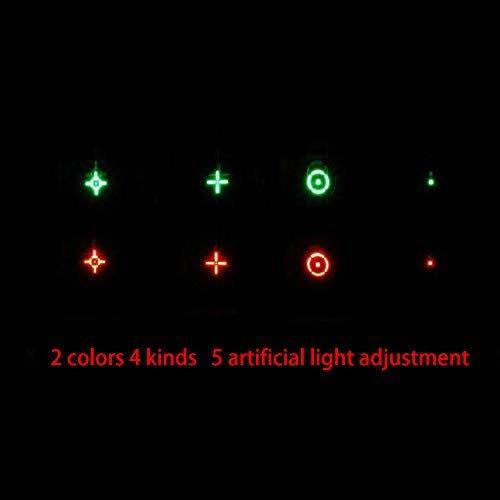
Aiming color: red, green aiming shape: 4 patterns (may differ from the arrangement and patterns) Brightness: 5 stages of red and green
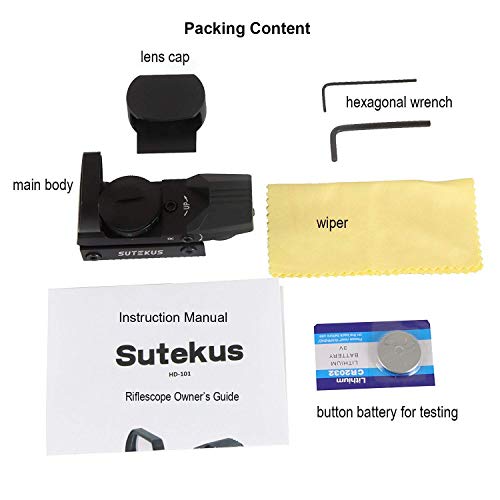
Accessories: “»Including test battery. (Used settings) (using CR2032 1 button battery) body, aiming parts cover, adjusting hex wrench
It is a replica of the dut site used by the United States, state agencies, special forces, etc.
20 mm guide rail support
Of course, it is a recommended program for CQB/ indoor large number of attackers.
Dut is red/green glowing 5 levels of dimming, 4 kinds of reticle! It weighs just 155 grams and is extremely light.
Product content: main body X1, lens cover X1, hexagonal wrench X2, test button battery X1
About the Sutekus Brand
Sutekus is a premium maker for firearm scopes, optics, mounting solutions, and other accessories used for firearms like rifles and long guns. They create and build their mounts, scopes, and related products choosing elements which are durable and long lasting. This includes the Sutekus Red&Green Dot Sight Reflex Holographic Tactical Riflescope Point Location 2 Colors 4 Retical Patterns with 0.8inch(20mm) Rail Mount by Sutekus. For additional shooting items, visit their site.
About Rifle Scopes
Rifle scopes allow you to exactly aim a rifle at various targets by aligning your eye with the target over a distance. They do this through magnification by utilizing a set of lenses inside the scope. The scope’s positioning can be adjusted for the consideration of varied environmental aspects like wind speed and elevation decreases to account for bullet drop.
The scope’s purpose is to understand exactly where the bullet will land based upon the sight picture you are viewing through the scope as you line up the scope’s crosshair or reticle with the target. A lot of contemporary rifle scopes and optics have around 11 parts which are arranged internally and outside of the scope body. These scope parts include the rifle scope’s body, lenses, windage and elevation dials, objective focus rings, and other elements. Learn about the eleven parts of glass.
The Types of Rifle Scopes
Rifle scopes can be either “first focal plane” or “second focal plane” style of scopes. The type of focal plane an optic has decides where the reticle or crosshair lies in relation to the optic’s magnification. It literally suggests the reticle is behind or ahead of the magnification lens of the scope. Looking for the very best type of rifle optic is based on what style of shooting you anticipate doing.
First Focal Plane Glass Facts
First focal plane optics (FFP) include the reticle ahead of the magnifying lens. This induces the reticle to increase in size based upon the level of magnification being used. The result is that the reticle measurements are the same at the magnified range as they are at the non magnified distance. As an example, one tick on a mil-dot reticle at one hundred yards without having “zoom” is still the very same tick at 100 yards with 5x “zoom”. These types of scopes are useful for:
- Quick acquisition, long distance types of shooting
- Shooting situations where calculations are marginal
- Experienced shooters who understand their target “hold over” plus “lead” correlations for their firearm
- Shooters who don’t mind the reticle is bigger and requires more visual sight area than a SFP reticle
Second Focal Plane Scope Info
Second focal plane scopes (SFP) come with the reticle to the rear of the zoom lens. In the FFP example with the SFP scope, the 5x “zoom” one hundred yard tick reticle measurement would be 1/5th of the non “zoom” tick.
- Long distance styles of shooting where shooters have more time to make ballistic estimations
- Shooting where most of the shots happen within much shorter distances and ranges
- Shooters who want a clearer optic picture without room used up by the larger sized FFP reticle
Zoom for Glass
The measure of scope zoom you require depends on the type of shooting you wish to do. Nearly every kind of rifle glass delivers some amount of magnification. The volume of magnification a scope delivers is established by the dimension, thickness, and curves of the lenses within the rifle scope. The magnification of the optic is the “power” of the scope. This suggests what the shooter is checking out through the scope is magnified times the power factor of what can usually be seen by human eyes.
Single Power Lens Rifle Scopes
A single power rifle optic or scope uses a magnification number designator like 4×32. This implies the magnification power of the scope is 4x power while the objective lens is 32mm. The zoom of this kind of scope can not adjust since it is a set power scope.
Adjustable Power Lens Rifle Glass
Variable power rifle scopes have adjustable power. These types of scopes will list the zoom degree in a configuration such as 2-10×32. These numbers suggest the magnification of the scope can be changed in between 2x and 10x power. This always incorporates the power levels in-between 2 and 10. The power manipulation is achieved using the power ring part of the scope near the back of the scope by the eye bell.
Power and Range
Here are some recommended scope power settings and the ranges where they can be successfully used. Keep in mind that higher magnification optics and scopes will not be as effective as lower magnification level scopes since increased magnification can be a detractor. The very same idea applies to longer distances where the shooter needs enough power to see where to best aim the rifle.
Info on Lens Finish
All state-of-the-art rifle glass lenses are layered. Lens finishing is a vital element of a rifle when purchasing high end rifle optics and scope equipment.
ED Versus HD Rifle Scopes
Some rifle scope companies will also use “HD” or high-definition glass finishings which make the most of different processes, elements, polarizations, and chemicals to draw out various color ranges and viewable definition through lenses. This HD finish is often used with greater density glass which drops light’s ability to refract by means of the lens glass. Some scope vendors use “HD” to describe “ED” indicating extra-low dispersion glass. ED handles how certain colors are represented on the chromatic spectrum and the chromatic difference or aberration which is also called color distortion or fringing. Chromatic aberration can be obvious over things with hard edges and outlines as light hits the item from particular angles.
Single Scope Lens Finish Versus Multi-Coating
Different scope lenses can even have different coverings applied to them. All lenses typically have at least some type of treatment or finishing applied to them prior to being used in a rifle scope or optic. Because the lens isn’t simply a raw piece of glass, they require performance enhancing coatings. It is part of the carefully tuned optic. It requires a coating to be applied to it so that it will be efficiently usable in many types of environments, degrees of sunshine (full VS shade), and other shooting conditions.
Single layered lenses have a treatment applied to them which is generally a protective and improving multi-purpose treatment. This lens treatment can shield the lens from scratches while lowering glare and other less useful things experienced in the shooting environment while sighting in with the optic. The quality of a single layered lens depends on the scope company and the amount you spent paying for it. Both are indications of the lens quality.
Some scope makers also make it a point to specify if their optic lenses are layered or “multi” coated. This indicates the lens has had numerous treatments applied to them. If a lens gets multiple treatments, it can indicate that a maker is taking multiple steps to combat different environmental aspects like an anti-glare covering, a scratch resistant anti-abrasion coating, followed by a hydrophilic finish. This additionally does not necessarily suggest the multi-coated lens will perform better than a single covered lens. Being “much better” hinges on the maker’s lens treatment technology and the quality of materials used in developing the rifle scope.
Anti-water Lens Coating
Water on an optical lens doesn’t assist with maintaining a clear sight picture through a scope in any way. Numerous top of the line and premium optic producers will coat their lenses with a hydrophilic or hydrophobic finishing. The Steiner Optics Nano-Protection is a fine example of this type of treatment. It deals with the surface of the Steiner scope lens so the H2O molecules can not bind to it or produce surface tension. The result is that the water beads roll off of the scope to maintain a clear, water free sight picture.
Options for Installing Rifle Glass on Long Guns
Installing approaches for scopes come in a couple of choices. There are the standard scope rings which are individually installed to the optic and one-piece mounts which cradle the scope. These various types of mounts also normally are made in quick release variations which use toss levers which enable rifle shooters to rapidly install and dismount the glass.
Hex Key Rifle Scope Rings
Normal, clamp style mounting scope rings use hex head screws to mount to the flattop style Picatinny scope installation rails on rifles. These types of scope mounts use a couple of separate rings to support the optic, and are made from 7075 T6 billet aluminum which are designed for long distance accuracy shooting. This type of scope install is fine for rifles which require a resilient, rock solid mounting solution which will not move no matter how much the scope is moved or abuse the rifle takes.
Quick-Release Cantilever Rifle Scope Ring Mounts
These types of quick-release rifle scope mounts can be used to rapidly detach a scope and attach it to a different rifle. Numerous scopes can even be swapped out if they all use a similar design mount. These types of mounts are convenient for rifles which are transported a lot, to remove the optic from the rifle for protection, or for scopes which are used in between numerous rifles.
Info on Rifle Glass Tube Sealing and Gas Purging
Moisture inside your rifle scope can mess up a day of shooting and your costly optic by triggering fogging and producing residue inside of the scope tube. Most scopes prevent wetness from entering the scope tube with a system of sealing O-rings which are waterproof.
Gas Purged Scope Tubes
Another part of preventing the buildup of moisture within the rifle scope tube is filling the tube with a gas like nitrogen. Since this space is already occupied by the gas, the optic is less influenced by temperature changes and pressure variations from the outside environment which may possibly allow water vapor to permeate in around the seals to fill the vacuum which would otherwise be there. These are good qualities of a decent rifle scope to look for.


