Description
Rifle Scope Product Details
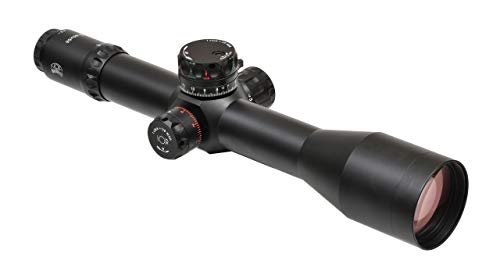
IOR Crusader Valdada 5-40×56 40mm FFP Crusader 2, Mil/Mil or MOA/MOA 1/8 turrets, Xtreme X1 Illum
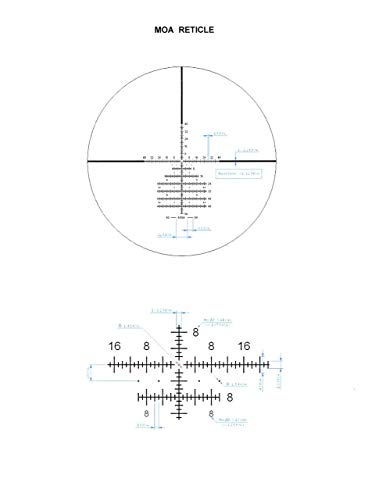
5-40×56 40mm FFP CRUSADER MOA/MOA SCOPE THE 5-40×56 XTREME LONG RANGE INTRODUCED IN 2020, IS THE FIRST 8x ZOOM RATIO FFP SUPER SCOPE EVER MADE. THE FEATURES BELOW TELL THE STORY ON THIS EXCEPTIONAL OPTICAL INSTRUMENT: Side focus with minimum adjustment to 25 ft Super precise 1/8 MOA click adjustments @100 yds Locking elevation turret with quick set Zero stop device Secondary point of impact index Digital illumination 115 MOA of adjustment minimum New Xtreme X1 reticle 5-40×56 RIFLESCOPE – MANUFACTURED EXCLUSIVELY, USING THE FINEST LD (LOW DISPERSION) GLASS IN THE WORLD: SCHOTT, GERMANY. TECHNICAL FEATURES MAGNIFICATION 5-40x OBJECTIVE SIZE 56mm FIELD OF VIEW (100 YDS.) 39-3.8 ft EXIT PUPIL 9.6- 1.4 mm EYE RELIEF 3.85 INCH DIOPTRICAL ADJUSTMENT -3 TO +3 DPT. CLOSE FOCUS ADJUSTMENT @40x 25 ft. RETICLE-TOTAL ADJUSTMENT RANGE 115 MOA min. CLICK VALUE 1/8 MOA AT 100 YDS. TUBE DIAMETER 40 mm LENGTH 15 INCH WEIGHT 42oz.
Rifle Scope Product Features
Full IOR Valdada Line at Darn Fine Shot
Call us 812 917 5653
Scope Comes with Free Rings
Rings can be traded in for mount upgrade
About the IOR Valdada Manufacturer
IOR Valdada is a premium manufacturer for weapon scopes, optics, mounting solutions, and other add-ons used for guns like rifles and long guns. They innovate and manufacture their products choosing elements which are resilient and long lasting. This includes the IOR Crusader Valdada 5-40×56 40mm FFP Crusader 2, Mil/Mil or MOA/MOA 1/8 turrets, Xtreme X1 Illum by IOR Valdada. For additional shooting items, visit their website.
Rifle Scope Facts
Rifle scopes enable you to exactly aim a rifle at various targets by aligning your eye with the target at range. They do this through magnification by employing a series of lenses within the scope. The scope’s positioning can be adapted to account for various natural elements like wind and elevation to account for bullet drop.
The scope’s function is to help shooters understand precisely where the bullet will land based on the sight picture you are seeing using the scope as you align the scope’s crosshair or reticle with the intended target. A lot of modern rifle optics have around 11 parts which are found within and externally on the scope body. These scope parts include the rifle scope’s body, lenses, modification dials, objective focus rings, and other parts. See all eleven parts of an optic.
The Varieties of Rifle Scopes
Rifle scopes can be either “first focal plane” or “second focal plane” type of optics. Going for the optimal type of rifle glass depends on what type of shooting you plan on doing.
First Focal Plane Glass
First focal plane glass (FFP) include the reticle ahead of the magnification lens. This induces the reticle to increase in size based on the extent of zoom being used. The benefit is that the reticle measurements are the same at the enhanced distance as they are at the non magnified distance. As an example, one tick on a mil-dot reticle at 100 yards without any “zoom” is still the exact same tick at 100 yards using 5x “zoom”. These types of scopes are beneficial for:
- Quick acquisition, far away kinds of shooting
- Shooting circumstances where calculations are minimal
- Experienced shooters who know their aim point “hold over” and “lead” correlations for their firearms
- Shooters who do not mind the reticle is enlarged and requires more visual sight area than a SFP reticle
Second Focal Plane Glass Details
Second focal plane scopes (SFP) come with the reticle behind the magnification lens. In the FFP example with the SFP scope, the 5x “zoom” 100 yard tick measurement would be 1/5th of the non “zoom” tick reticle measurement.
- Long distance types of shooting where shooters have extra time to make ballistic calculations
- Shooting where most of the shots occur within shorter ranges and spaces
- Shooters who choose a clearer optic sight picture without space taken up by the enlarged FFP reticle
Magnification for Scopes
The measure of scope magnification you need depends upon the sort of shooting you choose to do. Virtually every style of rifle optic offers some degree of zoom. The volume of magnification a scope supplies is established by the dimension, thickness, and curves of the lens glass within the rifle scope. The magnification level of the optic is the “power” of the opic. This implies what the shooter is checking out through the scope is magnified times the power aspect of what can usually be seen by human eyes.
About Single Power Lens Glass
A single power rifle scope and optic will have a magnification number designator like 4×32. This implies the magnification power of the scope is 4x power while the objective lens is 32mm. The magnification of this kind of optic can not change considering that it is a fixed power optic.
Variable Power Lens Rifle Scope Details
Variable power rifle scopes have adjustable power. It will note the magnification degree in a configuration such as 2-10×32. These numbers suggest the zoom of the scope could be adjusted between 2x and 10x power. This also utilizes the powers in-between 2 and 10. The power adjustment is achieved by working with the power ring part of the scope near the rear of the scope by the eye bell piece.
Power and Range
Here are some advised scope powers and the ranges where they could be efficiently used. Keep in mind that high power optics and scopes will not be as efficient as lower powered scope and optics due to the fact that too much magnification can be a bad thing. The same idea goes for extended distances where the shooter needs enough power to see where to properly aim the rifle.
Details on Lens Coverings
All modern rifle scope lenses are coated. There are various types and qualities of finishes. Lens coating can be an essential aspect of a rifle’s setup when looking into high end rifle optics and targeting systems. The glass lenses are among the most important pieces of the optic as they are what your eye looks through while sighting a rifle in on the target. The coating on the lenses safeguards the lens exterior and even helps with anti glare capabilities from refracted sunshine and color presence.
ED Versus HD Glass
Some scope manufacturers also use “HD” or high-definition lens coatings which use different methods, polarizations, chemicals, and components to draw out separate colors and viewable definition through the lens. Some scope makers use “HD” to refer to “ED” indicating extra-low dispersion glass.
Single Finishing Versus Multi-Coating for Rifle Optics
Various scope lenses can even have different finishes applied to them. All lenses usually have at least some type of treatment or finish applied to them prior to being used in a rifle scope or optic. Due to the fact that the lens isn’t just a raw piece of glass, they require performance enhancing coatings. It becomes part of the carefully tuned optic. It requires a coating to be applied to it so that it will be optimally usable in numerous kinds of environments, degrees of light (full light VS shaded), and other shooting conditions.
This lens treatment can safeguard the lens from scratches while lowering glare and other less helpful things experienced in the shooting environment while sighting in with the scope. The quality of a single coated lens depends on the scope maker and how much you paid for it.
Some scope manufacturers likewise make it a point to define if their optic lenses are coated or “multi” covered. This implies the lens has had several treatments applied to them. If a lens gets numerous treatments, it can indicate that a manufacturer is taking numerous steps to fight different natural factors like an anti-glare coating, a scratch resistant anti-abrasion covering, followed by a hydrophilic coating. This also does not always indicate the multi-coated lens is much better than a single coated lens. Being “better” depends upon the producer’s lens treatment innovation and the quality of products used in building the rifle optic.
Hydrophobic Lens Finishes
Water on a scope’s lens does not help with keeping a clear sight picture through an optic in any way. Numerous top of the line or high-end optic producers will coat their lenses with a hydrophobic or hydrophilic coating. The Steiner Optics Nano-Protection is a fine example of this type of treatment. It treats the surface of the Steiner optic lens so the H2O molecules can not bind to it or produce surface tension. The result is that the water beads move off of the scope to preserve a clear, water free sight picture.
Choices for Installing Scopes on Firearms
Installing solutions for scopes come in a couple of choices. There are the standard scope rings which are individually installed to the scope and one-piece scope mounts which cradle the scope. These various types of mounts also typically can be found in quick release variations which use toss levers which allow rifle operators to quickly mount and dismount the glass.
Rifle Optic Mounting Solutions with Hex Key Rings
Standard, clamp-on design mounting scope rings use hex head screws to fix to the flattop style Picatinny scope mount rails on the tops of rifles. These kinds of scope mounts use a pair of detached rings to support the scope, and are made from 7075 T6 billet aluminum or similar materials which are designed for long distance precision shooting. This kind of scope mount is excellent for rifle systems which need to have a durable, unfailing mount which will not shift no matter how much the scope is moved or jarring the rifle takes. These are the design of mounts you should have for a specialized scope setup on a long distance hunting or competition rifle which will almost never need to be changed or adjusted. Blue 242 Loctite threadlocker can also be used on the mount screws to stop the hex screw threads from backing out after they are installed securely in position. An example of these mounting rings are the 30mm type from Vortex Optics. The set usually costs around $200 USD
Quick-Release Cantilever Rifle Glass Ring Mounts
These types of quick-release rifle scope mounts can be used to rapidly remove a scope and attach it to a different rifle. Numerous scopes can even be swapped out if they all use a similar design mount. These types of mounts come in handy for long guns which are transferred a lot, to swap out the optic from the rifle for protecting the scope, or for optics which are used between numerous rifles or are situationally focused.
Glass Tube Sealing and Gas Purging
Wetness inside your rifle scope can destroy a day of shooting and your expensive optic by bringing about fogging and creating residue inside of the scope tube. A lot of scopes prevent wetness from getting in the scope tube with a system of sealing O-rings which are water resistant.
Gas Purged Scope Tubes
Another part of preventing the buildup of wetness inside of the rifle optic tube is filling the tube with a gas like nitrogen. Because this space is already occupied by the gas, the optic is less affected by temperature level shifts and pressure variations from the outdoor environment which may potentially allow water vapor to seep in around the seals to fill the void which would otherwise be there. These are good qualities of a decent rifle scope to seek out.


