


Description
Rifle Scope Product Details
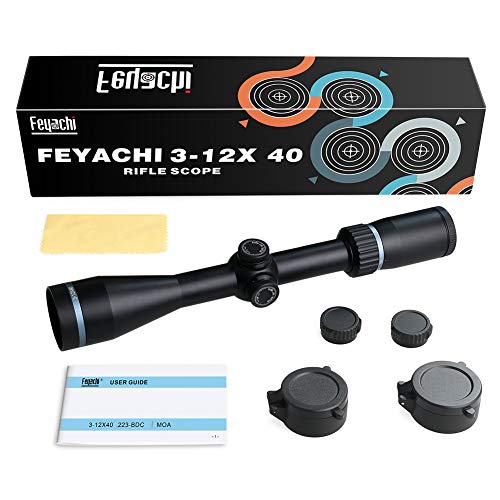
Feyachi Falcon 3-12x40mm Rifle Scope, BDC MOA Reticle Second Focal Plane 1-inch Tube Riflescopes Black Matte
Rifle Scope Product Features
About this item
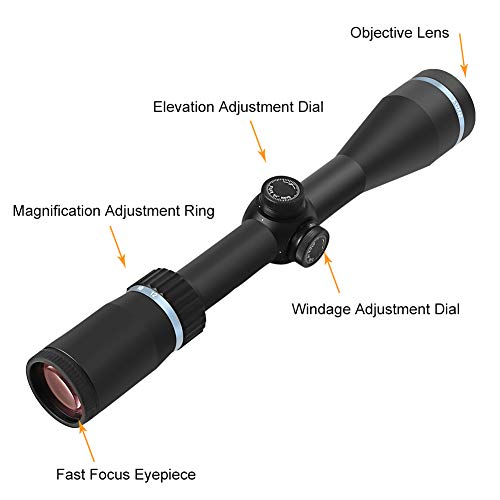
3-12x Magnification, 40mm Objective Lens. Specifically designed for discriminating hunters and shooters, offer the highest levels of performance and reliability.
Multiple layers of anti-reflective coating maximize light transmission, brightness and contrast. Quick focus Eyepiece features a smooth-turning rubberized ring allowing crisp reticle focus.
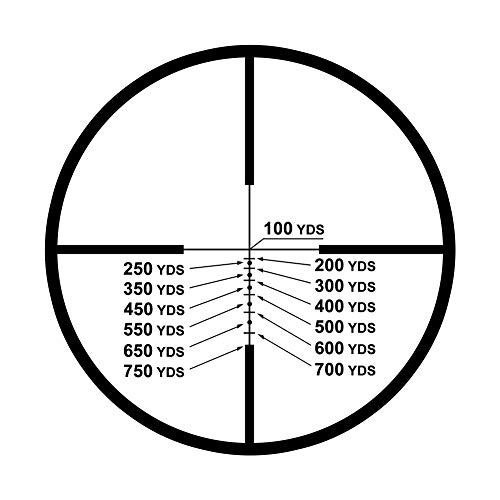
The BDC reticle provides bullet drop compensation up to 750yards, allows hunters to hold ‘dead-on’ at ranges exceeding those previously thought possible. Which effectively improve shooting accuracy.
Precise hand-turn 1/4-inch @ 100 yards click adjustments get you zeroed in quicker and maintain your setting, even with heavy recoil.
One-piece tube constructed from aircraft grade aluminum ensures strength and shockproof performance. completely sealed and nitrogen filled waterproof and fogproof.
Feyachi Falcon 3-12×40 Rifle Scope
The Falcon series of riflescopes offer the highest levels of performance and reliability, specifically designed for discriminating hunters and shooters.
With long eye relief, a fast-focus eyepiece, fully multi-coated lenses , there’s no compromising on the Falcon scopes.
The hard anodized single-piece aircraft-grade aluminum tube is nitrogen purged and o-ring sealed for waterproof and fogproof performance.
BDC Reticle
The BDC reticle is designed to match the trajectory of today’s modern inline rifles. Zero in at 100 yards using the exact ammunition you expect to hunt or shoot with. The reticle provides bullet drop compensation up to 750 yards.
Fully Multicoated Optical System
Multi-coated lens with 90%+ transmission, brightness from dawn to dusk ensures a very bright image with high resolution images.
E/W Adjustment
Precise hand-turn 1/4-inch @ 100 yards click adjustments get you zeroed in quicker and maintain your setting, even with heavy recoil.
Built for durability
One-piece tube constructed from aircraft grade aluminum. Waterproof, fog-proof and nitrogen purged and fully multicoated lenses for optimal light transmission.
Bullet Drop Compensation
The BDC reticle is designed to match the trajectory of today’s modern inline rifles. Zero in at 100 yards using the exact ammunition you expect to hunt or shoot with. The reticle provides bullet drop compensation up to 750 yards.
Ammunition used .223 PMC BRONZE 55 GRAIN FULL METAL JACKET-BT
Bullet Speed F/S-3195
Ballistic Coefficient-0.243
Zero Distance- 100 Yards
Temp.-59°
About the Feyachi Company
Feyachi is a premium company for long gun scopes, optics, mounts, and other add-ons used for guns like rifles and long guns. They innovate and make their products making the most of elements which are long lasting and resilient. This includes the Feyachi Falcon 3-12x40mm Rifle Scope, BDC MOA Reticle Second Focal Plane 1-inch Tube Riflescopes Black Matte by Feyachi. For additional shooting products, visit their site.
Information About Optics
Rifle scopes allow you to precisely aim a rifle at different targets by aligning your eye with the target over a range. They accomplish this through magnification by employing a series of lenses within the scope. The scope’s alignment can be adjusted for consideration of various natural things like wind speed and elevation to account for bullet drop.
The scope’s purpose is to understand precisely where the bullet will hit based upon the sight picture you are viewing using the scope as you line up the scope’s crosshair or reticle with the intended point of impact. Many contemporary rifle scopes and optics have around 11 parts which are arranged internally and externally on the optic. These optic pieces consist of the rifle scope’s body, lenses, modification dials, focus rings, and other parts. Learn about the eleven parts of optics.
The Styles of Rifle Scopes
Rifle scopes can be either “first focal plane” or “second focal plane” type of scopes. The kind of focal plane a scope has decides where the reticle or crosshair is located relative to the scopes zoom. It literally implies the reticle is behind or before the magnification lens of the optic. Picking out the most reliable form of rifle optic depends on what kind of hunting or shooting you intend on undertaking.
First Focal Plane Scope Details
Focal plane scopes (FFP) feature the reticle in front of the zoom lens. This causes the reticle to increase in size based upon the extent of zoom being used. The outcome is that the reticle measurements are the same at the enhanced range as they are at the non amplified distance. As an example, one tick on a mil-dot reticle at one hundred yards without having “zoom” is still the exact same tick at 100 yards using 5x “zoom”. These types of scopes work for:
- Quick acquisition, far away types of shooting
- Shooting scenarios where estimations are minimal
- Experienced shooters who have an idea for their aim point “hold over” as well as “lead” relationships for their firearm
- Shooters who don’t mind the reticle is bigger and uses up more visual sight area than a SFP reticle
Info on Second Focal Plane Optics
Second focal plane scopes (SFP) come with the reticle behind the magnification lens. In the FFP example with the SFP scope, the 5x “zoom” one hundred yard tick reticle measurement would be 1/5th of the non “zoom” tick reticle measurement.
- Far away styles of shooting where shooters have increased time to make ballistic calculations
- Shooting where most shots take place within shorter spaces and ranges
- Shooters who select a clearer optic picture without space used up by the bigger FFP reticle
Magnification for Rifle Optics
The quantity of scope magnification you need on your glass depends upon the sort of shooting you like to do. Virtually every style of rifle scope supplies some amount of magnification. The level of zoom a scope provides is determined by the dimension, thickness, and curvatures of the lenses within the rifle scope. The zoom of the scope is the “power” of the glass. This means what the shooter is aiming at through the scope is magnified times the power element of what can normally be seen by human eyes.
Fixed Single Power Lens Rifle Scopes
A single power rifle optic or scope comes with a zoom number designator like 4×32. This indicates the magnification power of the scope is 4x power and the objective lens is 32mm. The zoom of this type of optic can not adjust since it is set from the factory.
Adjustable Power Lens Optic Facts
Variable power rifle scopes use variable power levels. The power modification is handled by making use of the power ring part of the scope near the back of the scope by the eye bell.
The Power Level and Range of Scopes
Here are some suggested scope powers and the ranges where they can be successfully used. Bear in mind that higher power optics will not be as practical as lower magnification level scopes due to the fact that excessive zoom can be a detractor. The very same idea relates to extended distances where the shooter needs to have adequate power to see precisely where to best aim the rifle at the target.
About Lens Finishes
All modern rifle optic and scope lenses are coated. There are various types and qualities of glass coatings. When shopping for luxury rifle optical systems, Lens covering can be an essential aspect of defining the capability of the rifle. The glass lenses are among the most crucial pieces of the scope given that they are what your eye sees through while sighting a rifle in on the target. The finishing on the lenses shields the lens exterior and improves anti glare from excess natural light and color perception.
Details on Lens Coatings – HD Versus ED
Some rifle glass suppliers even use “HD” or high-def lens coatings which apply different procedures, chemicals, elements, and polarizations to enhance a wide range of colors and viewable target visibility through lenses. This high-def coating is normally used with more costly high density lens glass which lowers light’s ability to refract through the lens glass. Some scope producers use “HD” to describe “ED” indicating extra-low dispersion glass. ED deals with how colors are represented on the chromatic spectrum and the chromatic aberration or deviance which is also called color distortion or fringing. Chromatic aberration can be obvious over things with defined outlines as light hits the item from certain angles.
Single Covering Versus Multi-Coating
Various optic lenses can also have different coverings used to them. All lenses normally have at least some type of treatment or coating applied to them prior to being used in a rifle scope or optic.
Single covered lenses have a treatment applied to them which is normally a protective and improving multi-purpose treatment. This lens treatment can protect the lens from scratches while reducing glare and other less advantageous things experienced in the shooting environment while sighting in with the optic. The quality of a single layered lens depends upon the scope developer and how much you spent for it. Both are indications of the lens quality.
Some scope producers also make it a point to define if their optic lenses are covered or “multi” coated. This suggests the lens has several treatments applied to them. If a lens receives numerous treatments, it can indicate that a company is taking multiple actions to combat different environmental factors like an anti-glare finish, a scratch resistant anti-abrasion finishing, followed by a hydrophilic finishing. This additionally doesn’t necessarily mean the multi-coated lens will perform better than a single coated lens. Being “much better” hinges on the maker’s lens treatment technology and the quality of components used in constructing the rifle glass.
Scope Lens Anti-water Finish
Water on a lens does not assist with retaining a clear sight picture through an optic whatsoever. Numerous top of the line or high-end optic manufacturers will coat their lenses with a hydrophobic or hydrophilic finishing. The Steiner Optics Nano-Protection is a fine example of this sort of treatment. It treats the surface area of the Steiner optic lens so the water particles can not bind to it or develop surface tension. The result is that the water beads sheet off of the scope to preserve a clear, water free sight picture.
Choices for Mounting Rifle Glass on Long Guns
Installing options for scopes come in a few choices. There are the standard scope rings which are individually installed to the scope and one-piece scope mounts which cradle the scope. These different types of mounts also normally come in quick release versions which use manual levers which enable rifle operators to quickly mount and dismount the scopes.
Scope Mounts with Hex Key Rings
Basic, clamp type mounting optic rings use hex head screws to position to the flattop style Picatinny scope mount rails on the tops of rifles. These forms of scope mounts use a pair of individual rings to support the scope, and are made from 7075 T6 billet aluminum or similar materials which are designed for far away precision shooting. This form of scope mount is great for rifles which need to have a long lasting, hard use mount which will not move no matter just how much the scope is moved or jarring the rifle takes. These are the style of mounts you really want to have for a devoted optics setup on a far away hunting or tournament long gun which will rarely need to be altered or adjusted. Blue 242 Loctite threadlocker can also be used on the mount’s screws to keep the hex screws from backing out after they are mounted tightly in place. An example of these mounting rings are the 30mm type from the Vortex Optics company. The set typically costs around $200 USD
Quick-Release Cantilever Glass Rings
These types of quick-release rifle scope mounts can be used to quickly take off a scope from a rifle and reattach it to a different rifle. If they all use a comparable design mount, several scopes can often be swapped out. The quick detach design is CNC machined from anodized 6061 T6 aluminum and the mounting levers attach solidly to a flat top design Picatinny rail. This permits the scope to be sighted in while on the rifle, removed from the rifle, and remounted back on the rifle while keeping the original sighting settings. These kinds of mounts are useful and beneficial for rifles which are shipped a lot, to remove the scope glass from the rifle for protection, or for optics which are chosen for use in between multiple rifles. An example of this mount type is the 30mm mount designed by Vortex Optics. It normally costs around $250 USD
Rifle Optic Tube Sealing and Gas Purging
Wetness inside your rifle glass can destroy a day on the range and your pricey optic by inducing fogging and generating residue inside of the scope tube. Many scopes protect against moisture from getting in the scope tube with a system of sealing O-rings which are waterproof. Usually, these water resistant scopes can be submerged underneath 20 or 30 feet of water before the water pressure can push moisture past the O-rings. This should be plenty of moisture avoidance for basic use rifles for hunting and sporting purposes, unless you plan on taking your rifle aboard watercrafts and are concerned about the optic still functioning if it falls overboard and you can still rescue the gun.
Gas Purged Rifle Optic Tubes
Another part of preventing the accumulation of moisture inside of the rifle scope tube is filling the tube with a gas like nitrogen. Given that this space is currently occupied by the gas, the optic is less altered by temp changes and pressure distinctions from the outside environment which might potentially enable water vapor to permeate in around the seals to fill the vacuum which would otherwise exist. These are good qualities of a good rifle scope to seek out.


