Description
Rifle Scope Product Details
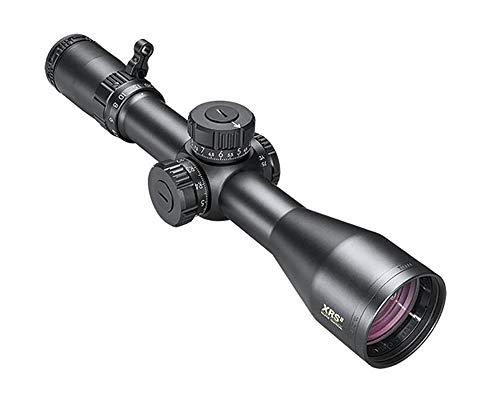
Bushnell Elite Tactical Riflescope XRS II, 4.5-30×50, Tremor 3_ET46305T
This is it. This is the scope that’s been to the podium at the King of 2 Miles and countless precision rifle matches. The one that’s used by top shooters across the world to make shots count. This is confidence. The most important thing about any scope is the glass. Every piece of glass is coated multiple times. Chromatic aberrations are a thing of the past because we gave it E. D. Prime glass for enhanced color representation, contrast, and resolution. Topping it all off is our exclusive EXO Barrier to protect your view from stage-robbing elements. Precision shooting requires precision tracking and the XRS II has it. Our exacting turrets are machined to extreme clearances for repeatability you can count on. The locking windage turret s it won’t move when you don’t want it to. Finally, we gave the elevation turret our simple to use true zero stop -the Rev Limiter.
Rifle Scope Product Features
[ELITE TACTICAL] is Bushnell’s flagship optic, crafted to the most exacting standards. Developed for the best, by the best to deliver precision at extreme distances.
Exo barrier lens coating is molecularly-bonded to the glass, and repels water, oil, fog, dust and debris
ED prime glass – delivers colorful, high-contrast images in any light
Throw hammer Throw Lever – Removable lever enables quick magnification changes
[KING OF 2 MILE] This is it. The scope that’s been to the podium at the King of 2 Miles and countless precision rifle matches.
About the Bushnell Manufacturer
Bushnell is a premium producer for long gun scopes, optics, mounts, and other add-ons used for firearms like rifles and long guns. They style and build their scopes, mounts, and related products by using materials which are long lasting and resilient. This includes the Bushnell Elite Tactical Riflescope XRS II, 4.5-30×50, Tremor 3_ET46305T by Bushnell. For more shooting goods, visit their website.
What You Need to Know About Glass
Rifle scopes permit you to exactly aim a rifle at different targets by lining up your eye with the target over a distance. They do this through magnifying the target using a set of lenses within the scope. The scope’s alignment can be adapted for the consideration of different environmental things like wind speed and elevation increases or decreases to account for bullet drop.
The scope’s purpose is to help shooters understand exactly where the bullet will land based upon the sight picture you are seeing through the scope as you align the scope’s crosshair or reticle with the target. Many modern-day rifle scopes have around eleven parts which are found inside and outside of the scope body. These scope parts include the rifle scope’s body, lenses, modification dials, focus rings, and other elements. Learn about the eleven parts of scopes.
Rifle Scope Styles
Rifle scopes can be either “first focal plane” or “second focal plane” kind of scopes. The kind of focal plane an optic has decides where the reticle or crosshair is located in regard to the scopes magnifying adjustments. It literally means the reticle is located behind or ahead of the magnifying lens of the optic. Deciding on the very best form of rifle optic is based on what type of hunting or shooting you anticipate doing.
First Focal Plane Glass
Focal plane scopes (FFP) feature the reticle in front of the magnification lens. These kinds of scopes are useful for:
- Quick acquisition, far away types of shooting
- Shooting situations where calculations are very little
- Experienced shooters who know their target “hold over” plus “lead” ratios for their firearm
- Shooters who do not mind the reticle is bigger and uses up more visual eyesight area than a SFP reticle
Second Focal Plane Glass
Second focal plane scopes (SFP) include the reticle to the rear of the zoom lens. In the FFP example with the SFP scope, the 5x “zoom” 100 yard tick reticle measurement would be 1/5th of the non “zoom” tick reticle measurement.
- Far away styles of shooting where shooters have more time to make ballistic estimations
- Shooting where most of the shots occur within much shorter proximities and ranges
- Shooters who prefer a clearer optic sight picture with less space taken up by the larger sized FFP reticle
Rifle Optic Magnification
The extent of scope magnification you need on your optic depends on the kind of shooting you choose to do. Virtually every type of rifle optic provides some degree of magnification. The volume of magnification a scope delivers is determined by the diameter, density, and curvatures of the lens glass within the rifle scope. The zoom of the scope is the “power” of the glass. This means what the shooter is looking at through the scope is amplified times the power factor of what can usually be seen by human eyes.
Fixed Power Lens Optic Info
A single power rifle scope uses a zoom number designator like 4×32. This indicates the magnification power of the scope is 4x power while the objective lens is 32mm. The magnification of this kind of scope can not fluctuate since it is set from the factory.
Variable Power Lens Rifle Optic Details
Variable power rifle scopes use variable power levels. The power change is accomplished by making use of the power ring part of the scope near the back of the scope by the eye bell.
Power and Range Correlations
Here are some recommended scope power levels and the distances where they could be successfully used. Remember that high magnification scopes and optics will not be as efficient as lower powered scopes because increased magnification can be a negative thing in certain situations. The exact same concept goes for longer ranges where the shooter needs adequate power to see precisely where to best aim the rifle.
About Rifle Optic Lens Coverings
All modern-day rifle scope and optic lenses are layered. There are different types and qualities of lens coatings. When researching luxury rifle optics and scope units, Lens coating can be an important component of a rifle. The lenses are among the most key parts of the glass due to the fact that they are what your eye sees through while sighting a rifle in on the target. The coating on the lenses shields the lens surface and also assists with anti glare capabilities from excess sunlight and color exposure.
HD Versus ED Lens Coatings
Some scope producers likewise use “HD” or high-definition lens finishings which use different procedures, components, chemicals, and polarizations to draw out a wide range of colors and viewable quality through the lens. Some scope producers use “HD” to refer to “ED” implying extra-low dispersion glass.
Scope Lens Single Coating Versus Multi-Coating
Various optic lenses can also have various coatings applied to them. All lenses typically have at least some type of treatment or coating applied to them prior to being used in a rifle scope or optic assembly. This is since the lens isn’t just a raw piece of glass. It becomes part of the carefully tuned optic. It requires a coating to be applied to it so that it will be efficiently usable in lots of types of environments, degrees of light (full VS shaded), and other shooting conditions.
Single covered lenses have a treatment applied to them which is usually a protective and enhancing multi-purpose treatment. This lens treatment can protect the lens from scratches while reducing glare and other less beneficial things experienced in the shooting environment while sighting in with the scope. The quality of a single coated lens depends on the scope maker and how much money you spent paying for it. Both are signs of the lens quality.
Some scope makers similarly make it a point to define if their optic lenses are covered or “multi” coated. Being “better” depends on the manufacturer’s lens treatment technology and the quality of products used in building the rifle scope.
Rifle Optic Lens Anti-water Covering
Water on a lens does not support maintaining a clear sight picture through a scope in any way. Numerous top of the line or high-end scope makers will coat their lenses with a hydrophobic or hydrophilic finish. The Steiner Optics Nano-Protection is a fine example of this kind of treatment. It deals with the surface of the Steiner glass lens so the water particles can not bind to it or develop surface tension. The outcome is that the water beads roll off of the scope to maintain a clear, water free sight picture.
Alternatives for Mounting Glass on Long Guns
Installing approaches for scopes can be found in a couple of choices. There are the basic scope rings which are separately installed to the optic and one-piece scope mounts which cradle the scope. These various types of mounts also typically can be found in quick release variations which use manual levers which allow rifle shooters to rapidly install and dismount the scope.
Glass Mounts with Hex Key Rings
Normal, clamp style mounting scope rings use hex head screws to mount to the flattop style Picatinny scope installation rails on rifles. These types of scope mounts use a couple of different rings to support the optic, and are made from 7075 T6 billet aluminum which is designed for long distance precision shooting. This type of scope mount is great for rifles which need a long lasting, sound mounting solution which will not move no matter how much the scope is moved or abuse the rifle takes.
Glass Mounting Solutions with Quick-Release Cantilever Rings
These types of quick-release rifle scope mounts can be used to rapidly connect and remove a scope from a rifle before reattaching it to a different rifle. Several scopes can also be switched out if they all use a compatible design mount. These types of mounts come in handy for long guns which are transferred a lot, to remove the optic from the rifle for protection, or for scopes which are used in between several rifles or are situationally focused.
Rifle Optic Tube Sealing and Gas Purging
Moisture inside your rifle scope can spoil a day of shooting and your pricey optic by causing fogging and generating residue within the scope tube. Most optics prevent humidity from entering the optical tube with a series of sealing O-rings which are water resistant. Typically, these water resistant optics can be immersed within 20 or 30 feet of water before the water pressure can push moisture past the O-rings. This should be sufficient humidity avoidance for basic use rifles, unless you intend on taking your rifle on your motorboat and are worried about the scope still working if it goes over the side and you can still retrieve the gun.
Scope Gas Purging
Another element of avoiding the accumulation of moisture within the rifle optic’s tube is filling the tube with a gas like nitrogen. Given that this area is currently occupied by the gas, the scope is less affected by climate shifts and pressure distinctions from the outdoor environment which could possibly permit water vapor to leak in around the seals to fill the vacuum which would otherwise exist. These are good qualities of a decent rifle scope to seek out.


