Description
Rifle Scope Product Details
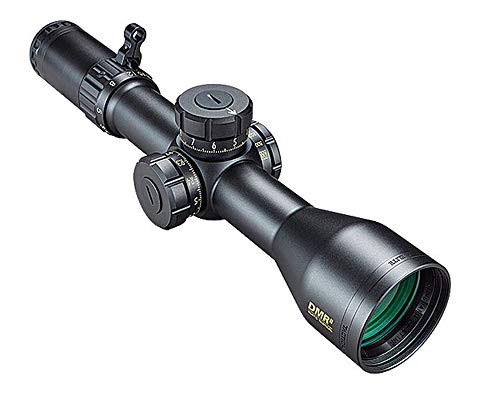
Bushnell Elite Tactical Riflescope HDMR II, 3.5-21×50, H59 Reticle, Revlimiter Zero Stop_ ET36215H, Black
The Elite Tactical DMR II Pro riflescope combines the exceptional performance of the venerable DMR II but adds ED Prime Glass to increase resolution and virtually eliminate chromatic aberrations to make target acquisition faster and easier. Its 34mm main tube houses our locking windage turret, and on top is our dial-halting RevLimiter zero stop under the elevation knob. Power changes are effortless and lighting fast thanks to the standard Throw Hammer. Glass is coated in the newest generation of Rainguard, our exclusive, element-cheating EXO Barrier. Includes a 2″ sunshade, bikini caps, and soft scope cover.
Rifle Scope Product Features
[ELITE TACTICAL] is Bushnell’s flagship optic, crafted to the most exacting standards. Developed for the best, by the best to deliver precision at extreme distances.
Exclusive EXO Barrier Protection – Bushnell’s newest and best protective lens coating molecularly bonds to the glass, repelling water, oil, dust, debris and preventing scratches.
IPX7 Waterproof construction – O-ring sealed optics stay dry inside, when immersed in three feet of water for up to 30 minutes.
Throwhammer Throw Lever – Allows for quick magnification changes with a simple flick of a finger.
About the Bushnell Company
Bushnell is a premium maker for long gun scopes, optics, mounts, and other components used for firearms like rifles and long guns. They create and supply their scopes and related products choosing building materials which are resilient and long lasting. This includes the Bushnell Elite Tactical Riflescope HDMR II, 3.5-21×50, H59 Reticle, Revlimiter Zero Stop_ ET36215H, Black by Bushnell. For additional shooting goods, visit their website.
What You Need to Know About Rifle Optics
Rifle scopes allow you to specifically align a rifle at different targets by lining up your eye with the target over a distance. They accomplish this through zoom by making use of a series of lenses inside the scope. The scope’s positioning can be adapted to take into account varied natural considerations like wind speed and elevation increases or decreases to account for bullet drop.
The scope’s purpose is to help shooters understand exactly where the bullet will land based upon the sight picture you are viewing with the optic as you line up the scope’s crosshair or reticle with the intended target. Most modern-day rifle optics have around eleven parts which are located within and externally on the scope. These optic pieces include the rifle scope’s body, lenses, windage turrets or dials, objective focus rings, and other parts. See all eleven parts of optics.
Rifle Optic Styles
Rifle scopes can be either “first focal plane” or “second focal plane” type of scopes. Considering the best type of rifle optic is based around what type of shooting you plan to do.
About First Focal Plane Glass
Focal plane scopes (FFP) come with the reticle in front of the zoom lens. This triggers the reticle to increase in size based upon the level of magnification being used. The benefit is that the reticle measurements are the same at the amplified range as they are at the non amplified distance. As an example, one tick on a mil-dot reticle at one hundred yards with no “zoom” is still the exact same tick at 100 yards with 5x “zoom”. These kinds of scopes work for:
- Quick acquisition, far away types of shooting
- Shooting scenarios where computations are low
- Experienced shooters who recognize their aim point “hold over” and also “lead” relationships for their firearms
- Shooters who do not mind the reticle is enlarged and uses up more visual sight room than a SFP reticle
About Second Focal Plane Scopes
Second focal plane optics (SFP) include the reticle behind the magnification lens. In the FFP example with the SFP scope, the 5x “zoom” 100 yard tick would be 1/5th of the non “zoom” tick measurement.
- Long distance forms of shooting where shooters have extra time to make ballistic calculations
- Shooting where most of the shots occur within much shorter ranges and spaces
- Shooters who choose a clearer optic picture with less space taken up by the enlarged FFP reticle
Rifle Scope Magnification
The amount of zoom a scope offers is figured out by the diameter, thickness, and curvatures of the lenses inside of the rifle scope. The magnification of the scope is the “power” of the scope.
Single Power Lens Scope Info
A single power rifle scope and optic uses a zoom number designator like 4×32. This implies the zoom power of the scope is 4x power while the objective lens is 32mm. The magnification of this kind of scope can not change because it is a fixed power optic.
Adjustable Power Lens Scopes
Variable power rifle scopes use enhanced power. The power modification is achieved by using the power ring part of the scope near the rear of the scope by the eye bell.
Scope Power and Ranges
Here are some advised scope powers and the distances where they could be effectively used. Keep in mind that high power optics will not be as practical as lower powered glass because too much zoom can be a detractor. The exact same idea relates to longer distances where the shooter needs enough power to see where to properly aim the rifle at the target.
Details on Scope Lens Coverings
All contemporary rifle optic lenses are covered in special coatings. There are various types and qualities of coverings. Lens coating can be a crucial element of a rifle’s setup when looking at high-end rifle optics and targeting systems. The lenses are one of the most essential pieces of the glass as they are what your eye sees through while sighting a rifle in on the point of impact. The finish on the lenses protects the lens surface area and even assists with anti glare capabilities from refracted sunrays and color visibility.
HD Versus ED Lenses
Some scope suppliers also use “HD” or high-def lens finishes that employ various procedures, components, rare earth compounds, and polarizations to enhance various colors and viewable definition through the lens. This high-definition finish is frequently used with more costly high density lens glass which decreases light’s potential to refract by means of the lens glass. Some scope suppliers use “HD” to describe “ED” indicating extra-low dispersion glass. ED handles how colors are represented on the chromatic spectrum and the chromatic aberration or difference which is also called color distortion or fringing. Chromatic aberration is often visible over items with defined outlines as light hits the object from particular angles.
Single Finishing Versus Multi-Coating
Various optic lenses can also have various coatings applied to them. All lenses normally have at least some type of treatment or covering applied to them before being used in a rifle scope or optic.
This lens treatment can safeguard the lens from scratches while reducing glare and other less advantageous things experienced in the shooting environment while sighting in with the scope. The quality of a single covered lens depends on the scope maker and how much you paid for it.
Some scope manufacturers likewise make it a point to specify if their optic lenses are covered or “multi” coated. This implies the lens has had several treatments applied to the surfaces of the glass. If a lens gets multiple treatments, it can prove that a company is taking several steps to fight different natural factors like an anti-glare coating, a scratch resistant anti-abrasion covering, followed by a hydrophilic finish. This also doesn’t always imply the multi-coated lens is better than a single covered lens. Being “better” is dependent on the producer’s lens treatment technology and the quality of glass used in building the rifle glass.
Anti-water Lens Finish
Water on a lens does not help with maintaining a clear sight picture through a scope at all. Many top of the line and military grade optic makers will coat their lenses with a hydrophobic or hydrophilic finishing.
Glass Installing Options
Mounting solutions for scopes can be found in a couple of options. There are the standard scope rings which are individually mounted to the optic and one-piece mounts which cradle the scope. These different kinds of mounts also typically are made in quick release variations which use toss levers which allow rifle shooters to quickly mount and dismount the scopes.
Hex Key Rifle Scope Rings
Normal, clamp style mounting scope rings use hex head screws to mount to the flattop design Picatinny scope installation rails on rifles. These types of scope mounts use two separate rings to support the optic, and are often made from 7075 T6 billet aluminum which is created for long distance precision shooting. This type of scope mount is great for rifles which need a resilient, sound mounting solution which will not move no matter how much the scope is moved or abused.
Quick-Release Cantilever Scope Rings
These types of quick-release rifle scope mounts can be used to quickly take off a scope and attach it to a different rifle. Numerous scopes can also be swapped out if they all use a similar style mount. These types of mounts are convenient for long guns which are carried a lot, to swap out the optic from the rifle for protection, or for scopes which are used between numerous rifles.
Info on Rifle Scope Tube Sealing and Gas Purging
Wetness inside your rifle optic can spoil a day of shooting and your highly-priced optic by inducing fogging and producing residue inside of the scope’s tube. A lot of scopes prevent wetness from entering the scope tube with a series of sealing O-rings which are waterproof. Typically, these water-resistant optics can be submerged underneath 20 or 30 feet of water before the water pressure can force moisture past the O-rings. This should be plenty of humidity prevention for basic use rifles for hunting and sporting purposes, unless you intend on taking your rifle boating and are worried about the scope still functioning if it is submerged in water and you can still recover the gun.
Gas Purged Rifle Scope Tubes
Another element of avoiding the accumulation of wetness within the rifle scope tube is filling the tube with a gas like nitrogen. Because this space is already taken up by the gas, the scope is less influenced by temperature shifts and pressure distinctions from the external environment which might possibly allow water vapor to seep in around the seals to fill the void which would otherwise exist. These are good qualities of a decent rifle scope to seek out.


