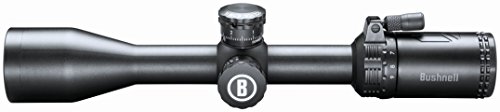
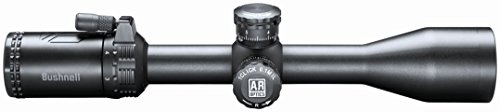
Description
Rifle Scope Product Details
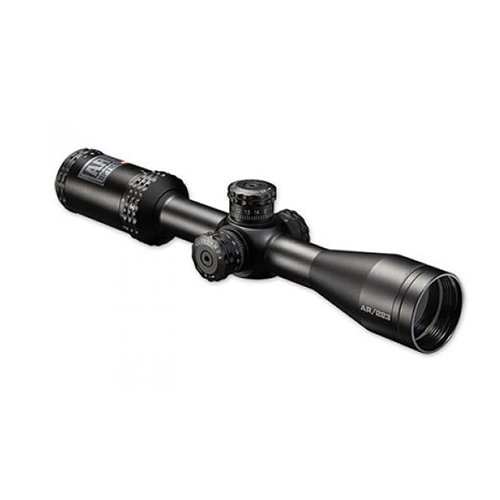
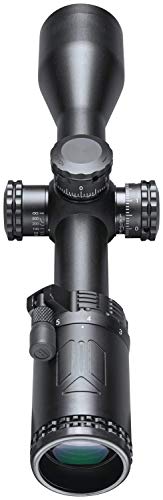
Bushnell 3-9×40 Riflescope with DZ 223 Reticle
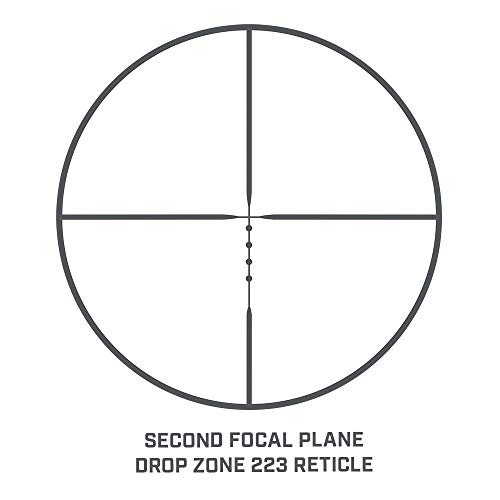
The Bushnell 3-9×40 is a tried and true configuration for your hunting or plinking rifle. The proven 3-9 power range provides for the right magnification for mid range shooting. A ballistic drop compensated reticle, designed for the 223 Remington/5.56 NATO cartridge, allows for easy shooting out to 600 yds. Fully multicoated optics and a nitrogen purged, waterproof construction provide bright, clear views of the target and the ability to use the scope in any weather conditions. Whether hunting or plinking, the Bushnell 3-9×40 is a trusted configuration that is sure to enable fast, efficient hits on target.
Rifle Scope Product Features
About this item
Trusted 3-9x magnification range for mid-range shooting
Waterproof Construction for use in rugged conditions
Adjustable length throw lever for fast magnification changes even while wearing gloves
Ballistic Drop Compensated reticle for easy hold over shooting to 600 yds
Fully Multi Coated optics for bright, clear views of the target
About the Bushnell Scope Maker
Bushnell is a premium supplier for long gun scopes, optics, mounting solutions, and other components used for firearms like rifles and long guns. They design and manufacture their scopes and related products by making the most of building materials which are resilient and long lasting. This includes the Bushnell 3-9×40 Riflescope with DZ 223 Reticle by Bushnell. For additional shooting products, visit their website.
What You Need to Know About Glass
Rifle scopes enable you to exactly align a rifle at different targets by aligning your eye with the target over a range. They accomplish this through magnifying the target by utilizing a set of lenses within the scope. The scope’s alignment can be dialed in for consideration of many environmental considerations like wind and elevation decreases to make up for bullet drop.
The scope’s purpose is to understand precisely where the bullet will land based on the sight picture you are viewing with the optic as you line up the scope’s crosshair or reticle with the intended target. A lot of modern-day rifle scopes have about 11 parts which are found within and on the exterior of the optic. These parts consist of the rifle scope’s body, lenses, modification turrets or dials, objective focus rings, and other elements. See all eleven parts of a rifle optical system.
Rifle Glass Varieties
Rifle scopes can be either “first focal plane” or “second focal plane” type of scopes. Considering the finest type of rifle glass is based around what type of shooting you plan to do.
Info on First Focal Plane Optics
Focal plane scopes (FFP) come with the reticle in front of the magnifying lens. This causes the reticle to increase in size based on the extent of magnification being used. The outcome is that the reticle measurements are the same at the enhanced range as they are at the non amplified range. For instance, one tick on a mil-dot reticle at 100 yards without “zoom” is still the exact same tick at one hundred yards with 5x “zoom”. These kinds of scopes work for:
- Quick acquisition, far away kinds of shooting
- Shooting situations where estimations are small
- Experienced shooters who know their target “hold over” plus “lead” ratios for their rifles
- Shooters who do not mind the reticle is bigger and uses up more visual sight room than a SFP reticle
Second Focal Plane Glass
Second focal plane optics (SFP) include the reticle behind the magnifying lens. This triggers the reticle to stay at the same size in connection with the amount of magnification being used. The outcome is that the reticle measurements alter based upon the zoom chosen to shoot over greater ranges because the markings present different increments which differ with the zoom. In the FFP illustration with the SFP glass, the 5x “zoom” 100 yard tick reticle measurement would be 1/5th of the non “zoom” tick measurement. These sorts of optics work for:
- Long distance forms of shooting where shooters have additional time to make ballistic computations
- Shooting where most shots occur within much shorter spaces and ranges
- Shooters who would like a clearer optic sight picture with less room taken up by the bigger FFP reticle
Zoom for Glass
The quantity of scope zoom you require depends upon the type of shooting you intend to do. Nearly every type of rifle scope supplies some degree of zoom. The level of zoom a scope delivers is determined by the dimension, density, and curves of the lens glass within the rifle scope. The magnification of the scope is the “power” of the glass. This signifies what the shooter is looking at through the scope is amplified times the power aspect of what can generally be seen by human eyes.
Fixed Single Power Lens Rifle Scope Info
A single power rifle optic will have a magnification number designator like 4×32. This implies the zoom power of the scope is 4x power while the objective lens is 32mm. The magnification of this kind of optic can not fluctuate given that it is a set power scope.
Variable Power Lens Rifle Optic Facts
Variable power rifle scopes can be tweaked between magnified levels. The power adjustment is performed using the power ring part of the scope near the rear of the scope by the eye bell.
Power Levels and Range
Here are some advised scope power levels and the distances where they can be efficiently used. Consider that high magnification glass will not be as practical as lower magnification level optics due to the fact that too much zoom can be a negative thing in certain situations. The exact same idea relates to extended ranges where the shooter needs sufficient power to see precisely where to best aim the rifle at the target.
Lens Finish for Rifle Scopes
All modern-day rifle scope and optic lenses are covered. Lens covering can be a vital element of a shooting platform when considering high end rifle optics and scope systems.
About Rifle Scope Lens Coatings – HD Versus ED
Some scope producers also use “HD” or high-definition lens coatings which use different procedures, chemicals, polarizations, and components to draw out different colors and viewable definition through the lens. Some scope producers use “HD” to refer to “ED” to signify the lens has extra-low dispersion glass.
Rifle Glass Lens Single Covering Versus Multi-Coating
Various scope lenses can also have various coatings applied to them. All lenses normally have at least some type of treatment or finishing applied to them before they are used in a rifle scope or optic assembly. Because the lens isn’t simply a raw piece of glass, they require performance enhancing coatings. It becomes part of the carefully tuned optic. It must have a finish put on it so that it will be optimally usable in many kinds of environments, degrees of light (full light VS shaded), and other shooting conditions.
This lens treatment can safeguard the lens from scratches while lowering glare and other less advantageous things experienced in the shooting environment while sighting in with the scope. The quality of a single coated lens depends on the scope manufacturer and how much you paid for it.
Some scope manufacturers likewise make it a point to specify if their optic lenses are layered or “multi” coated. This indicates the lens has multiple treatments applied to the surfaces. If a lens gets multiple treatments, it can establish that a producer is taking numerous actions to fight various environmental factors like an anti-glare finish, a scratch resistant anti-abrasion coating, followed by a hydrophilic finishing. This also doesn’t always indicate the multi-coated lens will perform better than a single covered lens. Being “much better” is dependent on the producer’s lens treatment solutions and the quality of products used in building the rifle scope.
Hydrophobic Scope Lens Covering
Water on a lens doesn’t assist with preserving a clear sight picture through a scope at all. Numerous top of the line and military grade optic companies will coat their lenses with a hydrophilic or hydrophobic anti-water finish.
Choices for Mounting Rifle Glass on Long Guns
Installing solutions for scopes are available in a few options. There are the basic scope rings which are individually installed to the optic and one-piece mounts which cradle the scope. These different kinds of mounts also normally come in quick release versions which use toss levers which permit rifle shooters to rapidly mount and dismount the optics.
Optic Mounting Solutions with Hex Key Rings
Basic, clamp style mounting optic rings use hex head screws to mount to the flattop style Picatinny scope mount rails on the tops of rifles. These types of scope mounts use a pair of individual rings to support the optic, and are made from 7075 T6 billet aluminum which are made for far away accuracy shooting. This type of scope mount is ideal for rifle systems which need to have a durable, hard use mount which will not move despite just how much the scope is moved or abuse the rifle takes. These are the design of mounts you really want to have for a faithful optics setup on a long distance hunting or competitors long gun that will almost never need to be changed or recalibrated. Blue 242 Loctite threadlocker can additionally be used on the screws to keep the hex screws from backing out after they are installed safely in place. An example of these rings are the 30mm type made by the Vortex Optics company. The set normally costs around $200 USD
Quick-Release Cantilever Optic Rings
These types of quick-release rifle scope mounts can be used to quickly connect and remove a scope from a rifle before reattaching it to a different rifle. Numerous scopes can even be switched out if they all use a similar style mount. These types of mounts come in handy for rifle platforms which are transferred a lot, to swap out the optic from the rifle for protection, or for scopes which are used between numerous rifles.
Sealing and Gas Purging for Optic Tubes
Wetness inside your rifle optic can ruin a day of shooting and your pricey optic by causing fogging and developing residue inside of the scope tube. Most scopes avoid moisture from getting in the scope tube with a system of sealing O-rings which are water resistant.
Gas Purged Glass Tubes
Another part of avoiding the buildup of moisture inside of the rifle optic’s tube is filling the tube with a gas like nitrogen. Given that this area is already occupied by the gas, the scope is less impacted by temperature level changes and pressure differences from the outside environment which might possibly enable water vapor to permeate in around the seals to fill the void which would otherwise exist. These are good qualities of a decent rifle scope to seek out.


