
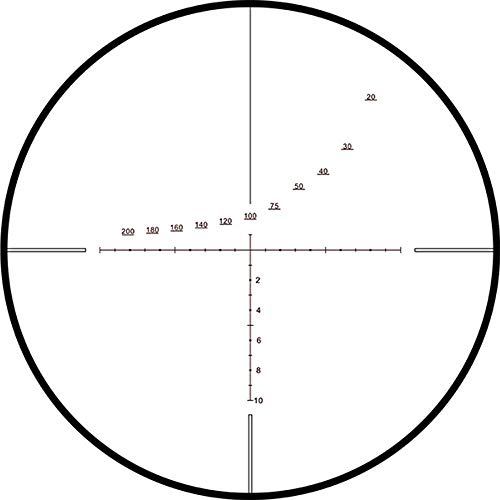


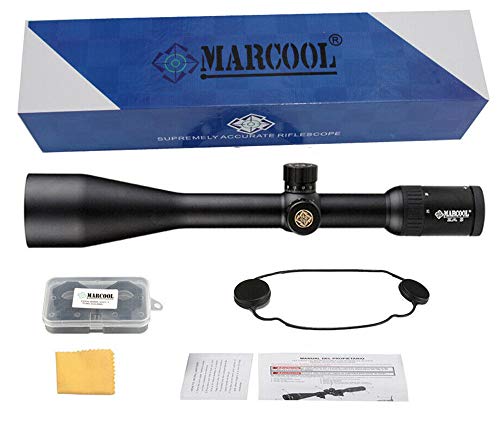
Description
Rifle Scope Product Details
Marcool 5-25X52 SF HD Rifle Scope Optical Aim Collimator Air Rifle Sight Pneumatics Weapon for Hunting
5-25X52
Rifle Scope Product Features
Adjustment Focus:SF
1/10 MIL Click Adjustments
Fully multi-coated green objective lens ensures a clear sight picture
Waterproof, fogproof and shockproof: One-piece tube construction with Nitrogen filled and O-ring sealed makes this hunting gun scope extremely durable and usable under any weather conditions
Comes with a generous lifetime warranty, superior quality assured
About the Marcool Manufacturer
Marcool is a premium company for rifle scopes, optics, mounts, and other components used for guns like rifles and long guns. They design and build their scopes, mounts, and related products making the most of building materials which are resilient and long lasting. This includes the Marcool 5-25X52 SF HD Rifle Scope Optical Aim Collimator Air Rifle Sight Pneumatics Weapon for Hunting by Marcool. For additional shooting products, visit their site.
Information Scopes
Rifle scopes allow you to precisely aim a rifle at various targets by lining up your eye with the target at range. They do this through magnification using a series of lenses inside the scope. The scope’s alignment can be dialed in to account for various environmental considerations like wind speed and elevation decreases to account for bullet drop.
The scope’s function is to help the shooter understand exactly where the bullet will land based on the sight picture you are viewing via the scope as you align the scope’s crosshair or reticle with the intended point of impact. Most modern rifle scopes and optics have about 11 parts which are found inside and externally on the optic. These scope parts include the rifle scope’s body, lenses, elevation dials, objective focus rings, and other components. Learn about the eleven parts of rifle optics.
Rifle Optic Types
Rifle scopes can be either “first focal plane” or “second focal plane” type of scopes. Considering the finest type of rifle glass is based around what type of shooting you plan to do.
First Focal Plane Scope Details
First focal plane optics (FFP) come with the reticle before the magnifying lens. This triggers the reticle to increase in size based upon the level of zoom being used. The outcome is that the reticle measurements are the same at the magnified range as they are at the non amplified range. One tick on a mil-dot reticle at one hundred yards without “zoom” is still the identical tick at 100 yards by using 5x “zoom”. These types of scopes are valuable for:
- Quick acquisition, far away kinds of shooting
- Shooting situations where calculations are very little
- Experienced shooters who recognize their aim point “hold over” and also “lead” equations for their long gun
- Shooters who do not mind the reticle is enlarged and takes up more visual sight space than a SFP reticle
Info on Second Focal Plane Glass
Second focal plane glass (SFP) feature the reticle to the rear of the zoom lens. This induces the reticle to remain at the same overall size relative to the amount of zoom being used. The end result is that the reticle measurements adapt based on the magnification applied to shoot over lengthier distances considering the markings present various increments which change with the zoom. In the FFP example with the SFP optic, the 5x “zoom” one hundred yard tick reticle measurement would be 1/5th of the non “zoom” tick reticle measurement. These particular styles of scopes are handy for:
- Far away forms of shooting where shooters have extra time to make ballistic computations
- Shooting where most shots occur within shorter ranges and spaces
- Shooters who choose a clearer optic picture with less space taken up by the larger size FFP reticle
Zoom for Optics
The amount of scope magnification you need on your glass is based on the type of shooting you intend to do. Pretty much every kind of rifle scope delivers some amount of magnification. The amount of magnification a scope gives is identified by the dimension, density, and curvatures of the lenses inside of the rifle optic. The magnification of the scope is the “power” of the opic. This denotes what the shooter is checking out through the scope is amplified times the power factor of what can usually be seen by human eyes.
About Single Power Lens Rifle Optics
A single power rifle optic uses a zoom number designator like 4×32. This implies the zoom power of the scope is 4x power while the objective lens is 32mm. The zoom of this type of optic can not change given that it is a fixed power optic.
Variable Power Lens Glass Info
Variable power rifle scopes can be tweaked between magnified levels. The power change is handled by using the power ring part of the scope near the back of the scope by the eye bell.
Power Levels and Range
Here are some advised scope power levels and the distances where they may be successfully used. Bear in mind that higher magnification scopes will not be as efficient as lower magnification level scopes due to the fact that too much zoom can be a negative thing in certain situations. The same idea relates to extended ranges where the shooter needs to have enough power to see exactly where to properly aim the rifle.
Rifle Scope Lens Covering
All contemporary rifle optic lenses are covered in special coatings. There are various types and qualities of glass lens coatings. Lens coating is an essential aspect of a rifle’s setup when contemplating luxury rifle optics and targeting units. The lenses are one of the most vital pieces of the glass considering that they are what your eye looks through while sighting a rifle in on the point of impact. The coating on the lenses safeguards the lens surface area and also improves anti glare from excess light and color visibility.
ED Versus HD Optics
Some rifle glass producers even use “HD” or high-definition glass finishings that take advantage of various procedures, elements, polarizations, and chemical applications to draw out a wide range of color ranges and viewable definition through the lens. This high-definition coating is normally used with more costly high density lens glass which brings down light’s chance to refract by means of the lens glass. Some scope producers use “HD” to describe “ED” implying extra-low dispersion glass. ED handles how colors are presented on the chromatic spectrum and the chromatic difference or aberration which is also called color distortion or fringing. Chromatic aberration can be noticeable over objects with defined shapes as light hits the item from specific angles.
Single Covering Versus Multi-Coating
Various optic lenses can likewise have different finishes applied to them. All lenses typically have at least some type of treatment or finish used to them before they are used in a rifle scope or optic.
Single layered lenses have a treatment applied to them which is typically a protective and improving multi-purpose treatment. This lens treatment can safeguard the lens from scratches while minimizing glare and other less beneficial things experienced in the shooting environment while sighting in with the scope. The quality of a single coated lens depends upon the scope maker and how much you spent paying for it. Both the make and cost are indications of the lens quality.
Some scope producers similarly make it a point to specify if their optic lenses are covered or “multi” covered. Being “much better” depends on the producer’s lens treatment technology and the quality of products used in constructing the rifle scope.
Hydrophobic Lens Coverings
Water on a scope’s lens does not help with keeping a clear sight picture through a scope in any way. Lots of top of the line and high-end optic producers will coat their lenses with a hydrophobic or hydrophilic finishing. The Steiner Optics Nano-Protection is a good example of this type of treatment. It provides protection for the surface of the Steiner glass lens so the water particles can not bind to it or produce surface tension. The result is that the water beads slide off of the scope to maintain a clear, water free sight picture.
Options for Installing Rifle Scopes on Firearms
Mounting approaches for scopes are available in a couple of choices. There are the standard scope rings which are separately mounted to the optic and one-piece scope mounts which cradle the scope. These various kinds of mounts also generally are made in quick release versions which use toss levers which allow rifle operators to quickly mount and remove the scopes.
Optic Mounting Solutions with Hex Key Rings
Basic, clamp-on design mounting optic rings use hex head screws to mount to the flattop style Picatinny scope mounting rails on the tops of rifles. These varieties of scope mounts use double separate rings to support the optic, and are made from 7075 T6 billet aluminum or similar materials which are created for long distance precision shooting. This form of scope mount is excellent for rifles which require a resilient, rock solid mount which will not move no matter just how much the scope is moved or jarring the rifle takes. These are the design of mounts you really want to have for a dedicated optics setup on a reach out and touch someone hunting or hard target interdiction firearm that will hardly ever need to be modified or recalibrated. Blue 242 Loctite threadlocker can additionally be used to stop the hex screw threads from wiggling out after they are installed safely in position. An example of these mounting rings are the 30mm style made by Vortex Optics. The set typically costs around $200 USD
Quick-Release Cantilever Rifle Scope Ring Mounting Solutions
These types of quick-release rifle scope mounts can be used to quickly connect and take off a scope from a rifle before reattaching it to a different rifle. Multiple scopes can also be swapped out if they all use a compatible style mount. These types of mounts come in handy for rifle platforms which are transported a lot, to swap out the optic from the rifle for protection, or for scopes which are used in between numerous rifles.
Rifle Glass Tube Sealing and Gas Purging
Moisture inside your rifle glass can spoil a day of shooting and your expensive optic by triggering fogging and producing residue within the scope tube. A lot of scopes prevent moisture from getting in the scope tube with a system of sealing O-rings which are waterproof. Usually, these scopes can be immersed within 20 or 30 feet of water before the water pressure can force moisture past the O-rings. This should be plenty of moisture content avoidance for standard use rifles for hunting and sporting purposes, unless you anticipate taking your rifle on boats and are worried about the scope still functioning if it is submerged in water and you can still rescue the rifle.
Rifle Optic Gas Purging
Another element of avoiding the accumulation of moisture inside of the rifle optic tube is filling the tube with a gas like nitrogen. Given that this space is already taken up by the gas, the scope is less influenced by temperature changes and pressure differences from the outside environment which could possibly allow water vapor to seep in around the seals to fill the vacuum which would otherwise exist. These are good qualities of a decent rifle scope to seek out.


