Description
Rifle Scope Product Details
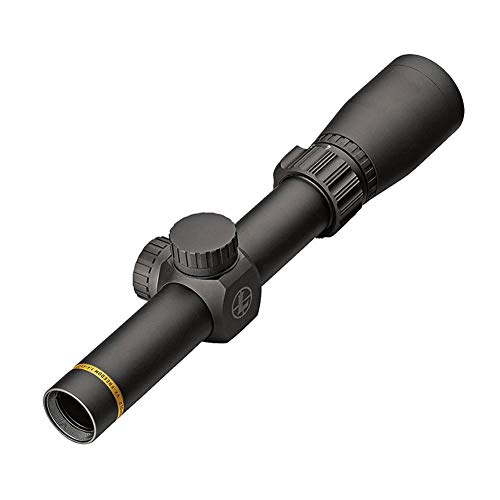
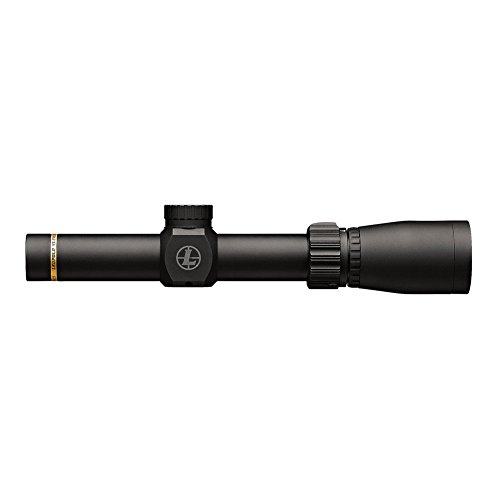
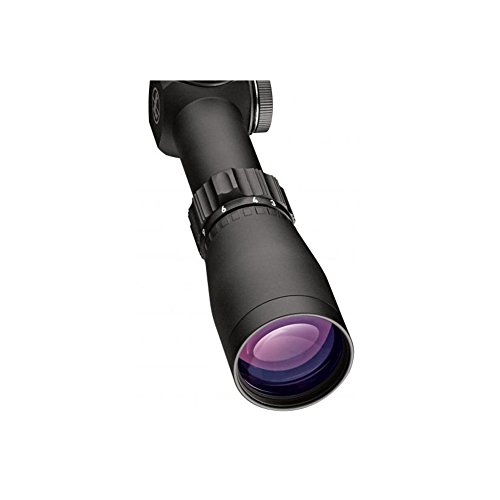
Leupold VX-Freedom 1.5-4x20mm Riflescope, Pig-Plex Reticle, Matte Finish
The next generation of shooters deserves a new standard for quality and ruggedness in their riflescopes. With the VX-Freedom you get best-in-class optics that produce a crisp, clear image with repeatable accuracy. It’s everything you’d expect from a Leupold – designed, machined, and assembled in our Oregon factory, tested to the same ruggedness standards as our top-tier riflescopes, and guaranteed for a lifetime of performance.
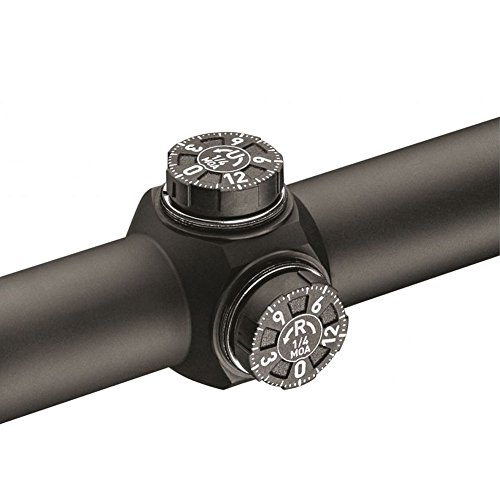
1/4 MOA Finger Click
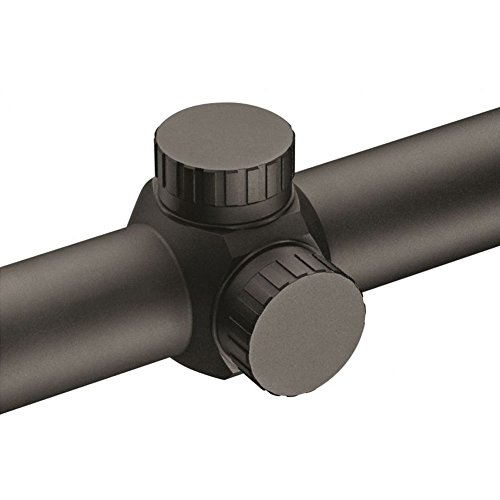
1/4 MOA precision finger click adjustments for windage and elevation offer absolute repeatability and dependability over a lifetime of extreme use.
Waterproof and Fogproof
Absolute waterproof and fogproof integrity: ready for a lifetime in the field, in all conditions.
Details
– Weight: 9.6 oz/272 g
– Linear FOV (ft/100 yd): 74.2-29.4
– Linear FOV (m/100 m): 24.75-9.81
– Eye Relief: 4.17-3.74 in
– Eye Relief: 106-95 mm
– Elevation Adjustment Range: 125 MOA/36.4 MIL
– Windage Adjustment Range: 125 MOA/36.4 MIL
– Exit Pupil: 5.0 mm
Rifle Scope Product Features
About this item
Repeatable 1/4 MOA precision finger clicks offer intuitive, simple adjustment over a lifetime of dependable use
Complete waterproof and fogproof integrity: ready for a lifetime in the field, in all conditions
Crafted from 6061-T6 aircraft quality aluminum
Twilight Light Management System for superb visibility in low-light conditions
Durable and compact, the one-inch maintube is lightweight and fits more legacy rings
Leupold VX-Freedom Scopes
Leupold VX-Freedom Rifle Scopes bring a new level of access to the quality, durability, and reliability that Leupold optics are known for. What can you expect from this VX-Freedom Series Suited for muzzleloaders, rimfire, and centerfire guns, the VX Freedom series offers a wide variety of magnification ranges and reticles. Although they may be affordable, Leupold didn’t cut any corners in their features. Features like Twilight Light Management System, scratch resistant lenses, and 1/4 MOA click turrets make these scopes an unbelievable value!
Features
Decent 3:1 zoom ratio has you covered in various situations
Adjustable windage and elevation
Complete waterproof and fogproof integrity
Crafted from 6061-T6 aircraft quality aluminum
Twilight Light Management System improves view in poor lighting
Scratch resistant lenses
Setting VX-Freedom apart
Lasting and dependable
The bodies of VX-Freedom scopes are made of durable 6061-T6 aircraft grade aluminum. These scopes are waterproof, fogproof and shockproof, with their scratch resistant lenses further ensuring lasting quality.
Optical finesse
Multi-coated lenses reduce color aberrations to provide a bright, true-to-life image. And Twilight Light Management System offers decent visibility even in those critical first and last near-dark minutes of the day when game is often most active.
Versatility
Each scope in the line features 3:1 zoom ratio. It lets you switch from observation and target acquisition to long-range precision aiming with just one turn. And the vast adjustment ranges for windage and elevation let you compensate for wind and bullet drop, helping you thrive at any distance, in any weather.
Duplex Reticle
Classic 1962 Leupold design. Thicker outer posts help you acquire target fast while thin, wire-like crosshairs allow for long-range precision. If you like minimalist reticles suitable for various scenarios, go for Duplex.
Duplex
Pig-Plex
Rimfire MOA
Tri-MOA
1.5-4x20mm 2-7x33mm 3-9x40mm
Magnification range 1.5x-4x 2x-7x 3x-9x
Weight, oz 9.6 11.1 12.2
Weight, g 272 315 346
Elevation adjustment range 125 MOA 75 MOA 60 MOA
Windage adjustment range 125 MOA 75 MOA 60 MOA
Eye relief, in 4.17-3.74 4.17-3.7 4.17-3.66
Eye relief, mm 106-95 106-94 106-93
About the Leupold Company
Leupold is a premium manufacturer for rifle scopes, optics, mounting solutions, and other add-ons used for guns like rifles and long guns. They design and make their scopes, mounts, and related products working with building materials which are long lasting and resilient. This includes the Leupold VX-Freedom 1.5-4x20mm Riflescope, Pig-Plex Reticle, Matte Finish by Leupold. For additional shooting products, visit their site.
Scope Details
Rifle scopes permit you to specifically aim a rifle at different targets by aligning your eye with the target over a distance. They accomplish this through magnifying the target by employing a set of lenses inside the scope. The scope’s alignment can be dialed in for the consideration of separate natural elements like wind and elevation increases or decreases to account for bullet drop.
The scope’s function is to help shooters understand precisely where the bullet will land based on the sight picture you are seeing via the optic as you align the scope’s crosshair or reticle with the target. Many modern rifle optics have about eleven parts which are arranged internally and outside of the scope. These optic pieces consist of the rifle scope’s body, lenses, modification turrets or dials, focus rings, and other parts. Learn about the eleven parts of glass.
Rifle Optic Types
Rifle scopes can be either “first focal plane” or “second focal plane” kind of scopes. The sort of focal plane a scope has decides where the reticle or crosshair lies in connection with the optic’s zoom. It simply implies the reticle is located behind or in front of the magnification lens of the optic. Deciding upon the best type of rifle scope is based upon what style of hunting or shooting you anticipate undertaking.
About First Focal Plane Optics
Focal plane scopes (FFP) include the reticle in front of the zoom lens. These types of scopes are useful for:
- Quick acquisition, far away types of shooting
- Shooting situations where computations are minor
- Experienced shooters who recognize their aim point “hold over” and also “lead” relationships for their firearms
- Shooters who do not mind the reticle is enlarged and requires more visual sight space than a SFP reticle
Second Focal Plane Scope Info
Second focal plane optics (SFP) come with the reticle behind the magnification lens. In the FFP example with the SFP scope, the 5x “zoom” 100 yard tick measurement would be 1/5th of the non “zoom” tick.
- Long distance styles of shooting where shooters have extra time to make ballistic estimations
- Shooting where most of the shots take place within much shorter proximities and ranges
- Shooters who desire a clearer optic picture with less area used up by the larger size FFP reticle
Rifle Glass Zoom
The level of scope zoom you need depends upon the form of shooting you plan to do. Virtually every kind of rifle scope provides some level of magnification. The level of magnification a scope provides is determined by the size, thickness, and curvatures of the lenses inside of the rifle optic. The magnifying level of the scope is the “power” of the glass. This means what the shooter is aiming at through the scope is magnified times the power aspect of what can normally be seen by human eyes.
Info on Single Power Lens Rifle Optics
A single power rifle optic or scope uses a zoom number designator like 4×32. This suggests the zoom power of the scope is 4x power while the objective lens is 32mm. The zoom of this type of optic can not adjust considering that it is a fixed power scope.
Variable Power Lens Rifle Optics
Variable power rifle scopes use variable power levels. The power modification is achieved using the power ring part of the scope near the back of the scope by the eye bell.
The Power Level and Range Correlation of Optics
Here are some suggested scope powers and the distances where they could be efficiently used. Highly magnified glass will not be as efficient as lower magnification rifle scope glass because too much zoom can be a bad thing. The same idea goes for extended ranges where the shooter needs to have enough power to see where to properly aim the rifle at the target.
Rifle Scope Lens Finish
All cutting-edge rifle glass lenses are layered. Lens coating is an important element of a rifle system when thinking about high end rifle optics and scope systems.
HD Versus ED Lenses
Some scope manufacturers likewise use “HD” or high-definition lens finishings which use different procedures, polarizations, aspects, and chemicals to draw out a wide range of colors and viewable definition through the lens. Some scope makers use “HD” to refer to “ED” meaning extra-low dispersion glass.
Single Coating Versus Multi-Coating
Various optic lenses can likewise have various coatings applied to them. All lenses typically have at least some type of treatment or coating used to them before they are used in a rifle scope or optic.
Single coated lenses have a treatment applied to them which is usually a protective and boosting multi-purpose treatment. This lens treatment can shield the lens from scratches while minimizing glare and other less advantageous things experienced in the shooting environment while sighting in with the optic. The quality of a single coated lens depends on the scope designer and how much you spent on it. Both the make and cost are signs of the lens quality.
Some scope manufacturers also make it a point to define if their optic lenses are layered or “multi” coated. This means the lens has numerous treatments applied to the surfaces of the glass. If a lens receives numerous treatments, it can indicate that a manufacturer is taking multiple actions to fight various natural factors like an anti-glare finishing, a scratch resistant anti-abrasion covering, followed by a hydrophilic coating. This additionally does not always suggest the multi-coated lens is much better than a single layered lens. Being “better” depends on the maker’s lens treatment techniques and the quality of materials used in constructing the rifle optic.
Hydrophobic Lens Covering
Water on a lens doesn’t assist with keeping a clear sight picture through a scope at all. Many top of the line and military grade scope makers will coat their lenses with a hydrophobic or hydrophilic coating.
Rifle Glass Mounting Options
Installing solutions for scopes can be found in a couple of choices. There are the basic scope rings which are separately installed to the optic and one-piece mounts which cradle the scope. These various kinds of mounts also normally come in quick release versions which use manual levers which permit rifle operators to quickly install and remove the glass.
Hex Key Optic Ring Mounting Solutions
Normal, clamp design mounting scope rings use hex head screws to mount to the flattop design Picatinny scope mount rails on rifles. These types of scope mounts use two different rings to support the optic, and are often made from 7075 T6 billet aluminum which are developed for long range precision shooting. This type of scope mount is perfect for rifles which need a long lasting, rock solid mount which will not move no matter how much the scope is moved or abused.
Glass Mounts with Quick-Release Cantilever Rings
These types of quick-release rifle scope mounts can be used to rapidly connect and remove a scope from a rifle before reattaching it to a different rifle. Multiple scopes can even be swapped out if they all use a compatible style mount. These types of mounts are convenient for rifles which are carried a lot, to remove the optic from the rifle for protection, or for optics which are used in between several rifles or are situationally focused.
Sealing and Gas Purging for Optic Tubes
Wetness inside your rifle glass can wreck a day of shooting and your costly optic by triggering fogging and making residue within the scope tube. A lot of scopes protect against wetness from entering the optical tube with a series of sealing O-rings which are waterproof. Normally, these water resistant optics can be immersed under 20 or 30 feet of water before the water pressure can push moisture past the O-rings. This should be plenty of humidity prevention for basic use rifles for hunting and sporting purposes, unless you anticipate taking your rifle on a boat and are worried about the optic still performing if it goes over the side and you can still rescue the firearm.
Rifle Optic Gas Purging
Another element of preventing the accumulation of moisture inside of the rifle scope tube is filling the tube with a gas like nitrogen. Given that this space is currently taken up by the gas, the optic is less influenced by climate shifts and pressure variations from the outside environment which may potentially allow water vapor to leak in around the seals to fill the vacuum which would otherwise exist. These are good qualities of a decent rifle scope to look for.


