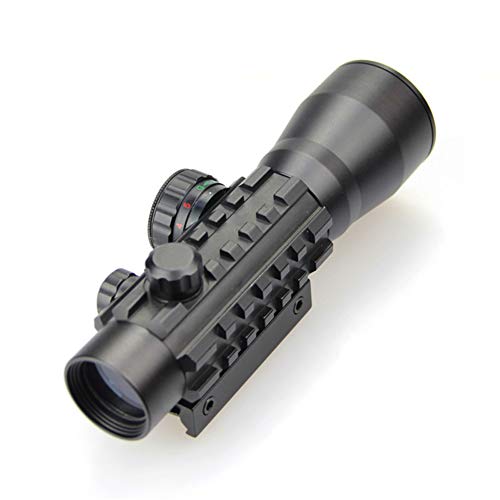
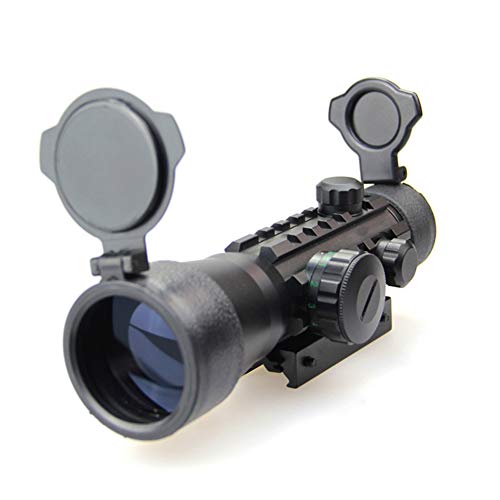
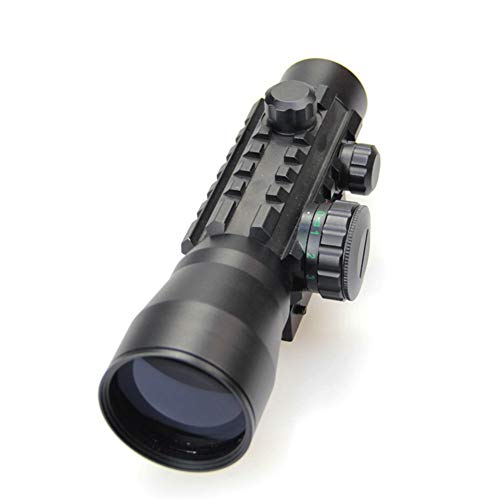
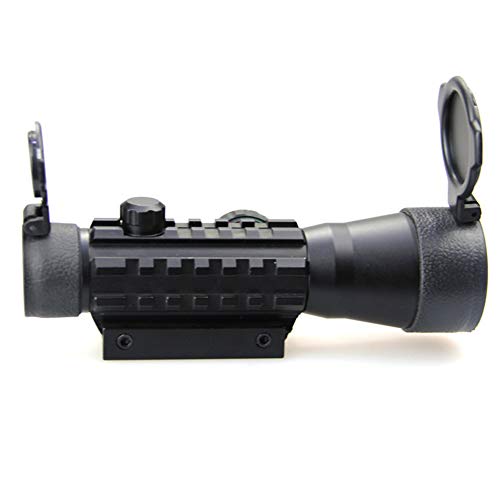

Description
Rifle Scope Product Details
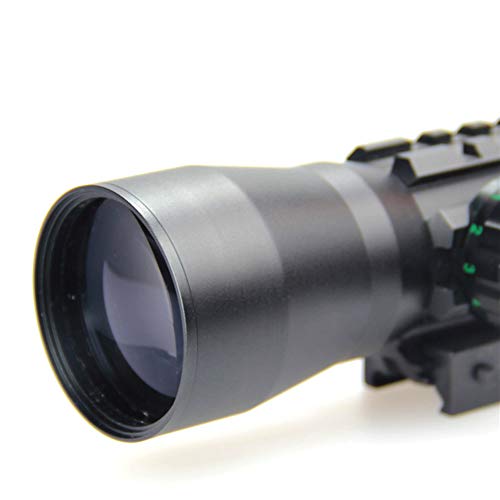
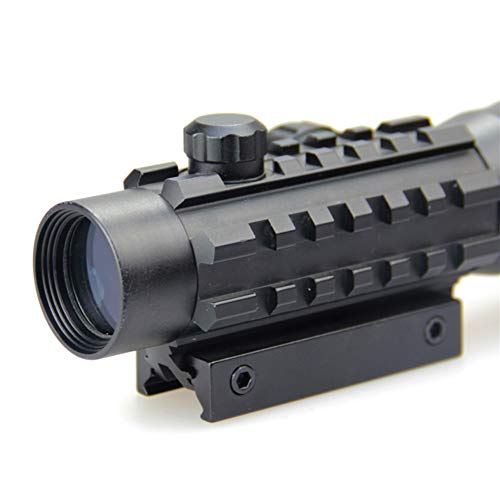
DJym 2X30mm Red Dot Sight for Hunting Rifle Scopes, High-Definition Blue Film Red and Green Aiming Nitrogen Waterproof Anti-Fog
[Magnification]: 2x
[Weight]: 275 g
[Length]: 17.4 cm
[Objective Diameter]: 30 mm
[Adjustment method]: Built adjustment
[Differentiation Material]: the wire
[Coating Method]: blue film
[Seismic or not]: Yes
[Nitrogen, water fog]: Yes
TCpick:
1. Welcome to purchase, we will send you as soon as possible, if you have any questions, we will reply within 24 hours, we wish you a happy shopping
2. If you are satisfied with our products, please leave your valuable feedback or product reviews, thank you for your support.
3. Our shop and many more products are welcome
Rifle Scope Product Features
100% brand new, excellent product quality, strong earthquake resistance, and very stable installation
Quick aiming, exquisite and compact, quick installation
Nitrogen-filled, waterproof and anti-fog, strong against the harsh environment in the wild, will not be eroded by water vapor and water
HD blue film, to some extent slow down the fatigue of long-term observation
quality assurance, our products have been CE and RoHS certified, if you have any questions, we’ll get back to you within 24 hours
About the DJym Scope Maker
DJym is a premium maker for weapon scopes, optics, mounting solutions, and other add-ons used for firearms like rifles and long guns. They style and make their scopes and related products by using elements which are resilient and long lasting. This includes the DJym 2X30mm Red Dot Sight for Hunting Rifle Scopes, High-Definition Blue Film Red and Green Aiming Nitrogen Waterproof Anti-Fog by DJym. For more shooting products, visit their website.
What You Need to Know About Glass
Rifle scopes enable you to precisely aim a rifle at different targets by lining up your eye with the target over a range. They do this through zoom using a set of lenses inside the scope. The scope’s positioning can be adjusted to account for various natural considerations like wind speed and elevation increases or decreases to account for bullet drop.
The scope’s function is to help the shooter understand precisely where the bullet will land based on the sight picture you are seeing via the scope as you line up the scope’s crosshair or reticle with the target. The majority of modern-day rifle scopes have about 11 parts which are arranged inside and on the exterior of the scope body. These parts consist of the rifle scope’s body, lenses, adjustment dials or turrets, objective focus rings, and other components. See all eleven parts of a rifle optical system.
Rifle Glass Varieties
Rifle scopes can be either “first focal plane” or “second focal plane” type of optics. Selecting the best type of rifle scope depends on what type of shooting you plan to do.
Info About First Focal Plane Glass
Focal plane scopes (FFP) feature the reticle in front of the zoom lens. These types of scopes are helpful for:
- Quick acquisition, long distance types of shooting
- Shooting circumstances where calculations are minimal
- Experienced shooters who know their aim point “hold over” and “lead” relationships for their long guns
- Shooters who don’t mind the reticle is enlarged and occupies more visual eyesight room than a SFP reticle
Second Focal Plane Optics
Second focal plane scopes (SFP) feature the reticle behind the magnification lens. This triggers the reticle to remain at the very same size in connection with the amount of magnification being used. The effect is that the reticle dimensions change based upon the magnification used to shoot over greater distances since the reticle measurements present various increments which change with the magnification level. In the FFP illustration with the SFP glass, the 5x “zoom” one hundred yard tick reticle measurement would be 1/5th of the non “zoom” tick. These particular styles of glass work for:
- Far away styles of shooting where shooters have increased time to make ballistic computations
- Shooting where most shots take place within much shorter ranges and distances
- Shooters who would like a clearer optic picture with less area used up by the enlarged FFP reticle
Details on Scope Zoom
The amount of magnification a scope provides is identified by the size, thickness, and curvatures of the lenses inside of the rifle scope. The zoom of the scope is the “power” of the scope.
Fixed Single Power Lens Scopes
A single power rifle optic and scope will have a magnification number designator like 4×32. This indicates the zoom power of the scope is 4x power and the objective lens is 32mm. The magnification of this type of optic can not change considering that it is set from the factory.
Variable Power Lens Rifle Scopes
Variable power rifle scopes can be adjusted between magnification increments. These types of scopes will note the zoom amount in a configuration such as 2-10×32. These numbers mean the zoom of the scope could be adjusted in between 2x and 10x power. This also incorporates the powers in-between 2 and 10. The power adjustment is achieved by applying the power ring part of the scope near the back of the scope by the eye bell.
The Power and Range of Scopes
Here are some suggested scope power settings and the distances where they can be efficiently used. High power optics will not be as beneficial as lower magnification level glass since too much zoom can be a bad thing. The same idea goes for extended distances where the shooter needs increased power to see exactly where to best aim the rifle.
Rifle Glass Lens Finishing
All modern rifle optic lenses are coated. There are various types and qualities of glass lens coverings. Lens finishing can be an essential element of a rifle’s setup when thinking of high end rifle optics and scope units. The glass lenses are one of the most vital parts of the scope due to the fact that they are what your eye sees through while sighting a rifle in on the target. The finish on the lenses offers protection to the lens surface and also helps with anti glare from refracted direct sunlight and color visibility.
HD Versus ED Scope Lens Coatings
Some scope makers also use “HD” or high-definition lens finishings which use various methods, chemicals, elements, and polarizations to draw out different colors and viewable definition through the lens. Some scope producers use “HD” to refer to “ED” to signify the lens has extra-low dispersion glass.
What to Know About Single Finish Versus Multi-Coating
Various optic lenses can also have different coatings applied to them. All lenses usually have at least some type of treatment or finish applied to them prior to being used in a rifle scope or optic.
This lens treatment can safeguard the lens from scratches while lowering glare and other less advantageous things experienced in the shooting environment while sighting in with the scope. The quality of a single coated lens depends on the scope manufacturer and how much you paid for it.
Some scope manufacturers similarly make it a point to define if their optic lenses are coated or “multi” covered. Being “better” depends on the maker’s lens treatment technology and the quality of products used in developing the rifle scope.
About Anti-water Covering
Water on a scope’s lens doesn’t assist with keeping a clear sight picture through a scope in any way. Numerous top of the line and high-end optic manufacturers will coat their lenses with a hydrophobic or hydrophilic covering. The Steiner Optics Nano-Protection is a good example of this sort of treatment. It provides protection for the exterior surfaces of the Steiner scope lens so the water particles can not bind to it or produce surface tension. The result is that the water beads roll off of the scope to preserve a clear, water free sight picture.
Rifle Optic Installing Options
Mounting solutions for scopes come in a couple of options. There are the standard scope rings which are individually mounted to the scope and one-piece scope mounts which cradle the scope. These different kinds of mounts also typically come in quick release versions which use toss levers which allow rifle operators to quickly mount and remove the glass.
Scope Mounts with Hex Key Rings
Standard, clamp design mounting scope rings use hex head screws to mount to the flattop style Picatinny scope installation rails on rifles. These types of scope mounts use a couple of separate rings to support the optic, and are often made from 7075 T6 billet aluminum which is created for long range accuracy shooting. This type of scope mount is fine for rifles which need a long lasting, sound mount which will not move no matter how much the scope is moved or abuse the rifle takes.
Quick-Release Cantilever Optic Ring Mounts
These kinds of quick-release rifle scope mounts can be used to quickly connect and remove a scope from a rifle. A wide range of scopes can also be swapped out if they all use a complementary style mount. The quick detach mount style is CNC machined from anodized 6061 T6 aluminum and the mounting levers attach securely to a flat top type Picatinny rail. This lets the scope to be sighted in while on the rifle, removed from the rifle, and remounted while retaining accuracy. These types of mounts come in handy for shooting platforms which are hauled around a lot, to take off the scope from the rifle for protection, or for scopes which are used between a number of rifles. An example of this mount type is the 30mm mount from the Vortex Optics brand. It usually costs around $250 USD
Sealing and Gas Purging for Rifle Optic Tubes
Moisture inside your rifle glass can spoil a day of shooting and your costly optic by inducing fogging and generating residue inside of the scope’s tube. Most optics prevent wetness from getting in the scope tube with a series of sealing O-rings which are water resistant. Generally, these water resistant scopes can be immersed within 20 or 30 feet of water before the water pressure can push moisture past the O-rings. This should be more than enough humidity prevention for common use rifles, unless you anticipate taking your rifle aboard watercrafts and are concerned about the scope still functioning if it is submerged in water and you can still salvage the rifle.
Gas Purged Rifle Scope Tubes
Another component of avoiding the accumulation of wetness within the rifle optic tube is filling the tube with a gas like nitrogen. Given that this space is already taken up by the gas, the glass is less affected by climate shifts and pressure differences from the outdoor environment which could possibly allow water vapor to leak in around the seals to fill the vacuum which would otherwise exist. These are good qualities of a decent rifle scope to look for.


