Description
Rifle Scope Product Details
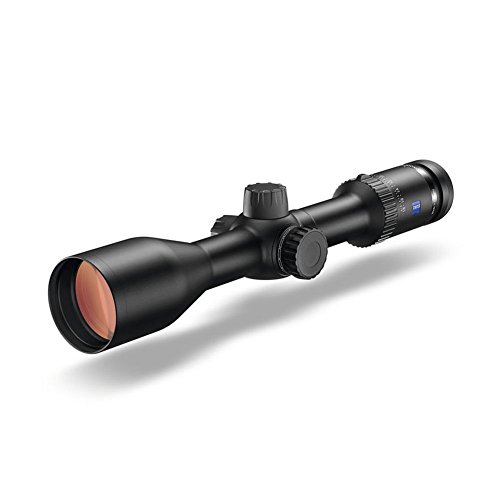
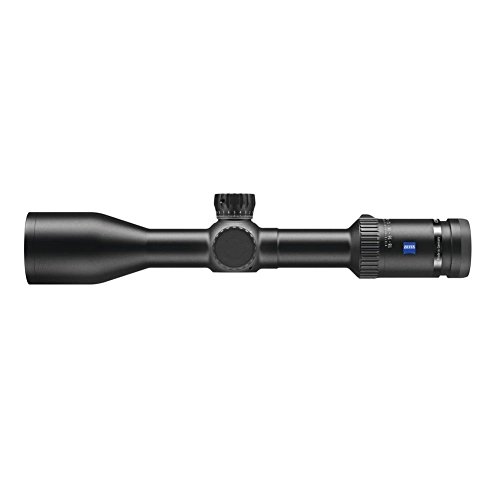
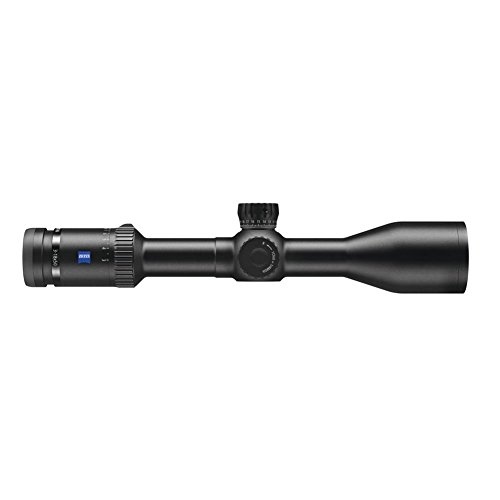
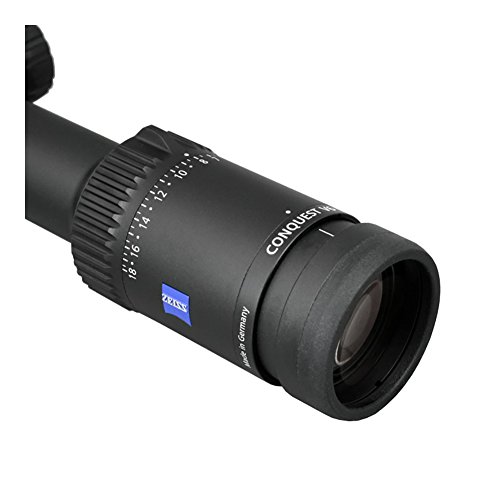
Zeiss Conquest V6 3-18×50 ZMOA Reticle w/BDC Turret (522241-9994-070)
The most versatile of the V6 line, this riflescope with 103 MOA elevation and 58 MOA wind age adjustment is built to excel at mid- to longer range shooting distances. Zeiss Conquest V6 3-18×50 riflescope is the perfect scope for the mobile Western hunter in pursuit of elk, antelope or mountain sheep. This compact and low profile scope also features MOA click adjustments, side parallax and is offered with ZMOA-2 ballistic reticles. FL (Fluoride) Glass, enhanced T* lens coatings and Louted protective coating from ZEISS provide industry-leading resolution and shooter accuracy. Technical data: Magnification: 3 – 18Effective lens diameter: 28. 6 mm – 50 mm Exit pupil diameter: 9. 5 mm – 2. 8 mm Twilight factor: 8. 5 – 30Field of view at 100 m: 12, 4 m – 2, 1 angular field of view, real: 7. 1° – 1. 2°Diopter range: -3/+2 dopey relief: 90 mm Parallax setting: 45, 7 ” m Made in Germany for the rugged demands of any hunting or shooting style, the new Conquest V6 with true 6x zoom and 30mm tube is engineered to reach beyond expectations. Compact with a low profile and constructed of aircraft grade aluminum, this Riflescope by Zeiss is extremely durable, and the precision mechanics and reliable internal components will perform flawlessly year after year.
Rifle Scope Product Features
30mm center tube
Constructed of aircraft grade aluminum
Allows for 62 – 103 MOA elevation adjustment for long-range hunting and shooting
ZEISS Conquest Riflescopes
Coating: LotuTec / ZEISS T
Nitrogen filling: yes
Water resistance: 400 mbar
Operating temperature: -25 / +50 C
Length: 338 mm
Weight: 630 g
ZEISS Conquest V6 3-18×50
Latest Riflescope from ZEISS with 6x zoom
Featuring ballistic turret and ballistic reticles ZMOA for long-distance hunting or shooting.
For the hunter who demands versatility and uncompromised long-range capability, the ZEISS Conquest V6 is the scope that proves distance is nothing.
Evaluation adjustment range: 103 MOA
Windage adjustment range: 58 MOA
Adjustment per click: 1/4 MOA
Center tube diameter: 30 mm
Eyepiece tube diameter: 45.5 mm
Objective tube diameter: 56 mm
Paralax setting: 45,7 ” m
Features
30 mm Center Tube
Constructed of aircraft grade aluminum. Allows for 62 – 103 MOA elevation adjustment for longrange hunting and shooting.
Windage adjustment of 34 – 58 MOA.
Fast and Precise
Ballistic Turret with Ballistic Stop and multiple revolutions.
MOA click adjustments on 3-18x and 5-30x, 80 clicks per rotation.
Made in Germany
Extremely reliable internal components. Precision mechanics. Flawless operation year after year.
Clarity
Enjoy clear visibility in any weather and easy cleaning. The LotuTec coating ensures that water simply rolls off the lenses and dirt can be removed easily and gently without a trace.
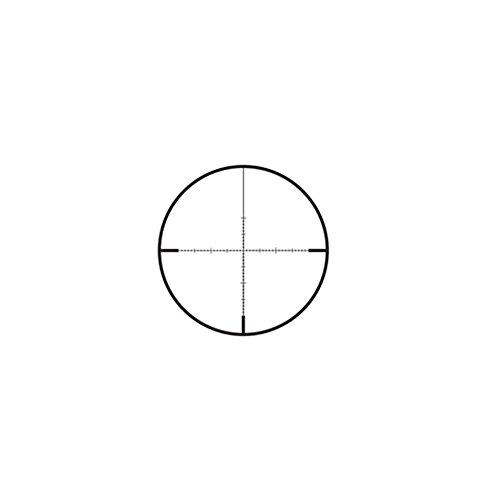
ZMOA Ballistic Reticle
ZMOA ballistic reticles feature fixed MOA subtensions.
The number followed by the reticle name (e.g ZBR-‘1’) indicates the distance in MOA between the hashmarks [Distance ‘A’ ” e.g. ‘1’ MOA].
The hashmarks on the horizontal and vertical crosshairs can be used for windage and elevation compensation, and for target ranging, when used with the optimum magnification setting stated in the charts.
Conquest V6 3-18×50 TERRA 3X 3-9×42
Magnification 3-18 3″9
Effective Lens Diameter 28.6 to 50 mm 42 to 42 mm
Nitrogen Filling Yes Yes
Water Resistance 400 mbar 400 mbar
Length 338 mm 315 mm
Weight 630 g 420 g
About the Zeiss Brand
Zeiss is a premium company for firearm scopes, optics, mounts, and other components used for firearms like rifles and long guns. They innovate and supply their mounts and related products using building materials which are durable and long lasting. This includes the Zeiss Conquest V6 3-18×50 ZMOA Reticle w/BDC Turret (522241-9994-070) by Zeiss. For additional shooting products, visit their site.
Information Glass
Rifle scopes enable you to exactly aim a rifle at different targets by aligning your eye with the target at range. They accomplish this through magnifying the target by using a set of lenses within the scope. The scope’s positioning can be dialed in for the consideration of varied ecological aspects like wind and elevation decreases to account for bullet drop.
The scope’s purpose is to understand precisely where the bullet will land based on the sight picture you are seeing using the optic as you line up the scope’s crosshair or reticle with the target. Most contemporary rifle optics have about eleven parts which are arranged inside and on the exterior of the optic. These scope parts include the rifle scope’s body, lenses, windage and elevation dials, focus rings, and other parts. Learn about the eleven parts of optics.
The Styles of Rifle Scopes
Rifle scopes can be either “first focal plane” or “second focal plane” type of scopes. Finding the finest type of rifle glass is based on what type of shooting you plan on doing.
First Focal Plane Scope Details
Focal plane scopes (FFP) include the reticle in front of the zoom lens. These kinds of scopes are beneficial for:
- Quick acquisition, long distance kinds of shooting
- Shooting circumstances where computations are small
- Experienced shooters who recognize their target “hold over” and also “lead” equations for their long gun
- Shooters who don’t mind the reticle is bigger and requires more visual eyesight space than a SFP reticle
About Second Focal Plane Optics
Second focal plane scopes (SFP) include the reticle behind the zoom lens. In the FFP example with the SFP scope, the 5x “zoom” 100 yard tick reticle measurement would be 1/5th of the non “zoom” tick measurement.
- Far away forms of shooting where shooters have more time to make ballistic estimations
- Shooting where most of the shots occur within shorter proximities and ranges
- Shooters who desire a clearer optic picture without room used up by the larger size FFP reticle
Scope Magnification
The amount of magnification a scope provides is figured out by the diameter, thickness, and curvatures of the lenses inside of the rifle scope. The zoom of the scope is the “power” of the scope.
Fixed Single Power Lens Rifle Optics
A single power rifle scope or optic uses a zoom number designator like 4×32. This suggests the zoom power of the scope is 4x power and the objective lens is 32mm. The zoom of this type of scope can not change considering that it is fixed.
About Adjustable Power Lens Scopes
Variable power rifle scopes have adjustable power. It will list the zoom degree in a format like 2-10×32. These numbers mean the magnification of the scope could be set in between 2x and 10x power. This additionally incorporates the power levels in-between 2 and 10. The power adjustment is achieved by working with the power ring component of the scope near the back of the scope by the eye bell.
Glass Power and Ranges
Here are some advised scope power levels and the distances where they could be effectively used. Highly magnified glass will not be as efficient as lower magnification rifle scope glass because too much magnification can be a bad thing. The same concept applies to extended ranges where the shooter needs sufficient power to see where to best aim the rifle.
Rifle Optic Lens Coating
All current rifle optic lenses are layered. Lens finishing is a vital aspect of a shooting system when purchasing high end rifle optics and scope equipment.
Details on Optic Lens Coatings – HD Versus ED
Some scope producers also use “HD” or high-definition lens finishings which use various methods, components, polarizations, and chemicals to draw out different colors and viewable definition through the lens. Some scope manufacturers use “HD” to refer to “ED” meaning extra-low dispersion glass.
Info on Single Finish Versus Multi-Coating
Different optic lenses can also have different finishings applied to them. All lenses generally have at least some kind of treatment or coating applied to them prior to being used in a rifle scope or optic assembly. This is because the lens isn’t just a raw piece of glass. It is part of the finely tuned optic. It must have a finish applied to it so that it will be efficiently functional in numerous kinds of environments, degrees of light (full light VS shade), and other shooting conditions.
This lens treatment can protect the lens from scratches while decreasing glare and other less advantageous things experienced in the shooting environment while sighting in with the scope. The quality of a single covered lens depends on the scope manufacturer and how much you paid for it.
Some scope makers similarly make it a point to specify if their optic lenses are coated or “multi” coated. Being “better” depends on the maker’s lens treatment innovation and the quality of materials used in constructing the rifle scope.
Anti-water Lens Finish
Water on a lens does not assist with preserving a clear sight picture through a scope at all. Lots of top of the line and high-end optic companies will coat their lenses with a hydrophobic or hydrophilic finish.
Rifle Glass Installation Alternatives
Installing approaches for scopes come in a few options. There are the basic scope rings which are separately installed to the scope and one-piece scope mounts which cradle the scope. These different kinds of mounts also generally are made in quick release variations which use toss levers which allow rifle operators to rapidly mount and remove the scopes.
Hex Key Optic Rings
Standard, clamp-on design mounting scope rings use hex head screws to fix to the flattop style Picatinny scope mounting rails on rifles. These styles of scope mounts use double independent rings to support the scope, and are normally made from 7075 T6 billet aluminum which are made for long distance precision shooting. This form of scope mount is ideal for rifle systems which need a resilient, rock solid mount which will not change despite just how much the scope is moved or abuse the rifle takes. These are the style of mounts you want for a devoted scope setup on a far away scouting or hard target interdiction long gun which will rarely need to be modified or adjusted. Blue 242 Loctite threadlocker can additionally be used on the scope mount’s screws to prevent the hex screw threads from wiggling out after they are installed safely in position. An example of these rings are the 30mm type from the Vortex Optics brand. The set normally costs around $200 USD
Quick-Release Cantilever Rifle Scope Rings
These types of quick-release rifle scope mounts can be used to rapidly take off a scope and connect it to a different rifle. Multiple scopes can also be switched out if they all use a compatible design mount. These types of mounts are handy for rifle platforms which are transported a lot, to remove the optic from the rifle for protecting the scope, or for scopes which are used between numerous rifles or are situationally focused.
Info Around Rifle Glass Tube Sealing and Gas Purging
Moisture inside your rifle scope can destroy a day of shooting and your expensive optic by bringing about fogging and developing residue inside of the scope tube. Many scopes avoid moisture from getting in the scope tube with a system of sealing O-rings which are water resistant.
Scope Gas Purging
Another component of preventing the buildup of wetness inside of the rifle optic tube is filling the tube with a gas like nitrogen. Because this space is already taken up by the gas, the glass is less altered by condition alterations and pressure distinctions from the outdoor environment which might possibly allow water vapor to permeate in around the seals to fill the void which would otherwise exist. These are good qualities of a decent rifle scope to seek out.


