
Description
Rifle Scope Mount Product Details
Wheeler Ultra Scope Mounting Kit
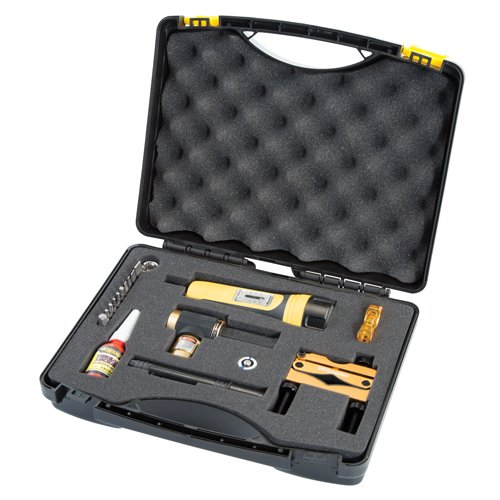
The Wheeler Engineering Ultra Scope Mounting Kit has all of the tools to meet your professional scope mounting needs. This kit has everything needed to do a professional job mounting your scope. The F.A.T. (Firearm Accurizing Torque) Wrench is used to apply precise inch-lb. pressure on all of your screws. The kit also includes the Professional Reticle Leveling System to make sure the scope is level and your crosshairs are perfectly perpendicular. The Professional Laser Bore Sighter aligns your crosshairs and gets you on paper faster. The kit comes with thread locker so your screws won’t work their way loose. Kit Includes: 9 bits, 1 socket and a bit holder for all your maintenance needs.
Rifle Scope Mount Product Features
About this item
Ultimate kit for all your scope mounting needs
Professional Reticle Leveling System makes sure the scope is level and crosshairs are perfectly perpendicular
FAT torque wrench applies precise inch pound; pressure on all of your screws
Professional Laser Bore Sighter to align your crosshairs and get you on paper faster
Includes 9 bits, 1 socket and a bit holder for your maintenance needs
Class IIIA laser; 5mW or less
Wheeler Engineering Ultra Scope Mounting Kit
The 3 best optics mounting tools on the market in one ultimate kit!
Wheeler Engineering is proud to construct innovative quality gunsmithing supplies. From state-of-the-art gunsmithing tools for the beginner to tools for the expert gunsmith, Wheeler prides itself on delivering durable, groundbreaking and long lasting tools for all firearm enthusiasts!
Wheeler Ultra Scope Mounting Kit
Get A Perfectly Mounted Scope Every Time.
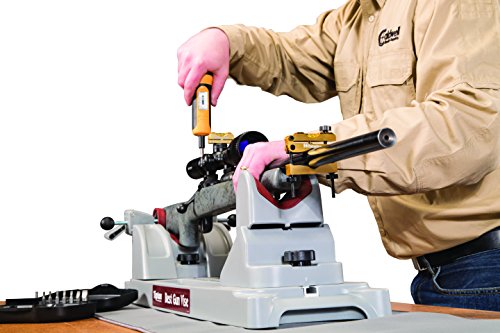
The Ultra Scope Mounting Kit from Wheeler Engineering puts all the best Wheeler scope mounting accessories into one perfect package. With this kit you can level your firearm, level your scope, mount your scope on your firearm and then coarse sight your scope with precision and accuracy. No more guess work and ‘that’s good enough’. The Ultra Scope Mounting Kit even provides thread locker and a lens pen to keep your scope clean and your optics secure on even the largest caliber guns. This kit includes the 3 best optics mounting tools on the market in one ultimate kit!
Features Professional Reticle Leveling System to ensure a level scope and perfectly perpendicular crosshairs.
Green Professional Laser Bore Sighter to align your crosshairs and get you on paper fast.
Wheeler F.A.T. Torque Wrench to apply precise pressure on all of your screws.
Includes 9 bits, 1 socket and a bit holder for all your maintenance needs.
Comes with thread locker so your screws won’t work their way lose.
Level, mount, sight all in one comprehensive kit.
Tools Included:
Professional Reticle Leveling System
Level your scope with ease using the Professional Reticle Leveling System. This factory calibrated Reference Level maximizes your accuracy potential.
F.A.T. Wrench
The Wheeler Engineering Firearms Accurizing Torque Wrench brings perfect consistency to every screw on your rifle. Mount your scope with ease and accuracy using the F.A.T. Wrench.
Professional Laser Bore Sighter
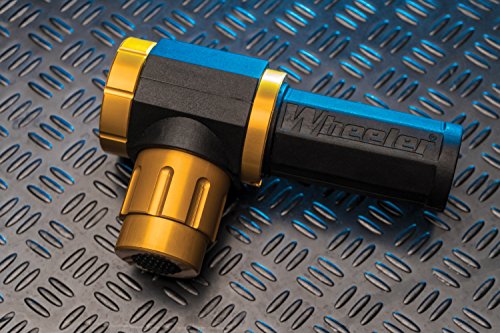
The PLBS uses a high power daylight-visible laser and high-strength magnetic connection to deliver fast and accurate bore sighting. Sighting your rifle is easy with the Professional Laser Bore Sighter.
About the Wheeler Scope Maker
Wheeler is a premium manufacturer for long gun scopes, optics, mounts, and other add-ons used for firearms like rifles and long guns. They design and build their mounts and related products using materials which are long lasting and resilient. This includes the Wheeler Ultra Scope Mounting Kit by Wheeler. For more shooting items, visit their website.
What You Need to Know About Optics
Rifle scopes permit you to precisely aim a rifle at various targets by aligning your eye with the target at range. They do this through magnification by utilizing a series of lenses inside the scope. The scope’s positioning can be dialed in to take into account varied ecological elements like wind speed and elevation to account for bullet drop.
The scope’s function is to understand precisely where the bullet will land based on the sight picture you are seeing via the scope as you line up the scope’s crosshair or reticle with the target. The majority of modern-day rifle scopes have around 11 parts which are located within and externally on the optic. These scope parts include the rifle scope’s body, lenses, adjustment turrets, objective focus rings, and other components. Learn about the eleven parts of rifle glass.
The Styles of Rifle Scopes
Rifle scopes can be either “first focal plane” or “second focal plane” style of scopes. The style of focal plane an optic has decides where the reticle or crosshair is located in connection with the scopes magnifying adjustments. It simply means the reticle is behind or before the magnifying lens of the scope. Deciding upon the most effective sort of rifle optic is based on what style of shooting you intend on doing.
First Focal Plane Optics
Focal plane scopes (FFP) include the reticle in front of the zoom lens. These styles of scopes are helpful for:
- Quick acquisition, long distance types of shooting
- Shooting situations where calculations are small
- Experienced shooters who understand their target “hold over” plus “lead” relationships for their firearms
- Shooters who don’t mind the reticle is bigger and takes up more visual eyesight space than a SFP reticle
About Second Focal Plane Glass
Second focal plane optics (SFP) feature the reticle behind the magnification lens. In the FFP example with the SFP scope, the 5x “zoom” one hundred yard tick would be 1/5th of the non “zoom” tick measurement.
- Long distance types of shooting where shooters have more time to make ballistic computations
- Shooting where most shots happen within much shorter ranges and proximities
- Shooters who prefer a clearer optic picture with less room used up by the bigger FFP reticle
Magnification for Rifle Optics
The amount of scope magnification you need on your scope is based on the sort of shooting you would like to do. Nearly every kind of rifle scope gives some amount of magnification. The amount of magnification a scope offers is identified by the size, thickness, and curves of the lens glass within the rifle scope. The magnification level of the scope is the “power” of the scope. This denotes what the shooter is checking out through the scope is magnified times the power aspect of what can normally be seen by human eyes.
Fixed Single Power Lens Rifle Optic Facts
A single power rifle optic uses a zoom number designator like 4×32. This means the zoom power of the scope is 4x power while the objective lens is 32mm. The zoom of this kind of scope can not change given that it is a set power scope.
Info About Variable Power Lens Rifle Glass
Variable power rifle scopes use enhanced power. The power adjustment is achieved by making use of the power ring part of the scope near the rear of the scope by the eye bell.
Rifle Scope Power and Range Correlation
Here are some suggested scope power settings and the ranges where they could be efficiently used. High power glass will not be as efficient as lower magnification level scopes due to the fact that too much magnification can be a bad thing. The exact same idea goes for extended distances where the shooter needs enough power to see where to properly aim the rifle.
Lens Coating for Optics
All cutting-edge rifle scope and optic lenses are coated. Lens covering can be an essential aspect of a shooting system when looking into high end rifle optics and scope setups.
About Optic Lens Coatings – HD Versus ED
Some scope brands also use “HD” or high-definition lens finishes which use different methods, aspects, polarizations, and chemicals to draw out various colors and viewable quality through the lens. Some scope producers use “HD” to refer to “ED” to signify the lens has extra-low dispersion glass.
Single Rifle Optic Lens Coating Versus Multi-Coating
Different optic lenses can likewise have different finishes applied to them. All lenses generally have at least some type of treatment or coating used to them before they are used in a rifle scope or optic.
This lens treatment can offer protection to the lens from scratches while minimizing glare and other less helpful things experienced in the shooting environment while sighting in with the scope. The quality of a single layered lens depends on the scope manufacturer and how much you paid for it.
Some scope makers also make it a point to specify if their optic lenses are covered or “multi” covered. Being “better” depends on the maker’s lens treatment technology and the quality of products used in constructing the rifle scope.
Rifle Glass Lens Anti-water Finish
Water on a scope lens doesn’t assist with maintaining a clear sight picture through an optic at all. Numerous top of the line or high-end scope makers will coat their lenses with a hydrophilic or hydrophobic covering. The Steiner Optics Nano-Protection is a fine example of this type of treatment. It deals with the surface area of the Steiner scope lens so the water particles can not bind to it or create surface tension. The outcome is that the water beads move off of the scope to preserve a clear, water free sight picture.
Rifle Scope Mounting Choices
Installing approaches for scopes come in a few options. There are the basic scope rings which are separately installed to the scope and one-piece scope mounts which cradle the scope. These various kinds of mounts also usually can be found in quick release variations which use toss levers which permit rifle shooters to quickly mount and remove the optics.
Hex Key Rifle Optic Rings
Standard, clamp type mounting optic rings use hex head screws to mount to the flattop style Picatinny scope mount rails on rifles. These varieties of scope mounts use two separate rings to support the optic, and are made from 7075 T6 billet aluminum or similar materials which are made for long distance accuracy shooting. This kind of scope mount is excellent for rifles which require a long lasting, rock solid mount which will not move regardless of just how much the scope is moved about or abuse the rifle takes. These are the style of mounts you should get for a faithful scope setup on a reach out and touch someone hunting or sniper competition rifle that will hardly ever need to be altered or recalibrated. Blue 242 Loctite threadlocker can also be used on the mount screws to keep the hex screw threads from wiggling out after they are mounted securely in position. An example of these mounting rings are the 30mm style made by Vortex Optics. The set generally costs around $200 USD
Rifle Glass Mounts with Quick-Release Cantilever Rings
These types of quick-release rifle scope mounts can be used to quickly connect and take off a scope from a rifle. Several scopes can also be switched out if they all use a complementary style mount. The quick detach design is CNC crafted from anodized 6061 T6 aluminum and the mounting levers attach firmly to a flat top style Picatinny rail. This allows the scope to be sighted in while on the rifle, taken off of the rifle, and remounted while keeping accuracy. These kinds of mounts are useful and beneficial for shooting platforms which are carried a lot, to take off the glass from the rifle for protection, or for scopes which are utilized in between several rifles. An example of this mount style is the 30mm mount designed by the Vortex Optics manufacturer. It normally costs around $250 USD
Info on Optic Tube Sealing and Gas Purging
Wetness inside your rifle glass can ruin a day of shooting and your expensive optic by triggering fogging and developing residue within the scope’s tube. A lot of scopes protect against moisture from getting in the scope tube with a series of sealing O-rings which are waterproof. Generally, these water resistant scopes can be submerged under 20 or 30 feet of water before the water pressure can force moisture past the O-rings. This should be ample moisture content prevention for standard use rifles, unless you plan on taking your rifle on your motorboat and are concerned about the scope still working if it goes over the side and you can still salvage the firearm.
Gas Purged Glass Tubes
Another element of preventing the accumulation of wetness within the rifle scope tube is filling the tube with a gas like nitrogen. Because this space is already occupied by the gas, the optic is less altered by temperature level shifts and pressure variations from the external environment which may potentially enable water vapor to permeate in around the seals to fill the void which would otherwise be there. These are good qualities of a good rifle scope to seek out.


