

Description
Rifle Scope Product Details
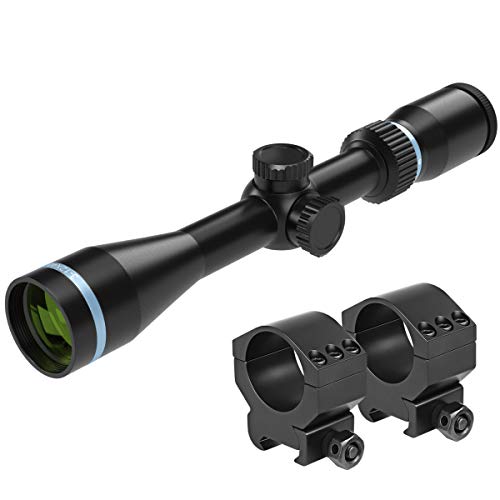
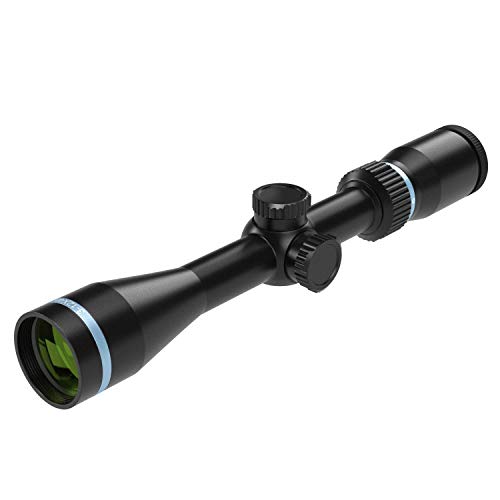
OTW Rifle Scope 3-12X40,BDC Reticle 750 Capped Turrets and 1 Inch Scope Mount Rings for 20/21 mm Picatinny Rails
The multi-coated green objective lens boast higher light transmittance for better clarity performance.Quick adjustment of the eyepiece in half a circle,you can get a more clearly View.P65-rated water resistant and designed for use in heavy rain
The BDC reticle is designed to match the trajectory of today’s modern inline rifles. Zero in at 100 yards using the exact ammunition you expect to hunt or shoot with. The reticle provides bullet drop compensation up to 750 yards.
Multi-coated lens with 90% transmission, brightness from dawn to dusk ensures a very bright image with high resolution images.Precise Hand-turn 1/4-MOA click adjustments,positive-click reticle adjustments get you zeroed in quicker and maintain your setting even with heavy recoil. Hunters can quickly focus during use and aim accurately at prey.
Compared to other eyepieces, our product can easily adjust the pupil distance and only need to rotate half a circle. Waterproof and Anti-fog design, Nitrogen filled and O-ring sealed,extend product life.
Specifications:
Magnification: 3-12X
Objective Diameter: 40mm
Eye Relief: 4.13″-3.93″
Field of View: 17.3-4.4 ft /100 yds
Tube Size: 30 mm
Adjustment Graduation: 1click 1/4″ 100YD
Specification for mount ring:
Rail Type: 21mm Dovetail Rails
Ring Diameter: 1 Inch
Material: High Quality Aluminum Alloy
Style: Medium Profile
Weight: 2.50 oz per ring
Rifle Scope Product Features
The BDC reticle provides bullet drop compensation up to 750yards,effectively improve shooting accuracy.Sight telescope with 3 to 12X magnification and 40mm objective.
Fully multilayer optical system that provides up to 90% light transmission and maximum brightness.
Waterproof and Anti-fog design, Nitrogen filled and O-ring sealed.Provide Full Lifetime Warranty for both Quality and Service guarantee
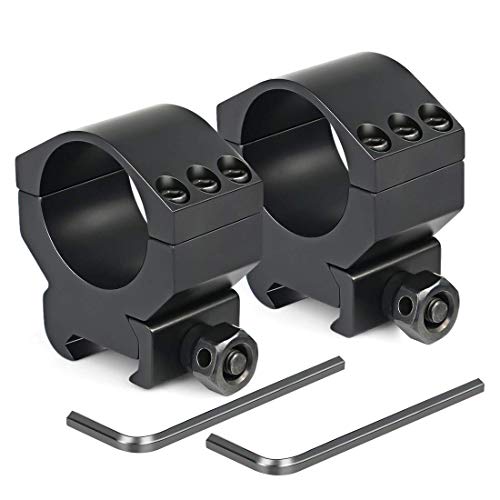
Medium Profile (21mm),scope rings are for standard scopes 25mm scope tube.With two rail clamp screws and six scope clamp screws, Precision and Repeatable Alignment.
Come with a plastic gasket on the inside of the rings to keep protecting your scope and holding secure.Design in hollowed-out configuration between the ring and the bottom of the base to release heavy duty when clamping the scope.
About the OTW Brand
OTW is a premium supplier for firearm scopes, optics, mounting solutions, and other components used for guns like rifles and long guns. They innovate and build their mounts, scopes, and related products making the most of materials which are long lasting and resilient. This includes the OTW Rifle Scope 3-12X40,BDC Reticle 750 Capped Turrets and 1 Inch Scope Mount Rings for 20/21 mm Picatinny Rails by OTW. For more shooting products, visit their website.
Rifle Glass Info
Rifle scopes allow you to specifically align a rifle at various targets by lining up your eye with the target at range. They accomplish this through magnifying the target using a series of lenses inside the scope. The scope’s alignment can be adjusted for the consideration of different environmental factors like wind and elevation to make up for bullet drop.
The scope’s function is to understand exactly where the bullet will hit based on the sight picture you are viewing through the scope as you align the scope’s crosshair or reticle with the target. Many modern-day rifle scopes and optics have about 11 parts which are found inside and on the exterior of the scope. These scope parts consist of the rifle scope’s body, lenses, windage and elevation turrets, focus rings, and other parts. See all eleven parts of optics.
About Rifle Optic Types
Rifle scopes can be either “first focal plane” or “second focal plane” type of scopes. The sort of focal plane a scope has determines where the reticle or crosshair is located in relation to the optic’s zoom. It simply suggests the reticle is behind or in front of the magnifying lens of the optic. Picking out the best form of rifle glass depends upon what style of hunting or shooting you intend on undertaking.
First Focal Plane Glass
Focal plane scopes (FFP) come with the reticle in front of the zoom lens. This induces the reticle to increase in size based upon the extent of magnification being used. The outcome is that the reticle measurements are the same at the amplified range as they are at the non amplified range. One tick on a mil-dot reticle at one hundred yards without “zoom” is still the identical tick at 100 yards by using 5x “zoom”. These kinds of scopes work for:
- Quick acquisition, long distance types of shooting
- Shooting scenarios where calculations are minor
- Experienced shooters who know their target “hold over” as well as “lead” ratios for their weapon
- Shooters who do not mind the reticle is bigger and uses up more visual eyesight room than a SFP reticle
Info on Second Focal Plane Optics
Second focal plane glass (SFP) feature the reticle behind the magnification lens. This causes the reticle to stay at the exact same overall size relative to the amount of zoom being used. The end result is that the reticle dimensions change based on the magnification chosen to shoot over lengthier ranges considering the reticle measurements represent various increments which differ with the magnification level. In the FFP example with the SFP glass, the 5x “zoom” 100 yard tick would be 1/5th of the non “zoom” tick measurement. These kinds of optics are handy for:
- Long distance kinds of shooting where shooters have more time to make ballistic computations
- Shooting where most shots take place within shorter proximities and ranges
- Shooters who desire a clearer optic sight picture with less room taken up by the enlarged FFP reticle
Zoom for Optics
The quantity of scope zoom you require depends on the sort of shooting you wish to do. Virtually every type of rifle optic gives some degree of zoom. The amount of magnification a scope gives is established by the diameter, thickness, and curves of the lenses inside of the rifle optic. The magnification level of the scope is the “power” of the glass. This denotes what the shooter is observing through the scope is magnified times the power factor of what can typically be seen by human eyes.
Fixed Power Lens Rifle Glass Info
A single power rifle scope or optic uses a magnification number designator like 4×32. This indicates the zoom power of the scope is 4x power while the objective lens is 32mm. The zoom of this kind of optic can not adjust because it is a set power scope.
Variable Power Lens Glass Info
Variable power rifle scopes can be modified between magnified settings. The power change is performed using the power ring part of the scope near the back of the scope by the eye bell.
Power and Range
Here are some recommended scope power settings and the ranges where they can be effectively used. Highly magnified scopes will not be as efficient as lower magnification level glass given that too much magnification can be a negative aspect depending on your shooting distance. The same concept applies to extended ranges where the shooter needs to have enough power to see precisely where to properly aim the rifle.
Scope Lens Finishing
All contemporary rifle optic lenses are coated. There are different types and qualities of glass lens finishings. Lens covering can be a crucial aspect of a rifle when contemplating luxury rifle optics and targeting equipment. The lenses are one of the most crucial pieces of the optic due to the fact that they are what your eye looks through while sighting a rifle in on the point of impact. The coating on the lenses protects the lens surface area and improves anti glare capabilities from excess sunlight and color perception.
Info on Rifle Scope Lens Coatings – HD Versus ED
Some scope makers also use “HD” or high-definition lens finishes which use different processes, chemicals, polarizations, and elements to draw out various colors and viewable definition through the lens. Some scope manufacturers use “HD” to refer to “ED” to signify the lens has extra-low dispersion glass.
Single Rifle Scope Lens Finishing Versus Multi-Coating
Different optic lenses can also have various coatings applied to them. All lenses normally have at least some type of treatment or coating applied to them prior to being used in a rifle scope or optic assembly. Since the lens isn’t simply a raw piece of glass, they require performance enhancing coatings. It is part of the carefully tuned optic. It needs to have a coating put on it so that it will be efficiently usable in many kinds of environments, degrees of light (full VS shade), and other shooting conditions.
This lens treatment can offer protection to the lens from scratches while decreasing glare and other less advantageous things experienced in the shooting environment while sighting in with the scope. The quality of a single coated lens depends on the scope manufacturer and how much you paid for it.
Some scope producers likewise make it a point to specify if their optic lenses are layered or “multi” coated. This implies the lens has had several treatments applied to the surfaces. If a lens gets numerous treatments, it can establish that a producer is taking multiple actions to combat different natural aspects like an anti-glare finishing, a scratch resistant anti-abrasion coating, followed by a hydrophilic covering. This also doesn’t necessarily indicate the multi-coated lens is better than a single covered lens. Being “much better” depends on the producer’s lens treatment techniques and the quality of materials used in developing the rifle glass.
Hydrophobic Coating for Rifle Scopes
Water on a lens doesn’t help with preserving a clear sight picture through a scope at all. Numerous top of the line and military grade optic makers will coat their lenses with a hydrophobic or hydrophilic covering.
Optic Mounting Choices
Mounting solutions for scopes come in a few choices. There are the basic scope rings which are individually mounted to the scope and one-piece scope mounts which cradle the scope. These different kinds of mounts also usually are made in quick release versions which use toss levers which permit rifle operators to quickly install and remove the scopes.
Hex Key Rifle Optic Ring Mounting Solutions
Basic, clamp style mounting optic rings use hex head screws to install to the flattop style Picatinny scope mount rails on the tops of rifles. These types of scope mounts use double separate rings to support the scope, and are made from 7075 T6 billet aluminum which are designed for far away accuracy shooting. This form of scope mount is exceptional for rifle systems which need to have a resilient, hard use mount which will not shift no matter just how much the scope is moved about or jarring the rifle takes. These are the type of mounts you really want to have for a specialized scope setup on a far away scouting or competitors rifle that will seldom need to be modified or adjusted. Blue 242 Loctite threadlocker can additionally be used on the scope mount’s screws to keep the hex screw threads from wiggling out after they are mounted firmly in place. An example of these mounting rings are the 30mm type from Vortex Optics. The set usually costs around $200 USD
Rifle Glass Mounts with Quick-Release Cantilever Rings
These types of quick-release rifle scope mounts can be used to rapidly take off a scope and attach it to a different rifle. Several scopes can even be switched out if they all use a compatible style mount. These types of mounts come in handy for long guns which are carried a lot, to swap out the optic from the rifle for protecting the scope, or for optics which are used in between several rifles.
About Glass Tube Sealing and Gas Purging
Moisture inside your rifle scope can ruin a day of shooting and your pricey optic by bringing about fogging and developing residue inside of the scope tube. Most scopes prevent wetness from getting in the scope tube with a system of sealing O-rings which are waterproof.
Rifle Optic Gas Purging
Another part of preventing the buildup of wetness inside of the rifle scope’s tube is filling the tube with a gas like nitrogen. Given that this space is already taken up by the gas, the glass is less impacted by climate shifts and pressure variations from the outside environment which might possibly allow water vapor to seep in around the seals to fill the void which would otherwise exist. These are good qualities of a decent rifle scope to seek out.


