Description
Rifle Scope Product Details
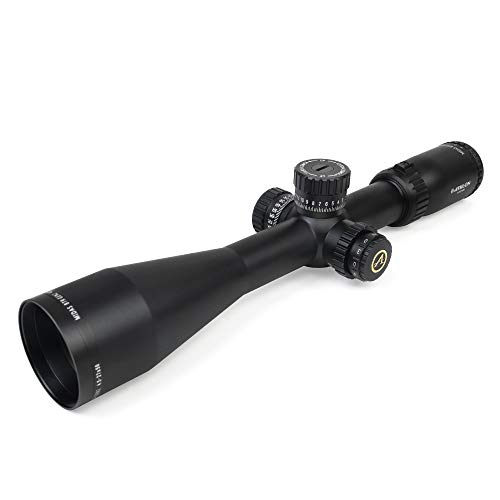
Athlon Optics Midas BTR GEN2 HD 4.5-27×50 Second Focal Plane Riflescopes
Rifle Scope Product Features
0. 25 MOA Click Value, 75 MOA Total Elevation Adjustment, 30 yards to infinity Parallax adjustment
HD Glass gives you better light transmission, brighter, and sharper image.
Advanced Fully Multicoated optics effectively reduces reflected light and increases the transmission of light giving you a brighter image than normal single coated lenses
Reticle etched on the glass that provides excellent backing support for complex reticle design and offers great durability and much higher shock resistance to recoil
Heat treated one piece tube gives the scope extra strength over multi-piece tubes. A one piece tube also is better at keeping moisture out thus keeping your scope fog proof for the life of the product
Sport type: Hunting
Included components: Instruction Manual
Midas BTR GEN2 HD
This Second Focal Plane variable power scope will be the perfect optic for you regardless of whether or not you are shooting small targets at a few hundred yards, shooting 3-gun matches, or hunting big game anywhere in the world, this will be the perfect option for you.
With new and improved tactile turrets, a true zero stop, and updated reticle designs; you won’t find a better option on the market for any of your applications. HD glass equipped with our Advanced Fully Multi-Coated lenses so you’ll have the brightest, clearest image possible in any situation. The innovative XPL coating protects your lenses from oil, dirt and smudges.
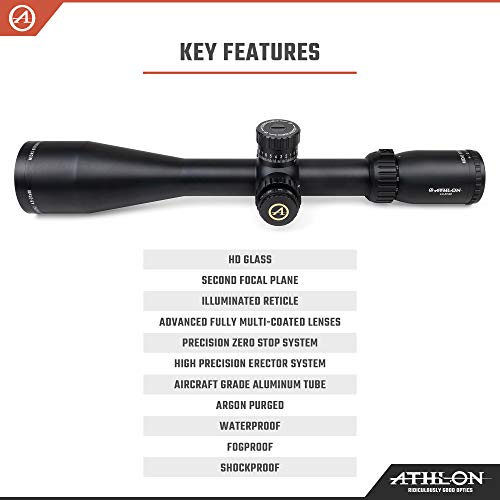
Key Features
HD Glass
HD Glass gives you better light transmission, brighter, and sharper image.
Advanced Fully Multi-coated
Fully Multi-coated optics effectively reduces reflected light and increases the transmission of light giving you a brighter image than normal single coated lenses
XPL Coating
XPL Coating gives you an extra protection on the exterior lenses from dirt, oil and scratches..
Precision Zero Stop
Precision Zero Stop System allows you to return to your zero position and dial back to it with a sharp and precise stop right at your zero location.
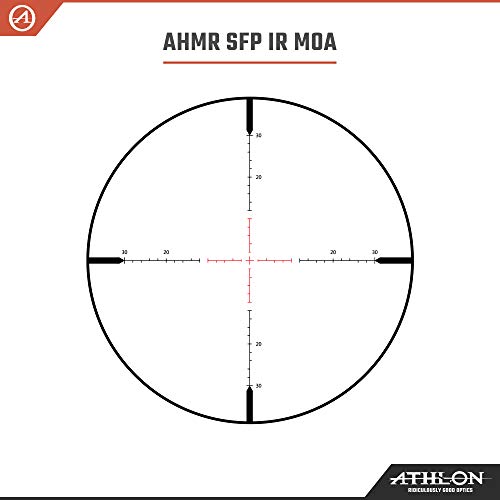
AHMR SFP IR MOA
AHMR SFP IR MOA reticle has an illuminated 20 moa center with a 2 moa center cross and 2 moa incremental hash marks which provide a unique two layer visual reference for a shooter to locate and get dead on the target within a blink of an eye. The illuminated reticle provides excellent low light visibility. The unique design of the markings with 2 & 4 moa and 6 & 8 moa locating at the opposite side of the lines gives you a clear reading of the markings with no confusion.
Subtensions in MOA: A1 (0.12); A2 (1.5); B1 (0.5); B2 (1); B3 (0.5); B4 (1.5); C1 (1); C2 (1); C3 (2).
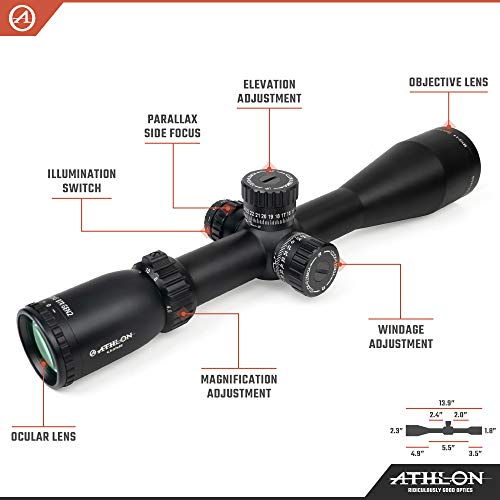
1-6×24 ATSR4 MOA 1-6×24 ATSR16 MOA 4.5-27×50 AHMR MOA 4.5-27×50 APRS4 MIL
Tube Diameter 30 mm 30 mm 30 mm 30 mm
Focal Plane Second Second Second Second
FoV at 100Y 108-17.6 ft 108-17.6 ft 22.7-3.6 ft 22.7-3.6 ft
Eye Relief 3.8″ 3.8″ 3.9″ 3.9″
Turret Style Capped Capped Exposed Exposed
Length 10.6″ 10.6″ 13.8″ 13.8″
Weight 18.1 oz 18.1 oz 26 oz 26 oz
About the Athlon Optics Brand
Athlon Optics is a premium manufacturer for weapon scopes, optics, mounting solutions, and other components used for firearms like rifles and long guns. They innovate and make their scopes, mounts, and related products choosing elements which are long lasting and durable. This includes the Athlon Optics Midas BTR GEN2 HD 4.5-27×50 Second Focal Plane Riflescopes by Athlon Optics. For more shooting items, visit their site.
Information Scopes
Rifle scopes enable you to precisely aim a rifle at various targets by aligning your eye with the target at range. They accomplish this through magnification using a series of lenses within the scope. The scope’s alignment can be adapted for consideration of many natural things like wind and elevation increases or decreases to make up for bullet drop.
The scope’s function is to help shooters understand exactly where the bullet will land based on the sight picture you are viewing via the scope as you line up the scope’s crosshair or reticle with the target. The majority of modern-day rifle optics have about eleven parts which are found within and on the exterior of the scope. These optic pieces include the rifle scope’s body, lenses, elevation turrets, focus rings, and other parts. See all eleven parts of scopes.
Rifle Glass Types
Rifle scopes can be either “first focal plane” or “second focal plane” kind of scopes. The type of focal plane a scope has establishes where the reticle or crosshair lies in regard to the scopes magnifying adjustments. It actually implies the reticle is located behind or in front of the magnification lens of the scope. Considering the most beneficial type of rifle glass depends upon what type of shooting you plan on undertaking.
First Focal Plane Scope Details
Focal plane scopes (FFP) include the reticle in front of the magnification lens. These types of scopes are helpful for:
- Quick acquisition, far away types of shooting
- Shooting circumstances where calculations are minimal
- Experienced shooters who recognize their target “hold over” and “lead” ratios for their rifles
- Shooters who don’t mind the reticle is bigger and occupies more visual eyesight area than a SFP reticle
Second Focal Plane Scopes
Second focal plane optics (SFP) come with the reticle behind the magnification lens. In the FFP example with the SFP scope, the 5x “zoom” 100 yard tick reticle measurement would be 1/5th of the non “zoom” tick measurement.
- Far away forms of shooting where shooters have extra time to make ballistic computations
- Shooting where most shots happen within shorter ranges and proximities
- Shooters who choose a clearer optic sight picture without space used up by the enlarged FFP reticle
Zoom for Glass
The measure of scope zoom you need on your glass depends on the kind of shooting you plan to do. Pretty much every type of rifle optic provides some amount of zoom. The level of magnification a scope supplies is established by the size, thickness, and curvatures of the lenses within the rifle optic. The magnification of the optic is the “power” of the scope. This implies what the shooter is observing through the scope is magnified times the power element of what can typically be seen by human eyes.
About Fixed Power Lens Glass
A single power rifle scope uses a zoom number designator like 4×32. This indicates the zoom power of the scope is 4x power and the objective lens is 32mm. The magnification of this type of scope can not fluctuate since it is set from the factory.
About Adjustable Power Lens Rifle Optics
Variable power rifle scopes can be modified between magnified settings. The power change is performed using the power ring part of the scope near the rear of the scope by the eye bell.
The Power Level and Range Correlation of Rifle Optics
Here are some suggested scope power settings and the distances where they could be efficiently used. Consider that higher power scopes will not be as efficient as lower magnification level scopes because increased zoom can be a bad thing. The very same idea relates to extended ranges where the shooter needs sufficient power to see where to properly aim the rifle.
About Lens Covering
All contemporary rifle scope and optic lenses are layered. There are various types and qualities of finishes. When shopping for high end rifle scope systems, Lens coating can be a critical component of defining the rifle’s capability. The lenses are among the most crucial parts of the optic since they are what your eye sees through while sighting a rifle in on the point of impact. The covering on the lenses safeguards the lens surface and even assists with anti glare from excess direct sunlight and color recognition.
About Rifle Optic Lens Coatings – HD Versus ED
Some scope manufacturers likewise use “HD” or high-definition lens coatings which use various techniques, chemicals, aspects, and polarizations to draw out a wide range of colors and viewable quality through the lens. Some scope makers use “HD” to refer to “ED” meaning extra-low dispersion glass.
Single Finish Versus Multi-Coating for Optics
Various optic lenses can even have different finishings applied to them. All lenses generally have at least some type of treatment or finishing applied to them before being used in a rifle scope or optic assembly. Since the lens isn’t just a raw piece of glass, they require performance enhancing coatings. It becomes part of the carefully tuned optic. It requires a coating to be applied to it so that the lens will be efficiently functional in lots of kinds of environments, degrees of sunlight (full VS shade), and other shooting conditions.
Single covered lenses have a treatment applied to them which is usually a protective and enhancing multi-purpose treatment. This lens treatment can preserve the lens from scratches while lowering glare and other less advantageous things experienced in the shooting environment while sighting in with the optic. The quality of a single covered lens depends upon the scope company and how much you paid for it. Both the make and cost are indicators of the lens quality.
Some scope makers similarly make it a point to define if their optic lenses are layered or “multi” covered. Being “better” depends on the maker’s lens treatment innovation and the quality of materials used in developing the rifle scope.
What to Know About Hydrophobic Coating
Water on a scope lens does not help with preserving a clear sight picture through a scope at all. Numerous top of the line and premium optic manufacturers will coat their lenses with a hydrophobic or hydrophilic finish. The Steiner Optics Nano-Protection is a good example of this kind of treatment. It treats the exterior surfaces of the Steiner glass lens so the H2O molecules can not bind to it or produce surface tension. The result is that the water beads slide off of the scope to preserve a clear, water free sight picture.
Choices for Mounting Scopes on Firearms
Mounting approaches for scopes are available in a few options. There are the basic scope rings which are individually mounted to the scope and one-piece scope mounts which cradle the scope. These various kinds of mounts also typically come in quick release variations which use toss levers which enable rifle shooters to rapidly mount and remove the glass.
Glass Mounts with Hex Key Rings
Standard, clamp style mounting scope rings use hex head screws to mount to the flattop style Picatinny scope mount rails on rifles. These types of scope mounts use two different rings to support the optic, and are often made from 7075 T6 billet aluminum which is developed for long distance precision shooting. This type of scope mount is excellent for rifles which require a durable, rock solid mounting solution which will not move no matter how much the scope is moved or abused.
Quick-Release Cantilever Rifle Glass Ring Mounts
These types of quick-release rifle scope mounts can be used to quickly remove a scope and connect it to a different rifle. Several scopes can even be swapped out if they all use a similar style mount. These types of mounts are convenient for rifle platforms which are transferred a lot, to swap out the optic from the rifle for protection, or for scopes which are used between numerous rifles or are situationally focused.
Sealing and Gas Purging for Rifle Glass Tubes
Wetness inside your rifle scope can ruin a day of shooting and your pricey optic by triggering fogging and producing residue inside of the scope tube. Most scopes avoid moisture from getting in the scope tube with a system of sealing O-rings which are waterproof.
What to Know About Rifle Optic Tube Gas Purging
Another element of preventing the buildup of moisture within the rifle scope’s tube is filling the tube with a gas like nitrogen. Considering that this space is already occupied by the gas, the scope is less impacted by climate alterations and pressure variations from the outdoor environment which could potentially enable water vapor to leak in around the seals to fill the void which would otherwise be there. These are good qualities of a good rifle scope to seek out.


