


Description
Rifle Scope Product Details
Vector Optics Continental Riflescopes 4-24×56 First Focal Plane Tactical MIL Reticle Zero-Stop & Turret Lock 34mm Monotube Illumiated Rifle Scope FFP
Rifle Scope Product Features
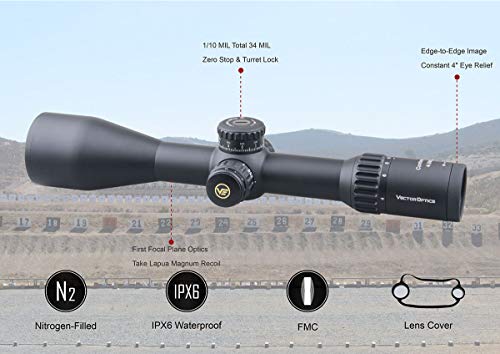
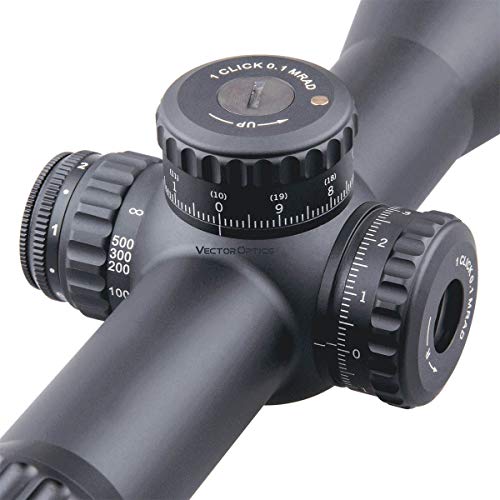
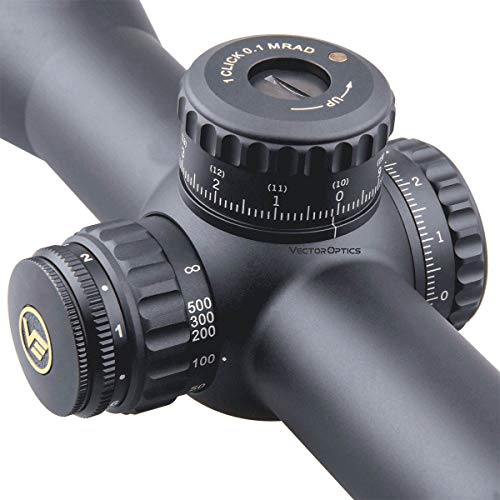
Zero-Stop & Turret Lock:Vector Optics Continental 4-24×56 First Focal Plane Tactical Reticle (MIL) riflescope offers an easy to set, rock-solid return to zero after turret adjustments. Tactical locking turrets provides fast, accurate adjustments.
34mm Monotube:One-piece oversized 34mm tubes increase strength and reliability, and provides greater elevation and windage adjustments for long ranges.And 34mm tube ruggedly built to withstand recoil and impacts. Strong o-ring seals and nitrogen purging guarantee their good performance.
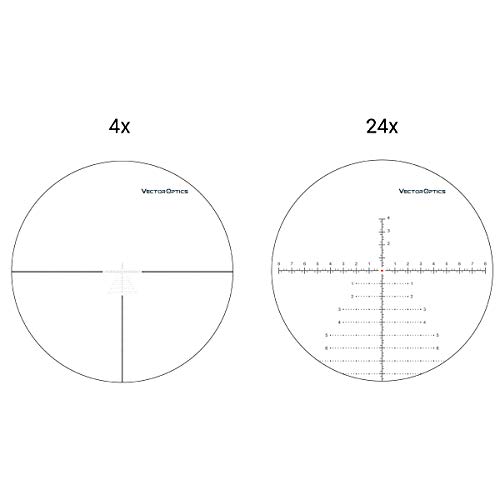
Etched Glass VCT-34FFP Tactical MIL Reticle, Center Dot Illuminated with Digital Lines & Dots.German Optics System by Using LaREE Lens & VePRO FMC > 90% Light Transmission.
6 Levels Illumination:Adjustment System Made of 7075 T6 That Never Snag on Anything and Never Get Turned.Very Little Distortion, Extra-Low Dispersion, Excellent for Dawn, Dusk Even at Night.
What’s included:First Focal Plane Tactical MIL Reticle Riflescopes 4-24x56mm,34mm picatinny high rings, instruction, lens cover and cleaning cloth,and lifetime warranty.
34mm Continental 1-6x28FFP Riflescope 34mm Continental 3-18x50FFP Riflescope 34mm Continental 4-24x56FFP Riflescope 34mm Continental 5-30x56FFP Riflescope
Magnification 1-6x 3-18x 4-24x 5-30x
Objective Lens Diameter 28mm 50mm 56mm 56mm
Ocular Lens Dia. 42mm / 1.7 inch 42mm / 1.7 inch 42mm / 1.7 inch 42mm / 1.7 inch
Ocular Lens Length 54mm / 2.1 inch 54mm / 2.1 inch 54mm / 2.1 inch 54mm / 2.1 inch
Exit Pupil 8-4.6mm 8-2.8mm 8-2.3mm 8-1.8mm
Optics Coating Fully-multi coat diamond clear Fully-multi coat diamond clear Fully-multi coat diamond clear Fully-multi coat diamond clear
Field of View 112.5-20.4 feet @100 yards 40.8-6.8 feet @100 yards 30.6-5.1 feet @100 yards 24.5-4.1 feet @100 yards
Eye Relief 100mm / 4.0 inch 100mm / 4.0 inch 100mm / 4.0 inch 100mm / 4.0 inch
Length 296mm / 11.7 inch 296mm / 11.7 inch 296mm / 11.7 inch 296mm / 11.7 inch
Weight 550g / 19.4 ounce 820g / 28.9 ounce 780g / 27.5 ounce 810g / 28.6 ounce
Tube Dia 34mm Monotube 34mm Monotube 34mm Monotube 34mm Monotube
Click Value 1/10 MIL 1/10 MIL 1/10 MIL 1/10 MIL
Elevation Range 52MIL 44MIL 34MIL 26MIL
Windage Range 20MIL 16MIL 16MIL 16MIL
Reticle Etched glass VCT-BNW Etched glass VCT-BNW Etched glass VCT-BNW Etched glass VCT-BNW
Illumination 6 gear red 6 gear 6 gear red 6 gear red
Battery type CR2032 CR2032 CR2032 CR2032
Length of middle turret part 48mm (1.9 inch) 48mm (1.9 inch) 48mm (1.9 inch) 48mm (1.9 inch)
Vector Optics Top Premium Line That Can Compete Most Worldwide Famous Brand Optics
34mm Monotube Made of 6061 T6, First Focal Plane Scope with German Schott ED HD Glass
German Optics System by Using LaREE Lens & VePRO FMC, > 90% Light Transmission
Very Little Distortion, Extra-Low Dispersion, Excellent for Dawn, Dusk Even at Night Shooting
True 6x Zoom Factor, Constant 4″ Eye Relief without Inside Dark Ring Around Image
6 Levels Red Illumination, Side Focus Parallax Min Starts from 10 Yards to Infinite
Adjustment System Made of 7075 T6 That Never Snag on Anything and Never Get Turned
1/10MIL Adjustment Zero-Stop & Turret Lock, 100 Clicks per Round, 34MIL Elevation Range
Etched Glass VCT-34FFP Tactical MIL Reticle, Center Dot Illuminated with Digital Lines & Dots
Take Lapua Magnum 338 Recoil and All Fields of Application for Hunting, Sporting & Competition
About the Vector Optics Brand
Vector Optics is a premium supplier for rifle scopes, optics, mounts, and other add-ons used for guns like rifles and long guns. They innovate and supply their mounts, scopes, and related products by applying materials which are resilient and long lasting. This includes the Vector Optics Continental Riflescopes 4-24×56 First Focal Plane Tactical MIL Reticle Zero-Stop & Turret Lock 34mm Monotube Illumiated Rifle Scope FFP by Vector Optics. For more shooting goods, visit their site.
What You Need to Know About Rifle Scopes
Rifle scopes permit you to exactly align a rifle at various targets by lining up your eye with the target at range. They do this through magnifying the target by using a set of lenses inside the scope. The scope’s alignment can be adjusted to account for different environmental aspects like wind and elevation decreases to account for bullet drop.
The scope’s function is to help the shooter understand exactly where the bullet will hit based upon the sight picture you are viewing with the scope as you align the scope’s crosshair or reticle with the intended target. The majority of modern rifle scopes and optics have around eleven parts which are located within and on the exterior of the scope body. These parts include the rifle scope’s body, lenses, modification dials, objective focus rings, and other elements. See all eleven parts of an optic.
Rifle Optic Types
Rifle scopes can be either “first focal plane” or “second focal plane” type of scopes. The type of focal plane a scope has decides where the reticle or crosshair lies in regard to the optic’s magnifying adjustments. It literally implies the reticle is located behind or before the magnification lens of the optic. Selecting the most ideal sort of rifle glass depends on what style of hunting or shooting you intend on doing.
First Focal Plane Glass
Focal plane scopes (FFP) feature the reticle in front of the magnification lens. This causes the reticle to increase in size based on the level of zoom being used. The result is that the reticle measurements are the same at the magnified range as they are at the non magnified range. One tick on a mil-dot reticle at one hundred yards without “zoom” is still the exact same tick at one hundred yards by using 5x “zoom”. These kinds of scopes are useful for:
- Quick acquisition, long distance types of shooting
- Shooting situations where computations are small
- Experienced shooters who recognize their aim point “hold over” plus “lead” ratios for their weapon
- Shooters who do not mind the reticle is bigger and takes up more visual sight area than a SFP reticle
About Second Focal Plane Scopes
Second focal plane scopes (SFP) come with the reticle to the rear of the zoom lens. In the FFP example with the SFP scope, the 5x “zoom” one hundred yard tick measurement would be 1/5th of the non “zoom” tick measurement.
- Long distance kinds of shooting where shooters have additional time to make ballistic estimations
- Shooting where most of the shots occur within shorter spaces and ranges
- Shooters who would like a clearer optic picture with less room used up by the enlarged FFP reticle
Ins and Outs of Rifle Glass Zoom
The quantity of scope zoom you need on your scope depends on the form of shooting you intend to do. Just about every type of rifle scope delivers some level of zoom. The quantity of zoom a scope gives is identified by the size, density, and curves of the lenses inside of the rifle scope. The magnification of the scope is the “power” of the scope. This means what the shooter is looking at through the scope is magnified times the power aspect of what can usually be seen by human eyes.
Fixed Single Power Lens Scope Info
A single power rifle optic or scope will have a zoom number designator like 4×32. This indicates the magnification power of the scope is 4x power and the objective lens is 32mm. The magnification of this kind of optic can not change given that it is fixed.
Info on Adjustable Power Lens Rifle Scopes
Variable power rifle scopes can be changed between magnification levels. It will list the zoom amount in a configuration such as 2-10×32. These numbers imply the zoom of the scope could be adjusted between 2x and 10x power. This also involves the power levels in-between 2 and 10. The power modification is achieved using the power ring component of the scope near the back of the scope by the eye bell piece.
Power Levels and Range Correlations
Here are some recommended scope power levels and the distances where they could be efficiently used. Always remember that high power optics will not be as effective as lower magnification level glass since excessive zoom can be a detractor. The exact same concept applies to longer distances where the shooter needs to have enough power to see exactly where to best aim the rifle at the target.
Details on Rifle Optic Lens Coatings
All modern rifle scope lenses are covered in special coatings. There are different types and qualities of finishings. When looking at high end rifle optical setups, Lens covering can be a vital component of defining the rifle’s capability. The glass lenses are among the most crucial parts of the scope because they are what your eye sees through while sighting a rifle in on the point of impact. The finishing on the lenses shields the lens surface and even assists with anti glare capabilities from refracted natural light and color perception.
HD Versus ED Lenses
Some rifle scope companies also use “HD” or high-def lens finishings which use various procedures, rare earth compounds, polarizations, and elements to extract separate color ranges and viewable target visibility through the lens. This HD finishing is often used with higher density lens glass which reduces light’s ability to refract through the lens glass. Some scope makers use “HD” to describe “ED” signifying extra-low dispersion glass. ED handles how certain colors are represented on the chromatic spectrum and the chromatic aberration or difference which is similarly called color distortion or fringing. Chromatic aberration can be obvious around things with well defined outlines as light hits the item from certain angles.
Details on Single Covering Versus Multi-Coating
Various optic lenses can also have different coatings applied to them. All lenses typically have at least some type of treatment or covering applied to them prior to being used in a rifle scope or optic.
Single coated lenses have a treatment applied to them which is normally a protective and boosting multi-purpose treatment. This lens treatment can protect the lens from scratches while lowering glare and other less helpful things experienced in the shooting environment while sighting in with the optic. The quality of a single layered lens depends upon the scope producer and the amount you spent paying for it. The scope’s maker and cost are indicators of the lens quality.
Some scope producers also make it a point to define if their optic lenses are covered or “multi” coated. Being “better” depends on the producer’s lens treatment technology and the quality of products used in building the rifle scope.
Hydrophobic Lens Coating
Water on a lens does not assist with preserving a clear sight picture through a scope at all. Many top of the line and military grade optic makers will coat their lenses with a hydrophilic or hydrophobic finish.
Options for Installing Optics on Long Guns
Mounting options for scopes come in a few choices. There are the basic scope rings which are individually mounted to the scope and one-piece scope mounts which cradle the scope. These different types of mounts also typically come in quick release versions which use throw levers which enable rifle operators to quickly mount and remove the scopes.
Hex Key Rifle Scope Rings
Standard, clamp style mounting scope rings use hex head screws to mount to the flattop style Picatinny scope mount rails on rifles. These types of scope mounts use two different rings to support the optic, and are made from 7075 T6 billet aluminum which are designed for long distance accuracy shooting. This type of scope mount is excellent for rifles which need a durable, sound mounting solution which will not move no matter how much the scope is moved or abuse the rifle takes.
Quick-Release Cantilever Rifle Optic Rings
These types of quick-release rifle scope mounts can be used to quickly detach a scope and connect it to a different rifle. Multiple scopes can also be swapped out if they all use a compatible design mount. These types of mounts are handy for long guns which are transported a lot, to swap out the optic from the rifle for protection, or for scopes which are used in between multiple rifles or are situationally focused.
Glass Tube Sealing and Gas Purging
Moisture inside your rifle optic can destroy a day of shooting and your pricey optic by bringing about fogging and producing residue inside of the scope tube. Most scopes avoid wetness from entering the scope tube with a system of sealing O-rings which are waterproof.
Rifle Scope Gas Purging
Another part of preventing the accumulation of wetness inside of the rifle optic’s tube is filling the tube with a gas like nitrogen. Considering that this space is currently occupied by the gas, the optic is less affected by temp shifts and pressure variations from the outdoor environment which may potentially enable water vapor to leak in around the seals to fill the void which would otherwise exist. These are good qualities of a decent rifle scope to look for.


