

Description
Rifle Scope Product Details
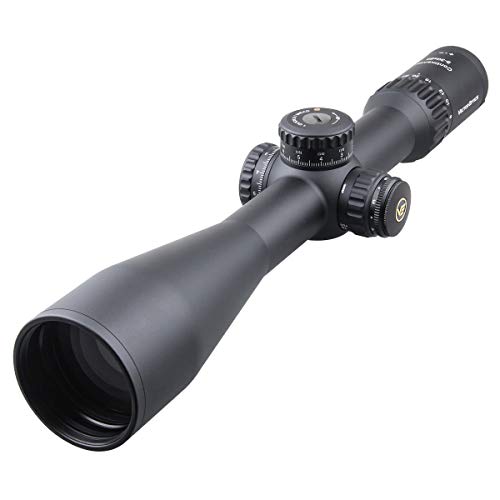
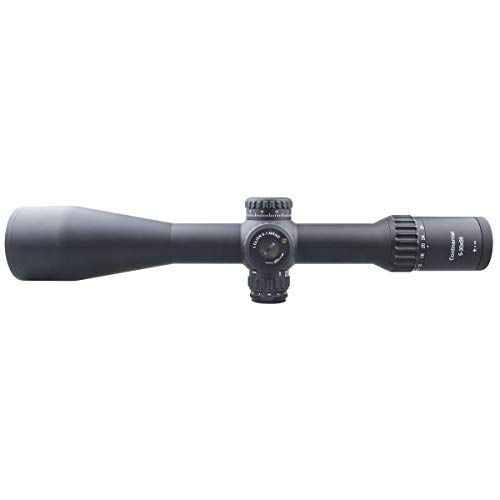
Vector Optics Continental Riflescope 5-30×56 First Focal Plane Tactical MIL Reticle Zero-Stop & Turret Lock 34mm Monotube Illumiated Rifle Scope FFP
Rifle Scope Product Features
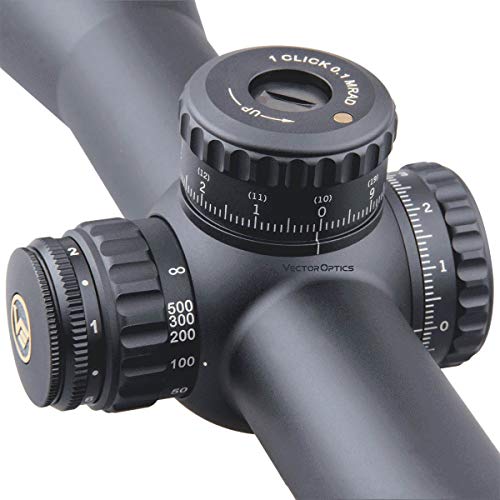
Zero-Stop & Turret Lock:Vector Optics Continental 5-30×56 First Focal Plane Tactical Reticle (MIL) riflescope offers an easy to set, rock-solid return to zero after turret adjustments. Tactical locking turrets provides fast, accurate adjustments.
34mm Monotube:One-piece oversized 34mm tubes increase strength and reliability, and provides greater elevation and windage adjustments for long ranges.And 34mm tube ruggedly built to withstand recoil and impacts. Strong o-ring seals and nitrogen purging guarantee their good performance.
6 Levels Red Illumination, Very Little Distortion, Extra-Low Dispersion, Excellent for Dawn, Dusk Even at Night Shooting
Etched Glass VCT-34FFP Tactical MIL Reticle, Center Dot Illuminated with Digital Lines & Dots.German Optics System by Using LaREE Lens & VePRO FMC, > 90% Light Transmission
What’s included:First Focal Plane Tactical MIL Reticle Riflescopes 5-30×56 FFP,34mm picatinny high rings, instruction, lens cover and cleaning cloth
34mm Continental 1-6x28FFP Riflescope 34mm Continental 3-18x50FFP Riflescope 34mm Continental 4-24x56FFP Riflescope 34mm Continental 5-30x56FFP Riflescope
Magnification 1-6x 3-18x 4-24x 5-30x
Objective Lens Diameter 28mm 50mm 56mm 56mm
Ocular Lens Dia. 42mm / 1.7 inch 42mm / 1.7 inch 42mm / 1.7 inch 42mm / 1.7 inch
Ocular Lens Length 54mm / 2.1 inch 54mm / 2.1 inch 54mm / 2.1 inch 54mm / 2.1 inch
Exit Pupil 8-4.6mm 8-2.8mm 8-2.3mm 8-1.8mm
Optics Coating Fully-multi coat diamond clear Fully-multi coat diamond clear Fully-multi coat diamond clear Fully-multi coat diamond clear
Field of View 112.5-20.4 feet @100 yards 40.8-6.8 feet @100 yards 30.6-5.1 feet @100 yards 24.5-4.1 feet @100 yards
Eye Relief 100mm / 4.0 inch 100mm / 4.0 inch 100mm / 4.0 inch 100mm / 4.0 inch
Length 296mm / 11.7 inch 296mm / 11.7 inch 296mm / 11.7 inch 296mm / 11.7 inch
Weight 550g / 19.4 ounce 820g / 28.9 ounce 780g / 27.5 ounce 810g / 28.6 ounce
Tube Dia 34mm Monotube 34mm Monotube 34mm Monotube 34mm Monotube
Click Value 1/10 MIL 1/10 MIL 1/10 MIL 1/10 MIL
Elevation Range 52MIL 44MIL 34MIL 26MIL
Windage Range 20MIL 16MIL 16MIL 16MIL
Reticle Etched glass VCT-BNW Etched glass VCT-BNW Etched glass VCT-BNW Etched glass VCT-BNW
Illumination 6 gear red 6 gear 6 gear red 6 gear red
Battery type CR2032 CR2032 CR2032 CR2032
Length of middle turret part 48mm (1.9 inch) 48mm (1.9 inch) 48mm (1.9 inch) 48mm (1.9 inch)
Vector Optics Top Premium Line That Can Compete Most Worldwide Famous Brand Optics
34mm Monotube Made of 6061 T6, First Focal Plane Scope with German Schott ED HD Glass
German Optics System by Using LaREE Lens & VePRO FMC, > 90% Light Transmission
Very Little Distortion, Extra-Low Dispersion, Excellent for Dawn, Dusk Even at Night Shooting
True 6x Zoom Factor, Constant 4″ Eye Relief without Inside Dark Ring Around Image
6 Levels Red Illumination, Side Focus Parallax Min Starts from 10 Yards to Infinite
Adjustment System Made of 7075 T6 That Never Snag on Anything and Never Get Turned
1/10MIL Adjustment Zero-Stop & Turret Lock, 100 Clicks per Round, 26MIL Elevation Range
Etched Glass VCT-34FFP Tactical MIL Reticle, Center Dot Illuminated with Digital Lines & Dots
Take Lapua Magnum 338 Recoil and All Fields of Application for Hunting, Sporting & Competition
About the Vector Optics Manufacturer
Vector Optics is a premium supplier for weapon scopes, optics, mounts, and other components used for firearms like rifles and long guns. They style and make their products making the most of elements which are resilient and long lasting. This includes the Vector Optics Continental Riflescope 5-30×56 First Focal Plane Tactical MIL Reticle Zero-Stop & Turret Lock 34mm Monotube Illumiated Rifle Scope FFP by Vector Optics. For more shooting products, visit their site.
What You Need to Know About Scopes
Rifle scopes enable you to exactly align a rifle at different targets by lining up your eye with the target at range. They accomplish this through magnifying the target by utilizing a set of lenses inside the scope. The scope’s positioning can be adjusted for the consideration of separate environmental considerations like wind and elevation increases or decreases to account for bullet drop.
The scope’s function is to help the shooter understand precisely where the bullet will hit based on the sight picture you are viewing through the scope as you line up the scope’s crosshair or reticle with the target. Most modern rifle scopes and optics have around 11 parts which are located inside and outside of the scope. These scope parts consist of the rifle scope’s body, lenses, windage dials, objective focus rings, and other elements. See all eleven parts of optics.
Rifle Optic Varieties
Rifle scopes can be either “first focal plane” or “second focal plane” type of optics. Going for the finest type of rifle optic is based on what type of shooting you plan to do.
About First Focal Plane Glass
Focal plane scopes (FFP) feature the reticle in front of the zoom lens. These types of scopes are useful for:
- Quick acquisition, far away types of shooting
- Shooting situations where calculations are minimal
- Experienced shooters who have an idea for their aim point “hold over” plus “lead” correlations for their long guns
- Shooters who do not mind the reticle is bigger and requires more visual sight space than a SFP reticle
Second Focal Plane Scopes
Second focal plane scopes (SFP) come with the reticle to the rear of the magnification lens. This induces the reticle to stay at the exact same dimensions in connection with the volume of magnification being used. The final result is that the reticle measurements evolve based upon the magnification employed to shoot over greater ranges due to the fact that the markings present distinct increments which change with the magnification level. In the FFP illustration with the SFP glass, the 5x “zoom” one hundred yard tick reticle measurement would be 1/5th of the non “zoom” tick reticle measurement. These particular types of glass are handy for:
- Far away forms of shooting where shooters have more time to make ballistic calculations
- Shooting where most shots happen within much shorter ranges and distances
- Shooters who like a clearer optic picture with less space used up by the larger sized FFP reticle
Scope Zoom
The quantity of magnification a scope provides is identified by the size, thickness, and curvatures of the lenses inside of the rifle scope. The zoom of the scope is the “power” of the scope.
Fixed Single Power Lens Scope Info
A single power rifle scope comes with a zoom number designator like 4×32. This means the magnification power of the scope is 4x power while the objective lens is 32mm. The zoom of this kind of scope can not fluctuate given that it is set from the factory.
Variable Power Lens Scope Info
Variable power rifle scopes use variable power levels. The power adjustment is achieved by the power ring part of the scope near the rear of the scope by the eye bell.
The Power Level and Range of Rifle Glass
Here are some recommended scope power settings and the ranges where they could be efficiently used. Highly magnified glass will not be as effective as lower magnification level rifle scope glass given that too much magnification can be a negative aspect depending on your shooting distance. The same idea applies to longer distances where the shooter needs adequate power to see exactly where to properly aim the rifle.
Lens Finish for Optics
All contemporary rifle optic lenses are coated. Lens covering is an important aspect of a shooting system when thinking about high end rifle optics and scope equipment.
HD Versus ED Lenses
Some rifle glass makers also use “HD” or high-definition lense finishes that use different processes, polarizations, rare earth compounds, and aspects to extract different colors and viewable target definition through the lens. This high-def coating is often used with more costly, high density glass which decreases light’s potential to refract through the lens glass. Some scope corporations use “HD” to describe “ED” meaning extra-low dispersion glass. ED deals with how certain colors are presented on the chroma spectrum and the chromatic difference or aberration which is similarly called color distortion or fringing. Chromatic aberration can be obvious over items with hard outlines as light hits the object from specific angles.
Scope Lens Single Finishing Versus Multi-Coating
Various optic lenses can also have different coatings used to them. All lenses normally have at least some type of treatment or coating used to them before they are used in a rifle scope or optic.
This lens treatment can safeguard the lens from scratches while minimizing glare and other less useful things experienced in the shooting environment while sighting in with the scope. The quality of a single layered lens depends on the scope manufacturer and how much you paid for it.
Some scope makers also make it a point to specify if their optic lenses are layered or “multi” covered. This implies the lens has numerous treatments applied to them. If a lens receives multiple treatments, it can indicate that a manufacturer is taking several actions to fight different environmental factors like an anti-glare coating, a scratch resistant anti-abrasion covering, followed by a hydrophilic coating. This also does not necessarily imply the multi-coated lens is much better than a single layered lens. Being “much better” is dependent on the producer’s lens treatment innovation and the quality of components used in developing the rifle optic.
Hydrophobic Rifle Scope Lens Finish
Water on an optic’s lens doesn’t assist with preserving a clear sight picture through an optic whatsoever. Lots of top of the line and premium optic manufacturers will coat their lenses with a hydrophobic or hydrophilic covering. The Steiner Optics Nano-Protection is a fine example of this kind of treatment. It provides protection for the exterior surfaces of the Steiner optic lens so the water molecules can not bind to it or create surface tension. The result is that the water beads slide off of the scope to keep a clear, water free sight picture.
Rifle Optic Installing Choices
Mounting approaches for scopes are available in a couple of options. There are the standard scope rings which are separately installed to the scope and one-piece mounts which cradle the scope. These different types of mounts also usually are made in quick release variations which use toss levers which allow rifle shooters to rapidly install and remove the scope.
Hex Key Rifle Scope Ring Mounting Solutions
Basic, clamp type mounting scope rings use hex head screws to position to the flattop design Picatinny scope mount rails on rifles. These kinds of scope mounts use two independent rings to support the optic, and are normally made from 7075 T6 billet aluminum or similar materials which are created for long distance precision shooting. This type of scope mount is great for rifles which are in need of a long lasting, rock solid mount which will not move despite how much the scope is moved about or abuse the rifle takes. These are the design of mounts you really want to have for a devoted scope setup on a long distance scouting or competitors firearm that will almost never need to be altered or recalibrated. Blue 242 Loctite threadlocker can also be used on the scope mount’s screws to protect against the hex screws from wiggling out after they are mounted safely in place. An example of these mounting rings are the 30mm style from the Vortex Optics company. The set normally costs around $200 USD
Optic Mounting Solutions with Quick-Release Cantilever Rings
These kinds of quick-release rifle scope mounts can be used to rapidly remove a scope from a rifle and reattach it to a different rifle. Several scopes can also be switched out if they all use a complementary style mount. The quick detach mount style is CNC machined from anodized 6061 T6 aluminum and the mounting levers fasten firmly to a flat top design Picatinny rail. This permits the scope to be sighted in while on the rifle, removed from the rifle, and remounted while maintaining precision. These types of mounts come in convenient for shooting platforms which are moved around a lot, to take off the scope glass from the rifle for protection, or for sight systems which are utilized in between a number of rifles. An example of this mount style is the 30mm mount designed by Vortex Optics. It usually costs around $250 USD
Rifle Scope Tube Sealing and Gas Purging
Moisture inside your rifle optic can ruin a day of shooting and your costly optic by triggering fogging and creating residue inside of the scope tube. A lot of scopes prevent moisture from entering the scope tube with a system of sealing O-rings which are waterproof.
Gas Purged Rifle Scope Tubes
Another component of avoiding the buildup of wetness within the rifle scope tube is filling the tube with a gas like nitrogen. Given that this space is currently occupied by the gas, the scope is less altered by climate alterations and pressure distinctions from the external environment which might potentially allow water vapor to permeate in around the seals to fill the vacuum which would otherwise be there. These are good qualities of a decent rifle scope to look for.


