Description
Rifle Scope Product Details
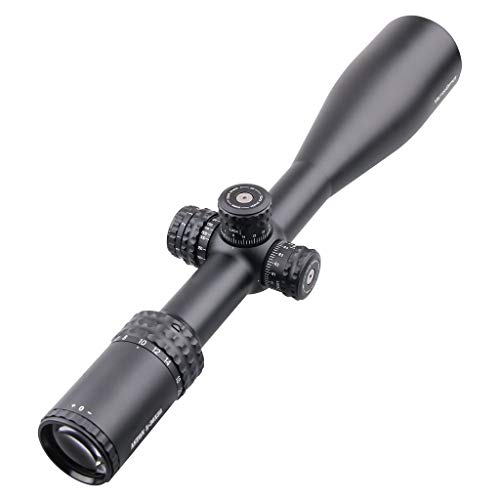
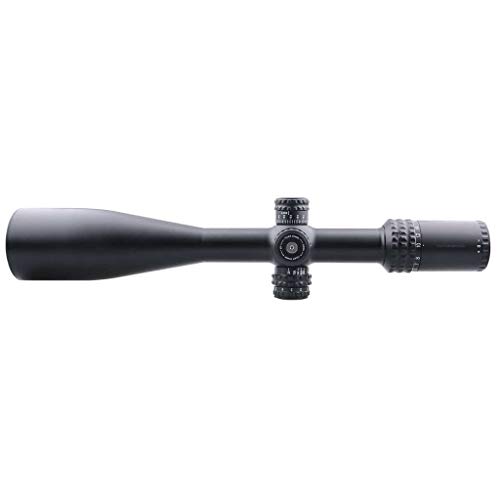
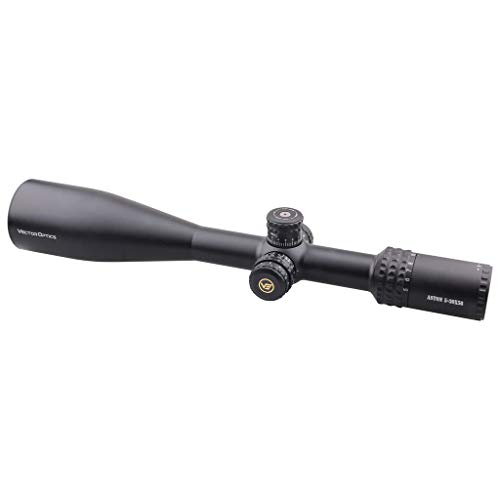
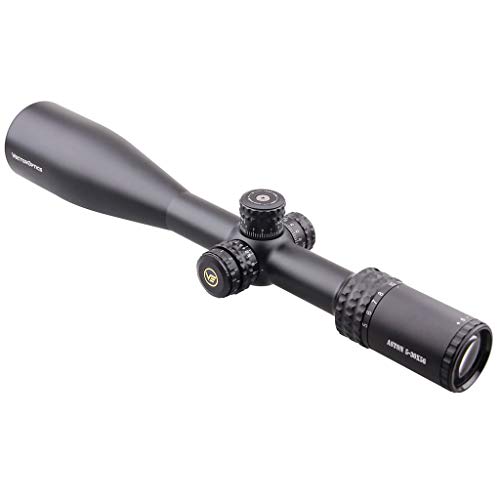
Vector Optics Aston 5-30x56mm, 30mm Tube, 1/4 MOA, Red Illuminated Second Focal Plane (SFP) Rifle Scope
Specifications:
Magnification: 5-30x
Objective Lens Dia.:56mm
Tube Dia.:30mm
Adjustment Click Value: 1/4 MOA
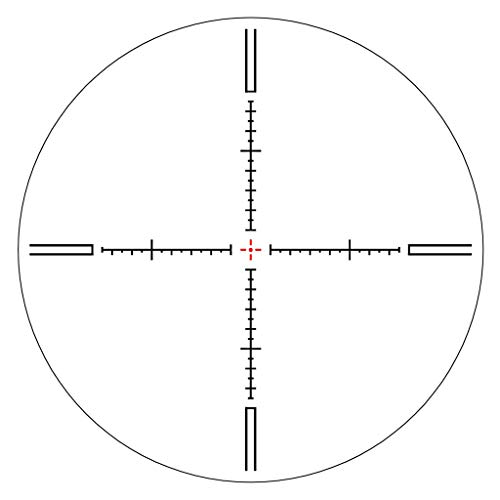
Reticle: Etched glass VPA-A
Illumination: 11 gear
Ocular Len Dia: 36mm(1.4 inch)
Field of View: 19.93-3.3 Feet @ 100 yards
Eye Relief: 124-86mm (4.9-3.4 inch)
Exit Pupil: 11.2-1.87mm
Parallax Setting: 100 yards
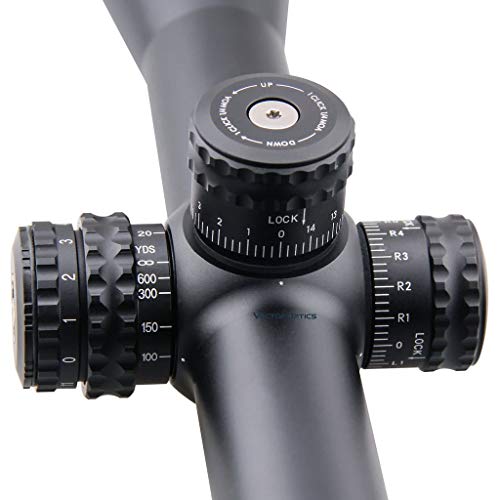
Side Focus: 20, 30, 40, 50,100, 150, 300, 600 and infinite
Elevation Range: >50 MOA
Windage Range: >50 MOA
Lens Coating: Fully multicoated
Length: 400mm (15.7 inch)
Weight: 835g (29.5 ounce)
Finish: Matte
Battery: CR2032(EXCLUDED)
Distance between objective lens part and middle turret: 55mm (2.1 inch)
Length of middle turret part: 38mm (1.5 inch)
Distance between middle turret part to power ring: 55mm (2.1 inch)
Diopter compensation from fast-focus eyepiece (+2 to -2)
Features:
Lifetime Warranty
30mm Monotube. 1/4 MOA windage and elevation adjustments for fine-tuning accuracy.
The reticle is red illuminated along the second focal plane.
The illunimation has 11 levels brightness.
Excellent for Dawn and Dusk Shooting.
Turret lock feature: Pull to adjust, press to lock.
Fast-focus Eyepiece for quick and easy reticle focusing
O-ring Sealed and Nitrogen Purged Ensure Waterproof at 1m and Fog Proof performance; Shockproof to 750g
Package Includes:
– 1 x 5-30×56 Riflescope
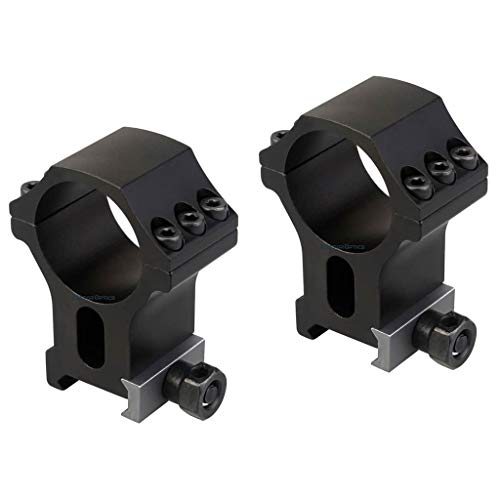
– 2 x 30mm weaver mount ring (default) or dovetail mount ring (on request only)
– 1 x Lens Cover
– 1 x Cleaning cloth
Note: We offer 5 YEARS WARRANTY. Please feel free to contact us if you have any interests or product issues, we are available 24/7 online.
Rifle Scope Product Features
Lifetime warranty. Optics hold zero.
1/4 MOA windage and elevation adjustments for fine-tuning accuracy. Crystal Clear Edge-to-Edge Image.
The reticle is red illuminated along the second focal plane. The illunimation has 11 levels brightness.
Turret lock sytem. Pull to adjust, press to lock. O-ring Sealed and Nitrogen Purged Ensure Waterproof at 1m and Fog Proof performance; Shockproof to 750g
Excellent for Dawn and Dusk Shooting. Free 30mm mount rings, and lens covers.
About the Vector Optics Scope Maker
Vector Optics is a premium supplier for firearm scopes, optics, mounting solutions, and other add-ons used for firearms like rifles and long guns. They design and make their scopes and related products by applying elements which are durable and long lasting. This includes the Vector Optics Aston 5-30x56mm, 30mm Tube, 1/4 MOA, Red Illuminated Second Focal Plane (SFP) Rifle Scope by Vector Optics. For more shooting goods, visit their website.
What You Need to Know About Scopes
Rifle scopes permit you to specifically aim a rifle at various targets by lining up your eye with the target over a range. They accomplish this through zoom by using a series of lenses inside the scope. The scope’s alignment can be dialed in to account for numerous environmental considerations like wind and elevation increases to account for bullet drop.
The scope’s purpose is to understand precisely where the bullet will land based upon the sight picture you are viewing through the optic as you line up the scope’s crosshair or reticle with the intended target. A lot of modern rifle scopes have around 11 parts which are found internally and externally on the optic. These scope parts include the rifle scope’s body, lenses, windage and elevation turrets or dials, focus rings, and other components. See all eleven parts of a rifle optical system.
About Glass Styles
Rifle scopes can be either “first focal plane” or “second focal plane” style of scopes. The style of focal plane a scope has establishes where the reticle or crosshair lies in relation to the scopes magnifying adjustments. It simply implies the reticle is located behind or ahead of the magnification lens of the scope. Looking for the most suitable form of rifle glass is dependent on what kind of shooting or hunting you anticipate undertaking.
First Focal Plane Optic Info
First focal plane scopes (FFP) come with the reticle ahead of the magnification lens. This induces the reticle to increase in size based upon the level of magnification being used. The benefit is that the reticle measurements are the same at the amplified distance as they are at the non magnified distance. One tick on a mil-dot reticle at one hundred yards with no “zoom” is still the very same tick at 100 yards with 5x “zoom”. These types of scopes are beneficial for:
- Quick acquisition, long distance types of shooting
- Shooting circumstances where estimations are minor
- Experienced shooters who know their aim point “hold over” and “lead” equations for their rifles
- Shooters who don’t mind the reticle is bigger and takes up more visual eyesight space than a SFP reticle
Info About Second Focal Plane Glass
Second focal plane scopes (SFP) include the reticle to the rear of the magnification lens. In the FFP example with the SFP scope, the 5x “zoom” one hundred yard tick reticle measurement would be 1/5th of the non “zoom” tick.
- Far away styles of shooting where shooters have additional time to make ballistic estimations
- Shooting where most of the shots happen within shorter proximities and ranges
- Shooters who select a clearer optic picture without space taken up by the enlarged FFP reticle
Magnification for Optics
The extent of scope magnification you need on your scope depends upon the form of shooting you would like to do. Virtually every style of rifle glass offers some level of magnification. The quantity of magnification a scope supplies is established by the diameter, density, and curvatures of the lenses within the rifle optic. The magnification of the optic is the “power” of the glass. This means what the shooter is aiming at through the scope is magnified times the power factor of what can generally be seen by human eyes.
About Single Power Lens Rifle Glass
A single power rifle scope and optic uses a zoom number designator like 4×32. This indicates the zoom power of the scope is 4x power while the objective lens is 32mm. The magnification of this kind of optic can not fluctuate because it is fixed.
Info on Adjustable Power Lens Scopes
Variable power rifle scopes have adjustable power. These types of scopes will note the magnification amount in a format like 2-10×32. These numbers mean the magnification of the scope could be changed between 2x and 10x power. This always utilizes the power levels in-between 2 and 10. The power manipulation is accomplished by employing the power ring component of the scope near the back of the scope by the eye bell piece.
Glass Power Level and Ranges
Here are some suggested scope power settings and the distances where they may be successfully used. Highly magnified glass will not be as efficient as lower magnification level scopes due to the fact that too much magnification can be a negative aspect depending on your shooting distance. The same concept applies to extended ranges where the shooter needs to have sufficient power to see precisely where to best aim the rifle.
Details on Optic Lens Coating
All modern rifle scope lenses are covered in special coatings. There are different types and qualities of glass coverings. Lens finishing is a crucial aspect of a rifle when thinking of high-end rifle optics and scope equipment. The lenses are one of the most essential components of the scope due to the fact that they are what your eye sees through while sighting a rifle in on the target. The finishing on the lenses safeguards the lens surface as well as helps with anti glare capabilities from excess direct sunlight and color perception.
HD Versus ED Rifle Glass Lens Coatings
Some scope producers likewise use “HD” or high-definition lens finishings which use different techniques, elements, chemicals, and polarizations to draw out a wide range of colors and viewable definition through the lens. Some scope producers use “HD” to refer to “ED” indicating extra-low dispersion glass.
Single Glass Lens Finish Versus Multi-Coating
Various optic lenses can also have various finishes used to them. All lenses generally have at least some type of treatment or finish used to them prior to being used in a rifle scope or optic.
This lens treatment can offer protection to the lens from scratches while minimizing glare and other less advantageous things experienced in the shooting environment while sighting in with the scope. The quality of a single coated lens depends on the scope producer and how much you paid for it.
Some scope manufacturers also make it a point to specify if their optic lenses are layered or “multi” covered. Being “better” depends on the producer’s lens treatment technology and the quality of products used in building the rifle scope.
Hydrophobic Coating for Rifle Glass
Water on an optical lens doesn’t improve preserving a clear sight picture through an optic in any way. Many top of the line or premium scope makers will coat their lenses with a hydrophobic or hydrophilic finish. The Steiner Optics Nano-Protection is a good example of this sort of treatment. It deals with the exterior of the Steiner scope lens so the water molecules can not bind to it or create surface tension. The outcome is that the water beads slide off of the scope to maintain a clear, water free sight picture.
Alternatives for Installing Glass on Long Guns
Mounting approaches for scopes are available in a few options. There are the standard scope rings which are separately installed to the scope and one-piece scope mounts which cradle the scope. These various kinds of mounts also typically can be found in quick release variations which use throw levers which permit rifle operators to rapidly mount and remove the scopes.
Glass Mounting Solutions with Hex Key Rings
Standard, clamp design mounting optic rings use hex head screws to fix to the flattop design Picatinny scope mounting rails on the tops of rifles. These styles of scope mounts use two independent rings to support the scope, and are normally constructed from 7075 T6 billet aluminum or similar materials which are created for long distance accuracy shooting. This form of scope mount is ideal for rifles which need to have a durable, hard use mount which will not move regardless of just how much the scope is moved or abuse the rifle takes. These are the style of mounts you should have for a faithful scope system on a reach out and touch someone scouting or competition rifle which will seldom need to be altered or recalibrated. Blue 242 Loctite threadlocker can additionally be used on the mount’s screws to stop the hex screw threads from wiggling out after they are installed securely in place. An example of these rings are the 30mm style made by Vortex Optics. The set typically costs around $200 USD
Quick-Release Cantilever Rifle Glass Ring Mounts
These types of quick-release rifle scope mounts can be used to quickly detach a scope and connect it to a different rifle. Multiple scopes can even be swapped out if they all use a similar design mount. These types of mounts come in handy for long guns which are transported a lot, to remove the optic from the rifle for protecting the scope, or for scopes which are used between multiple rifles.
Sealing and Gas Purging for Rifle Glass Tubes
Moisture inside your rifle glass can mess up a day on the range and your costly optic by triggering fogging and producing residue inside of the scope tube. A lot of optics prevent wetness from getting in the optical tube with a system of sealing O-rings which are waterproof. Generally, these scopes can be immersed under 20 or 30 feet of water before the water pressure can force moisture past the O-rings. This should be plenty of moisture prevention for basic use rifles for hunting and sporting purposes, unless you intend on taking your rifle sailing and are concerned about the scope still functioning if it goes over the side and you can still salvage the firearm.
Gas Purged Optic Tubes
Another part of preventing the accumulation of moisture inside of the rifle scope tube is filling the tube with a gas like nitrogen. Given that this space is currently taken up by the gas, the scope is less affected by temp changes and pressure variations from the outside environment which may potentially allow water vapor to permeate in around the seals to fill the vacuum which would otherwise be there. These are good qualities of a good rifle scope to look for.


