



Description
Rifle Scope Product Details
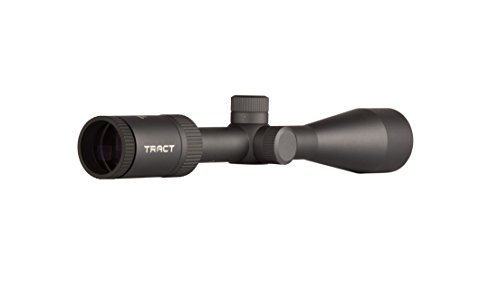
Tract TORIC 2-10×42 Riflescope w/BDC Reticle – Hunting Optics for The Ultimate in Versatility
Rifle Scope Product Features
TRACT’s UHD Technology Features the highest quality SCHOTT HT Glass for incredible low light performance and Extra Low Dispersion (ED) Objective Lens to help resolve detail at higher powers
Glass Etched BDC Reticle with Pointed Post Bracketing System and Windage Correction for increased accuracy at longer distances
4″ of constant Eye Relief through entire magnification range
Includes High Profile Turret Kit with Locking Feature and Zero Stop
Lifetime Warranty
TRACT Optics is doing things differently. Period. As an optics company producing high-end riflescopes and binoculars, we have created a direct-to-consumer business model that makes your experience our top priority.
From day one, we’ve had a very specific purpose at TRACT: Build a bridge directly to you, the consumer. We’ve cut out the middleman to eliminate retail markup and unreliable product support. TRACT set out to build the finest line of optics without making any sacrifices or letting any barriers get in their way. The result is our TORIC line of superior riflescopes with specifications and features that perform every time, anywhere, no matter the conditions.
Just know we appreciate the opportunity to share with you our passion for creating incredible optics, all the while giving you first-rate product support.
TRACT Optics Designed and Engineered to be Best in Class
This ultra-versatile 5x zoom 2-10×42 TORIC UHD is engineered for the hunter who needs the very best whether hunting in the hardwoods or over a long range bean field. It features TRACT’s advanced Ultra High Definition optical system comprising of Fully Multi-Coated SCHOTT HT (high transmission) glass throughout the entire scope providing sharp, bright images with superior light transmission of any scope in this class. The ED (Extra Low Dispersion) lens helps eliminate chromatic aberration and increases contrast especially at the higher powers.
Take advantage of the quick focus eyepiece, 4 inches of constant eye relief and the Glass Etched T-Plex reticle providing unsurpassed performance in low-light conditions at longer distances.
TORIC’s Optical System Separates itself From the Crowd
TORIC’s Ultra High Definition (UHD) optical system incorporates:
Industry leading SCHOTT HT (High Transmission) special glass variants that are known for their superior transmittance
ED (Extra Low Dispersion) glass reduces Chromatic Abberation resulting in unsurpassed clairty and precise image quality
Fully Multi-Coated Optical Lens System
“All combined, TORIC’s UHD system provides the shooter with incredibly sharp, bright images with superior light transmission values.
Locking & Zero Stop Turret Kit Included
Each TORIC riflescope comes with a High Profile Turret Kit. The kit allows you to replace the exisiting standard medium turret, with the high profile turret providing the long range shooter with the following benefits:
“Locking Turret Feature – To provide the shooter with the confidence that the elevation turret cannot be moved even in the roughest of conditions
Simply lift the high profile elevation turret up to disengage the lock. Turn the elevation knob in the desired direction. Push turret back down to return to the locked position.
“Zero Stop” – Provides the shooter with the assurance that he will not go past his zero.
After sighting in your rifle, simply insert the Turret Kit and set the zero stop module in place.
Once assembled, you now have a positive repeatable stopping point at your chosen zero point. Then, no matter how many elevation adjustments you make, turning the elevation knob down to the zero stop setting returns you to your original zero.
No counting clicks or need for visual reference. In poor or low-lighting conditions,you can return to your original zero stop simply by feel.
”
The Ultra Versatile 2-10×42 TORIC Also Features:
Large Ocular Lens with 4″ of Constant Eye Relief
“Benefits:
“Keeps your cheek weld consistant throughout the entire magnification range for improved accuracy
4” of eye relief keeps you safe from getting hit under heavy magnum recoil or shooting at sharp angels.
“Easier for the shooter to locate the target
Bullet Drop Compensation and windage correction, the Glass-etched Impact BDC reticle can play an integral part to your success in the field.
The strategically placed MoA BDC dots and pointed post bracketing system provide bullet drop compensation with a definitive aiming point that does not obscure the target, even at long range.
The horizontal pointed posts allow you to bracket the target, making it easier to hold slightly higher or lower on the target.
The vertical hash marks on the center crosshair and windage correction dots provide an approximate hold for a 10 mile-per-hour crosswind.
The reticle is set up for both standard (2,800 fps) and magnum cartridge (3,000 fps) trajectory in approximate 100 yard increments.
Simply sight a standard cartridge to 100 yards and a magnum at 200 yards.
Or, to customize the reticle to your exact load, calculate the exact distance each dot represents by entering your cartridge info into the IMPACT Ballistic Program on the TRACT Optics website.
Precision Windage & Elevation Adjustments w/Quick Reset to Zero
Hand Turn Windage & Elevations Adjustments
Repeatable and audible 1/4” clicks at 100 yards are easily reset to zero without any tools, making sighting in or field adjustments quick and easy.
20 MOA of adjustment per revolution and a 50-MOA range.
Customize your 2-10 TORIC with a selection of accuracy enhancing accessories such as the Low Profile Impact Custom Turret or High Profile Impact Custom Turret.
“”Then I returned the dials to zero and hit my first bullet holes. That was almost 44 inches in total adjustment in all directions, and the scope’s ability to return to zero indicated its internal mechanics tracked extremely well.” Bryce Towsley – American Hunter 12/2016
About the Tract Company
Tract is a premium company for long gun scopes, optics, mounting solutions, and other add-ons used for firearms like rifles and long guns. They innovate and manufacture their mounts and related products by choosing materials which are long lasting and resilient. This includes the Tract TORIC 2-10×42 Riflescope w/BDC Reticle – Hunting Optics for The Ultimate in Versatility by Tract. For more shooting items, visit their site.
What You Need to Know About Rifle Glass
Rifle scopes permit you to exactly align a rifle at various targets by lining up your eye with the target over a distance. They accomplish this through zoom by making use of a set of lenses inside the scope. The scope’s alignment can be adapted for the consideration of varied natural things like wind and elevation to make up for bullet drop.
The scope’s purpose is to help the shooter understand exactly where the bullet will land based on the sight picture you are viewing via the scope as you line up the scope’s crosshair or reticle with the target. Many modern rifle optics have about 11 parts which are found within and externally on the optic. These scope parts include the rifle scope’s body, lenses, windage turrets or dials, focus rings, and other elements. See all eleven parts of an optic.
Rifle Scope Types
Rifle scopes can be either “first focal plane” or “second focal plane” type of optics. Considering the optimal type of rifle optic depends on what type of shooting you plan to do.
About First Focal Plane Scopes
First focal plane optics (FFP) include the reticle in front of the magnification lens. This causes the reticle to increase in size based on the extent of zoom being used. The result is that the reticle measurements are the same at the magnified range as they are at the non amplified range. One tick on a mil-dot reticle at 100 yards without “zoom” is still the very same tick at 100 yards with 5x “zoom”. These types of scopes work for:
- Quick acquisition, long distance types of shooting
- Shooting circumstances where estimations are very little
- Experienced shooters who recognize their target “hold over” and also “lead” ratios for their firearm
- Shooters who do not mind the reticle is enlarged and occupies more visual eyesight space than a SFP reticle
About Second Focal Plane Glass
Second focal plane scopes (SFP) feature the reticle behind the zoom lens. In the FFP example with the SFP scope, the 5x “zoom” 100 yard tick measurement would be 1/5th of the non “zoom” tick reticle measurement.
- Far away kinds of shooting where shooters have additional time to make ballistic calculations
- Shooting where most of the shots take place within shorter ranges and distances
- Shooters who choose a clearer optic sight picture without area used up by the larger size FFP reticle
Magnification for Glass
The quantity of zoom a scope supplies is figured out by the diameter, density, and curvatures of the lenses inside of the rifle scope. The magnification of the scope is the “power” of the scope.
Info on Single Power Lens Rifle Scopes
A single power rifle scope and optic will have a magnification number designator like 4×32. This suggests the magnification power of the scope is 4x power while the objective lens is 32mm. The zoom of this type of optic can not change since it is a fixed power optic.
Variable Power Lens Glass Details
Variable power rifle scopes can be tweaked between magnified settings. The power adjustment is achieved by the power ring part of the scope near the back of the scope by the eye bell.
Power Levels and Range Correlations
Here are some recommended scope powers and the ranges where they may be effectively used. Keep in mind that high power scopes and optics will not be as efficient as lower magnification level optics and scopes since too much magnification can be a bad thing. The exact same idea applies to longer ranges where the shooter needs increased power to see where to best aim the rifle at the target.
Info on Lens Coatings
All modern-day rifle scope lenses are covered in special coatings. There are different types and qualities of finishings. Lens coating can be an important element of a rifle when thinking of high-end rifle optics and targeting units. The lenses are among the most significant components of the scope considering they are what your eye sees through while sighting a rifle in on the point of impact. The covering on the lenses shields the lens exterior as well as assists with anti glare capabilities from refracted sunlight and color profiles.
HD Versus ED Lenses
Some scope brands likewise use “HD” or high-definition lens coatings which use different methods, chemicals, polarizations, and aspects to draw out separate colors and viewable quality through the lens. Some scope producers use “HD” to refer to “ED” meaning extra-low dispersion glass.
Single Finishing Versus Multi-Coating for Optics
Various optic lenses can also have different coatings applied to them. All lenses typically have at least some kind of treatment or finishing applied to them prior to being used in a rifle scope or optic. Because the lens isn’t simply a raw piece of glass, they require performance enhancing coatings. It becomes part of the carefully tuned optic. It needs to have a coating placed on it so that the lens will be efficiently usable in many kinds of environments, degrees of sunshine (full VS shaded), and other shooting conditions.
Single layered lenses have a treatment applied to them which is normally a protective and boosting multi-purpose treatment. This lens treatment can safeguard the lens from scratches while lowering glare and other less helpful things experienced in the shooting environment while sighting in with the optic. The quality of a single coated lens depends upon the scope designer and the amount you spent for it. Both the manufacturer and amount are signs of the lens quality.
Some scope manufacturers also make it a point to define if their optic lenses are layered or “multi” coated. Being “much better” depends on the producer’s lens treatment innovation and the quality of materials used in developing the rifle scope.
Scope Lens Anti-water Covering
Water on a lens does not help with preserving a clear sight picture through a scope at all. Numerous top of the line and high-end scope companies will coat their lenses with a hydrophilic or hydrophobic coating.
Optic Installation Options
Mounting approaches for scopes can be found in a couple of choices. There are the basic scope rings which are separately installed to the optic and one-piece mounts which cradle the scope. These different types of mounts also normally are made in quick release variations which use toss levers which permit rifle operators to rapidly mount and remove the optics.
Rifle Optic Mounting Solutions with Hex Key Rings
Normal, clamp design mounting scope rings use hex head screws to mount to the flattop design Picatinny scope installation rails on rifles. These types of scope mounts use two separate rings to support the optic, and are often made from 7075 T6 billet aluminum which is created for long range precision shooting. This type of scope install is perfect for rifles which need a resilient, rock solid mount which will not move no matter how much the scope is moved or abused.
Quick-Release Cantilever Scope Ring Mounting Solutions
These kinds of quick-release rifle scope mounts can be used to quickly detach a scope from a rifle and reattach it to a different rifle. A wide range of scopes can also be swapped out if they all use a complementary style mount. The quick detach design is CNC crafted from anodized 6061 T6 aluminum and the mounting levers fasten securely to a flat top style Picatinny rail. This allows the scope to be sighted in while on the rifle, taken off of the rifle, and remounted back on the rifle while retaining the original sighting settings. These types of mounts are useful and convenient for shooting platforms which are carried a lot, to remove the glass from the rifle for protection, or for aiming systems which are adopted in between a number of rifles. An example of this mount type is the 30mm mount designed by the Vortex Optics brand. It usually costs around $250 USD
Rifle Glass Tube Sealing and Gas Purging
Moisture inside your rifle scope can destroy a day of shooting and your expensive optic by causing fogging and creating residue inside of the scope tube. Many scopes prevent wetness from getting in the scope tube with a system of sealing O-rings which are waterproof.
Rifle Scope Gas Purging
Another component of preventing the buildup of moisture inside of the rifle scope’s tube is filling the tube with a gas like nitrogen. Since this area is currently taken up by the gas, the glass is less affected by temp changes and pressure variations from the outdoor environment which might potentially enable water vapor to permeate in around the seals to fill the void which would otherwise exist. These are good qualities of a decent rifle scope to look for.


