
Description
Rifle Scope Product Details
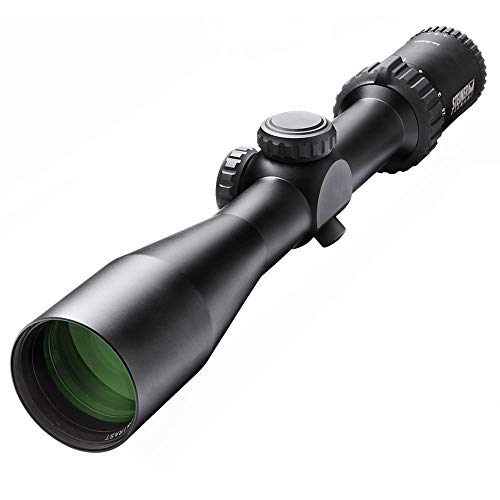
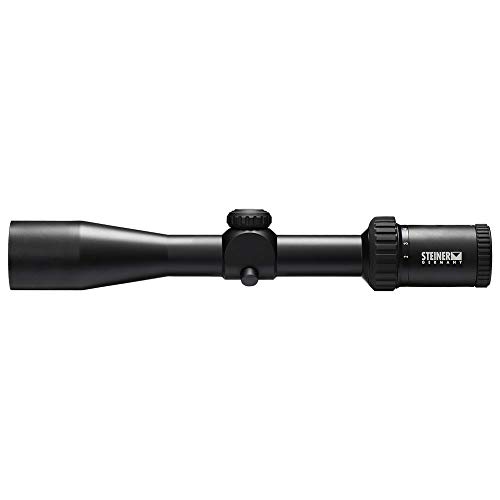
Steiner Optics GS3 Game Sensing Waterproof Hunting Riflescope – for Rifles, Perfect for Varmint and Big Game Hunting
Rifle Scope Product Features
About this item
Color adjusted transmission (Cat) amplifies contrast in the peak human vision sensitivity range, to spot game in any environment.
Nano protection hydrophobic molecular coating creates a lens surface so smooth water sheets off and dirt, dust, snow and fingerprints are repelled for easy cleaning and a clear view.
Plex S1 reticle helps determine holdover for distance and cascading dots/lines compensate for wind.
Waterproof – submersible to 33 ft, depend on O-ring sealed, Nitrogen filled construction to provide moisture free performance.
Heritage – we stand behind our products. Period! We will repair/replace defective products at no charge for the lifetime of the Product. does not cover damage, loss or theft.
Crafted to See Better, Not Just Further
Unerring Precision
After more than 460 high-precision manufacturing and inspection steps, finished multi-coated lenses are assembled into unbreakable Makrolon polycarbonate binocular housings.
100% In-House Optics
Steiner grinds and polishes their own premium lenses and BaK4 prisms, then multi-coats all air-to-glass surfaces with proprietary coatings for unmatched brightness and clarity.
More Light, Better Image
All air-to-glass surfaces of Steiner scopes are multi-coated with proprietary, cutting-edge formulations of minerals and rare earth compounds that maximize clarity, color and definition. As the one brand that has developed optics specifically for military service, Steiner is committed to giving you every possible edge.
Designed for Comfort
Scopes have adjustable illumination, oversized knobs, and positive sound/feel feedback for easy settings and repeatable accuracy. Every detail is ergonomically perfect. Because the world never is.
Model No. 5004 features S1 Reticle
Product Features:
New 5x Zoom Range
CAT Color Adjusted Transmission
Steiner Plex S1 Reticle
Steiner 4A Reticle
Short Mounting Length
Rugged 30mm Tube
Waterproof/Fogproof
GS3 2-10×42
Model No. 5004
The new Steiner GS3 “game sensing” scope utilizes exclusive CAT (color adjusted transmission) lens coatings to amplify contrast in the peak human vision sensitivity range. The optimized contrast effectively separates game from leafy or shadow-dappled backgrounds, exposing your target to a clean, accurate shot; the GS3 5x zoom range lets hunters from eastern whitetail country to western big game ranges pair their new scope with their favorite centerfire, rimfire or muzzleloader rifle.
Magnification 2x-10x
Tube Diameter 30mm
Length: 13.5″
Weight: 18 oz
GS3 2-10×42, Steiner S1 Reticle GS3 3-15×50, Steiner S1 Reticle GS3 3-15×56, Steiner S1 Reticle GS3 4-20×50, Steiner S7 Reticle GS3 4-20×50, Steiner S1 Reticle
Field of View at 100 yds 52.0 – 10.5 36.0 – 7.5 36.0 – 7.5 25.8 – 5.5 25.8 – 5.5
Eye Relief 3.5 – 4.3 in. 3.5 – 4.3 in. 3.5 – 4.3 in. 3.5 – 4.3 in. 3.5 – 4.3 in.
Exit Pupil 12.0 – 4.2 mm 11.0 – 3.5 mm 11.0 – 3.5 mm 11.0 – 2.5 mm 11.0 – 2.5 mm
Diopter Adjustment Range +2 to -3 +2 to -3 +2 to -3 +2 to -3 +2 to -3
Elevation Adjustment Knob Resettable Zero Resettable Zero Resettable Zero Resettable Zero Resettable Zero
Wind/Elevation Click Value 1/4 MOA 1/4 MOA 1/4 MOA 1/4 MOA 1/4 MOA
Elevation Range at 100 m. 70 MOA 70 MOA 70 MOA 64 MOA 64 MOA
Wind Range at 100 m. 70 MOA 70 MOA 70 MOA 48 MOA 48 MOA
Parallax/Focus Fixed Fixed Fixed Side Focus Side Focus
Parallax/Focus Range 328 ft. 328 ft. 328 ft. 164 ft. to Infinity 164 ft. to Infinity
About the Steiner Scope Maker
Steiner is a premium supplier for firearm scopes, optics, mounts, and other add-ons used for guns like rifles and long guns. They design and build their scopes, mounts, and related products choosing elements which are long lasting and resilient. This includes the Steiner Optics GS3 Game Sensing Waterproof Hunting Riflescope – for Rifles, Perfect for Varmint and Big Game Hunting by Steiner. For additional shooting products, visit their website.
Optic Info
Rifle scopes permit you to specifically align a rifle at different targets by aligning your eye with the target at range. They accomplish this through zoom using a set of lenses inside the scope. The scope’s alignment can be dialed in for the consideration of different environmental considerations like wind speed and elevation to make up for bullet drop.
The scope’s function is to help shooters understand exactly where the bullet will land based upon the sight picture you are viewing via the optic as you line up the scope’s crosshair or reticle with the intended point of impact. The majority of modern rifle scopes and optics have around 11 parts which are found inside and externally on the optic. These scope parts consist of the rifle scope’s body, lenses, windage and elevation turrets or dials, objective focus rings, and other components. See all eleven parts of a rifle scope.
The Styles of Rifle Scopes
Rifle scopes can be either “first focal plane” or “second focal plane” type of optics. Deciding upon the perfect type of rifle glass is based around what type of shooting you plan on doing.
First Focal Plane Optics
First focal plane scopes (FFP) feature the reticle in front of the zoom lens. This triggers the reticle to increase in size based on the level of zoom being used. The outcome is that the reticle measurements are the same at the magnified distance as they are at the non magnified range. As an example, one tick on a mil-dot reticle at 100 yards without having “zoom” is still the same tick at one hundred yards with 5x “zoom”. These kinds of scopes are valuable for:
- Quick acquisition, long distance types of shooting
- Shooting circumstances where estimations are minor
- Experienced shooters who have an idea for their aim point “hold over” and also “lead” relationships for their weapon
- Shooters who do not mind the reticle is bigger and takes up more visual eyesight room than a SFP reticle
About Second Focal Plane Glass
Second focal plane scopes (SFP) include the reticle to the rear of the zoom lens. In the FFP example with the SFP scope, the 5x “zoom” 100 yard tick measurement would be 1/5th of the non “zoom” tick measurement.
- Far away types of shooting where shooters have extra time to make ballistic calculations
- Shooting where most of the shots take place within much shorter spaces and ranges
- Shooters who would like a clearer optic picture with less space used up by the enlarged FFP reticle
Scope Zoom
The amount of scope magnification you need is based on the form of shooting you intend to do. Practically every style of rifle optic supplies some level of zoom. The volume of magnification a scope supplies is determined by the dimension, thickness, and curves of the lenses inside of the rifle scope. The zoom of the optic is the “power” of the glass. This means what the shooter is observing through the scope is amplified times the power aspect of what can generally be seen by human eyes.
Fixed Single Power Lens Optics
A single power rifle scope or optic will have a magnification number designator like 4×32. This suggests the zoom power of the scope is 4x power while the objective lens is 32mm. The magnification of this kind of optic can not fluctuate since it is a fixed power scope.
Adjustable Power Lens Rifle Optic Facts
Variable power rifle scopes have adjustable power. These types of scopes will list the magnification level in a format such as 2-10×32. These numbers suggest the magnification of the scope could be changed in between 2x and 10x power. This always utilizes the power levels in-between 2 and 10. The power modification is achieved using the power ring part of the scope near the back of the scope by the eye bell piece.
Optic Power and Range Correlation
Here are some recommended scope power levels and the distances where they can be effectively used. Keep in mind that higher power scopes and optics will not be as practical as lower powered optics and scopes due to the fact that excessive zoom can be a detractor. The very same idea goes for extended distances where the shooter needs to have adequate power to see exactly where to best aim the rifle.
Lens Finish for Scopes
All modern rifle optic lenses are coated. There are various types and qualities of glass lens finishes. Lens covering can be an important aspect of a rifle when considering high-end rifle optics and scope units. The glass lenses are one of the most crucial pieces of the optic considering that they are what your eye looks through while sighting a rifle in on the target. The coating on the lenses offers protection to the lens exterior and also helps with anti glare from refracted sunshine and color perception.
ED Versus HD Rifle Glass
Some rifle scope suppliers additionally use “HD” or high-definition glass finishes that employ different procedures, rare earth compounds, components, and polarizations to extract different colors and viewable target visibility through lenses. This HD coating is frequently used with more costly, high density lens glass which decreases light’s capability to refract by means of the lens glass. Some scope makers use “HD” to describe “ED” signifying extra-low dispersion glass. ED deals with how certain colors are presented on the chroma spectrum and the chromatic aberration which is also called color distortion or fringing. Chromatic aberration can be visible over items with hard edges and shapes as light hits the object from particular angles.
Single Optic Lens Finishing Versus Multi-Coating
Various optic lenses can likewise have various finishes applied to them. All lenses generally have at least some type of treatment or coating applied to them prior to being used in a rifle scope or optic.
Single layered lenses have a treatment applied to them which is generally a protective and boosting multi-purpose treatment. This lens treatment can protect the lens from scratches while minimizing glare and other less advantageous things experienced in the shooting environment while sighting in with the scope. The quality of a single layered lens depends upon the scope designer and just how much you paid for it. Both the make and cost are indicators of the lens quality.
Some scope producers similarly make it a point to define if their optic lenses are layered or “multi” coated. Being “better” depends on the producer’s lens treatment technology and the quality of products used in developing the rifle scope.
Details on Hydrophobic Finish
Water on a scope lens does not support keeping a clear sight picture through an optic whatsoever. Numerous top of the line or high-end optic makers will coat their lenses with a hydrophobic or hydrophilic finishing. The Steiner Optics Nano-Protection is a good example of this type of treatment. It treats the surface of the Steiner scope lens so the water molecules can not bind to it or produce surface tension. The outcome is that the water beads roll off of the scope to preserve a clear, water free sight picture.
Rifle Glass Installing Options
Installing options for scopes can be found in a couple of choices. There are the basic scope rings which are individually installed to the scope and one-piece mounts which cradle the scope. These different types of mounts also usually are made in quick release versions which use toss levers which allow rifle shooters to quickly install and remove the scope.
Hex Key Rifle Glass Rings
Standard, clamp-on type mounting scope rings use hex head screws to position to the flattop design Picatinny scope mount rails on the tops of rifles. These forms of scope mounts use a pair of separate rings to support the scope, and are made from 7075 T6 billet aluminum which are designed for long distance accuracy shooting. This form of scope mount is very good for rifle systems which are in need of a durable, hard use mount which will not move despite how much the scope is moved about or abuse the rifle takes. These are the design of mounts you want for a dedicated scope system on a far away hunting or hard target interdiction rifle that will seldom need to be changed or adjusted. Blue 242 Loctite threadlocker can also be used on screws to protect against the hex screw threads from backing out after they are installed safely in position. An example of these mounting rings are the 30mm style from Vortex Optics. The set normally costs around $200 USD
Quick-Release Cantilever Scope Rings
These types of quick-release rifle scope mounts can be used to rapidly detach a scope and attach it to a different rifle. Numerous scopes can even be swapped out if they all use a compatible design mount. These types of mounts come in handy for long guns which are transferred a lot, to remove the optic from the rifle for protection, or for scopes which are used in between numerous rifles or are situationally focused.
Details on Rifle Optic Tube Sealing and Gas Purging
Moisture inside your rifle scope can mess up a day of shooting and your pricey optic by causing fogging and developing residue inside of the scope tube. Many scopes avoid moisture from entering the scope tube with a system of sealing O-rings which are water resistant.
Gas Purged Scope Tubes
Another component of avoiding the accumulation of wetness within the rifle scope tube is filling the tube with a gas like nitrogen. Because this area is currently occupied by the gas, the scope is less affected by condition changes and pressure differences from the outdoor environment which could possibly permit water vapor to seep in around the seals to fill the vacuum which would otherwise exist. These are good qualities of a decent rifle scope to look for.


