



Description
Rifle Scope Product Details
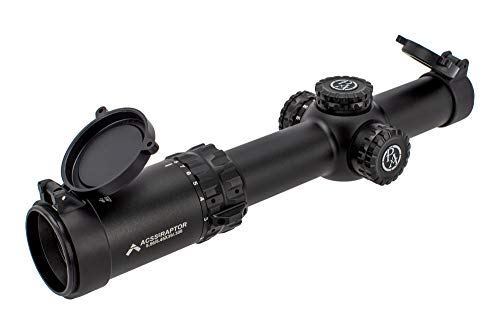
Primary Arms SLX 1-8x24FFP Rifle Scope – Illuminated ACSS-Raptor-5.56/5.45/.308
The world’s most advanced reticle comes in an all-new scope- Introducing Primary Arms SLx 1-8×24 FFP Rifle Scope.
The Primary Arms SLx 1-8×24 first focal plane (FFP) rifle scope bridges the gap between our SLx 1-6×24 FFP scopes and our top-of-the-line PLx 1-8×24 FFP scopes, offering an expansive magnification range with an eight-time zoom ratio in a compact, lightweight, and affordable package. This tough low power variable optic (LPVO) features full red reticle illumination, a quick focus eyepiece, and low profile, finger adjustable turrets topped by our new turret caps. The first focal plane construction allows for a small red-dot style reticle at low magnification for quick close-quarters engagements, without sacrificing the features and accuracy of our popular Advanced Combined Sighting System (ACSS) reticle system when you bring the magnification up. To get you from 1x to 8x and back, the SLx FFP rifle scope features our moveable and replaceable magnification ring fin. To top it all off we are backing this scope with lifetime warranty!
The ACSS Raptor-5.56 first focal plane reticle has been calibrated to be true at every magnification. The reticle’s features include automatic ranging out to 600 yards, moving target leads, and a large, fast horse shoe that easily draws your eye to the target. This caliber specific reticle is tuned for 5.56 NATO/5.45x39mm/.308 Win. Full red reticle illumination is provided by a single (included) CR2032 battery, and a spare battery is included inside the windage turret cap. A total of 11 settings take the reticle all the way up to daylight bright. At 1x you get a fast reticle optimized for engaging targets in close quarters. At 8x you have a precision reticle that will let you easily reach out to 600 yards!
Rifle Scope Product Features
Variable 1-8x magnification first focal plane features the ACSS Raptor reticle for 5.56/5.45/.308
Reticle features include automatic ranging out to 600 yards and moving target leads designed to excel at close quarters out to mid-range engagements
Full red illumination with 11 brightness settings powered by a common CR2032 battery
IP67 waterproof, fog resistant and nitrogen purged with a 6061-aluminum scope body and anodized matte black finish
Lifetime warranty for manufacturer defects, materials and workmanship, and even normal wear and tear
About the Primary Arms Company
Primary Arms is a premium maker for rifle scopes, optics, mounting solutions, and other accessories used for guns like rifles and long guns. They style and make their products choosing building materials which are durable and long lasting. This includes the Primary Arms SLX 1-8x24FFP Rifle Scope – Illuminated ACSS-Raptor-5.56/5.45/.308 by Primary Arms. For more shooting products, visit their website.
What You Need to Know About Scopes
Rifle scopes enable you to exactly aim a rifle at different targets by aligning your eye with the target over a distance. They do this through magnifying the target by making use of a series of lenses inside the scope. The scope’s positioning can be dialed in for the consideration of many natural things like wind and elevation decreases to account for bullet drop.
The scope’s function is to help shooters understand precisely where the bullet will hit based on the sight picture you are viewing with the scope as you line up the scope’s crosshair or reticle with the target. Most modern-day rifle scopes have around eleven parts which are located inside and externally on the scope. These parts consist of the rifle scope’s body, lenses, windage and elevation dials or turrets, focus rings, and other components. See all eleven parts of a rifle optical system.
Rifle Scope Varieties
Rifle scopes can be either “first focal plane” or “second focal plane” type of scopes. The type of focal plane a scope has establishes where the reticle or crosshair is located relative to the scopes magnifying adjustments. It literally indicates the reticle is situated behind or before the magnification lens of the optic. Selecting the most beneficial form of rifle glass depends on what kind of shooting you plan on doing.
First Focal Plane Optics
First focal plane scopes (FFP) come with the reticle before the magnifying lens. This triggers the reticle to increase in size based on the level of magnification being used. The outcome is that the reticle measurements are the same at the magnified range as they are at the non magnified distance. One tick on a mil-dot reticle at 100 yards without “zoom” is still the exact same tick at one hundred yards by using 5x “zoom”. These types of scopes work for:
- Quick acquisition, far away kinds of shooting
- Shooting circumstances where computations are marginal
- Experienced shooters who recognize their aim point “hold over” and also “lead” correlations for their weapon
- Shooters who don’t mind the reticle is bigger and takes up more visual eyesight room than a SFP reticle
Info About Second Focal Plane Scopes
Second focal plane scopes (SFP) include the reticle to the rear of the zoom lens. This induces the reticle to stay at the exact same dimensions in connection with the level of zoom being used. The final result is that the reticle measurements adapt based on the zoom chosen to shoot over longer ranges considering that the markings represent distinct increments which vary with the magnification level. In the FFP example with the SFP scope, the 5x “zoom” one hundred yard tick measurement would be 1/5th of the non “zoom” tick measurement. These particular styles of glass are beneficial for:
- Long distance kinds of shooting where shooters have extra time to make ballistic estimations
- Shooting where most shots occur within much shorter spaces and ranges
- Shooters who select a clearer optic sight picture with less room taken up by the bigger FFP reticle
Zoom for Glass
The quantity of zoom a scope provides is figured out by the diameter, thickness, and curvatures of the lenses inside of the rifle scope. The zoom of the scope is the “power” of the scope.
About Fixed Power Lens Rifle Scopes
A single power rifle optic and scope comes with a zoom number designator like 4×32. This implies the magnification power of the scope is 4x power while the objective lens is 32mm. The magnification of this type of scope can not adjust since it is set from the factory.
Adjustable Power Lens Rifle Optics
Variable power rifle scopes have adjustable power. It will list the magnification amount in a configuration like 2-10×32. These numbers mean the zoom of the scope could be adjusted between 2x and 10x power. This also involves the powers in-between 2 and 10. The power adaptation is achieved by applying the power ring component of the scope near the back of the scope by the eye bell.
Scope Power Level and Ranges
Here are some suggested scope power levels and the ranges where they may be efficiently used. Bear in mind that higher power scopes and optics will not be as effective as lower magnification level scopes due to the fact that excessive zoom can be a bad thing. The same applies to longer ranges where the shooter needs adequate power to see where to best aim the rifle.
About Scope Lens Finish
All present day rifle scope and optic lenses are coated. Lens coating is an important element of a rifle’s setup when considering high end rifle optics and scope setups.
HD Versus ED Rifle Optic Lens Coatings
Some rifle glass suppliers even use “HD” or high-definition lense finishes which use various procedures, components, chemicals, and polarizations to draw out various color ranges and viewable target visibility through lenses. This high-definition finish is typically used with more costly, high density glass which reduces light’s chance to refract by means of the lens glass. Some scope manufacturers use “HD” to describe “ED” indicating extra-low dispersion glass. ED handles how colors are represented on the chromatic spectrum and the chromatic deviance or aberration which is also called color distortion or fringing. Chromatic aberration can be noticeable over objects with hard shapes as light hits the item from certain angles.
Single Coating Versus Multi-Coating
Various optic lenses can likewise have various finishes used to them. All lenses usually have at least some type of treatment or finish applied to them before they are used in a rifle scope or optic.
Single coated lenses have a treatment applied to them which is generally a protective and improving multi-purpose treatment. This lens treatment can preserve the lens from scratches while decreasing glare and other less beneficial things experienced in the shooting environment while sighting in with the scope. The quality of a single covered lens depends on the scope producer and how much you spent for it. Both the make and cost are indicators of the lens quality.
Some scope makers similarly make it a point to specify if their optic lenses are coated or “multi” coated. Being “better” depends on the manufacturer’s lens treatment technology and the quality of products used in developing the rifle scope.
Hydrophobic Coating for Rifle Glass
Water on an optical lens does not improve keeping a clear sight picture through an optic at all. Lots of top of the line or high-end optic producers will coat their lenses with a hydrophilic or hydrophobic finish. The Steiner Optics Nano-Protection is a good example of this type of treatment. It treats the exterior surfaces of the Steiner glass lens so the water molecules can not bind to it or create surface tension. The outcome is that the water beads slide off of the scope to maintain a clear, water free sight picture.
Options for Mounting Optics on Firearms
Installing options for scopes come in a few options. There are the standard scope rings which are separately installed to the scope and one-piece scope mounts which cradle the scope. These different types of mounts also usually can be found in quick release variations which use toss levers which permit rifle shooters to quickly mount and remove the glass.
Rifle Glass Mounts with Hex Key Rings
Normal, clamp design mounting scope rings use hex head screws to mount to the flattop style Picatinny scope mount rails on rifles. These types of scope mounts use two different rings to support the optic, and are often made from 7075 T6 billet aluminum which are developed for long range accuracy shooting. This type of scope install is perfect for rifles which need a durable, rock solid mount which will not move no matter how much the scope is moved or abused.
Rifle Scope Mounts with Quick-Release Cantilever Rings
These types of quick-release rifle scope mounts can be used to quickly take off a scope and attach it to a different rifle. Multiple scopes can even be switched out if they all use a similar design mount. These types of mounts come in handy for rifles which are carried a lot, to remove the optic from the rifle for protection, or for scopes which are used in between multiple rifles or are situationally focused.
Details on Rifle Scope Tube Sealing and Gas Purging
Wetness inside your rifle optic can wreck a day of shooting and your highly-priced optic by causing fogging and developing residue within the scope tube. The majority of optics prevent wetness from getting in the scope tube with a series of sealing O-rings which are water resistant. Usually, these water-resistant scopes can be submerged beneath 20 or 30 feet of water before the water pressure can force moisture past the O-rings. This should be plenty of moisture prevention for basic use rifles for hunting and sporting purposes, unless you anticipate taking your rifle sailing and are concerned about the optic still working if it goes over the side and you can still find the firearm.
Details on Rifle Glass Tube Gas Purging
Another component of preventing the buildup of wetness within the rifle optic tube is filling the tube with a gas like nitrogen. Given that this area is already occupied by the gas, the optic is less altered by temp alterations and pressure variations from the outside environment which could potentially permit water vapor to seep in around the seals to fill the void which would otherwise be there. These are good qualities of a good rifle scope to look for.


