

Description
Rifle Scope Product Details
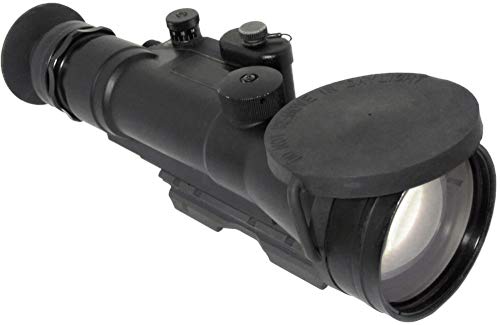
PRG Defense 15WOP422353021 Model Wolverine Pro 4 NL2 Gen 2+”Level 2″ Night Vision Rifle Scope, 4X Magnification, 125mm Objective Lens, 8° FOV, 25m to Infinity Focus Range, 30mm Eye Relief
PRG Defense 15WOP422353021 Model Wolverine Pro 4 NL2 Gen 2+ “Level 2” Night Vision Rifle Scope, 4x Magnification, 125mm Objective Lens, 8° FOV, 25m to Infinity Focus Range, 30mm Eye Relief
The Wolverine Pro 4 is a night vision weapon sight based upon the military nomenclature AN/PVS-12/12A. The Wolverine Pro 4 utilizes a high strength aluminum design to service the rugged day to day requirements and ever changing environments. Except for the optical elements, all external surfaces utilize a non-reflective matte black finish. Controls and adjustments are easy to operate and include power on/off switch, reticle brightness, eyepiece focus, range (distance) focus, plus windage and elevation adjustments.
Key Features
Easy to operate
Automatic brightness control
Adjustable projected reticle
Powered by 2 AA batteries
60 hour continuous operation
Specifications
Image Intensifier Tube: Gen 2+ “level 2″
Magnification: 4x
Objective lens: 125mm
FOV: 8°
Focus range: 25m to infinity
Diopter adjustment: -5 to +2 dpt
Eye relief: 30mm
Reticle color: Red
Infrared Illuminator: Detachable, long-range
Battery Type: 2 AA Batteries
Battery Life (Operating): Up to 60 hours at 20
Overall Dimensions: 262 x 87 x 87 mm (10.3″ x 3.4″ x 3.4”)
Weight: 1.74 kg (3.8 lbs)
Rifle Scope Product Features
4x Magnification, 125mm Objective Lens, 8° FOV, 25m to Infinity Focus Range
Automatic brightness control, Adjustable projected reticle
Powered by 2 AA batteries, 60 hour continuous operation
Detachable, long-range Infrared Illuminator
ITAR Compliance: *Export of this product outside of the United States of America is not allowed and is controlled by the US Department of State. By adding to Cart, You confirm that You are a U.S. Person and agree that You do not intend to Export this product. You also understand this product is regulated by the International Traffic in Arms Regulations (ITAR).
About the PRG Defense Scope Maker
PRG Defense is a premium producer for rifle scopes, optics, mounts, and other add-ons used for guns like rifles and long guns. They style and supply their scopes and related products making the most of building materials which are durable and long lasting. This includes the PRG Defense 15WOP422353021 Model Wolverine Pro 4 NL2 Gen 2+”Level 2″ Night Vision Rifle Scope, 4X Magnification, 125mm Objective Lens, 8° FOV, 25m to Infinity Focus Range, 30mm Eye Relief by PRG Defense. For more shooting goods, visit their site.
What You Need to Know About Rifle Optics
Rifle scopes enable you to exactly align a rifle at various targets by aligning your eye with the target at range. They accomplish this through zoom by utilizing a series of lenses within the scope. The scope’s positioning can be adjusted for consideration of numerous natural aspects like wind and elevation decreases to account for bullet drop.
The scope’s function is to help shooters understand precisely where the bullet will land based upon the sight picture you are seeing with the optic as you align the scope’s crosshair or reticle with the intended target. A lot of modern rifle scopes have around eleven parts which are arranged inside and outside of the scope body. These parts consist of the rifle scope’s body, lenses, windage turrets or dials, focus rings, and other components. See all eleven parts of a rifle optical system.
About Scope Styles
Rifle scopes can be either “first focal plane” or “second focal plane” style of scopes. The form of focal plane a scope has identifies where the reticle or crosshair lies in connection with the scopes magnification. It simply suggests the reticle is situated behind or before the magnifying lens of the optic. Choosing the best style of rifle glass depends upon what variety of shooting or hunting you intend on undertaking.
About First Focal Plane Scopes
Focal plane scopes (FFP) include the reticle in front of the magnification lens. These styles of scopes are beneficial for:
- Quick acquisition, long distance types of shooting
- Shooting situations where computations are small
- Experienced shooters who recognize their target “hold over” as well as “lead” relationships for their firearm
- Shooters who don’t mind the reticle is bigger and uses up more visual sight space than a SFP reticle
Info About Second Focal Plane Scopes
Second focal plane scopes (SFP) feature the reticle to the rear of the magnifying lens. This induces the reticle to remain at the same scale in connection with the volume of zoom being used. The end result is that the reticle dimensions adapt based on the magnification applied to shoot over lengthier distances considering the reticle markings present different increments which fluctuate with the zoom. In the FFP illustration with the SFP scope, the 5x “zoom” one hundred yard tick reticle measurement would be 1/5th of the non “zoom” tick measurement. These particular sorts of glass are convenient for:
- Far away styles of shooting where shooters have increased time to make ballistic computations
- Shooting where most of the shots occur within much shorter ranges and distances
- Shooters who prefer a clearer optic picture with less space taken up by the larger sized FFP reticle
Magnification for Scopes
The extent of scope zoom you need on your scope depends upon the type of shooting you choose to do. Practically every kind of rifle optic offers some degree of magnification. The volume of magnification a scope gives is identified by the dimension, density, and curves of the lenses within the rifle optic. The magnification of the optic is the “power” of the opic. This denotes what the shooter is looking at through the scope is magnified times the power element of what can normally be seen by human eyes.
Fixed Single Power Lens Scope Info
A single power rifle scope and optic comes with a zoom number designator like 4×32. This indicates the magnification power of the scope is 4x power and the objective lens is 32mm. The zoom of this kind of optic can not adjust considering that it is a set power scope.
Variable Power Lens Rifle Scopes
Variable power rifle scopes can be changed between magnification increments. These types of scopes will list the magnification amount in a format such as 2-10×32. These numbers suggest the zoom of the scope could be adjusted in between 2x and 10x power. This always incorporates the powers in-between 2 and 10. The power manipulation is achieved by working with the power ring component of the scope near the rear of the scope by the eye bell.
Power Levels and Range
Here are some advised scope power settings and the distances where they could be efficiently used. Consider that high power glass will not be as effective as lower magnification level optics because excessive magnification can be a negative thing in certain situations. The exact same concept applies to longer ranges where the shooter needs adequate power to see precisely where to properly aim the rifle at the target.
Lens Coating for Rifle Optics
All modern rifle optic and scope lenses are covered in special coatings. There are different types and qualities of glass finishes. When thinking about luxury rifle optical devices, Lens covering can be a very important element of defining the capability of the rifle. The glass lenses are one of the most important components of the glass given that they are what your eye looks through while sighting a rifle in on the point of impact. The coating on the lenses shields the lens surface and even improves anti glare capabilities from refracted natural light and color presence.
ED Versus HD Rifle Glass
Some rifle scope producers additionally use “HD” or high-definition lens coatings that make the most of different procedures, rare earth compounds, aspects, and polarizations to extract different colors and viewable target definition through the lens. This high-definition finishing is commonly used with more costly, high density lens glass which decreases light’s capability to refract by means of the lens glass. Some scope corporations use “HD” to refer to “ED” meaning extra-low dispersion glass. ED deals with how colors are represented on the chroma spectrum and the chromatic difference or aberration which is similarly called color distortion or fringing. Chromatic aberration may be noticeable over things with hard outlines as light hits the item from particular angles.
Single Coating Versus Multi-Coating
Different optic lenses can also have various finishings applied to them. All lenses typically have at least some type of treatment or finishing applied to them prior to being used in a rifle scope or optic assembly. Due to the fact that the lens isn’t simply a raw piece of glass, they require performance enhancing coatings. It is part of the carefully tuned optic. It requires a coating to be applied to it so that it will be optimally functional in numerous kinds of environments, degrees of light (full VS shade), and other shooting conditions.
Single covered lenses have a treatment applied to them which is generally a protective and improving multi-purpose treatment. This lens treatment can safeguard the lens from scratches while lowering glare and other less beneficial things experienced in the shooting environment while sighting in with the scope. The quality of a single layered lens depends upon the scope producer and how much you paid for it. The scope’s maker and cost are signs of the lens quality.
Some scope makers also make it a point to specify if their optic lenses are covered or “multi” covered. This indicates the lens has multiple treatments applied to the surfaces of the glass. If a lens gets numerous treatments, it can indicate that a producer is taking several actions to fight different environmental aspects like an anti-glare finish, a scratch resistant anti-abrasion finishing, followed by a hydrophilic coating. This also doesn’t always mean the multi-coated lens is better than a single covered lens. Being “much better” depends on the manufacturer’s lens treatment techniques and the quality of components used in creating the rifle glass.
Anti-water Lens Coverings
Water on a lens doesn’t improve maintaining a clear sight picture through a scope in any way. Many top of the line and high-end scope manufacturers will coat their lenses with a hydrophobic or hydrophilic finishing. The Steiner Optics Nano-Protection is a good example of this kind of treatment. It provides protection for the exterior of the Steiner scope lens so the H2O particles can not bind to it or create surface tension. The result is that the water beads sheet off of the scope to preserve a clear, water free sight picture.
Alternatives for Mounting Optics on Firearms
Installing approaches for scopes come in a couple of options. There are the basic scope rings which are separately installed to the optic and one-piece scope mounts which cradle the scope. These various kinds of mounts also usually are made in quick release variations which use manual levers which permit rifle shooters to rapidly install and dismount the glass.
Hex Key Scope Ring Mounting Solutions
Standard, clamp design mounting optic rings use hex head screws to fix to the flattop style Picatinny scope mounting rails on the tops of rifles. These forms of scope mounts use a pair of separate rings to support the optic, and are normally made from 7075 T6 billet aluminum or similar materials which are made for long distance accuracy shooting. This kind of scope mount is exceptional for rifles which need a long lasting, unfailing mount which will not move no matter just how much the scope is moved about or abuse the rifle takes. These are the style of mounts you want for a specialized optics system on a reach out and touch someone hunting or competitors long gun that will rarely need to be altered or adjusted. Blue 242 Loctite threadlocker can also be used on the scope mount’s screws to prevent the hex screws from wiggling out after they are mounted securely in position. An example of these rings are the 30mm style made by Vortex Optics. The set normally costs around $200 USD
Quick-Release Cantilever Optic Rings
These types of quick-release rifle scope mounts can be used to quickly remove a scope and connect it to a different rifle. Several scopes can also be swapped out if they all use a similar design mount. These types of mounts come in handy for rifles which are carried a lot, to remove the optic from the rifle for protecting the scope, or for optics which are used in between several rifles or are situationally focused.
Sealing and Gas Purging for Glass Tubes
Wetness inside your rifle scope can mess up a day of shooting and your costly optic by triggering fogging and developing residue inside of the scope tube. Many scopes avoid wetness from entering the scope tube with a system of sealing O-rings which are water resistant.
Rifle Optic Gas Purging
Another element of preventing the accumulation of moisture within the rifle scope’s tube is filling the tube with a gas like nitrogen. Given that this space is currently taken up by the gas, the optic is less altered by temperature level shifts and pressure differences from the outside environment which could potentially permit water vapor to seep in around the seals to fill the void which would otherwise be there. These are good qualities of a good rifle scope to seek out.


