

Description
Rifle Scope Product Details
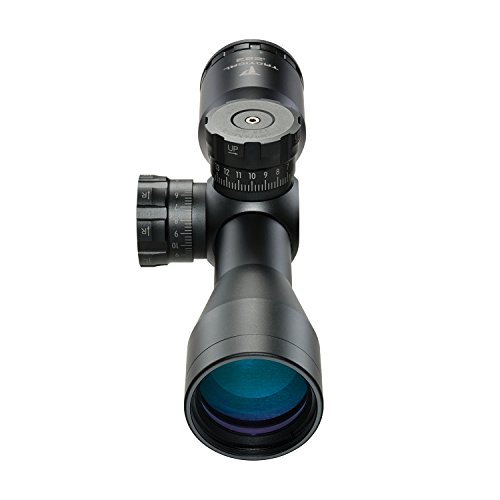
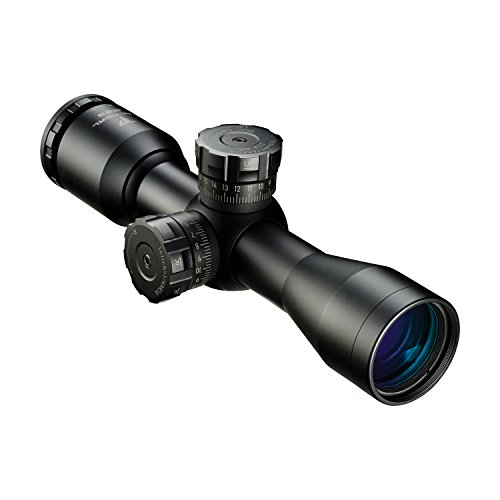
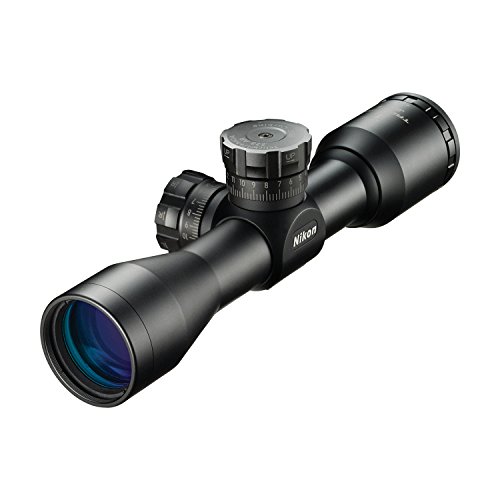
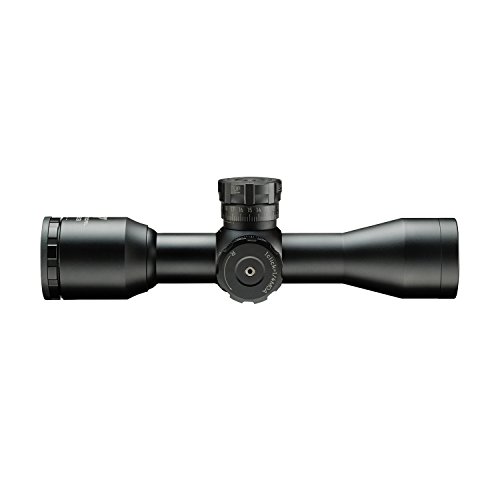
Nikon P-Tactical .223 3×32 Matte BDC Carbine (16526)
Nikon new p-tactical riflescopes provide the features you need to maximize your shooting experience-regardless of the platform you mount it on. Fully multicoated optical systems housed in rugged, one-inch, aircraft-grade aluminum main tubes brighten even the most dismal environments and unforgiving conditions.
Rifle Scope Product Features
About this item
The BDC carbine reticle provides a 200 yard Crosshair with “hash marks” at 400 yards and 600 yards
One inch body tube
Spring loaded instant zero resets turrets
Elevated windage and elevation turrets
Generous consistant Eye relief
Included Components: Scope Caps
NIKON P-TACTICAL SCOPES
Nikon’s P-TACTICAL scopes provide the features you need to maximize your hunting experience ” regardless of the platform you mount it on. Fully multicoated optical systems housed in rugged, one-inch, aircraft-grade aluminum main tubes brighten even the most dismal environments and unforgiving conditions. The versatile 3x zoom ratio (on variable models) provides the field of view at the low end and the detail at the high end to satisfy most shooting demands. P-TACTICAL’s hash-marked MK1-MOA or MK1-MRAD reticles are matched to ergonomic turrets with directional indicators to make every come-up-or down ” both simple and intuitive. Dedicated caliber models ” including rimfire ” match the reticle to your preferred caliber. When used in conjunction with Nikon’s free Spot On Ballistic Technology, all reticles offer exact holdover points or elevation adjustment for any long-range engagement.
Bright, Fully Multicoated Optics
Fuly multicoated optical systemshoused in rugged, one-inch, aircraft-grade aluminum main tube brighten even the most dismal environments.
Spring-loaded Instant Zero-reset Turrets
Windage and elevation turrets are clearly marked for quick adjustments. Rugged, aircraft-grade aluminum main tube.
Quick Focus Eyepiece
Smooth-turn aluminum ring with rubberized eye guard allows crisp reticle focus and quick target acquisition. Spring-loaded windage and elevation knobs can be reset to “zero” after sighting-in for easy reference when making field adjustments.
Waterproof/Fogproof/Shockproof
O-ring sealed to prevent moisture from entering body and nitrogen purged for total reliability against thermal shock. Shockproof construction shrugs off hard recoil and rugged use.
BDC 600
The P-TACTICAL line offers models with the newly designed MK1-MOA and MK1-MRAD reticles, as well as the platform-based, caliber-designated BDC 150, BDC 600, BDC 800, BDC SuperSub and BDC Carbine.
MK1-MOA
The MK1 reticle’s asymmetrical design allows for additional holdover and can be used to estimate range, target size, elevation holdover and wind-drift at the designated magnification.
BDC Carbine
The BDC reticles can be optimized with Spot On Ballistic Technology at NikonSportOptics.com/SpotOn
Nikon P-Tactical 223 3-9x40mm BDC 600 Reticle Scope Nikon P-TACTICAL 3-9×40 MK1-MOA Scope Nikon P-TACTICAL .223 3×32 BDC Carbine Scope
Magnification 3- 9x 3- 9x 3x
Objective Diameter 40mm 40mm 32mm
Tube Diameter – Other 1 in 1 in 1 in
Weight 16.9 oz 16.9 oz 12.7 oz
Overall Length 12.4 in 12.4 in 8.2 in
aterproof/Fogproof
About the Nikon Scope Maker
Nikon is a premium supplier for firearm scopes, optics, mounting solutions, and other accessories used for firearms like rifles and long guns. They innovate and build their scopes and related products by making the most of materials which are long lasting and resilient. This includes the Nikon P-Tactical .223 3×32 Matte BDC Carbine (16526) by Nikon. For more shooting products, visit their site.
What You Need to Know About Rifle Glass
Rifle scopes permit you to precisely aim a rifle at various targets by lining up your eye with the target at range. They do this through zoom by making use of a set of lenses inside the scope. The scope’s positioning can be adjusted for the consideration of varied natural things like wind and elevation increases or decreases to make up for bullet drop.
The scope’s purpose is to help the shooter understand exactly where the bullet will land based on the sight picture you are viewing through the optic as you line up the scope’s crosshair or reticle with the target. A lot of contemporary rifle scopes have about 11 parts which are arranged within and externally on the optic. These scope parts consist of the rifle scope’s body, lenses, windage and elevation dials, objective focus rings, and other parts. Learn about the eleven parts of rifle scopes.
Rifle Scope Varieties
Rifle scopes can be either “first focal plane” or “second focal plane” type of scopes. The form of focal plane a scope has decides where the reticle or crosshair is located in relation to the scopes magnifying adjustments. It literally suggests the reticle is behind or before the magnification lens of the optic. Considering the most ideal style of rifle optic is dependent on what form of hunting or shooting you intend on undertaking.
About First Focal Plane Optics
Focal plane scopes (FFP) feature the reticle in front of the magnification lens. These types of scopes are useful for:
- Quick acquisition, long distance types of shooting
- Shooting situations where computations are marginal
- Experienced shooters who have an idea for their aim point “hold over” plus “lead” ratios for their firearms
- Shooters who do not mind the reticle is enlarged and occupies more visual eyesight room than a SFP reticle
Second Focal Plane Scope Info
Second focal plane optics (SFP) include the reticle behind the zoom lens. This causes the reticle to remain at the exact same scale in relation to the level of zoom being used. The end result is that the reticle measurements adjust based upon the zoom chosen to shoot over lengthier distances considering the markings represent various increments which can vary with the magnification level. In the FFP illustration with the SFP glass, the 5x “zoom” 100 yard tick would be 1/5th of the non “zoom” tick. These particular sorts of glass are beneficial for:
- Far away types of shooting where shooters have extra time to make ballistic estimations
- Shooting where most shots happen within much shorter proximities and ranges
- Shooters who like a clearer optic sight picture with less space used up by the larger size FFP reticle
Zoom for Rifle Scopes
The quantity of zoom a scope provides is figured out by the size, density, and curvatures of the lenses inside of the rifle scope. The zoom of the scope is the “power” of the scope.
About Fixed Single Power Lens Glass
A single power rifle scope comes with a magnification number designator like 4×32. This suggests the zoom power of the scope is 4x power while the objective lens is 32mm. The zoom of this type of scope can not change given that it is a fixed power optic.
Variable Power Lens Scope Details
Variable power rifle scopes have adjustable power. These types of scopes will note the zoom amount in a format like 2-10×32. These numbers mean the magnification of the scope can be changed between 2x and 10x power. This always involves the powers in-between 2 and 10. The power shift is achieved by employing the power ring part of the scope near the rear of the scope by the eye bell piece.
Power and Range
Here are some advised scope powers and the ranges where they can be successfully used. Highly magnified rifle scope glass will not be as useful as lower magnification level glass because too much zoom can be a bad thing. The same concept goes for extended ranges where the shooter needs adequate power to see precisely where to best aim the rifle at the target.
Rifle Scope Lens Coating
All contemporary rifle scope lenses are covered in special coatings. There are different types and qualities of glass coatings. Lens covering is an essential element of a rifle’s setup when thinking about high end rifle optics and scope equipment. The glass lenses are among the most vital parts of the scope because they are what your eye looks through while sighting a rifle in on the target. The covering on the lenses offers protection to the lens surface area as well as assists with anti glare capabilities from excess sunrays and color recognition.
About Rifle Glass Lens Coatings – HD Versus ED
Some scope manufacturers likewise use “HD” or high-definition lens finishings which use various processes, chemicals, polarizations, and elements to draw out separate colors and viewable definition through the lens. Some scope manufacturers use “HD” to refer to “ED” indicating extra-low dispersion glass.
Single Finishing Versus Multi-Coating for Scopes
Different optic lenses can also have different coverings used to them. All lenses usually have at least some type of treatment or covering used to them before they are used in a rifle scope or optic.
Single layered lenses have a treatment applied to them which is typically a protective and enhancing multi-purpose treatment. This lens treatment can shield the lens from scratches while minimizing glare and other less helpful things experienced in the shooting environment while sighting in with the optic. The quality of a single layered lens depends on the scope developer and just how much you spent for it. Both are signs of the lens quality.
Some scope makers also make it a point to define if their optic lenses are covered or “multi” coated. This means the lens has multiple treatments applied to the surfaces. If a lens receives several treatments, it can indicate that a producer is taking numerous steps to fight different environmental aspects like an anti-glare finish, a scratch resistant anti-abrasion finish, followed by a hydrophilic coating. This also doesn’t always suggest the multi-coated lens is better than a single layered lens. Being “better” hinges on the manufacturer’s lens treatment technology and the quality of materials used in creating the rifle glass.
Anti-water Finish for Rifle Optics
Water on an optical lens doesn’t support maintaining a clear sight picture through a scope in any way. Lots of top of the line and premium scope producers will coat their lenses with a hydrophobic or hydrophilic finish. The Steiner Optics Nano-Protection is a good example of this kind of treatment. It treats the surface area of the Steiner scope lens so the H2O molecules can not bind to it or develop surface tension. The outcome is that the water beads slide off of the scope to maintain a clear, water free sight picture.
Scope Mounting Choices
Installing options for scopes are available in a couple of options. There are the basic scope rings which are individually mounted to the scope and one-piece scope mounts which cradle the scope. These various kinds of mounts also usually can be found in quick release versions which use throw levers which allow rifle shooters to rapidly install and remove the glass.
Hex Key Rifle Glass Ring Mounting Solutions
Standard, clamp style mounting scope rings use hex head screws to mount to the flattop style Picatinny scope installation rails on rifles. These types of scope mounts use two different rings to support the optic, and are made from 7075 T6 billet aluminum which are designed for long range accuracy shooting. This type of scope mount is perfect for rifles which need a long lasting, sound mounting solution which will not move no matter how much the scope is moved or abused.
Quick-Release Cantilever Rifle Scope Rings
These types of quick-release rifle scope mounts can be used to quickly remove a scope and attach it to a different rifle. Multiple scopes can also be switched out if they all use a compatible style mount. These types of mounts are handy for long guns which are transferred a lot, to remove the optic from the rifle for protection, or for scopes which are used between multiple rifles.
Details on Optic Tube Sealing and Gas Purging
Moisture inside your rifle scope can spoil a day on the range and your highly-priced optic by resulting in fogging and producing residue inside of the scope tube. A lot of scopes prevent wetness from entering the scope tube with a series of sealing O-rings which are waterproof. Usually, these water-resistant scopes can be immersed under 20 or 30 feet of water before the water pressure can push moisture past the O-rings. This should be more than enough wetness prevention for basic use rifles, unless you intend on taking your rifle aboard watercrafts and are concerned about the optic still functioning if it goes overboard and you can still salvage the firearm.
Scope Gas Purging
Another component of preventing the accumulation of wetness inside of the rifle scope tube is filling the tube with a gas like nitrogen. Because this space is already occupied by the gas, the optic is less altered by temp shifts and pressure variations from the outside environment which could possibly allow water vapor to seep in around the seals to fill the void which would otherwise exist. These are good qualities of a decent rifle scope to look for.


