
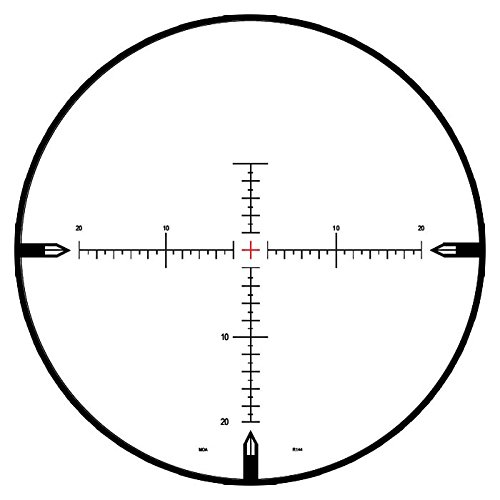


Description
Rifle Scope Product Details
NightForce C507 5.5-22×56 NXS Riflescope Moar-T Reticle, Black, 30mm Tube, ZeroStop.250 MOA Adjustments
NightForce 5.5-22×56 NXS Riflescope w/ MOAR-T Reticle, Black, 30mm, ZeroStop – .250 MOA – MOAR-T C507. New for 2014!
Rifle Scope Product Features
NXS 5.5-22×56
0.250 MOA Adjustments
ZeroStop
MOAR-T Reticle
30mm Tube
About the NightForce Manufacturer
NightForce is a premium supplier for firearm scopes, optics, mounts, and other accessories used for firearms like rifles and long guns. They create and supply their mounts, scopes, and related products choosing elements which are durable and long lasting. This includes the NightForce C507 5.5-22×56 NXS Riflescope Moar-T Reticle, Black, 30mm Tube, ZeroStop.250 MOA Adjustments by NightForce. For additional shooting goods, visit their website.
Facts About Rifle Optics
Rifle scopes allow you to precisely aim a rifle at various targets by lining up your eye with the target over a range. They do this through zoom using a series of lenses inside the scope. The scope’s positioning can be dialed in to take into account many natural factors like wind and elevation decreases to account for bullet drop.
The scope’s function is to understand precisely where the bullet will hit based on the sight picture you are seeing using the scope as you line up the scope’s crosshair or reticle with the target. A lot of modern rifle optics have around eleven parts which are located inside and externally on the scope body. These scope parts consist of the rifle scope’s body, lenses, windage dials or turrets, objective focus rings, and other elements. Learn about the eleven parts of rifle optics.
Rifle Glass Styles
Rifle scopes can be either “first focal plane” or “second focal plane” type of scopes. The sort of focal plane an optic has decides where the reticle or crosshair is located in regard to the optic’s zoom. It actually implies the reticle is situated behind or before the magnifying lens of the optic. Selecting the most reliable type of rifle optic depends upon what sort of shooting or hunting you intend on doing.
First Focal Plane Optics
Focal plane scopes (FFP) come with the reticle in front of the magnifying lens. This induces the reticle to increase in size based upon the level of magnification being used. The outcome is that the reticle measurements are the same at the enhanced range as they are at the non amplified distance. For instance, one tick on a mil-dot reticle at one hundred yards without having “zoom” is still the corresponding tick at 100 yards using 5x “zoom”. These types of scopes are useful for:
- Quick acquisition, long distance types of shooting
- Shooting circumstances where computations are low
- Experienced shooters who know their target “hold over” plus “lead” equations for their weapon
- Shooters who don’t mind the reticle is bigger and takes up more visual sight room than a SFP reticle
Info on Second Focal Plane Scopes
Second focal plane optics (SFP) feature the reticle to the rear of the magnifying lens. This induces the reticle to stay at the very same overall size relative to the level of zoom being used. The final result is that the reticle measurements evolve based upon the magnification applied to shoot over greater ranges given that the reticle markings represent distinct increments which can vary with the zoom. In the FFP example with the SFP optic, the 5x “zoom” 100 yard tick would be 1/5th of the non “zoom” tick reticle measurement. These kinds of scopes are convenient for:
- Far away kinds of shooting where shooters have increased time to make ballistic estimations
- Shooting where most of the shots happen within shorter spaces and ranges
- Shooters who choose a clearer optic sight picture without room taken up by the bigger FFP reticle
Zoom for Rifle Optics
The extent of scope zoom you need depends upon the sort of shooting you desire to do. Pretty much every style of rifle scope gives some amount of zoom. The quantity of magnification a scope supplies is established by the size, density, and curvatures of the lenses inside of the rifle optic. The magnifying level of the optic is the “power” of the scope. This denotes what the shooter is observing through the scope is magnified times the power factor of what can typically be seen by human eyes.
Fixed Power Lens Optic Details
A single power rifle optic and scope uses a magnification number designator like 4×32. This implies the zoom power of the scope is 4x power and the objective lens is 32mm. The zoom of this type of optic can not adjust given that it is fixed.
About Adjustable Power Lens Rifle Glass
Variable power rifle scopes use variable power levels. The power adjustment is performed by using the power ring part of the scope near the rear of the scope by the eye bell.
The Power Level and Range of Rifle Optics
Here are some advised scope powers and the ranges where they could be effectively used. Highly magnified scopes will not be as useful as lower magnification level rifle scope glass since too much magnification can be a bad thing. The exact same idea applies to longer ranges where the shooter needs adequate power to see where to properly aim the rifle.
Info on Optic Lens Finishing
All modern rifle optic lenses are coated. There are different types and qualities of glass lens finishings. Lens covering can be an important element of a rifle when thinking of high end rifle optics and targeting systems. The lenses are one of the most vital components of the glass since they are what your eye sees through while sighting a rifle in on the target. The finish on the lenses offers protection to the lens surface area and improves anti glare from excess natural light and color visibility.
HD Versus ED Lens Coatings
Some rifle scope makers even use “HD” or high-def lense coverings that employ different processes, polarizations, chemicals, and elements to extract various colors and viewable target visibility through the lens. This high-definition finishing is normally used with increased density glass which drops light’s potential to refract by means of the lens glass. Some scope producers use “HD” to describe “ED” signifying extra-low dispersion glass. ED handles how certain colors are presented on the chromatic spectrum and the chromatic difference or aberration which is similarly called color distortion or fringing. Chromatic aberration is often obvious around things with defined shapes as light hits the item from specific angles.
Single Optic Lens Finish Versus Multi-Coating
Various optic lenses can even have various coverings applied to them. All lenses usually have at least some kind of treatment or finish applied to them before they are used in a rifle scope or optic. Due to the fact that the lens isn’t just a raw piece of glass, they require performance enhancing coatings. It is part of the carefully tuned optic. It requires a coating to be applied to it so that it will be optimally usable in many types of environments, degrees of sunlight (full VS shade), and other shooting conditions.
Single covered lenses have a treatment applied to them which is normally a protective and enhancing multi-purpose treatment. This lens treatment can preserve the lens from scratches while minimizing glare and other less advantageous things experienced in the shooting environment while sighting in with the scope. The quality of a single layered lens depends upon the scope producer and how much money you spent on it. Both the make and cost are indicators of the lens quality.
Some scope makers similarly make it a point to specify if their optic lenses are coated or “multi” coated. Being “better” depends on the manufacturer’s lens treatment innovation and the quality of products used in building the rifle scope.
Details on Hydrophobic Covering
Water on a lens doesn’t help with keeping a clear sight picture through a scope at all. Numerous top of the line and high-end scope companies will coat their lenses with a hydrophilic or hydrophobic finishing.
Options for Installing Rifle Scopes on Long Guns
Installing solutions for scopes are available in a few options. There are the basic scope rings which are individually mounted to the optic and one-piece scope mounts which cradle the scope. These different types of mounts also generally can be found in quick release versions which use throw levers which permit rifle operators to rapidly mount and dismount the glass.
Hex Key Rifle Optic Rings
Basic, clamp design mounting scope rings use hex head screws to mount to the flattop design Picatinny scope mount rails on the tops of rifles. These types of scope mounts use double individual rings to support the optic, and are made from 7075 T6 billet aluminum which are developed for long distance precision shooting. This form of scope mount is effective for rifle systems which need a long lasting, rock solid mount which will not move regardless of how much the scope is moved or abuse the rifle takes. These are the design of mounts you should get for a specialized scope setup on a reach out and touch someone hunting or interdiction firearm that will almost never need to be modified or adjusted. Blue 242 Loctite threadlocker can additionally be used on the scope mount screws to keep the hex screw threads from wiggling out after they are mounted safely in position. An example of these rings are the 30mm style from Vortex Optics. The set usually costs around $200 USD
Quick-Release Cantilever Glass Ring Mounts
These types of quick-release rifle scope mounts can be used to rapidly take off a scope from a rifle and reattach it to a different rifle. If they all use a similar style mount, a number of scopes can also be swapped out on the range. The quick detach design is CNC machined from anodized 6061 T6 aluminum and the mounting levers connect solidly to a flat top style Picatinny rail. This enables the scope to be sighted in while on the rifle, taken off of the rifle, and remounted while maintaining accuracy. These types of mounts are useful and convenient for rifles which are carried a lot, to remove the scope glass from the rifle for protection, or for optics which are employed between numerous rifles. An example of this mount type is the 30mm mount designed by Vortex Optics. It usually costs around $250 USD
Sealing and Gas Purging for Rifle Glass Tubes
Moisture inside your rifle glass can spoil a day of shooting and your highly-priced optic by resulting in fogging and developing residue within the scope’s tube. Most scopes prevent humidity from going into the scope tube with a system of sealing O-rings which are waterproof. Usually, these water resistant scopes can be submerged underneath 20 or 30 feet of water before the water pressure can force moisture past the O-rings. This should be more than enough wetness prevention for basic use rifles, unless you plan on taking your rifle aboard watercrafts and are worried about the scope still working if it is submerged in water and you can still find the rifle.
Scope Gas Purging
Another component of avoiding the buildup of wetness within the rifle optic’s tube is filling the tube with a gas like nitrogen. Given that this space is already taken up by the gas, the optic is less influenced by climate changes and pressure differences from the outdoor environment which might potentially allow water vapor to leak in around the seals to fill the void which would otherwise exist. These are good qualities of a decent rifle scope to look for.


