




Description
Rifle Scope Product Details
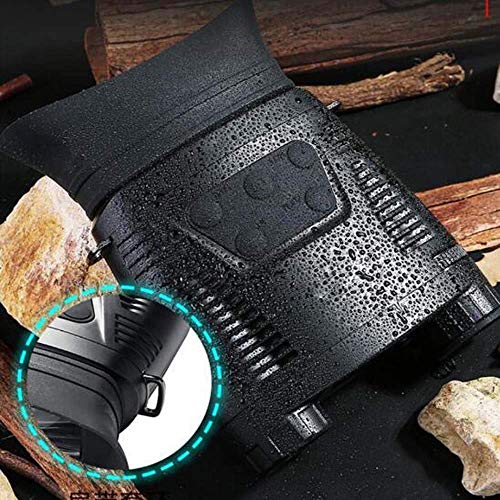
Night Vision Binoculars Large-Screen High-Definition Digital Video Camera Black and White Night Vision Dual-Hunting Patrol Security Outdoors JIAJIAFUDR
Welcome to our shop
Happy shopping!
Our products have been thoroughly tested, inspected and packaged before delivery.
If you have any questions, please feel free to contact us so that we can provide you with the best service.
Digital Zoom: 3.5X-7X
Perspective: 9 °
Objective Diameter: 31mm
Exit pupil distance: 30mm
Objective: 1.2F
Darkness effective distance: 400M
Eyepiece magnification: 2X
CMOS sensor sensitivity
Size: 1/3
Resolution: 640×480
External power supply: USB
8 AA-4.5V-6V batteries
Storage: TF Card
Package size: 27.5×22.5x9cm
If you are not satisfied with the product, please feel free to contact us, we will contact you within 24 hours. For more related product details, please search for “JIAJIAFUDR”
Rifle Scope Product Features
This series is a demand for outdoor sports completely designed, reliable and versatile, built ranging reticle, ad hoc ranging slide rule, built-in compass, to meet the changing requirements of outdoor sports.
Large diameter, high brightness and high contrast.
Large-diameter, round antireflection coatings, multilayer broadband antireflection green film camera, in front ensure higher brightness and contrast,
Especially in a dark environment, more than a telescope to details of the scene.
Advanced prism, clear image, advanced BAK4 prism film, the edge of the image quality even if it is clear and bright.
About the JIAJIAFU Brand
JIAJIAFU is a premium supplier for rifle scopes, optics, mounting solutions, and other accessories used for firearms like rifles and long guns. They innovate and build their mounts and related products using building materials which are resilient and long lasting. This includes the Night Vision Binoculars Large-Screen High-Definition Digital Video Camera Black and White Night Vision Dual-Hunting Patrol Security Outdoors JIAJIAFUDR by JIAJIAFU. For more shooting goods, visit their website.
What You Need to Know About Rifle Glass
Rifle scopes enable you to precisely aim a rifle at different targets by aligning your eye with the target over a range. They do this through magnifying the target by using a set of lenses within the scope. The scope’s positioning can be adjusted to take into account various natural aspects like wind speed and elevation decreases to make up for bullet drop.
The scope’s function is to understand precisely where the bullet will land based upon the sight picture you are viewing with the scope as you line up the scope’s crosshair or reticle with the intended point of impact. The majority of modern-day rifle optics have about 11 parts which are found inside and outside of the scope. These scope parts include the rifle scope’s body, lenses, windage and elevation turrets or dials, focus rings, and other elements. Learn about the eleven parts of scopes.
About Rifle Scope Varieties
Rifle scopes can be either “first focal plane” or “second focal plane” type of scopes. Deciding on the finest type of rifle scope is based on what type of shooting you plan to do.
First Focal Plane Scope Facts
Focal plane scopes (FFP) include the reticle in front of the magnification lens. These styles of scopes are helpful for:
- Quick acquisition, long distance types of shooting
- Shooting situations where calculations are very little
- Experienced shooters who have an idea for their aim point “hold over” plus “lead” equations for their firearms
- Shooters who do not mind the reticle is enlarged and occupies more visual eyesight room than a SFP reticle
Second Focal Plane Optics
Second focal plane scopes (SFP) feature the reticle to the rear of the zoom lens. This induces the reticle to remain at the same size in connection with the level of magnification being used. The end result is that the reticle dimensions shift based upon the zoom applied to shoot over greater distances considering the reticle measurements present distinct increments which change with the magnification. In the FFP illustration with the SFP scope, the 5x “zoom” one hundred yard tick measurement would be 1/5th of the non “zoom” tick measurement. These particular sorts of scopes work for:
- Far away forms of shooting where shooters have increased time to make ballistic calculations
- Shooting where most of the shots occur within shorter proximities and ranges
- Shooters who would like a clearer optic picture with less room taken up by the enlarged FFP reticle
Rifle Scope Zoom
The quantity of scope zoom you need on your glass depends upon the kind of shooting you would like to do. Virtually every kind of rifle glass delivers some level of zoom. The volume of zoom a scope offers is identified by the dimension, density, and curvatures of the lenses inside of the rifle optic. The magnifying level of the optic is the “power” of the scope. This denotes what the shooter is looking at through the scope is magnified times the power factor of what can typically be seen by human eyes.
Info on Fixed Power Lens Rifle Glass
A single power rifle optic and scope uses a zoom number designator like 4×32. This implies the magnification power of the scope is 4x power while the objective lens is 32mm. The zoom of this kind of scope can not change given that it is fixed.
Adjustable Power Lens Glass
Variable power rifle scopes use variable power levels. The power adjustment is handled using the power ring part of the scope near the rear of the scope by the eye bell.
Power and Range Correlations
Here are some advised scope powers and the ranges where they could be efficiently used. Highly magnified scopes will not be as useful as lower powered scopes considering too much magnification can be a negative aspect depending on your shooting distance. The exact same concept relates to longer distances where the shooter needs to have sufficient power to see precisely where to properly aim the rifle at the target.
Scope Lens Finishing
All modern-day rifle optic and scope lenses are covered in special coatings. There are various types and qualities of lens coatings. Lens covering is an important aspect of a rifle’s setup when considering high-end rifle optics and scope units. The glass lenses are one of the most vital pieces of the optic as they are what your eye sees through while sighting a rifle in on the target. The finish on the lenses protects the lens surface area as well as helps with anti glare from refracted light and color presence.
Details on Rifle Glass Lens Coatings – HD Versus ED
Some scope brands likewise use “HD” or high-definition lens finishings which use different methods, polarizations, chemicals, and aspects to draw out different colors and viewable definition through the lens. Some scope producers use “HD” to refer to “ED” implying extra-low dispersion glass.
About Single Coating Versus Multi-Coating
Different optic lenses can also have different coatings applied to them. All lenses normally have at least some type of treatment or finish used to them prior to being used in a rifle scope or optic.
Single layered lenses have a treatment applied to them which is typically a protective and boosting multi-purpose treatment. This lens treatment can safeguard the lens from scratches while reducing glare and other less helpful things experienced in the shooting environment while sighting in with the scope. The quality of a single coated lens depends on the scope designer and the amount you spent for it. Both the make and cost are indications of the lens quality.
Some scope manufacturers likewise make it a point to specify if their optic lenses are covered or “multi” covered. This indicates the lens has had multiple treatments applied to them. If a lens receives several treatments, it can show that a manufacturer is taking multiple steps to combat various natural factors like an anti-glare coating, a scratch resistant anti-abrasion finish, followed by a hydrophilic finish. This additionally does not always imply the multi-coated lens will perform better than a single layered lens. Being “better” depends upon the producer’s lens treatment techniques and the quality of products used in constructing the rifle optic.
Anti-water Lens Coatings
Water on a lens doesn’t help with maintaining a clear sight picture through a scope at all. Many top of the line and high-end optic makers will coat their lenses with a hydrophobic or hydrophilic anti-water finish.
Scope Installation Choices
Installing approaches for scopes come in a couple of choices. There are the basic scope rings which are individually mounted to the optic and one-piece scope mounts which cradle the scope. These different types of mounts also generally are made in quick release variations which use throw levers which enable rifle operators to rapidly mount and dismount the scope.
Scope Mounting Solutions with Hex Key Rings
Standard, clamp design mounting scope rings use hex head screws to mount to the flattop style Picatinny scope mount rails on rifles. These types of scope mounts use a couple of different rings to support the optic, and are often made from 7075 T6 billet aluminum which is designed for long distance precision shooting. This type of scope install is perfect for rifles which need a long lasting, rock solid mount which will not move no matter how much the scope is moved or abused.
Quick-Release Cantilever Optic Rings
These types of quick-release rifle scope mounts can be used to quickly connect and remove a scope from a rifle. A wide range of scopes can also be swapped out if they all use a complementary style mount. The quick detach design is CNC crafted from anodized 6061 T6 aluminum and the mounting levers attach firmly to a flat top type Picatinny rail. This allows the scope to be sighted in while on the rifle, taken off of the rifle, and remounted back on the rifle while preserving the original sighting settings. These types of mounts are useful and practical for shooting platforms which are moved around a lot, to remove the scope glass from the rifle for protection, or for optics which are chosen for use in between numerous rifles. An example of this mount style is the 30mm mount from the Vortex Optics brand. It typically costs around $250 USD
Glass Tube Sealing and Gas Purging
Wetness inside your rifle scope can destroy a day of shooting and your costly optic by bringing about fogging and producing residue inside of the scope tube. Most scopes avoid moisture from going into the scope tube with a system of sealing O-rings which are waterproof.
Gas Purged Rifle Glass Tubes
Another element of avoiding the accumulation of wetness inside of the rifle scope’s tube is filling the tube with a gas like nitrogen. Given that this area is already occupied by the gas, the glass is less affected by temperature changes and pressure distinctions from the outdoor environment which might possibly permit water vapor to seep in around the seals to fill the void which would otherwise be there. These are good qualities of a good rifle scope to seek out.


