



Description
Rifle Scope Product Details
Monstrum 3-9×32 Rifle Scope with Rangefinder Reticle | Monstrum Offset Picatinny Scope Rings | Bundle
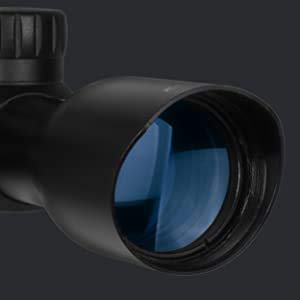
The Monstrum Tactical S3932-R-RG is a high performance tactical scope, providing crystal clear optics at 3 to 9 times magnification for close to mid range shooting.
It comes equipped with an illuminated Rangefinder reticle which can be viewed in red or green illumination and in multiple brightness intensities, or viewed in black without illumination, for a suitable sight picture regardless of lighting or environment.
Crafted from aircraft grade aluminum, the scope is both sturdy and lightweight, with a 1 inch sealed, nitrogen charged tube for resistance to water and fog. The scope is 9.6 Inches in length, 2 Inches in width, 2 Inches in height and 12 ounces in weight. It comes with lens covers and one 3V CR1632 battery.
Product bundle also includes a set of 1 inch offset cantilever scope rings for optimum scope placement. The rings extend forward 1.5 inch from the base and can be mounted in either direction dependent on your preferred scope placement and your mounting system.
Rifle Scope Product Features
About this item
Tactical rifle scope providing crystal clear targeting at 3-9x magnification, with a 32mm objective diameter and an eye relief of 3.5-3.8 Inches
Glass rangefinder reticle for on-the-fly range estimation and long distance targeting
Dial controlled reticle illumination in both red and green with multiple brightness intensities
Bundle includes a set of Monstrum Offset Cantilever Scope Rings for added flexibility for scope placement and optimum eye relief
About the Monstrum Brand
Monstrum is a premium maker for long gun scopes, optics, mounts, and other accessories used for guns like rifles and long guns. They innovate and supply their products by making the most of elements which are resilient and long lasting. This includes the Monstrum 3-9×32 Rifle Scope with Rangefinder Reticle | Monstrum Offset Picatinny Scope Rings | Bundle by Monstrum. For more shooting goods, visit their site.
What You Need to Know About Optics
Rifle scopes enable you to exactly align a rifle at various targets by lining up your eye with the target over a distance. They accomplish this through magnifying the target using a series of lenses inside the scope. The scope’s alignment can be adapted to account for numerous natural considerations like wind speed and elevation decreases to account for bullet drop.
The scope’s purpose is to understand exactly where the bullet will land based on the sight picture you are seeing through the optic as you line up the scope’s crosshair or reticle with the intended point of impact. Many modern rifle optics have about 11 parts which are found within and on the exterior of the scope. These scope parts consist of the rifle scope’s body, lenses, elevation turrets or dials, objective focus rings, and other parts. See all eleven parts of scopes.
The Varieties of Rifle Scopes
Rifle scopes can be either “first focal plane” or “second focal plane” style of scopes. The form of focal plane an optic has identifies where the reticle or crosshair is located relative to the optic’s magnifying adjustments. It literally means the reticle is located behind or in front of the magnification lens of the optic. Looking for the best kind of rifle glass depends on what variety of shooting or hunting you anticipate doing.
First Focal Plane Scope Facts
Focal plane scopes (FFP) come with the reticle in front of the magnification lens. This triggers the reticle to increase in size based on the level of magnification being used. The result is that the reticle measurements are the same at the magnified range as they are at the non magnified range. One tick on a mil-dot reticle at 100 yards with no “zoom” is still the same tick at 100 yards by using 5x “zoom”. These types of scopes work for:
- Quick acquisition, long distance types of shooting
- Shooting circumstances where estimations are small
- Experienced shooters who recognize their target “hold over” and also “lead” correlations for their rifles
- Shooters who do not mind the reticle is enlarged and uses up more visual sight space than a SFP reticle
About Second Focal Plane Optics
Second focal plane optics (SFP) include the reticle behind the magnifying lens. This triggers the reticle to stay at the very same dimensions in relation to the level of magnification being used. The effect is that the reticle dimensions adjust based on the zoom employed to shoot over longer ranges due to the fact that the reticle markings present distinct increments which vary with the zoom level. In the FFP illustration with the SFP scope, the 5x “zoom” one hundred yard tick reticle measurement would be 1/5th of the non “zoom” tick measurement. These types of optics are handy for:
- Far away styles of shooting where shooters have additional time to make ballistic computations
- Shooting where most shots happen within shorter proximities and ranges
- Shooters who desire a clearer optic sight picture with less room used up by the larger sized FFP reticle
Details on Glass Zoom
The level of scope magnification you need on your glass is based on the kind of shooting you want to do. Just about every type of rifle optic provides some level of zoom. The volume of magnification a scope supplies is established by the dimension, thickness, and curves of the lens glass within the rifle scope. The magnification of the optic is the “power” of the opic. This denotes what the shooter is aiming at through the scope is magnified times the power factor of what can normally be seen by human eyes.
Info About Single Power Lens Glass
A single power rifle optic comes with a magnification number designator like 4×32. This suggests the magnification power of the scope is 4x power and the objective lens is 32mm. The zoom of this kind of scope can not fluctuate because it is a set power scope.
Variable Power Lens Rifle Optics
Variable power rifle scopes can be tweaked between magnified levels. The power modification is accomplished by making use of the power ring part of the scope near the rear of the scope by the eye bell.
Rifle Glass Power Level and Range Correlation
Here are some advised scope power settings and the ranges where they may be efficiently used. Highly magnified glass will not be as efficient as lower powered glass since too much magnification can be a negative aspect depending on your shooting distance. The exact same idea applies to extended ranges where the shooter needs adequate power to see where to best aim the rifle at the target.
About Optic Lens Coating
All state-of-the-art rifle glass lenses are coated. Lens coating can be a vital aspect of a shooting platform when purchasing high end rifle optics and scope systems.
HD Versus ED Lenses
Some optic makers also use “HD” or high-definition glass coverings that apply different procedures, components, compounds, and polarizations to extract a wide range of colors and viewable definition through lenses. This HD finishing is typically used with increased density lens glass which brings down light’s ability to refract through the lens glass. Some scope brands use “HD” to describe “ED” meaning extra-low dispersion glass. ED handles how certain colors are represented on the chroma spectrum and the chromatic aberration or difference which is similarly called color distortion or fringing. Chromatic aberration may be visible over things with defined shapes as light hits the object from various angles.
Single Finish Versus Multi-Coating
Different optic lenses can likewise have various coatings used to them. All lenses usually have at least some type of treatment or finishing used to them before being used in a rifle scope or optic.
This lens treatment can safeguard the lens from scratches while reducing glare and other less advantageous things experienced in the shooting environment while sighting in with the scope. The quality of a single layered lens depends on the scope maker and how much you paid for it.
Some scope producers also make it a point to specify if their optic lenses are layered or “multi” covered. Being “much better” depends on the manufacturer’s lens treatment technology and the quality of products used in developing the rifle scope.
Rifle Glass Lens Hydrophobic Finishing
Water on a lens doesn’t assist with keeping a clear sight picture through a scope at all. Numerous top of the line and military grade scope companies will coat their lenses with a hydrophilic or hydrophobic finishing.
Scope Installation Choices
Installing options for scopes come in a few choices. There are the basic scope rings which are individually mounted to the optic and one-piece scope mounts which cradle the scope. These different kinds of mounts also typically come in quick release versions which use manual levers which enable rifle operators to rapidly mount and remove the glass.
Hex Key Scope Rings
Standard, clamp design mounting scope rings use hex head screws to mount to the flattop design Picatinny scope installation rails on rifles. These types of scope mounts use two different rings to support the optic, and are made from 7075 T6 billet aluminum which are created for long distance accuracy shooting. This type of scope mount is great for rifles which require a resilient, rock solid mount which will not move no matter how much the scope is moved or abuse the rifle takes.
Quick-Release Cantilever Glass Ring Mounts
These types of quick-release rifle scope mounts can be used to rapidly detach a scope from a rifle and reattach it to a different rifle. If they all use a similar style mount, several scopes can often be switched on the range. The quick detach mount style is CNC crafted from anodized 6061 T6 aluminum and the mounting levers attach securely to a flat top type Picatinny rail. This allows the scope to be sighted in while on the rifle, removed from the rifle, and remounted back on the rifle while keeping precision. These types of mounts are useful and beneficial for rifles which are transferred a lot, to take off the scope glass from the rifle for protection, or for optics which are utilized between several rifles. An example of this mount type is the 30mm mount from Vortex Optics. It typically costs around $250 USD
Scope Tube Sealing and Gas Purging
Moisture inside your rifle scope can mess up a day of shooting and your expensive optic by triggering fogging and developing residue inside of the scope tube. Most scopes avoid wetness from going into the scope tube with a system of sealing O-rings which are waterproof.
Gas Purged Rifle Glass Tubes
Another part of preventing the accumulation of moisture inside of the rifle optic tube is filling the tube with a gas like nitrogen. Considering that this space is currently occupied by the gas, the glass is less impacted by temperature shifts and pressure differences from the outside environment which may potentially enable water vapor to seep in around the seals to fill the vacuum which would otherwise be there. These are good qualities of a good rifle scope to seek out.


