Description
Rifle Scope Product Details
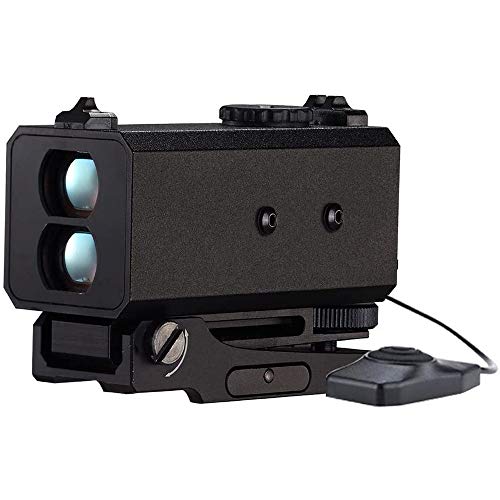
MASALING LE-032 Riflescope Mate rangefinder Tactical Rifle Scope Sight Rangefinder 700M Mini Tactical Outdoor Hunting Shooting Rangefinder
Product parameters:
Measuring range: 6-700M
Resolution: +/-1M
Speed “”measurement performance: 0-300km/h
Battery: One CR23V
Waterproof rating: IP65
Colour: Black
Material: metal alloy
Net weight: 0.15kg
Product size: 8.4×3.8×5.5cm.
Weight after packaging: 0.3kg
Packing size: 15x10x6cm
product description:
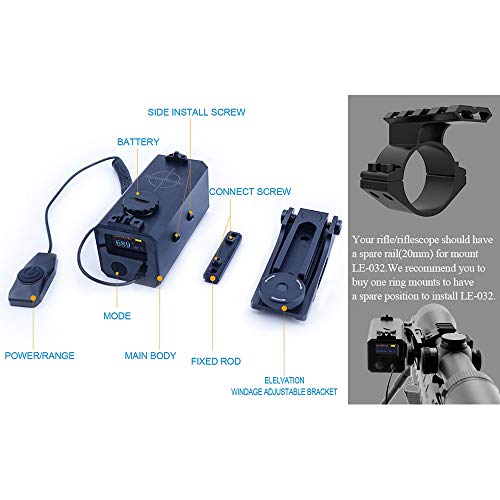
1) After long pressing the mouse tail switch, the tuning mode enters the working mode. The default working mode is the laser ranging mode.
2) Press and hold the M key to switch the measurement unit, M or Y. (Note: When the device is emitting laser light, long press the M key does not convert the unit.)
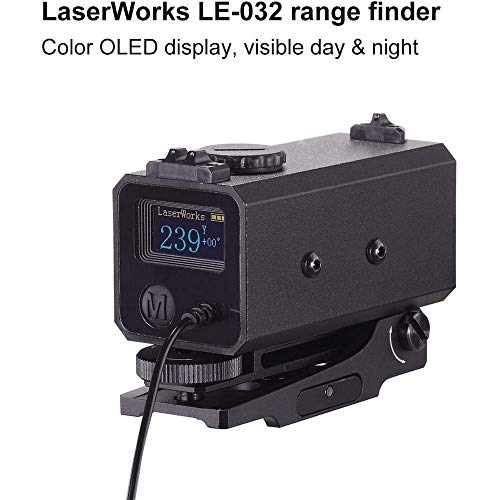
3) Press the mouse tail switch again. An upward arrow will appear in the lower right corner of the screen to indicate that the device is in laser emission mode. The measurement distance can be read.
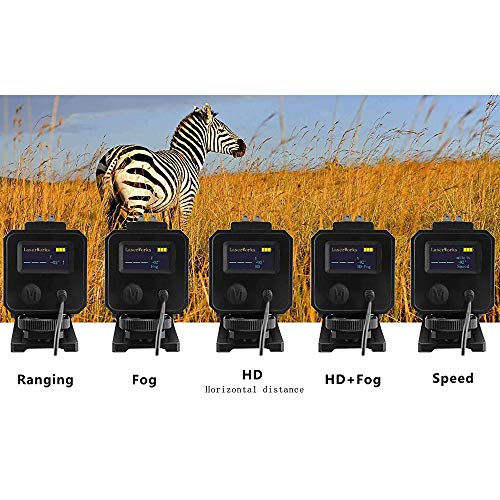
4) Select the working mode by short pressing the M key (five modes: ranging/fog mode/horizontal distance/fog day+horizontal distance/speed measurement)
Operating mode:
1) Ranging mode
2) Fog mode: Continuous ranging can eliminate measurement errors caused by fog. The unit M-Y can be switched.
3) Horizontal distance (HD): The pitch angle data participates in the distance calculation, and the actual horizontal distance can be obtained. The unit M-Y can be switched.
4) Fog + horizontal distance (HD + Fog): Correction of the horizontal distance in foggy days. The unit M-Y can be switched.
5) Speed “”mode: Speed “”measurement can be performed on moving objects in the same direction as the laser beam. Switchable measurement unit Km/h–mile/h.
Product List:
LE032 Hunting Rangefinder x1
Box x1
Manual x1
Rifle Scope Product Features
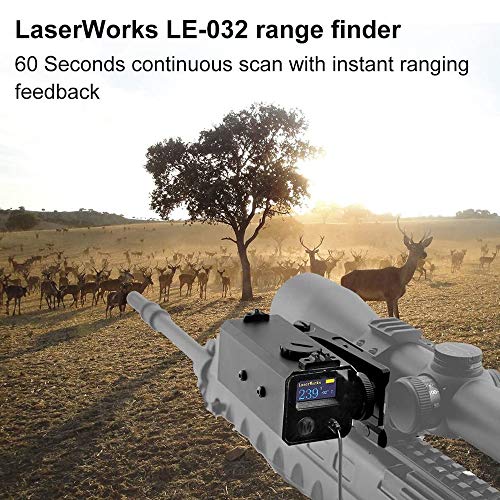
Long Distance Spotting SightThe rifle scope can clearly measure the distance range of 6-700M, and supports continuous measurement and implementation of ranging, helping you quickly and accurately lock the target.
Sturdy MaterialThe cross bow scope is made of hard aluminum alloy metal and can be moved anywhere. And the color of the rangefinder matches most camouflage patterns. It is light, shockproof, weather resistant and can be used for a long time.
Color OLED DisplayThe real-time speed will be clearly displayed on the digital dashboard, you can keep track of the speed, and you can change the unit of measurement in time.
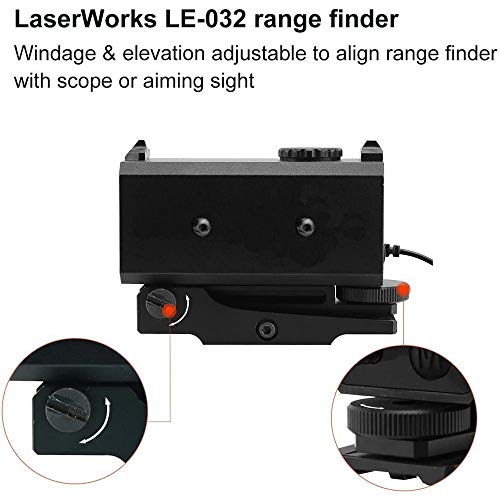
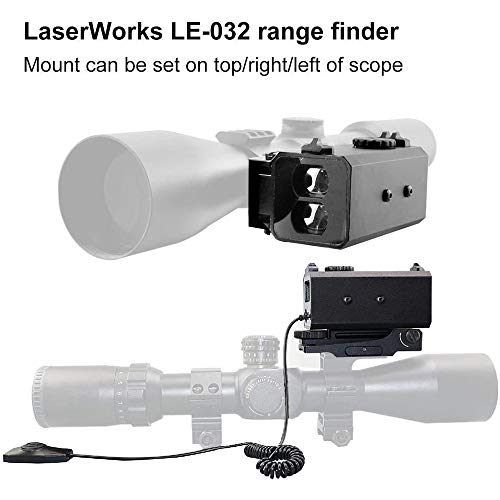
Universal Mounting TableUniversal clamp type mounting table, matched with mechanical aiming points. It is convenient to use with riflescopes, bows, crossbows and other products.
Multi Function Hunting RangefinderRange finder for hunting sports, archery, shooting, and golfing with distance measurer, continuous scan mode, golf pin flag-lock, slope correction.
About the MASALING Brand
MASALING is a premium company for firearm scopes, optics, mounting solutions, and other add-ons used for firearms like rifles and long guns. They style and manufacture their scopes, mounts, and related products making the most of materials which are durable and long lasting. This includes the MASALING LE-032 Riflescope Mate rangefinder Tactical Rifle Scope Sight Rangefinder 700M Mini Tactical Outdoor Hunting Shooting Rangefinder by MASALING. For more shooting products, visit their site.
Scope Info
Rifle scopes permit you to precisely aim a rifle at various targets by aligning your eye with the target over a range. They do this through magnifying the target by using a set of lenses inside the scope. The scope’s positioning can be adapted to account for many environmental considerations like wind speed and elevation increases or decreases to make up for bullet drop.
The scope’s function is to help the shooter understand exactly where the bullet will hit based upon the sight picture you are seeing using the optic as you line up the scope’s crosshair or reticle with the intended target. The majority of modern-day rifle optics have around eleven parts which are found internally and outside of the scope body. These optic pieces consist of the rifle scope’s body, lenses, windage and elevation dials or turrets, objective focus rings, and other components. Learn about the eleven parts of rifle glass.
Rifle Optic Varieties
Rifle scopes can be either “first focal plane” or “second focal plane” type of optics. Opting for the perfect type of rifle scope is based around what type of shooting you plan to do.
First Focal Plane Optics
First focal plane optics (FFP) feature the reticle ahead of the magnifying lens. This induces the reticle to increase in size based upon the level of magnification being used. The outcome is that the reticle measurements are the same at the enhanced distance as they are at the non amplified range. For instance, one tick on a mil-dot reticle at 100 yards with no “zoom” is still the same tick at 100 yards using 5x “zoom”. These types of scopes work for:
- Quick acquisition, far away kinds of shooting
- Shooting circumstances where computations are small
- Experienced shooters who have an idea for their aim point “hold over” plus “lead” relationships for their long gun
- Shooters who do not mind the reticle is bigger and uses up more visual eyesight space than a SFP reticle
Second Focal Plane Optic Info
Second focal plane glass (SFP) come with the reticle behind the zoom lens. This causes the reticle to stay at the same overall size in connection with the amount of zoom being used. The effect is that the reticle dimensions change based on the zoom applied to shoot over longer distances because the reticle markings present different increments which fluctuate with the zoom level. In the FFP illustration with the SFP optic, the 5x “zoom” 100 yard tick reticle measurement would be 1/5th of the non “zoom” tick. These types of optics are convenient for:
- Long distance kinds of shooting where shooters have additional time to make ballistic estimations
- Shooting where most of the shots occur within shorter ranges and proximities
- Shooters who select a clearer optic picture without space taken up by the larger sized FFP reticle
Scope Zoom
The quantity of zoom a scope supplies is identified by the diameter, density, and curvatures of the lenses inside of the rifle scope. The zoom of the scope is the “power” of the scope.
About Fixed Power Lens Rifle Scopes
A single power rifle scope and optic will have a magnification number designator like 4×32. This implies the magnification power of the scope is 4x power and the objective lens is 32mm. The magnification of this type of optic can not adjust since it is set from the factory.
Adjustable Power Lens Rifle Glass Info
Variable power rifle scopes can be changed between magnification levels. These types of scopes will note the magnification amount in a configuration such as 2-10×32. These numbers mean the magnification of the scope can be changed in between 2x and 10x power. This also incorporates the power levels in-between 2 and 10. The power adjustment is achieved by employing the power ring part of the scope near the rear of the scope by the eye bell.
Scope Power and Ranges
Here are some recommended scope power levels and the ranges where they could be effectively used. High power scopes will not be as efficient as lower magnification scopes due to the fact that too much zoom can be a negative aspect depending on your shooting distance. The exact same idea applies to longer ranges where the shooter needs to have adequate power to see precisely where to best aim the rifle at the target.
Lens Coating for Glass
All modern rifle optic and scope lenses are covered. Lens finish can be a crucial aspect of a shooting platform when thinking about high end rifle optics and scope equipment.
HD Versus ED Scope Lens Coatings
Some glass suppliers will also use “HD” or high-def lense coverings that take advantage of various procedures, elements, polarizations, and chemical applications to enhance different colors and viewable target definition through lenses. This high-definition coating is commonly used with greater density lens glass which drops light’s ability to refract through the lens glass. Some scope suppliers use “HD” to refer to “ED” meaning extra-low dispersion glass. ED deals with how certain colors are presented on the chromatic spectrum and the chromatic aberration which is similarly called color distortion or fringing. Chromatic aberration is often visible over objects with hard edges and outlines as light hits the object from specific angles.
Single Rifle Optic Lens Finish Versus Multi-Coating
Different optic lenses can even have various finishes applied to them. All lenses normally have at least some kind of treatment or finish applied to them prior to being used in a rifle scope or optic assembly. Because the lens isn’t just a raw piece of glass, they require performance enhancing coatings. It becomes part of the carefully tuned optic. It needs to have a covering put on it so that the lens will be optimally functional in many kinds of environments, degrees of light (full light VS shaded), and other shooting conditions.
Single covered lenses have a treatment applied to them which is usually a protective and enhancing multi-purpose treatment. This lens treatment can protect the lens from scratches while decreasing glare and other less useful things experienced in the shooting environment while sighting in with the scope. The quality of a single layered lens depends upon the scope manufacturer and how much you spent paying for it. Both the make and cost are indicators of the lens quality.
Some scope makers likewise make it a point to define if their optic lenses are layered or “multi” covered. This implies the lens has multiple treatments applied to the surfaces of the glass. If a lens gets numerous treatments, it can indicate that a company is taking multiple steps to fight various environmental aspects like an anti-glare finish, a scratch resistant anti-abrasion covering, followed by a hydrophilic coating. This additionally does not always suggest the multi-coated lens will perform much better than a single layered lens. Being “better” is dependent on the manufacturer’s lens treatment innovation and the quality of products used in constructing the rifle optic.
Anti-water Lens Coatings
Water on a lens does not help with preserving a clear sight picture through a scope at all. Lots of top of the line and military grade scope makers will coat their lenses with a hydrophobic or hydrophilic finish.
Options for Mounting Rifle Glass on Firearms
Installing approaches for scopes are available in a couple of choices. There are the standard scope rings which are individually mounted to the optic and one-piece mounts which cradle the scope. These various kinds of mounts also normally are made in quick release versions which use toss levers which enable rifle shooters to rapidly install and remove the glass.
Hex Key Rifle Glass Ring Mounts
Basic, clamp-on type mounting optic rings use hex head screws to position to the flattop style Picatinny scope mount rails on rifles. These styles of scope mounts use two independent rings to support the scope, and are made from 7075 T6 billet aluminum or similar materials which are developed for far away precision shooting. This type of scope mount is great for rifle systems which need to have a resilient, hard use mount which will not shift no matter just how much the scope is moved or abuse the rifle takes. These are the style of mounts you really want to have for a dedicated scope system on a far away hunting or interdiction long gun that will almost never need to be modified or adjusted. Blue 242 Loctite threadlocker can also be used on the screws to stop the hex screws from wiggling out after they are installed firmly in place. An example of these mounting rings are the 30mm type from Vortex Optics. The set typically costs around $200 USD
Quick-Release Cantilever Rifle Glass Ring Mounts
These kinds of quick-release rifle scope mounts can be used to rapidly take off a scope from a rifle and reattach it to a different rifle. If they all use a comparable design mount, a number of scopes can often be switched out. The quick detach design is CNC crafted from anodized 6061 T6 aluminum and the mounting levers attach firmly to a flat top design Picatinny rail. This enables the scope to be sighted in while on the rifle, removed from the rifle, and remounted while maintaining accuracy. These types of mounts come in practical for shooting platforms which are moved a lot, to take off the optic from the rifle for protection, or for scopes which are used between multiple rifles. An example of this mount style is the 30mm mount designed by the Vortex Optics manufacturer. It generally costs around $250 USD
Sealing and Gas Purging for Rifle Optic Tubes
Moisture inside your rifle scope can ruin a day of shooting and your pricey optic by bringing about fogging and creating residue inside of the scope tube. Most scopes prevent moisture from entering the scope tube with a system of sealing O-rings which are water resistant.
Gas Purged Scope Tubes
Another part of preventing the buildup of wetness inside of the rifle optic’s tube is filling the tube with a gas like nitrogen. Because this area is currently occupied by the gas, the glass is less impacted by temperature changes and pressure variations from the external environment which may potentially permit water vapor to seep in around the seals to fill the vacuum which would otherwise exist. These are good qualities of a good rifle scope to look for.


