Description
Rifle Scope Product Details
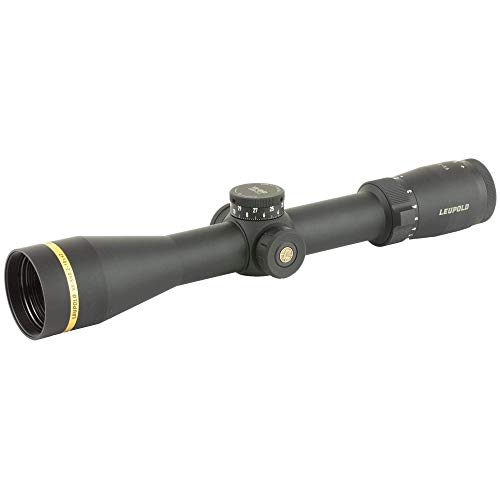
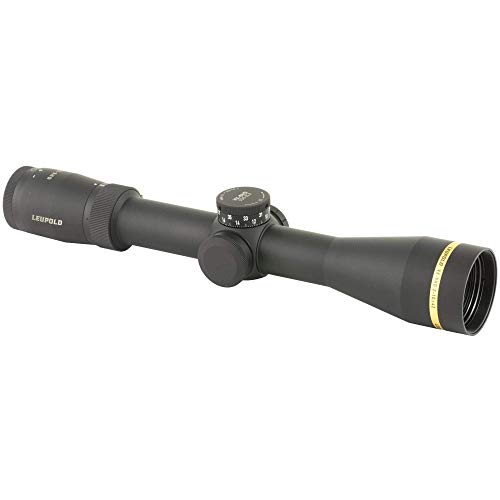
Leupold VX-5HD 2-10x42mm Riflescope
Rifle Scope Product Features
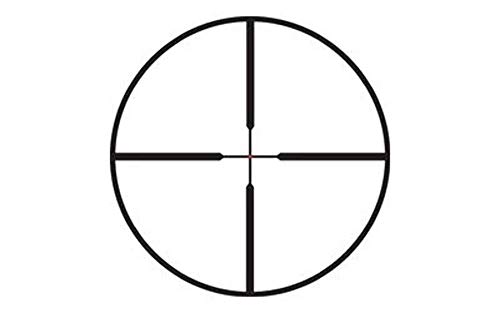
Leupold Model #171389 – VX-5HD 2-10x42mm with Illume. Fire Dot Duplex CDS reticle and Matte finish
100% Waterproof, fogproof, & shockproof
Zero Lock CDS-ZL2 (Custom Dial System) – Simplifies longer shots by eliminating the need for holdovers or ballistic calculations by using a dial that is customized to your rifle and ammo
Twilight Max HD Light Management system – Adds up to 30 minutes of shooting light, best in class glare reduction, and edge to edge HD lens clarity
Illuminated Reticle, ideal for lowlight conditions, with Motion Sensor Technology – Automatically deactivates after 5 minutes of inactivity, yet reactivates instantly with movement for increased battery life
Versatile 5: 1 Zoom Ratio
Guard-Ion Hydrophobic Lens Coating – Extremely durable, scratch resistant and sheds water, dirt, and fingerprints
VX-5HD 2-10x42mm
Magnification Range: 2x-10x
Weight: 16.4 oz.
Length: 12.5 in.
Maintube Diameter: 30mm
Eye Relief (in) – Low: 3.8
Eye Relief (in) – High: 3.82
Linear FOV (ft/100 yd) – Low: 57.5
Linear FOV (ft/100 yd) – High: 11.7
Leupold VX-5HD
Relentless Performance
This scope is just at home on the side of a mountain chasing monster goats as it is at the range. The extremely versatile 2-10 magnification gives you a super-wide field of view, while also allowing for clear, long-range shots. Its wide magnification ranges give hunters and shooters the ability to adapt to any environment. With the Twilight Max HD Light Management System, it’s purpose built for the toughest lighting conditions. Rugged and reliable, the VX-5HD is ready for your next adventure.
Lightweight, rugged performance
Unparalleled low light performance
Designed, machined, & assembled in the USA
Twilight Max HD Light Management System
Representing the pinnacle of our in-house lens design, the Twilight Max HD systemis built to deliver unbelieveable image quality in the harshest of lighting conditions.
Twilight Max HD Light Management System
Free CDS Elevation Dial
Designed, Machined, & Assembled in the USA
Rugged Reliability
Proprietary gas blend and seals are tested by us to a 33-foot depth and a multitude of pressure changes.
Every Leupold riflescope is designed to survive a minimum of 5,000 impacts on the Punisher, Leupold’s recoil simulation machine. The force of each impact is 3x the recoil of a .308 rifle.
All Leupold riflescopes are tested by us to perform from -40F to 160F.
VX-Freedom VX-R VX-3i VX-5HD VX-6HD
Light Management System Twilight Twilight Twilight Max Twilight Max HD Twilight Max HD
Maintube Size 1 inch 30mm 1 inch, 30mm 30mm, 34mm 30mm, 34mm
Zoom Ratio 3:1 3:1 3:1 5:1 6:1
HD Glass No No No Yes Yes
About the Leupold Brand
Leupold is a premium company for firearm scopes, optics, mounting solutions, and other accessories used for guns like rifles and long guns. They innovate and make their products by applying materials which are resilient and long lasting. This includes the Leupold VX-5HD 2-10x42mm Riflescope by Leupold. For more shooting goods, visit their website.
All About Rifle Glass
Rifle scopes allow you to exactly align a rifle at different targets by aligning your eye with the target at range. They accomplish this through magnification by utilizing a set of lenses inside the scope. The scope’s positioning can be adapted for consideration of numerous natural elements like wind speed and elevation decreases to make up for bullet drop.
The scope’s function is to help shooters understand exactly where the bullet will hit based upon the sight picture you are seeing via the scope as you align the scope’s crosshair or reticle with the intended point of impact. Many modern rifle optics have around eleven parts which are arranged within and externally on the optic. These parts include the rifle scope’s body, lenses, windage and elevation turrets, focus rings, and other parts. See all eleven parts of optics.
About Optic Varieties
Rifle scopes can be either “first focal plane” or “second focal plane” type of scopes. Finding the optimal type of rifle optic depends on what type of shooting you plan on doing.
Info on First Focal Plane Glass
Focal plane scopes (FFP) feature the reticle in front of the magnification lens. These styles of scopes are helpful for:
- Quick acquisition, far away types of shooting
- Shooting scenarios where calculations are very little
- Experienced shooters who understand their aim point “hold over” as well as “lead” correlations for their firearms
- Shooters who don’t mind the reticle is enlarged and uses up more visual sight area than a SFP reticle
Info on Second Focal Plane Scopes
Second focal plane scopes (SFP) feature the reticle behind the magnifying lens. This causes the reticle to remain at the very same size relative to the quantity of magnification being used. The end result is that the reticle measurements adjust based on the zoom employed to shoot over lengthier distances considering the reticle measurements represent distinct increments which can vary with the zoom. In the FFP illustration with the SFP glass, the 5x “zoom” 100 yard tick would be 1/5th of the non “zoom” tick measurement. These types of optics work for:
- Long distance forms of shooting where shooters have increased time to make ballistic calculations
- Shooting where most shots take place within much shorter ranges and distances
- Shooters who would like a clearer optic picture with less space taken up by the enlarged FFP reticle
Optic Zoom
The quantity of magnification a scope provides is identified by the diameter, density, and curvatures of the lenses inside of the rifle scope. The zoom of the scope is the “power” of the scope.
Info on Single Power Lens Rifle Optics
A single power rifle optic and scope comes with a zoom number designator like 4×32. This suggests the magnification power of the scope is 4x power and the objective lens is 32mm. The zoom of this type of scope can not adjust considering that it is set from the factory.
Variable Power Lens Rifle Optics
Variable power rifle scopes have adjustable power. It will note the magnification level in a format such as 2-10×32. These numbers indicate the magnification of the scope can be set in between 2x and 10x power. This also utilizes the power levels in-between 2 and 10. The power manipulation is achieved by applying the power ring part of the scope near the back of the scope by the eye bell.
The Power and Range Correlation of Rifle Glass
Here are some recommended scope power settings and the ranges where they can be efficiently used. Bear in mind that high magnification optics and scopes will not be as practical as lower powered optics because excessive magnification can be a bad thing. The same idea goes for longer distances where the shooter needs to have adequate power to see exactly where to best aim the rifle at the target.
Lens Finishing for Rifle Optics
All top of the line rifle optic lenses are coated. Lens finishing can be a vital aspect of a shooting platform when looking at high end rifle optics and scope systems.
HD Versus ED Rifle Scope Lens Coatings
Some glass manufacturers will also use “HD” or high-definition glass coatings that use different procedures, polarizations, rare earth compounds, and elements to draw out various color ranges and viewable target definition through the lens. This HD finishing is often used with more costly, high density glass which decreases light’s potential to refract by means of the lens glass. Some scope vendors use “HD” to describe “ED” implying extra-low dispersion glass. ED handles how certain colors are represented on the chroma spectrum and the chromatic aberration or difference which is similarly called color distortion or fringing. Chromatic aberration is often visible around items with hard edges and shapes as light hits the object from various angles.
Single Scope Lens Covering Versus Multi-Coating
Different optic lenses can also have various finishes used to them. All lenses generally have at least some type of treatment or finishing used to them prior to being used in a rifle scope or optic.
This lens treatment can protect the lens from scratches while lowering glare and other less helpful things experienced in the shooting environment while sighting in with the scope. The quality of a single covered lens depends on the scope manufacturer and how much you paid for it.
Some scope makers likewise make it a point to define if their optic lenses are layered or “multi” coated. This implies the lens has had multiple treatments applied to the surfaces of the glass. If a lens gets multiple treatments, it can show that a company is taking numerous steps to fight different environmental aspects like an anti-glare coating, a scratch resistant anti-abrasion coating, followed by a hydrophilic coating. This additionally doesn’t always suggest the multi-coated lens is better than a single layered lens. Being “much better” hinges on the manufacturer’s lens treatment techniques and the quality of materials used in building the rifle scope.
Anti-water Lens Coating
Water on a lens doesn’t help with maintaining a clear sight picture through a scope at all. Lots of top of the line and high-end optic companies will coat their lenses with a hydrophilic or hydrophobic finish.
Alternatives for Installing Rifle Scopes on Long Guns
Installing options for scopes can be found in a couple of options. There are the standard scope rings which are separately installed to the scope and one-piece mounts which cradle the scope. These different kinds of mounts also usually are made in quick release versions which use throw levers which permit rifle shooters to quickly install and remove the glass.
Hex Key Rifle Scope Ring Mounts
Basic, clamp design mounting scope rings use hex head screws to fix to the flattop style Picatinny scope mounting rails on the tops of rifles. These kinds of scope mounts use double detached rings to support the optic, and are made from 7075 T6 billet aluminum which are designed for far away precision shooting. This kind of scope mount is good for rifles which require a durable, unfailing mount which will not shift regardless of just how much the scope is moved about or jarring the rifle takes. These are the style of mounts you should get for a dedicated scope system on a reach out and touch someone hunting or tournament long gun that will almost never need to be altered or adjusted. Blue 242 Loctite threadlocker can additionally be used on the mount’s screws to protect against the hex screw threads from wiggling out after they are mounted firmly in position. An example of these mounting rings are the 30mm style made by the Vortex Optics brand. The set usually costs around $200 USD
Quick-Release Cantilever Rifle Optic Ring Mounting Solutions
These types of quick-release rifle scope mounts can be used to rapidly connect and take off a scope from a rifle. If they all use a comparable style mount, a number of scopes can often be swapped on the range. The quick detach mount style is CNC crafted from anodized 6061 T6 aluminum and the mounting levers fasten securely to a flat top design Picatinny rail. This lets the scope to be sighted in while on the rifle, taken off of the rifle, and remounted while preserving precision. These kinds of mounts are useful and beneficial for rifles which are moved around a lot, to remove the optic from the rifle for protection, or for sight systems which are adopted between a number of rifles. An example of this mount style is the 30mm mount from Vortex Optics. It typically costs around $250 USD
Sealing and Gas Purging for Glass Tubes
Wetness inside your rifle scope can ruin a day of shooting and your pricey optic by bringing about fogging and creating residue inside of the scope tube. A lot of scopes prevent moisture from getting in the scope tube with a system of sealing O-rings which are waterproof.
Details on Rifle Glass Tube Gas Purging
Another part of avoiding the buildup of wetness inside of the rifle scope’s tube is filling the tube with a gas like nitrogen. Since this space is already occupied by the gas, the scope is less impacted by condition alterations and pressure differences from the outdoor environment which may possibly permit water vapor to seep in around the seals to fill the vacuum which would otherwise be there. These are good qualities of a good rifle scope to look for.


