



Description
Rifle Scope Product Details
Leupold Service Rifle VX-4.5HD 1-4x24mm Riflescope
Rifle Scope Product Features
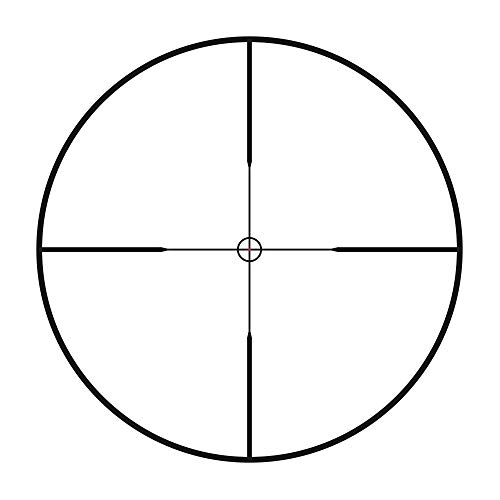
Leupold Model #176281 – Service Rifle VX-4. 5HD 1-4x24mm with Illume. Fire Dot Bull-Ring CDS reticle and Matte finish
100% Waterproof, fog proof, & shockproof
Zero Lock CDS (Custom Dial System) – Simplifies longer shots by eliminating the need for holdovers or ballistic calculations by using a dial that is customized to your rifle and ammo
Twilight Max HD Light Management system – Adds up to 30 minutes of shooting light, best in class glare reduction, and edge to edge HD lens clarity
Lightweight Design – Disperses recoil energy for unrivaled durability and performance with ultra-lightweight construction
Guard-Ion Hydrophobic Lens Coating – Extremely durable, scratch resistant and sheds water, dirt, and fingerprints
30mm main tube offers incredible strength and increased range of wind age and elevation adjustment
Designed, machined, and assembled in the USA
Service Rifle VX-4.5HD 1-4x24mm
Magnification Range: 1x-4x
Weight: 13.4 oz.
Length: 10.76 in.
Maintube Diameter: 30mm
Eye Relief (in) – Low: 3.7
Eye Relief (in) – High: 3.82
Linear FOV (ft/100 yd) – Low: 123.2
Linear FOV (ft/100 yd) – High: 26.2
Leupold Service Rifle
Relentless Performance
See better. Shoot better. Score better. The VX-4.5HD Service Rifle scope gives you the edge you need to win more matches. It delivers bright, edge-to-edge image sharpness at 4.5x magnification – the highest magnification allowed for NRA Service Rifle competitions. At its low power, the true 1x magnification’s flat, true-to-life image makes off hand shooting quick and easy.
Lightweight, rugged performance
Unparalleled low light performance
Designed, machined, & assembled in the USA
Twilight Light Management System
Leupold’s Twilight Light Management systems delivers industry leading brightness and clarity by balancing light transmission, glare reduction, and image contrast and resolution ensuring a crisp image in any lighting condition.
Twilight Max HD Light Management System
Designed, Machined, & Assembled in the USA
Rugged Reliability
Proprietary gas blend and seals are tested to a 33-foot depth and a multitude of pressure changes.
Every Leupold riflescope is designed to survive a minimum of 5,000 impacts on the Punisher, Leupold’s recoil simulation machine. The force of each impact is 3x the recoil of a .308 rifle.
All Leupold riflescopes are tested to perform from -40F to 160F.
Mark AR VX-R Patrol Competition Series VX-6 VX-4.5HD
Light Management System Twilight Twilight Twilight Max Xtended Twilight Twilight Max HD
Maintube Size 1 inch 30mm 30mm 34mm 30mm
Zoom Ratio 3:1 3:1 N/A 6:1 4:1
HD Glass No No No No Yes
About the Leupold Manufacturer
Leupold is a premium manufacturer for rifle scopes, optics, mounting solutions, and other accessories used for firearms like rifles and long guns. They innovate and build their scopes, mounts, and related products by using materials which are durable and long lasting. This includes the Leupold Service Rifle VX-4.5HD 1-4x24mm Riflescope by Leupold. For additional shooting products, visit their website.
What You Need to Know About Rifle Scopes
Rifle scopes enable you to exactly align a rifle at various targets by lining up your eye with the target over a distance. They do this through magnifying the target by making use of a series of lenses within the scope. The scope’s alignment can be adapted to account for numerous ecological aspects like wind speed and elevation to account for bullet drop.
The scope’s function is to understand exactly where the bullet will hit based on the sight picture you are seeing with the scope as you line up the scope’s crosshair or reticle with the intended target. The majority of contemporary rifle scopes have around 11 parts which are found internally and outside of the scope body. These optic pieces include the rifle scope’s body, lenses, elevation dials, objective focus rings, and other parts. See all eleven parts of scopes.
Rifle Glass Styles
Rifle scopes can be either “first focal plane” or “second focal plane” kind of scopes. The kind of focal plane a scope has determines where the reticle or crosshair lies in connection with the scopes magnifying adjustments. It literally implies the reticle is behind or before the magnification lens of the optic. Considering the most beneficial type of rifle optic is based upon what kind of hunting or shooting you intend on undertaking.
First Focal Plane Optics
Focal plane scopes (FFP) include the reticle in front of the zoom lens. These styles of scopes are beneficial for:
- Quick acquisition, far away kinds of shooting
- Shooting scenarios where calculations are low
- Experienced shooters who know their target “hold over” and also “lead” correlations for their firearm
- Shooters who don’t mind the reticle is enlarged and occupies more visual sight room than a SFP reticle
About Second Focal Plane Glass
Second focal plane scopes (SFP) come with the reticle to the rear of the magnification lens. In the FFP example with the SFP scope, the 5x “zoom” 100 yard tick would be 1/5th of the non “zoom” tick.
- Far away styles of shooting where shooters have extra time to make ballistic calculations
- Shooting where most shots occur within shorter ranges and spaces
- Shooters who prefer a clearer optic sight picture without area used up by the larger sized FFP reticle
Zoom for Glass
The measure of scope magnification you need depends upon the form of shooting you like to do. Nearly every kind of rifle optic delivers some level of zoom. The quantity of zoom a scope delivers is established by the diameter, density, and curves of the lens glass inside of the rifle scope. The zoom of the optic is the “power” of the glass. This denotes what the shooter is checking out through the scope is magnified times the power factor of what can normally be seen by human eyes.
Single Power Lens Rifle Scope Info
A single power rifle optic and scope uses a magnification number designator like 4×32. This means the zoom power of the scope is 4x power and the objective lens is 32mm. The magnification of this kind of scope can not adjust considering that it is a set power scope.
About Adjustable Power Lens Rifle Optics
Variable power rifle scopes use variable power levels. The power adjustment is accomplished by the power ring part of the scope near the rear of the scope by the eye bell.
The Power and Range of Scopes
Here are some recommended scope powers and the ranges where they can be effectively used. Remember that higher power glass will not be as efficient as lower powered optics since excessive magnification can be a negative thing in certain situations. The same idea goes for longer distances where the shooter needs sufficient power to see precisely where to best aim the rifle at the target.
Rifle Glass Lens Covering
All modern rifle optic lenses are layered. There are different types and qualities of finishings. When researching high end rifle optical devices, Lens covering can be a critical aspect of defining the capability of the rifle. The glass lenses are one of the most crucial components of the glass due to the fact that they are what your eye sees through while sighting a rifle in on the point of impact. The finishing on the lenses shields the lens exterior and improves anti glare from refracted daylight and color perception.
ED Versus HD Rifle Optics
Some scope brands also use “HD” or high-definition lens coverings which use various processes, chemicals, aspects, and polarizations to draw out different colors and viewable quality through the lens. Some scope makers use “HD” to refer to “ED” to signify the lens has extra-low dispersion glass.
Single Finishing Versus Multi-Coating for Scopes
Different optic lenses can likewise have different coatings used to them. All lenses generally have at least some type of treatment or coating used to them before being used in a rifle scope or optic.
Single covered lenses have a treatment applied to them which is usually a protective and boosting multi-purpose treatment. This lens treatment can protect the lens from scratches while minimizing glare and other less advantageous things experienced in the shooting environment while sighting in with the optic. The quality of a single layered lens depends on the scope company and the amount you spent on it. Both the make and cost are signs of the lens quality.
Some scope makers also make it a point to define if their optic lenses are layered or “multi” coated. This means the lens has had multiple treatments applied to them. If a lens receives numerous treatments, it can show that a manufacturer is taking several actions to combat various environmental factors like an anti-glare coating, a scratch resistant anti-abrasion finish, followed by a hydrophilic finish. This also does not necessarily imply the multi-coated lens is much better than a single layered lens. Being “better” depends on the producer’s lens treatment technology and the quality of glass used in building the rifle optic.
Hydrophobic Lens Coatings
Water on a lens does not assist with keeping a clear sight picture through a scope at all. Numerous top of the line and military grade optic makers will coat their lenses with a hydrophobic or hydrophilic covering.
Rifle Optic Mounting Options
Mounting approaches for scopes are available in a few options. There are the standard scope rings which are separately mounted to the optic and one-piece scope mounts which cradle the scope. These various kinds of mounts also usually are made in quick release variations which use toss levers which allow rifle operators to quickly mount and dismount the scope.
Glass Mounting Solutions with Hex Key Rings
Normal, clamp style mounting scope rings use hex head screws to mount to the flattop style Picatinny scope installation rails on rifles. These types of scope mounts use a couple of different rings to support the optic, and are often made from 7075 T6 billet aluminum which are created for long distance precision shooting. This type of scope install is wonderful for rifles which require a resilient, sound mounting solution which will not move no matter how much the scope is moved or abused.
Rifle Glass Mounts with Quick-Release Cantilever Rings
These types of quick-release rifle scope mounts can be used to rapidly take off a scope and connect it to a different rifle. Numerous scopes can also be swapped out if they all use a similar style mount. These types of mounts are handy for long guns which are transported a lot, to remove the optic from the rifle for protection, or for optics which are used in between multiple rifles.
Details on Rifle Glass Tube Sealing and Gas Purging
Moisture inside your rifle glass can ruin a day on the range and your pricey optic by triggering fogging and generating residue inside of the scope’s tube. A lot of optics prevent moisture from going into the scope tube with a system of sealing O-rings which are waterproof. Typically, these water-resistant scopes can be submerged within 20 or 30 feet of water before the water pressure can push moisture past the O-rings. This should be ample moisture avoidance for conventional use rifles for hunting and sporting purposes, unless you anticipate taking your rifle on a boat and are worried about the scope still performing if it falls overboard and you can still recover the gun.
About Optic Tube Gas Purging
Another component of avoiding the buildup of wetness within the rifle optic tube is filling the tube with a gas like nitrogen. Since this area is currently taken up by the gas, the scope is less impacted by temperature level shifts and pressure distinctions from the outdoor environment which might possibly allow water vapor to seep in around the seals to fill the vacuum which would otherwise exist. These are good qualities of a decent rifle scope to seek out.


