Description
Rifle Scope Product Details
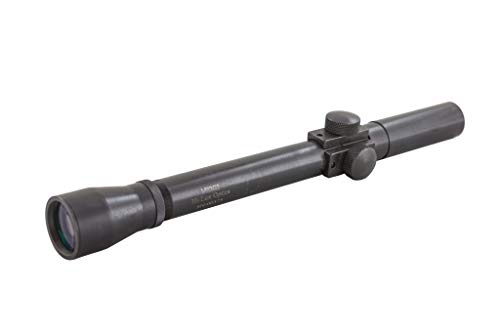
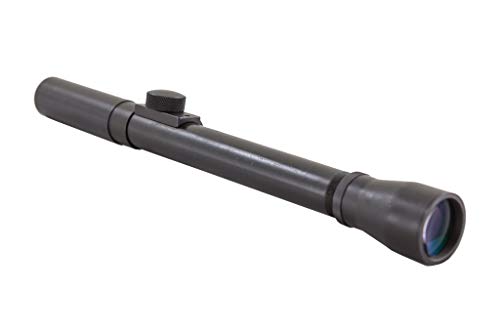
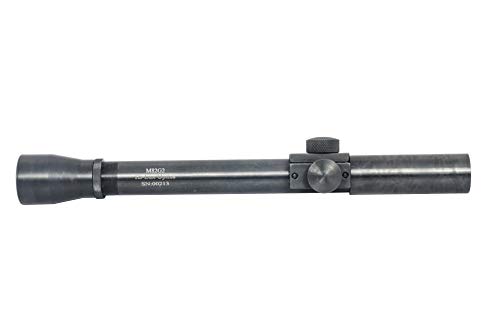
Hi-Lux Optics M82G2 Vintage Rifle M82G2 2.5 x 7/8″ Tube Reproduction Scope, Black
When the U.S. was forced into WW II in late 1941, America’s infantry troops were not prepared for the scale of combat they would encounter. The country was not prepared to arm hundreds of thousands of new riflemen with the latest U.S. military rifle – the semi-automatic M1 Garand. Several hundred thousand WW I vintage Springfield Model 1903 rifles were pulled out of storage and sent back into war – and both Remington and Smith-Corona used modified original tooling to produce a slightly modernized version of the rifle, known as the M1903A3. Some were fitted with a low-power 3/4-inch tube 2.5x scope, to become the official U.S. Army M1903A4 sniper rifle, while the Marine Corps installed an 8x target scope on select ’03 rifles to create their Model 41 sniper rifle. (Hi-Lux Optics produces superb reproductions of both scopes.) The riflescope chosen for the new M1C sniper rifle was the 7/8-inch tube 2.5x Lyman Alaskan – which was designated “TELESCOPE M82”. The sporting versions of this riflescope had proven to be rugged, and capable of withstanding rough and tumble use in the wilds of Alaska, and to withstand the hard recoil of rifles with the firepower to put down a 1,000 pound grizzly. Hi-Lux Optics has totally re-engineered this scope design from the inside out, to produce the clearest, brightest and most reliable scope of this type ever manufactured – and we’re proud to add it to our lineup of Wm. Malcolm vintage riflescopes. Externally, this scope is the spitting image of the original. Internally, this scope is far superior – and due to the vast improvements Hi-Lux Optics has made, we are referring to the Wm. Malcolm version as the M82G2. Those improvements include high quality multi-coated lenses for superior light transmission and exceptional clarity. The new M82G2 scope also offers more wind age and elevation adjustment than the original. The Wm. Malcolm version provides a total of 80 MOA for both wind age and elevation.
Rifle Scope Product Features
2.5X Magnification
0.5 MOA/click Adjustment
7/8″ Steel Main Tube
Fine Cross Hair Reticle
CMP Vintage Sniper Match Legal
About the Hi-Lux Optics Brand
Hi-Lux Optics is a premium producer for firearm scopes, optics, mounts, and other accessories used for firearms like rifles and long guns. They style and supply their products using elements which are durable and long lasting. This includes the Hi-Lux Optics M82G2 Vintage Rifle M82G2 2.5 x 7/8″ Tube Reproduction Scope, Black by Hi-Lux Optics. For additional shooting goods, visit their site.
Rifle Optic Info
Rifle scopes permit you to exactly aim a rifle at different targets by aligning your eye with the target at range. They do this through magnifying the target by employing a series of lenses inside the scope. The scope’s alignment can be dialed in for consideration of various ecological considerations like wind speed and elevation increases or decreases to account for bullet drop.
The scope’s function is to understand precisely where the bullet will land based on the sight picture you are viewing through the optic as you align the scope’s crosshair or reticle with the intended point of impact. A lot of modern-day rifle scopes have about 11 parts which are arranged internally and externally on the scope body. These parts consist of the rifle scope’s body, lenses, adjustment dials or turrets, objective focus rings, and other components. See all eleven parts of optics.
Rifle Scope Varieties
Rifle scopes can be either “first focal plane” or “second focal plane” type of optics. Deciding upon the finest type of rifle glass depends on what type of shooting you plan to do.
First Focal Plane Scopes
Focal plane scopes (FFP) come with the reticle in front of the magnifying lens. This causes the reticle to increase in size based upon the extent of magnification being used. The outcome is that the reticle measurements are the same at the enhanced distance as they are at the non magnified range. For example, one tick on a mil-dot reticle at one hundred yards with no “zoom” is still the same tick at 100 yards using 5x “zoom”. These kinds of scopes work for:
- Quick acquisition, long distance kinds of shooting
- Shooting circumstances where computations are minor
- Experienced shooters who know their target “hold over” as well as “lead” relationships for their rifles
- Shooters who don’t mind the reticle is bigger and takes up more visual eyesight space than a SFP reticle
Second Focal Plane Glass
Second focal plane scopes (SFP) include the reticle to the rear of the zoom lens. In the FFP example with the SFP scope, the 5x “zoom” one hundred yard tick measurement would be 1/5th of the non “zoom” tick measurement.
- Far away kinds of shooting where shooters have increased time to make ballistic estimations
- Shooting where most of the shots happen within shorter spaces and ranges
- Shooters who select a clearer optic picture with less room taken up by the bigger FFP reticle
About Scope Zoom
The amount of magnification a scope offers is identified by the size, thickness, and curvatures of the lenses inside of the rifle scope. The magnification of the scope is the “power” of the scope.
Fixed Power Lens Rifle Glass Facts
A single power rifle optic will have a zoom number designator like 4×32. This indicates the magnification power of the scope is 4x power and the objective lens is 32mm. The magnification of this kind of scope can not change given that it is a set power scope.
Info About Variable Power Lens Scopes
Variable power rifle scopes can be tweaked between magnified levels. The power adjustment is handled by the power ring part of the scope near the back of the scope by the eye bell.
Glass Power and Ranges
Here are some advised scope power settings and the distances where they may be efficiently used. High power glass will not be as efficient as lower powered glass considering too much zoom can be a bad thing. The very same idea goes for extended distances where the shooter needs to have increased power to see precisely where to properly aim the rifle.
Lens Finishing for Rifle Glass
All modern rifle scope and optic lenses are coated. There are different types and qualities of glass lens finishes. Lens finishing can be an important element of a rifle’s setup when contemplating high-end rifle optics and targeting equipment. The lenses are among the most significant components of the glass due to the fact that they are what your eye looks through while sighting a rifle in on the target. The covering on the lenses safeguards the lens surface area and also assists with anti glare capabilities from excess light and color recognition.
HD Versus ED Lenses
Some glass suppliers will also use “HD” or high-def glass coverings that apply different procedures, chemical applications, polarizations, and elements to draw out various color ranges and viewable target visibility through the lens. This HD covering is typically used with greater density glass which brings down light’s ability to refract through the lens glass. Some scope vendors use “HD” to refer to “ED” suggesting extra-low dispersion glass. ED handles how certain colors are represented on the chromatic spectrum and the chromatic aberration or deviance which is also called color distortion or fringing. Chromatic aberration may be visible around items with hard outlines as light hits the object from particular angles.
Single Covering Versus Multi-Coating for Glass
Various optic lenses can likewise have various finishes used to them. All lenses usually have at least some type of treatment or coating applied to them prior to being used in a rifle scope or optic.
Single coated lenses have a treatment applied to them which is usually a protective and boosting multi-purpose treatment. This lens treatment can safeguard the lens from scratches while lowering glare and other less helpful things experienced in the shooting environment while sighting in with the scope. The quality of a single layered lens depends on the scope maker and just how much you spent for it. Both the manufacturer and amount are indicators of the lens quality.
Some scope producers also make it a point to define if their optic lenses are layered or “multi” coated. This implies the lens has multiple treatments applied to the surfaces of the glass. If a lens receives numerous treatments, it can establish that a producer is taking several actions to fight various natural elements like an anti-glare finish, a scratch resistant anti-abrasion finishing, followed by a hydrophilic finish. This additionally does not always suggest the multi-coated lens will perform better than a single layered lens. Being “much better” hinges on the maker’s lens treatment innovation and the quality of products used in developing the rifle scope.
Scope Lens Hydrophobic Coating
Water on a scope’s lens does not improve preserving a clear sight picture through a scope whatsoever. Lots of top of the line and high-end scope producers will coat their lenses with a hydrophilic or hydrophobic finishing. The Steiner Optics Nano-Protection is a good example of this type of treatment. It provides protection for the exterior of the Steiner optic lens so the water particles can not bind to it or create surface tension. The result is that the water beads roll off of the scope to maintain a clear, water free sight picture.
Rifle Optic Installing Alternatives
Installing solutions for scopes can be found in a couple of options. There are the basic scope rings which are separately mounted to the optic and one-piece scope mounts which cradle the scope. These different kinds of mounts also typically are made in quick release versions which use throw levers which allow rifle shooters to quickly mount and remove the optics.
Hex Key Scope Ring Mounts
Basic, clamp-on type mounting optic rings use hex head screws to mount to the flattop design Picatinny scope mounting rails on the tops of rifles. These kinds of scope mounts use a pair of detached rings to support the scope, and are normally made from 7075 T6 billet aluminum or similar materials which are designed for long distance accuracy shooting. This type of scope mount is effective for rifle systems which need a durable, hard use mount which will not move no matter just how much the scope is moved about or abuse the rifle takes. These are the style of mounts you really want to have for a devoted optics system on a reach out and touch someone scouting or competition long gun that will hardly ever need to be modified or recalibrated. Blue 242 Loctite threadlocker can also be used on the scope mount screws to stop the hex screw threads from backing out after they are installed safely in place. An example of these rings are the 30mm style from the Vortex Optics company. The set typically costs around $200 USD
Optic Mounting Solutions with Quick-Release Cantilever Rings
These types of quick-release rifle scope mounts can be used to quickly remove a scope from a rifle and reattach it to a different rifle. If they all use a comparable style mount, multiple scopes can often be switched out in the field. The quick detach design is CNC crafted from anodized 6061 T6 aluminum and the mounting levers fasten solidly to a flat top type Picatinny rail. This permits the scope to be sighted in while on the rifle, removed from the rifle, and remounted back on the rifle while maintaining the original sighting settings. These kinds of mounts come in handy for shooting platforms which are shipped a lot, to remove the optic from the rifle for protection, or for scopes which are chosen for use in between multiple rifles. An example of this mount type is the 30mm mount designed by Vortex Optics. It normally costs around $250 USD
About Rifle Optic Tube Sealing and Gas Purging
Moisture inside your rifle glass can spoil a day on the range and your highly-priced optic by triggering fogging and producing residue inside of the scope’s tube. Many scopes protect against wetness from entering the optical tube with a series of sealing O-rings which are water resistant. Generally, these scopes can be immersed underneath 20 or 30 feet of water before the water pressure can push moisture past the O-rings. This should be more than enough moisture prevention for common use rifles, unless you intend on taking your rifle on your motorboat and are concerned about the scope still performing if it is submerged in water and you can still recover the gun.
Info on Optic Tube Gas Purging
Another part of preventing the accumulation of moisture within the rifle optic’s tube is filling the tube with a gas like nitrogen. Because this space is already occupied by the gas, the glass is less influenced by temperature changes and pressure variations from the outside environment which may potentially allow water vapor to seep in around the seals to fill the vacuum which would otherwise exist. These are good qualities of a good rifle scope to seek out.


