Description
Rifle Scope Product Details
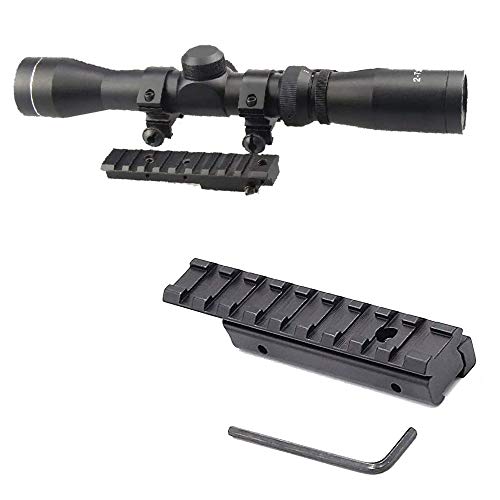
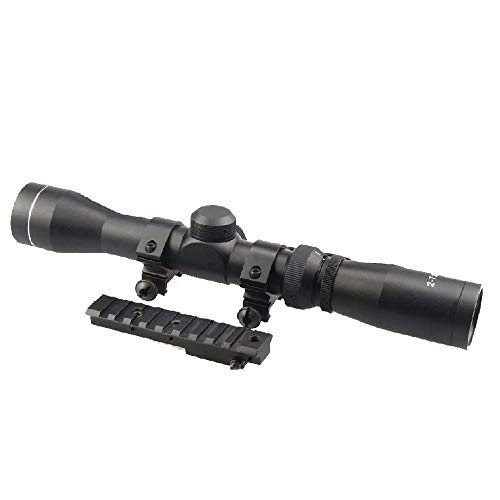
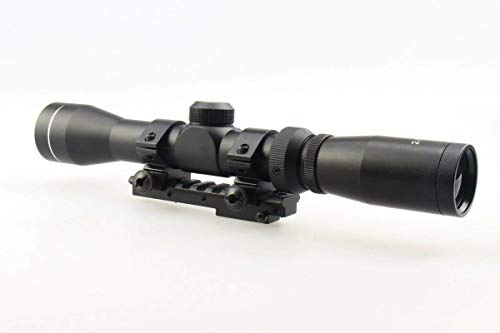
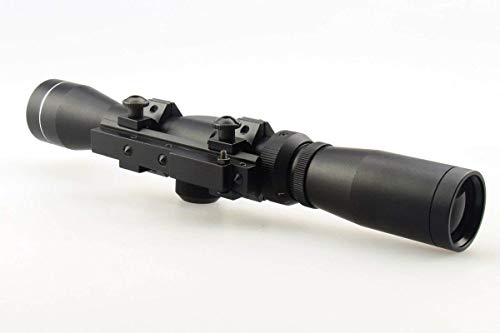
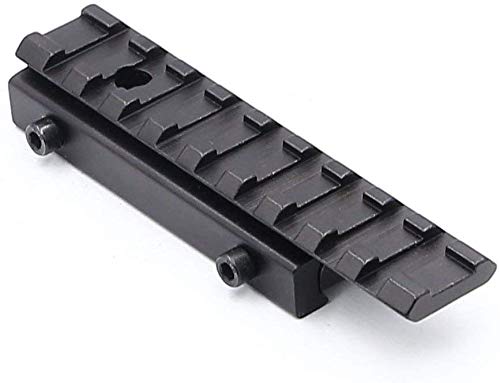
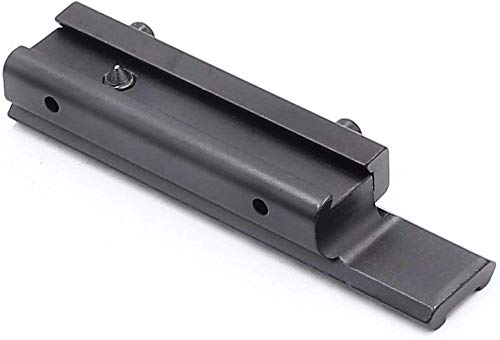
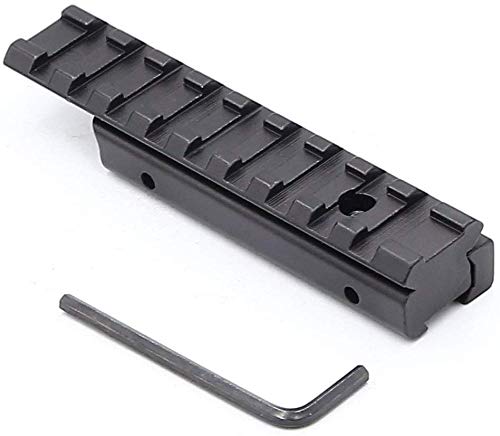
Gotical Sports Long Eye Relief Rifles P4 Scope 2-7X32 Fog and Water Resistant + Low Profile Mosin Nagant 11mm Picatinny Rail Adapter Converter 91/30 Model Scope Mount Compact Short.
Long eye Relief 2-7×32 SCOPE SPECIFICATIONS Magnification: 2X-7X Tube Diameter: 1″ Objective: 32 mm Eye Relief: 8.5″ – 10.5″ Exit Pupil: 16 – 4.6 mm FOV (feet at 100 yds.): 14 – 4.6 M.O.A.: 1/4 Finish: Matte Black Lens Coating: Blue Length: 10.5″ Weight: 9 oz. FEATURES Milled from one solid piece of aircraft grade aluminum body to withstand constant heavy recoil Fog proof and shock-resistant housing Nitrogen charged with weather resistant seals Blue fused multi-coated lens provides superior light transmission.
Resolution and scratch resistance Windage and elevation adjustment 8.5 – 10.5 Inch eye relief provides safety from heavy recoil and enables fast target acquisition Weaver / Picatinny 1913 ring mounts included MOUNT SPECIFICATIONS Length: 6″ Weight: 2.3 oz. FEATURES Black anodized aircraft grade aluminum Accepts all standard Weaver / Picatinny 1913 accessories No drilling, tapping, or gunsmithing required Mounts to rear sight of models 91/30.It Allows mounting of long eye relief scopes to standard Rifle
Rifle Scope Product Features
SPORTS Mosin Nagant Long Eye Relief 2-7×32 dreticle Rifle scope and new generation weaver style Mosin Nagant scope mount for 91/30 model . Comes with a pair of rings and see through scope lens cover.
Long Eye Relief P4 Scope : Fully coated optics, nitrogen purged tube, and resistant to fog, moisture and the effects of punishing recoil.
The adaptor’s Picatinny : Rail allows for the mounting of Picatinny or Weaver standard scopes, red dots, magnifiers, or other optics.
Long eye Relief : suitable for scout Rifles and pistols Water, fog and shock proof.
P4 Scope : SCOPE Length: 10.5″ Weight: 9 oz ; MOUNT Length: 6″ Weight: 2.3 oz.includes low profile Weaver/Picatinny rings, includes flip up lens covers
About the GOTICAL Company
GOTICAL is a premium producer for long gun scopes, optics, mounting solutions, and other add-ons used for firearms like rifles and long guns. They innovate and manufacture their mounts and related products by applying building materials which are long lasting and durable. This includes the Gotical Sports Long Eye Relief Rifles P4 Scope 2-7X32 Fog and Water Resistant + Low Profile Mosin Nagant 11mm Picatinny Rail Adapter Converter 91/30 Model Scope Mount Compact Short. by GOTICAL. For more shooting items, visit their site.
What You Need to Know About Rifle Glass
Rifle scopes allow you to specifically aim a rifle at different targets by lining up your eye with the target at range. They accomplish this through magnification by using a set of lenses within the scope. The scope’s positioning can be adjusted to account for varied natural elements like wind speed and elevation to account for bullet drop.
The scope’s function is to help the shooter understand precisely where the bullet will hit based on the sight picture you are seeing via the optic as you line up the scope’s crosshair or reticle with the intended target. A lot of modern-day rifle scopes and optics have around 11 parts which are found internally and externally on the scope body. These parts consist of the rifle scope’s body, lenses, adjustment dials or turrets, focus rings, and other components. Learn about the eleven parts of rifle glass.
Rifle Scope Varieties
Rifle scopes can be either “first focal plane” or “second focal plane” style of scopes. The style of focal plane an optic has identifies where the reticle or crosshair lies relative to the optic’s magnification. It actually implies the reticle is situated behind or ahead of the magnification lens of the optic. Picking out the most reliable kind of rifle optic is based upon what style of shooting or hunting you anticipate doing.
About First Focal Plane Optics
Focal plane scopes (FFP) include the reticle in front of the magnification lens. These kinds of scopes are useful for:
- Quick acquisition, far away kinds of shooting
- Shooting scenarios where calculations are very little
- Experienced shooters who know their target “hold over” plus “lead” equations for their firearm
- Shooters who don’t mind the reticle is enlarged and takes up more visual sight area than a SFP reticle
Second Focal Plane Scope Info
Second focal plane optics (SFP) feature the reticle to the rear of the zoom lens. In the FFP example with the SFP scope, the 5x “zoom” one hundred yard tick would be 1/5th of the non “zoom” tick measurement.
- Long distance forms of shooting where shooters have additional time to make ballistic estimations
- Shooting where most of the shots occur within much shorter proximities and ranges
- Shooters who like a clearer optic sight picture without room taken up by the bigger FFP reticle
Magnification for Rifle Glass
The amount of zoom a scope supplies is figured out by the diameter, density, and curvatures of the lenses inside of the rifle scope. The zoom of the scope is the “power” of the scope.
Fixed Power Lens Scope Facts
A single power rifle optic comes with a magnification number designator like 4×32. This implies the zoom power of the scope is 4x power while the objective lens is 32mm. The zoom of this kind of scope can not change because it is a set power scope.
About Adjustable Power Lens Scopes
Variable power rifle scopes have adjustable power. It will note the magnification amount in a format like 2-10×32. These numbers imply the zoom of the scope could be set between 2x and 10x power. This additionally includes the powers in-between 2 and 10. The power shift is achieved by working with the power ring part of the scope near the back of the scope by the eye bell piece.
Rifle Optic Power Level and Ranges
Here are some recommended scope powers and the ranges where they may be efficiently used. Remember that high power optics and scopes will not be as effective as lower powered optics and scopes since increased magnification can be a negative thing in certain situations. The very same idea relates to longer distances where the shooter needs to have adequate power to see precisely where to properly aim the rifle at the target.
Lens Finish for Rifle Glass
All modern rifle optic and scope lenses are coated. There are various types and qualities of glass lens finishings. Lens finishing can be a crucial aspect of a rifle’s setup when looking at luxury rifle optics and targeting systems. The lenses are one of the most essential components of the scope given that they are what your eye sees through while sighting a rifle in on the point of impact. The finish on the lenses shields the lens surface area and also assists with anti glare capabilities from refracted natural light and color discernibility.
ED Versus HD Rifle Scopes
Some scope makers also use “HD” or high-definition lens finishings which use different processes, chemicals, aspects, and polarizations to draw out a wide range of colors and viewable definition through the lens. Some scope makers use “HD” to refer to “ED” to signify the lens has extra-low dispersion glass.
Single Finishing Versus Multi-Coating for Rifle Optics
Different scope lenses can even have various coatings applied to them. All lenses typically have at least some type of treatment or coating applied to them prior to being used in a rifle scope or optic assembly. This is due to the fact that the lens isn’t just a raw piece of glass. It is part of the carefully tuned optic. It requires a coating to be applied to it so that the lens will be optimally functional in lots of types of environments, degrees of sunlight (full VS shade), and other shooting conditions.
This lens treatment can safeguard the lens from scratches while minimizing glare and other less advantageous things experienced in the shooting environment while sighting in with the scope. The quality of a single coated lens depends on the scope maker and how much you paid for it.
Some scope producers likewise make it a point to define if their optic lenses are coated or “multi” covered. This indicates the lens has numerous treatments applied to the surfaces. If a lens receives numerous treatments, it can indicate that a manufacturer is taking several actions to combat different natural factors like an anti-glare covering, a scratch resistant anti-abrasion finishing, followed by a hydrophilic finishing. This also does not necessarily imply the multi-coated lens is much better than a single layered lens. Being “better” is dependent on the manufacturer’s lens treatment techniques and the quality of materials used in constructing the rifle scope.
Hydrophobic Finish for Rifle Scopes
Water on a scope’s lens does not improve keeping a clear sight picture through a scope whatsoever. Many top of the line and premium optic manufacturers will coat their lenses with a hydrophobic or hydrophilic finish. The Steiner Optics Nano-Protection is a good example of this sort of treatment. It treats the surface area of the Steiner glass lens so the H2O molecules can not bind to it or create surface tension. The result is that the water beads roll off of the scope to keep a clear, water free sight picture.
Scope Installation Options
Mounting solutions for scopes are available in a few choices. There are the basic scope rings which are individually installed to the scope and one-piece scope mounts which cradle the scope. These various types of mounts also generally can be found in quick release variations which use throw levers which enable rifle shooters to quickly install and remove the scope.
Hex Key Rifle Glass Ring Mounts
Normal, clamp style mounting scope rings use hex head screws to mount to the flattop style Picatinny scope mount rails on rifles. These types of scope mounts use a couple of separate rings to support the optic, and are often made from 7075 T6 billet aluminum which is designed for long range precision shooting. This type of scope install is fine for rifles which require a long lasting, rock solid mount which will not move no matter how much the scope is moved or abuse the rifle takes.
Rifle Scope Mounting Solutions with Quick-Release Cantilever Rings
These kinds of quick-release rifle scope mounts can be used to quickly attach and detach a scope from a rifle. Several scopes can also be swapped out if they all use a complementary designed mount. The quick detach mount style is CNC machined from anodized 6061 T6 aluminum and the mounting levers connect firmly to a flat top design Picatinny rail. This permits the scope to be sighted in while on the rifle, taken off of the rifle, and remounted while maintaining accuracy. These kinds of mounts come in practical for rifles which are moved around a lot, to remove the glass from the rifle for protection, or for scopes which are chosen for use in between numerous rifles. An example of this mount style is the 30mm mount from the Vortex Optics brand. It normally costs around $250 USD
Scope Tube Sealing and Gas Purging
Wetness inside your rifle scope can ruin a day on the range and your pricey optic by triggering fogging and developing residue within the scope tube. A lot of optics prevent wetness from entering the scope tube with a series of sealing O-rings which are waterproof. Normally, these water-resistant optics can be submerged within 20 or 30 feet of water before the water pressure can force moisture past the O-rings. This should be sufficient humidity avoidance for common use rifles, unless you plan on taking your rifle on a boat and are concerned about the scope still performing if it goes overboard and you can still rescue the firearm.
About Scope Tube Gas Purging
Another element of avoiding the accumulation of moisture inside of the rifle scope tube is filling the tube with a gas like nitrogen. Given that this area is currently taken up by the gas, the glass is less impacted by temperature level shifts and pressure distinctions from the external environment which could potentially permit water vapor to seep in around the seals to fill the vacuum which would otherwise be there. These are good qualities of a good rifle scope to seek out.


