
Description
Rifle Scope Product Details
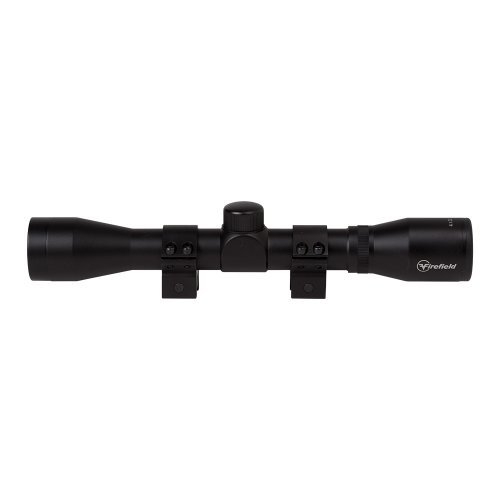
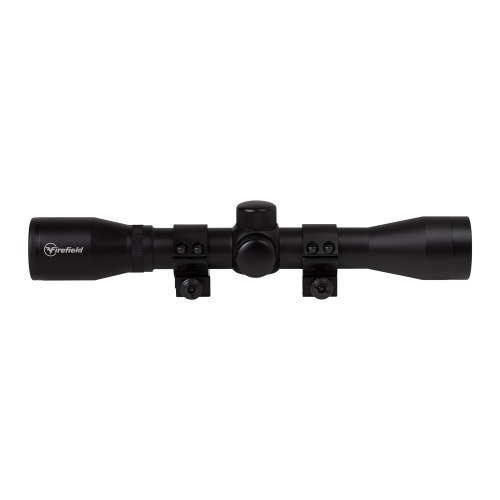
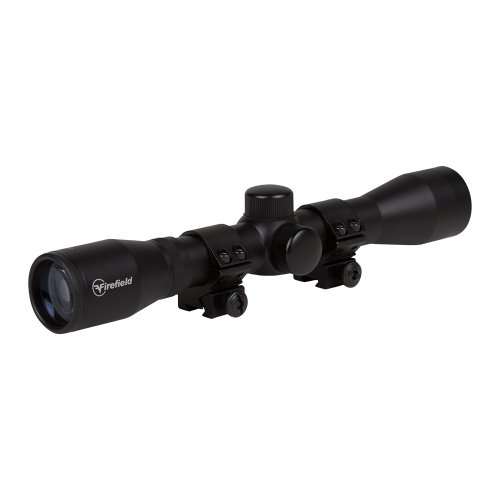
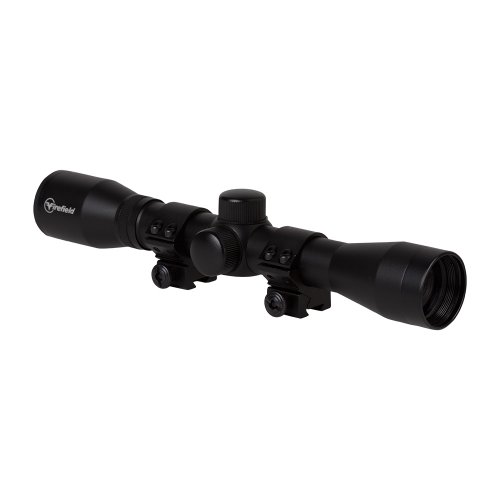
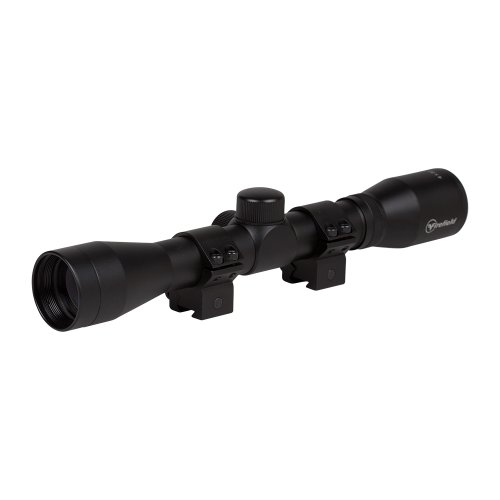
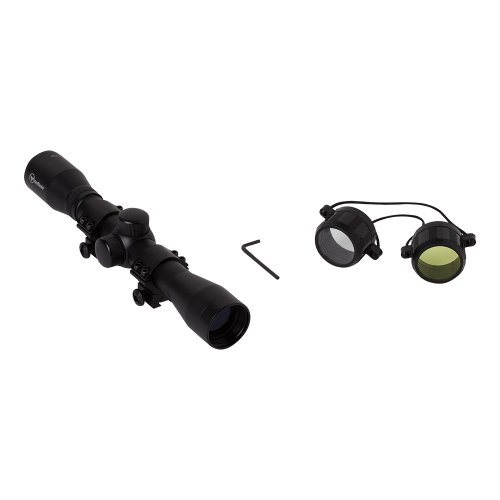
Firefield Tactical 4×32 Riflescope with Dove Tail Mount
Like all members of the Firefield Tactical Riflescope line, the 4×32 Tactical Riflescope features cutting-edge glass to ensure that it is the most accurate instrument on the market for a variety of tactical applications. Its precision multi-coated optics offer the clearest view for easy target acquisition in both bright and low-light situations. Featuring a fine Duplex reticle and 1/4-inch click MOA adjustment, this riflescope is ideal for tactical shooting, providing quick target acquisition by leading the shooter’s eye to the center of the reticle. Its wide field-of-view and diopter adjustment give the scope customizable characteristics to hit each target with precision accuracy. Water resistant and fog proof, the nitrogen-filled tube features windage and elevation adjustment caps for a sleek, streamlined look to the scope. This fixed power magnification riflescope features a lightweight and shockproof frame, for maximum portability and durability, ensuring every adrenaline-filled moment is intensified.
Rifle Scope Product Features
Mil dot reticle
Fully multi-coated lenses
Waterproof/ fog proof
Fixed magnification
Next Generation Optics and Accessories
Responding to the growing interest in shooting sports, tactical training and competitive shooting, Firefield began forming a new legion of next-generation shooters. A majority of Firefield users grew up watching action-packed movies, TV shows and playing interactive video games that encompass tactical gear and military-style weapons platforms. Our optics and shooting accessories allow shooters to turn what they’ve seen on the screen into a reality. Firefield offers people such as active, retired or aspiring military and enforcement officers”if given a national crisis”the chance to stand up in defense to serve and protect their country. These individuals will be victorious at all costs and will not be afraid of self-sacrifice to fight for greater good. Whether it’s combat simulation, home defense or nighttime hunting, Firefield offers everything needed to achieve VICTORY.
Best Sellers
Laser Sights: Nothing says quick target acquisition like Firefield Laser Sights. From subcompact pistol laser sights to the versatile green laser flashlight for-grip, Firefield Laser Sights are ideal accessories for any operator.
Laser Sights
Night Vision Riflescope
Shooting Stick
Bipods
Self Reliance
Love for our country
Sport or Competition
Promoting self-reliance, love for our country and the importance of protecting our family
Firefield products cater to independent, free-thinkers who strive to live a life of honor, purpose and meaning. Firefield works hard to embrace that spirit. Each product is built on a foundation of promoting self-reliance, love for our country and the importance of protecting our family. We understand that life is constantly moving, and our customers need the necessary tools to realize their full potential and complete each task with principle and integrity. By joining the Firefield Legion, you are part of an elite group that is responsible, ethical and edgy, and loves to keep it real in any situation.
About the Firefield Manufacturer
Firefield is a premium producer for weapon scopes, optics, mounting solutions, and other accessories used for guns like rifles and long guns. They style and supply their products by using materials which are long lasting and resilient. This includes the Firefield Tactical 4×32 Riflescope with Dove Tail Mount by Firefield. For more shooting goods, visit their site.
What You Need to Know About Rifle Optics
Rifle scopes enable you to specifically aim a rifle at different targets by lining up your eye with the target over a range. They accomplish this through magnification by utilizing a set of lenses within the scope. The scope’s alignment can be dialed in to take into account different ecological considerations like wind and elevation increases to make up for bullet drop.
The scope’s purpose is to help the shooter understand exactly where the bullet will land based upon the sight picture you are seeing using the optic as you line up the scope’s crosshair or reticle with the intended target. A lot of modern-day rifle scopes and optics have around 11 parts which are located internally and externally on the scope. These scope parts include the rifle scope’s body, lenses, elevation dials, objective focus rings, and other parts. Learn about the eleven parts of scopes.
The Varieties of Rifle Scopes
Rifle scopes can be either “first focal plane” or “second focal plane” type of scopes. The kind of focal plane an optic has determines where the reticle or crosshair lies relative to the scopes magnification. It actually suggests the reticle is situated behind or in front of the magnification lens of the optic. Choosing the most ideal type of rifle glass depends upon what style of shooting you plan on doing.
First Focal Plane Optic Details
Focal plane scopes (FFP) feature the reticle in front of the magnification lens. These kinds of scopes are helpful for:
- Quick acquisition, far away types of shooting
- Shooting scenarios where calculations are minor
- Experienced shooters who understand their aim point “hold over” plus “lead” equations for their weapon
- Shooters who do not mind the reticle is bigger and occupies more visual eyesight area than a SFP reticle
About Second Focal Plane Scopes
Second focal plane glass (SFP) include the reticle behind the zoom lens. This induces the reticle to remain at the exact same dimensions in relation to the quantity of zoom being used. The end result is that the reticle dimensions evolve based upon the zoom applied to shoot over greater ranges considering that the reticle markings represent various increments which change with the zoom level. In the FFP example with the SFP glass, the 5x “zoom” 100 yard tick reticle measurement would be 1/5th of the non “zoom” tick. These particular sorts of scopes work for:
- Far away styles of shooting where shooters have additional time to make ballistic estimations
- Shooting where most of the shots happen within much shorter spaces and ranges
- Shooters who prefer a clearer optic sight picture with less room taken up by the enlarged FFP reticle
Details on Scope Magnification
The quantity of magnification a scope supplies is determined by the diameter, thickness, and curvatures of the lenses inside of the rifle scope. The magnification of the scope is the “power” of the scope.
Fixed Power Lens Rifle Optics
A single power rifle optic and scope comes with a zoom number designator like 4×32. This means the magnification power of the scope is 4x power while the objective lens is 32mm. The magnification of this type of scope can not fluctuate because it is a fixed power scope.
Variable Power Lens Rifle Optics
Variable power rifle scopes can be modified between magnified settings. The power modification is accomplished using the power ring part of the scope near the rear of the scope by the eye bell.
Optic Power and Ranges
Here are some advised scope power levels and the ranges where they could be efficiently used. Always remember that high magnification scopes will not be as effective as lower powered optics and scopes because excessive magnification can be a bad thing. The very same idea relates to extended distances where the shooter needs increased power to see exactly where to properly aim the rifle at the target.
Lens Finishing for Rifle Optics
All modern rifle scope and optic lenses are layered. There are different types and qualities of glass coverings. Lens covering is an important aspect of a rifle’s setup when looking at high-end rifle optics and scope systems. The glass lenses are among the most crucial components of the glass given that they are what your eye looks through while sighting a rifle in on the target. The finish on the lenses offers protection to the lens exterior and also improves anti glare from excess sunrays and color perception.
HD Versus ED Optic Lens Coatings
Some glass manufacturers also use “HD” or high-definition lense finishes which apply different procedures, polarizations, aspects, and chemicals to draw out a wide range of color ranges and viewable target definition through lenses. This high-def covering is commonly used with greater density glass which decreases light’s capability to refract by means of the lens glass. Some scope brands use “HD” to refer to “ED” implying extra-low dispersion glass. ED handles how colors are presented on the chromatic spectrum and the chromatic aberration or difference which is similarly called color distortion or fringing. Chromatic aberration can be obvious over items with hard edges and outlines as light hits the object from certain angles.
About Single Finish Versus Multi-Coating
Different scope lenses can also have various finishings applied to them. All lenses typically have at least some type of treatment or finish applied to them prior to being used in a rifle scope or optic. Due to the fact that the lens isn’t simply a raw piece of glass, they require performance enhancing coatings. It becomes part of the carefully tuned optic. It requires a coating to be applied to it so that the lens will be optimally usable in many types of environments, degrees of sunlight (full light VS shaded), and other shooting conditions.
This lens treatment can protect the lens from scratches while minimizing glare and other less beneficial things experienced in the shooting environment while sighting in with the scope. The quality of a single covered lens depends on the scope manufacturer and how much you paid for it.
Some scope makers similarly make it a point to define if their optic lenses are coated or “multi” coated. Being “much better” depends on the maker’s lens treatment technology and the quality of products used in developing the rifle scope.
Hydrophobic Lens Coatings
Water on a lens does not help with preserving a clear sight picture through a scope at all. Numerous top of the line and military grade scope makers will coat their lenses with a hydrophilic or hydrophobic coating which is water repellent.
Alternatives for Mounting Glass on Long Guns
Installing approaches for scopes come in a couple of choices. There are the standard scope rings which are separately installed to the optic and one-piece mounts which cradle the scope. These various types of mounts also normally come in quick release versions which use throw levers which permit rifle operators to rapidly mount and dismount the scopes.
Hex Key Rifle Optic Ring Mounts
Standard, clamp style mounting scope rings use hex head screws to mount to the flattop design Picatinny scope installation rails on rifles. These types of scope mounts use two separate rings to support the optic, and are made from 7075 T6 billet aluminum which is designed for long range accuracy shooting. This type of scope install is wonderful for rifles which need a resilient, sound mount which will not move no matter how much the scope is moved or abused.
Quick-Release Cantilever Rifle Scope Ring Mounts
These types of quick-release rifle scope mounts can be used to quickly connect and remove a scope from a rifle. Several scopes can also be switched out if they all use a complementary designed mount. The quick detach mount style is CNC crafted from anodized 6061 T6 aluminum and the mounting levers connect securely to a flat top style Picatinny rail. This permits the scope to be sighted in while on the rifle, removed from the rifle, and remounted while keeping accuracy. These kinds of mounts are useful and handy for rifles which are transferred a lot, to take off the glass from the rifle for protection, or for aiming systems which are employed in between numerous rifles. An example of this mount style is the 30mm mount designed by Vortex Optics. It typically costs around $250 USD
Glass Tube Sealing and Gas Purging
Wetness inside your rifle optic can mess up a day of shooting and your expensive optic by triggering fogging and producing residue inside of the scope tube. The majority of scopes prevent moisture from going into the scope tube with a system of sealing O-rings which are water resistant.
Gas Purged Scope Tubes
Another element of preventing the accumulation of moisture inside of the rifle scope tube is filling the tube with a gas like nitrogen. Given that this area is already taken up by the gas, the glass is less impacted by temperature shifts and pressure distinctions from the external environment which might potentially permit water vapor to leak in around the seals to fill the vacuum which would otherwise be there. These are good qualities of a decent rifle scope to look for.


