



Description
Rifle Scope Product Details
Eagle Eye Rifle Scope 3-9×42 AOEG R/G Turrets with Lock and Reset Compact Tactical Scope Etched Glass Mil Dot Riflescope with 2 Kinds of Mounts
Eagle Eye Optics has been doing riflescope business over 15 years across the world. We manufacture Optical Riflescopes, Red Dot Scopes, and more for hunting. Our rifle scopes fully multicoated optical system and innovative adjustment technologies, and offers a superior hunting performance. Our riflescopes built to withstand the toughest hunting conditions, our scopes integrate shock-proof, fog-proof, and water-proof construction.
Our superiority is adopting HD Lens and advanced optical system that can transmits up to more than 90 percent of available light, ensuring maximum brightness from dawn to dusk. To simplify field adjustments, Eagle Eye also integrated a zero-reset turret into the riflescope. Just sight in as usual, lift the spring-loaded adjustment knob, rotate to your “zero,” and re-engage. Field adjustments are now as simple as dialing in your subsequent ranges.
Characteristics:
1. Adjustable Objective 5 yds to Inf
2. 100% waterproof / fogproof / shockproof construction
3. Target turrets with locking/resetting capabilities
4. Dual color Red / Green Illuminated Mil-Dot.5 position rheostat
5. Green dot for low light, red dot for bright light application
6. Fully multi-coated optics
7. 91% light transmission
8. Fast focus eyebell
9. Easy grip target-style windage and elevation adjustments
10. Etched Glass Mil Dot Reticle
11. ISO9001 certificate of registration
12. Wide Field of View
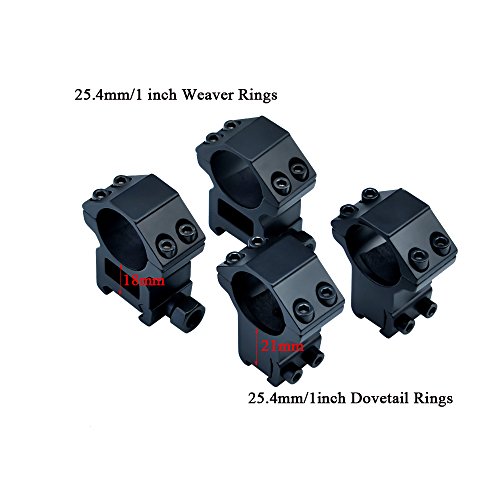
13. With Weaver (21mm) Mounts And Dovetail (11mm) Mounts
14. Flip-up lens covers to protect the lenses from dirt or dust
15. Black matte finish
16. Compact Size
Rifle Scope Product Features
Nitrogen filled against damp; One piece tube more strong and shockproof; Etched Glass mil dot reticle more shockproof than Crosshair; BKA4 lens more clearly.
Eye Relief:85mm/3.3inch; Tube Diameter(mm/inch):25.4/1;Click Value:1/4
Field of View(m@100m)/(ft@100yds):12.9/38.6@3x 4.4/13.2@9X
Power:3X-9X ObjectiveLens:42mm; Weight:612g/21.6oz; Length:246mm/9.7inch;Parallax Adjustment:Adjustable Objective 5 yds to Inf
All accessories fix a good and long life time rifle scope, we quality guaranteed, or refund.
About the Eagle Eye Scope Maker
Eagle Eye is a premium company for long gun scopes, optics, mounts, and other add-ons used for guns like rifles and long guns. They create and make their scopes, mounts, and related products by applying elements which are long lasting and durable. This includes the Eagle Eye Rifle Scope 3-9×42 AOEG R/G Turrets with Lock and Reset Compact Tactical Scope Etched Glass Mil Dot Riflescope with 2 Kinds of Mounts by Eagle Eye. For additional shooting goods, visit their website.
What You Need to Know About Rifle Glass
Rifle scopes permit you to exactly aim a rifle at different targets by aligning your eye with the target over a range. They accomplish this through magnifying the target by using a series of lenses within the scope. The scope’s alignment can be dialed in for consideration of different natural things like wind speed and elevation to make up for bullet drop.
The scope’s purpose is to help the shooter understand precisely where the bullet will land based upon the sight picture you are viewing through the scope as you line up the scope’s crosshair or reticle with the intended target. A lot of modern rifle scopes and optics have about 11 parts which are arranged inside and outside of the optic. These parts include the rifle scope’s body, lenses, elevation turrets or dials, focus rings, and other parts. Learn about the eleven parts of scopes.
Rifle Glass Varieties
Rifle scopes can be either “first focal plane” or “second focal plane” type of optics. Picking the optimal type of rifle glass is based around what type of shooting you plan on doing.
About First Focal Plane Glass
Focal plane scopes (FFP) feature the reticle in front of the magnifying lens. This causes the reticle to increase in size based upon the level of zoom being used. The result is that the reticle measurements are the same at the enhanced distance as they are at the non magnified range. One tick on a mil-dot reticle at one hundred yards with no “zoom” is still the identical tick at one hundred yards by using 5x “zoom”. These types of scopes work for:
- Quick acquisition, long distance types of shooting
- Shooting situations where computations are marginal
- Experienced shooters who recognize their target “hold over” and “lead” relationships for their firearms
- Shooters who do not mind the reticle is enlarged and takes up more visual eyesight space than a SFP reticle
About Second Focal Plane Scopes
Second focal plane scopes (SFP) come with the reticle behind the magnification lens. In the FFP example with the SFP scope, the 5x “zoom” one hundred yard tick reticle measurement would be 1/5th of the non “zoom” tick reticle measurement.
- Long distance kinds of shooting where shooters have additional time to make ballistic calculations
- Shooting where most shots take place within much shorter spaces and ranges
- Shooters who desire a clearer optic picture without area taken up by the larger sized FFP reticle
Ins and Outs of Rifle Scope Magnification
The quantity of magnification a scope offers is figured out by the diameter, thickness, and curvatures of the lenses inside of the rifle scope. The magnification of the scope is the “power” of the scope.
Single Power Lens Scopes
A single power rifle optic uses a magnification number designator like 4×32. This means the zoom power of the scope is 4x power and the objective lens is 32mm. The zoom of this type of optic can not fluctuate because it is a set power scope.
Adjustable Power Lens Glass
Variable power rifle scopes use enhanced power. The power modification is achieved by the power ring part of the scope near the rear of the scope by the eye bell.
Power Levels and Range Correlations
Here are some suggested scope powers and the distances where they can be effectively used. High power glass will not be as efficient as lower magnification level rifle scope glass since too much magnification can be a bad thing. The same concept relates to longer ranges where the shooter needs adequate power to see exactly where to best aim the rifle at the target.
About Rifle Glass Lens Finishing
All top teir rifle optic lenses are coated. Lens finish can be an essential aspect of a rifle when considering high end rifle optics and scope setups.
Details on Glass Lens Coatings – HD Versus ED
Some scope producers also use “HD” or high-definition lens coatings which use various methods, chemicals, polarizations, and elements to draw out various colors and viewable definition through the lens. Some scope producers use “HD” to refer to “ED” implying extra-low dispersion glass.
Single Optic Lens Coating Versus Multi-Coating
Various optic lenses can even have different finishings applied to them. All lenses typically have at least some type of treatment or finish applied to them before they are used in a rifle scope or optic assembly. Since the lens isn’t simply a raw piece of glass, they require performance enhancing coatings. It becomes part of the finely tuned optic. It must have a coating placed on it so that it will be optimally functional in numerous types of environments, degrees of sunshine (full light VS shaded), and other shooting conditions.
This lens treatment can protect the lens from scratches while reducing glare and other less advantageous things experienced in the shooting environment while sighting in with the scope. The quality of a single coated lens depends on the scope producer and how much you paid for it.
Some scope producers also make it a point to specify if their optic lenses are layered or “multi” covered. Being “better” depends on the producer’s lens treatment technology and the quality of products used in building the rifle scope.
What to Know About Hydrophobic Finish
Water on a lens doesn’t assist with keeping a clear sight picture through a scope at all. Many top of the line and high-end optic makers will coat their lenses with a hydrophilic or hydrophobic finishing.
Options for Mounting Glass on Firearms
Installing solutions for scopes can be found in a few options. There are the basic scope rings which are separately installed to the scope and one-piece mounts which cradle the scope. These various kinds of mounts also typically are made in quick release versions which use throw levers which allow rifle operators to rapidly install and dismount the scope.
Scope Mounting Solutions with Hex Key Rings
Standard, clamp design mounting optic rings use hex head screws to mount to the flattop style Picatinny scope mount rails on the tops of rifles. These styles of scope mounts use a pair of independent rings to support the scope, and are usually constructed from 7075 T6 billet aluminum or similar materials which are manufactured for long distance precision shooting. This form of scope mount is good for rifles which need a durable, rock solid mount which will not shift no matter how much the scope is moved or jarring the rifle takes. These are the design of mounts you should get for a specialized scope system on a far away hunting or sniper competition long gun that will pretty much never need to be modified or adjusted. Blue 242 Loctite threadlocker can also be used on the scope mount’s screws to keep the hex screws from wiggling out after they are installed firmly in place. An example of these rings are the 30mm style from the Vortex Optics company. The set usually costs around $200 USD
Quick-Release Cantilever Rifle Scope Ring Mounts
These types of quick-release rifle scope mounts can be used to rapidly attach and take off a scope from a rifle. If they all use a similar design mount, multiple scopes can also be swapped out. The quick detach design is CNC machined from anodized 6061 T6 aluminum and the mounting levers attach solidly to a flat top type Picatinny rail. This permits the scope to be sighted in while on the rifle, removed from the rifle, and remounted while keeping the original sighting settings. These kinds of mounts are useful and practical for shooting platforms which are carried a lot, to take off the glass from the rifle for protection, or for scopes which are adopted in between a number of rifles. An example of this mount style is the 30mm mount from the Vortex Optics manufacturer. It generally costs around $250 USD
Sealing and Gas Purging for Glass Tubes
Moisture inside your rifle optic can destroy a day of shooting and your costly optic by bringing about fogging and developing residue inside of the scope tube. Most scopes prevent wetness from getting in the scope tube with a system of sealing O-rings which are waterproof.
Gas Purged Glass Tubes
Another component of avoiding the buildup of wetness inside of the rifle optic’s tube is filling the tube with a gas like nitrogen. Given that this area is already taken up by the gas, the scope is less altered by temp shifts and pressure distinctions from the outside environment which may possibly enable water vapor to leak in around the seals to fill the vacuum which would otherwise be there. These are good qualities of a decent rifle scope to look for.


