Description
Rifle Scope Product Details
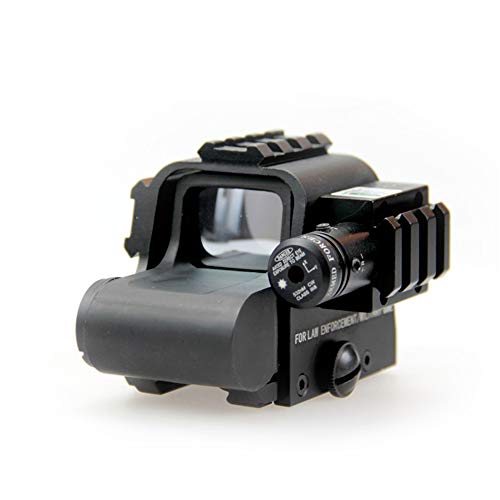
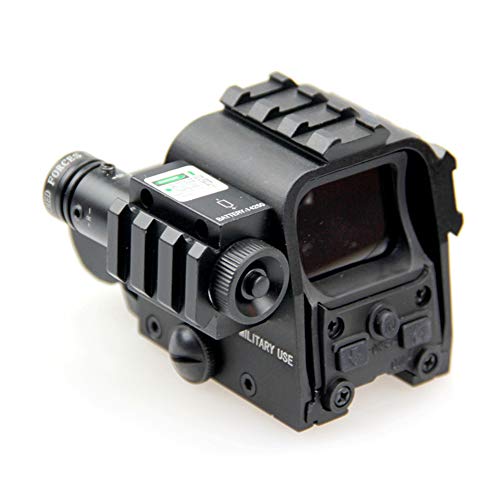
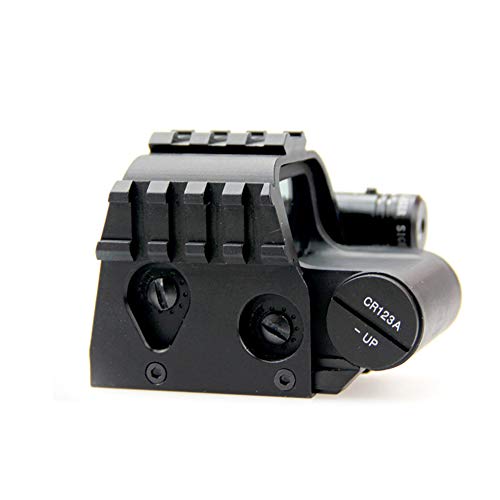
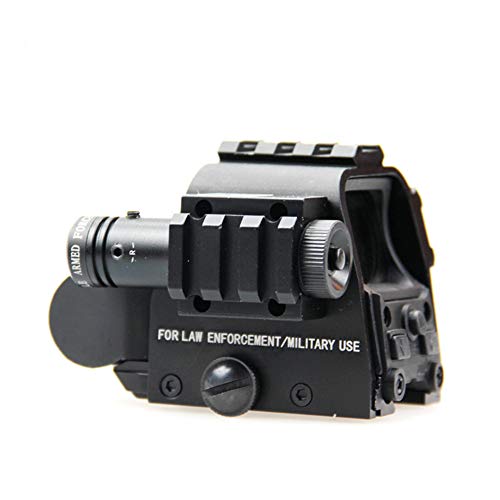
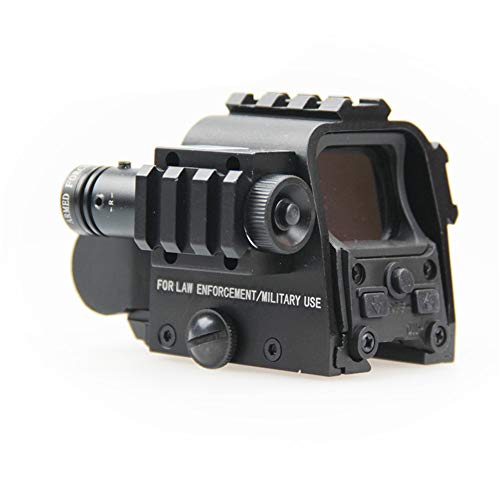
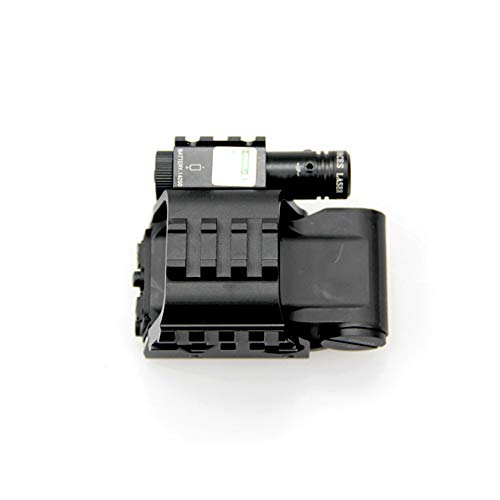
DJym Non-Magnification HD Red Dot Sight, Red and Green Differentiation Shockproof Waterproof and Stable Sight
Model: HD553G
Magnification: 1x
Objective lens diameter: 22mm
Field of view: 15.8m@100m
Guide rail: 22mm
Differentiation mode: 1
Split silk color: red and green
Gear position: button
Mirror body: black
Product size: 91x50x63mm
TCpick:
1. Welcome to buy, we will send it to you as soon as possible, if you have any questions, we will reply within 24 hours, I wish you a happy shopping
2. If you are satisfied with our products, please leave your valuable feedback or product reviews, thank you for your support.
3. Our has more products, welcome to buy
Rifle Scope Product Features
100% brand new Excellent product quality.
There is no magnification of the scope, the button adjusts the gear position, allowing you to respond quickly.
22mm rail, excellent seismic performance, will not shake.
High-definition vision, allowing you to observe the field of vision more clearly.
Quality assurance, our products are CE and RoHS certified, if you have any questions, we will reply you within 24 hours
About the DJym Manufacturer
DJym is a premium maker for long gun scopes, optics, mounting solutions, and other add-ons used for firearms like rifles and long guns. They design and make their scopes and related products choosing materials which are durable and long lasting. This includes the DJym Non-Magnification HD Red Dot Sight, Red and Green Differentiation Shockproof Waterproof and Stable Sight by DJym. For additional shooting products, visit their website.
What You Need to Know About Rifle Scopes
Rifle scopes permit you to specifically align a rifle at various targets by lining up your eye with the target over a distance. They accomplish this through magnification by using a series of lenses inside the scope. The scope’s alignment can be dialed in to take into account varied ecological elements like wind and elevation increases to make up for bullet drop.
The scope’s purpose is to help the shooter understand exactly where the bullet will hit based on the sight picture you are seeing using the scope as you line up the scope’s crosshair or reticle with the intended target. Many modern-day rifle scopes have about eleven parts which are found internally and on the exterior of the optic. These scope parts include the rifle scope’s body, lenses, adjustment dials, objective focus rings, and other parts. Learn about the eleven parts of glass.
The Styles of Rifle Scopes
Rifle scopes can be either “first focal plane” or “second focal plane” type of scopes. Opting for the optimal type of rifle optic is based around what type of shooting you plan on doing.
First Focal Plane Scopes
Focal plane scopes (FFP) feature the reticle in front of the magnification lens. These styles of scopes are beneficial for:
- Quick acquisition, far away kinds of shooting
- Shooting situations where estimations are marginal
- Experienced shooters who recognize their aim point “hold over” plus “lead” ratios for their firearms
- Shooters who don’t mind the reticle is enlarged and occupies more visual eyesight space than a SFP reticle
About Second Focal Plane Optics
Second focal plane optics (SFP) feature the reticle to the rear of the zoom lens. In the FFP example with the SFP scope, the 5x “zoom” 100 yard tick measurement would be 1/5th of the non “zoom” tick.
- Far away forms of shooting where shooters have more time to make ballistic calculations
- Shooting where most of the shots occur within much shorter distances and ranges
- Shooters who prefer a clearer optic sight picture without space used up by the larger sized FFP reticle
Ins and Outs of Rifle Glass Magnification
The level of scope zoom you need on your optic depends on the form of shooting you like to do. Almost every type of rifle scope delivers some degree of magnification. The volume of magnification a scope provides is identified by the size, thickness, and curves of the lenses inside of the rifle optic. The magnifying level of the scope is the “power” of the opic. This implies what the shooter is looking at through the scope is magnified times the power element of what can normally be seen by human eyes.
Fixed Power Lens Scopes
A single power rifle optic comes with a magnification number designator like 4×32. This indicates the magnification power of the scope is 4x power while the objective lens is 32mm. The zoom of this type of scope can not adjust considering that it is a fixed power optic.
Info on Variable Power Lens Rifle Scopes
Variable power rifle scopes use variable power levels. The power change is performed by using the power ring part of the scope near the rear of the scope by the eye bell.
Optic Power Level and Ranges
Here are some advised scope power levels and the distances where they can be successfully used. Always remember that high magnification scopes will not be as practical as lower magnification level glass since too much magnification can be a bad thing. The exact same idea goes for longer distances where the shooter needs to have adequate power to see where to best aim the rifle at the target.
Details on Lens Finish
All contemporary rifle scope and optic lenses are covered in special coatings. There are different types and qualities of finishes. When thinking about high end rifle optical systems, Lens covering can be a critical aspect of a rifle. The glass lenses are one of the most key components of the optic given that they are what your eye looks through while sighting a rifle in on the target. The finishing on the lenses safeguards the lens surface and even improves anti glare from excess daylight and color presence.
About Rifle Scope Lens Coatings – HD Versus ED
Some scope producers also use “HD” or high-def lense coatings that employ various procedures, elements, rare earth compounds, and polarizations to extract various color ranges and viewable target definition through lenses. This HD coating is commonly used with more costly, high density glass which brings down light’s opportunity to refract by means of the lens glass. Some scope corporations use “HD” to describe “ED” implying extra-low dispersion glass. ED deals with how colors are represented on the chroma spectrum and the chromatic aberration which is also called color distortion or fringing. Chromatic aberration is often visible around things with hard shapes as light hits the item from certain angles.
Single Finish Versus Multi-Coating for Scopes
Different optic lenses can also have different finishings applied to them. All lenses usually have at least some kind of treatment or finish applied to them before being used in a rifle scope or optic. This is because the lens isn’t just a raw piece of glass. It becomes part of the finely tuned optic. It requires a coating to be applied to it so that the lens will be efficiently functional in numerous types of environments, degrees of light (full light VS shaded), and other shooting conditions.
Single covered lenses have a treatment applied to them which is typically a protective and boosting multi-purpose treatment. This lens treatment can safeguard the lens from scratches while decreasing glare and other less helpful things experienced in the shooting environment while sighting in with the scope. The quality of a single covered lens depends upon the scope company and the amount you spent for it. Both the manufacturer and amount are indications of the lens quality.
Some scope makers also make it a point to define if their optic lenses are covered or “multi” covered. Being “better” depends on the producer’s lens treatment innovation and the quality of products used in building the rifle scope.
Details on Anti-water Finish
Water on a lens doesn’t help with maintaining a clear sight picture through a scope at all. Many top of the line and military grade scope makers will coat their lenses with a hydrophilic or hydrophobic covering.
Alternatives for Installing Optics on Firearms
Installing approaches for scopes can be found in a few choices. There are the standard scope rings which are separately installed to the scope and one-piece mounts which cradle the scope. These various types of mounts also generally are made in quick release versions which use manual levers which enable rifle shooters to quickly mount and remove the scope.
Optic Mounting Solutions with Hex Key Rings
Standard, clamp style mounting scope rings use hex head screws to mount to the flattop style Picatinny scope mount rails on rifles. These types of scope mounts use a couple of different rings to support the optic, and are often made from 7075 T6 billet aluminum which is developed for long distance accuracy shooting. This type of scope install is great for rifles which need a long lasting, rock solid mount which will not move no matter how much the scope is moved or abused.
Quick-Release Cantilever Rifle Optic Rings
These types of quick-release rifle scope mounts can be used to quickly connect and remove a scope from a rifle before reattaching it to a different rifle. Several scopes can even be switched out if they all use a similar design mount. These types of mounts come in handy for rifles which are transferred a lot, to swap out the optic from the rifle for protecting the scope, or for scopes which are used between numerous rifles or are situationally focused.
Sealing and Gas Purging for Optic Tubes
Moisture inside your rifle scope can destroy a day of shooting and your pricey optic by triggering fogging and creating residue inside of the scope tube. Most scopes prevent wetness from getting in the scope tube with a system of sealing O-rings which are water resistant.
Gas Purged Rifle Glass Tubes
Another component of avoiding the accumulation of moisture inside of the rifle optic tube is filling the tube with a gas like nitrogen. Considering that this area is currently occupied by the gas, the glass is less affected by condition shifts and pressure distinctions from the outdoor environment which could possibly permit water vapor to permeate in around the seals to fill the void which would otherwise be there. These are good qualities of a good rifle scope to look for.


