
Description
Rifle Scope Product Details
Crimson Trace CTL-3105 1-5x24mm 3 Series Short-Range Tactical Riflescope with FFP, Illuminated MIL Reticle and Zero Reset for Shooting, Competition and Range
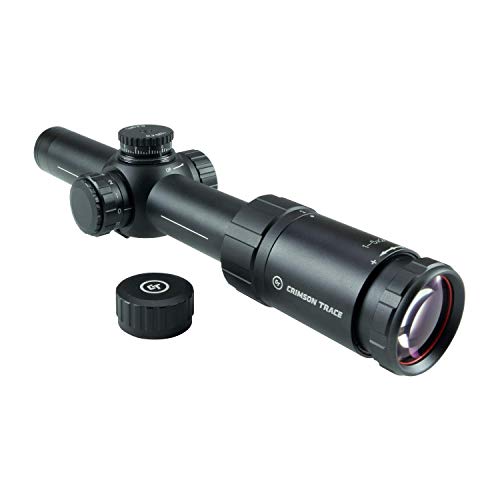
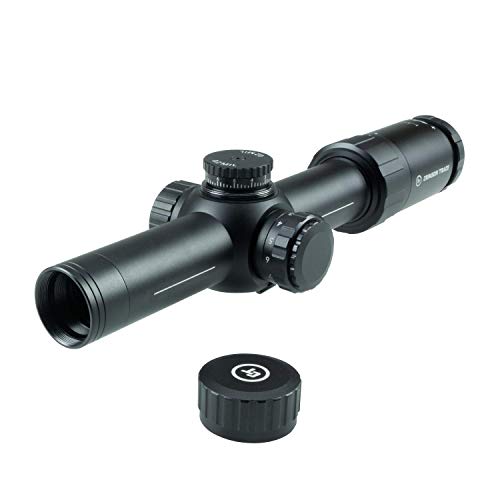
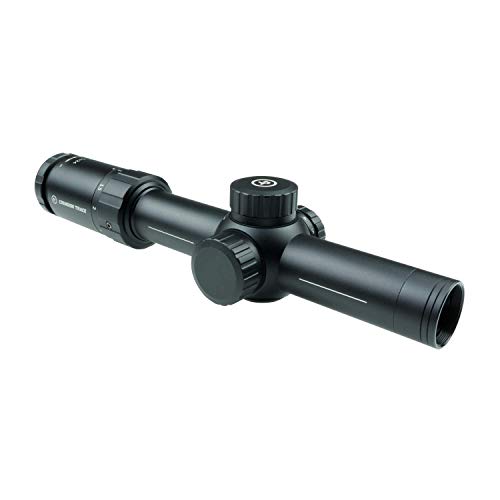
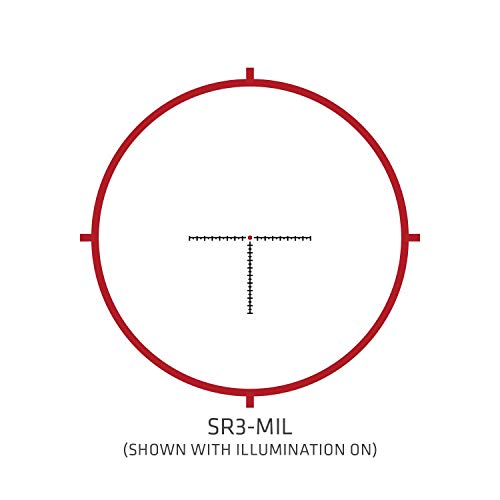
The CTL-3105 3 Series is a feature rich 1-5x24mm short-range rifle scope that has been purposefully built from the ground up. The scopes First Focal Plane (FFP) and impressive Japanese ED glass clarity makes for an unparalleled shooting experience. The custom designed SR3-MIL advanced reticle is fully illuminated and offers a quick acquisition outer ring that vanishes when increasing magnification. The capped .2 MIL tactical turrets provide a precise and rugged feel when dialing for the most accurate of shots. The entire Crimson Trace Scope Line offers EZ Mount Leveling Indicators for quick and exact mounting and red alignment ring for proper eye placement. All Crimson Trace Scopes are part of the FREE Batteries For Life program and are covered under the Lifetime Protection Guaranteed Warranty.
Rifle Scope Product Features
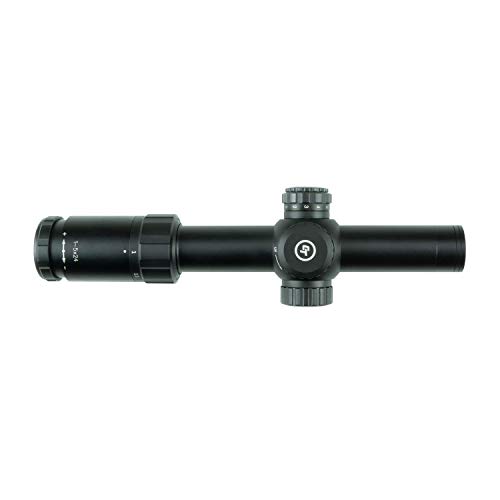
SPECS: 1-5 magnification with a 24mm lens diameter, 2″ H x 10″ L x 2.8″ W and weighs 19.9 oz
ACCURACY: Features a first focal plane, SR3-MIL illuminated milling reticle and .2 MIL capped turrets
EASE OF USE: Features capped windage (right), elevation (top) turrets and a parallax/illumination control knob (left), leveling lines for a quick scope mount and a premium zero reset for a mindless zero and fast acquisition at various distances
INCLUDES: (1) CR2032 lithium batteries and qualifies for CTCs Batteries for Life Program
DURABLE: 30mm one piece tube is constructed of 6061-T6 aircraft grade anodized aluminum and features nitrogen purged, Japanese ED extra low dispersion glass with proprietary MoC coating for
GUARANTEED: All Crimson Trace Scopes are covered under a Full Lifetime Warranty. For questions or warranty contact us at support@crimsontrace.com
Products to Elevate Your Confidence in Moments That Matter
In 1994, Crimson Trace developed and sold its first laser sight – an internal system for GLOCK pistols, known as the GLS. Two years later, the newly patented, user-installed Lasergrips product line was unveiled at the 1996 SHOT Show. Over the years, the engineers at CTC have been dedicated to constant improvement and the evolution of products. As we approach our 25th year, Crimson Trace is pleased to add electronic sights, precision riflescopes and sporting riflescopes to our collection.
Complete Focus
Red Dots
Fast acquisition and reliable construction is offered in a full line of red dots and reflex sights
Lasers
Award winning lasers easily fit on your weapon and ensure accuracy in the most pivotal moments
Riflescopes
From large to small, first focal to second, the glass in the CTC riflescopes are clear, precise and on target
About the Crimson Trace Company
Crimson Trace is a premium supplier for rifle scopes, optics, mounting solutions, and other accessories used for firearms like rifles and long guns. They innovate and make their mounts and related products making the most of elements which are durable and long lasting. This includes the Crimson Trace CTL-3105 1-5x24mm 3 Series Short-Range Tactical Riflescope with FFP, Illuminated MIL Reticle and Zero Reset for Shooting, Competition and Range by Crimson Trace. For additional shooting items, visit their website.
Rifle Optic Facts
Rifle scopes permit you to precisely align a rifle at different targets by lining up your eye with the target at range. They accomplish this through zoom by using a set of lenses inside the scope. The scope’s alignment can be adjusted for consideration of different natural considerations like wind speed and elevation increases or decreases to make up for bullet drop.
The scope’s purpose is to help the shooter understand exactly where the bullet will hit based on the sight picture you are seeing with the optic as you align the scope’s crosshair or reticle with the target. Many modern rifle scopes and optics have about eleven parts which are found within and externally on the optic. These scope parts include the rifle scope’s body, lenses, windage and elevation dials, objective focus rings, and other elements. Learn about the eleven parts of scopes.
Rifle Optic Types
Rifle scopes can be either “first focal plane” or “second focal plane” type of scopes. Deciding on the perfect type of rifle glass is based on what type of shooting you plan to do.
First Focal Plane Scopes
First focal plane scopes (FFP) include the reticle before the magnification lens. This induces the reticle to increase in size based upon the level of zoom being used. The benefit is that the reticle measurements are the same at the magnified distance as they are at the non amplified range. One tick on a mil-dot reticle at one hundred yards with no “zoom” is still the very same tick at one hundred yards by using 5x “zoom”. These kinds of scopes are useful for:
- Quick acquisition, long distance types of shooting
- Shooting scenarios where calculations are minimal
- Experienced shooters who know their target “hold over” and also “lead” ratios for their rifles
- Shooters who don’t mind the reticle is bigger and occupies more visual sight room than a SFP reticle
Info on Second Focal Plane Optics
Second focal plane glass (SFP) feature the reticle behind the zoom lens. This triggers the reticle to stay at the same scale in connection with the quantity of magnification being used. The end result is that the reticle measurements alter based on the magnification chosen to shoot over longer ranges considering the reticle markings present various increments which vary with the magnification level. In the FFP example with the SFP optic, the 5x “zoom” one hundred yard tick would be 1/5th of the non “zoom” tick. These types of scopes work for:
- Long distance styles of shooting where shooters have extra time to make ballistic estimations
- Shooting where most of the shots occur within much shorter ranges and proximities
- Shooters who prefer a clearer optic sight picture without space taken up by the enlarged FFP reticle
Details on Scope Magnification
The quantity of magnification a scope offers is determined by the diameter, density, and curvatures of the lenses inside of the rifle scope. The zoom of the scope is the “power” of the scope.
About Fixed Single Power Lens Rifle Optics
A single power rifle optic or scope will have a magnification number designator like 4×32. This indicates the magnification power of the scope is 4x power while the objective lens is 32mm. The magnification of this type of optic can not fluctuate since it is a fixed power optic.
Adjustable Power Lens Rifle Scope Details
Variable power rifle scopes have adjustable power. These types of scopes will list the zoom amount in a configuration like 2-10×32. These numbers indicate the magnification of the scope could be set in between 2x and 10x power. This always utilizes the power levels in-between 2 and 10. The power shift is achieved by making use of the power ring component of the scope near the back of the scope by the eye bell.
Power Levels and Range
Here are some recommended scope power levels and the distances where they may be efficiently used. Highly magnified glass will not be as effective as lower magnification level rifle scope glass due to the fact that too much magnification can be a negative aspect depending on your shooting distance. The same concept goes for longer ranges where the shooter needs to have enough power to see exactly where to properly aim the rifle.
Lens Finish for Scopes
All modern-day rifle scope and optic lenses are layered. There are different types and qualities of lens finishings. Lens finish can be a crucial element of a rifle when thinking of high end rifle optics and targeting equipment. The glass lenses are among the most crucial components of the glass due to the fact that they are what your eye looks through while sighting a rifle in on the point of impact. The finishing on the lenses offers protection to the lens surface area and also helps with anti glare from refracted direct sunlight and color profiles.
HD Versus ED Lenses
Some scope brands also use “HD” or high-definition lens finishings which use various processes, chemicals, polarizations, and components to draw out different colors and viewable definition through the lens. Some scope producers use “HD” to refer to “ED” implying extra-low dispersion glass.
Single Finishing Versus Multi-Coating for Rifle Optics
Different optic lenses can also have different finishes applied to them. All lenses normally have at least some type of treatment or covering used to them prior to being used in a rifle scope or optic.
This lens treatment can safeguard the lens from scratches while lowering glare and other less beneficial things experienced in the shooting environment while sighting in with the scope. The quality of a single covered lens depends on the scope producer and how much you paid for it.
Some scope makers likewise make it a point to define if their optic lenses are layered or “multi” covered. This indicates the lens has numerous treatments applied to them. If a lens receives several treatments, it can establish that a producer is taking multiple steps to combat various environmental elements like an anti-glare finishing, a scratch resistant anti-abrasion finishing, followed by a hydrophilic coating. This additionally does not necessarily indicate the multi-coated lens is much better than a single covered lens. Being “much better” is dependent on the manufacturer’s lens treatment solutions and the quality of glass used in constructing the rifle scope.
Anti-water Lens Coverings
Water on a scope lens doesn’t help with preserving a clear sight picture through a scope at all. Lots of top of the line and high-end scope manufacturers will coat their lenses with a hydrophobic or hydrophilic finishing. The Steiner Optics Nano-Protection is a fine example of this kind of treatment. It deals with the exterior surfaces of the Steiner glass lens so the water molecules can not bind to it or create surface tension. The result is that the water beads sheet off of the scope to maintain a clear, water free sight picture.
Choices for Mounting Glass on Long Guns
Installing options for scopes come in a couple of choices. There are the basic scope rings which are individually installed to the scope and one-piece mounts which cradle the scope. These different kinds of mounts also normally can be found in quick release variations which use manual levers which enable rifle operators to quickly mount and remove the optics.
Hex Key Optic Rings
Standard, clamp design mounting scope rings use hex head screws to mount to the flattop style Picatinny scope mount rails on rifles. These types of scope mounts use two separate rings to support the optic, and are often made from 7075 T6 billet aluminum which is designed for long distance precision shooting. This type of scope mount is wonderful for rifles which require a durable, sound mount which will not move no matter how much the scope is moved or abuse the rifle takes.
Scope Mounting Solutions with Quick-Release Cantilever Rings
These types of quick-release rifle scope mounts can be used to quickly connect and detach a scope from a rifle. Multiple scopes can also be switched out if they all use a similar style mount. The quick detach mount style is CNC machined from anodized 6061 T6 aluminum and the mounting levers connect solidly to a flat top type Picatinny rail. This permits the scope to be sighted in while on the rifle, taken off of the rifle, and remounted back on the rifle while retaining accuracy. These kinds of mounts come in convenient for rifles which are hauled around a lot, to take off the scope from the rifle for protection, or for optics which are adopted between multiple rifles. An example of this mount type is the 30mm mount designed by Vortex Optics. It generally costs around $250 USD
Optic Tube Sealing and Gas Purging
Moisture inside your rifle optic can mess up a day on the range and your highly-priced optic by triggering fogging and creating residue inside of the scope’s tube. Many scopes protect against wetness from going into the optical tube with a system of sealing O-rings which are waterproof. Typically, these water-resistant scopes can be submerged under 20 or 30 feet of water before the water pressure can push moisture past the O-rings. This should be more than enough moisture prevention for basic use rifles, unless you plan on taking your rifle boating and are concerned about the optic still working if it is submerged in water and you can still retrieve the gun.
Gas Purged Scope Tubes
Another element of avoiding the accumulation of wetness within the rifle optic tube is filling the tube with a gas like nitrogen. Given that this space is already occupied by the gas, the glass is less affected by temp shifts and pressure distinctions from the outdoor environment which could possibly enable water vapor to seep in around the seals to fill the vacuum which would otherwise be there. These are good qualities of a good rifle scope to look for.


