
Description
Rifle Scope Product Details
Bushnell RXS250 Reflex Sight_RXS250
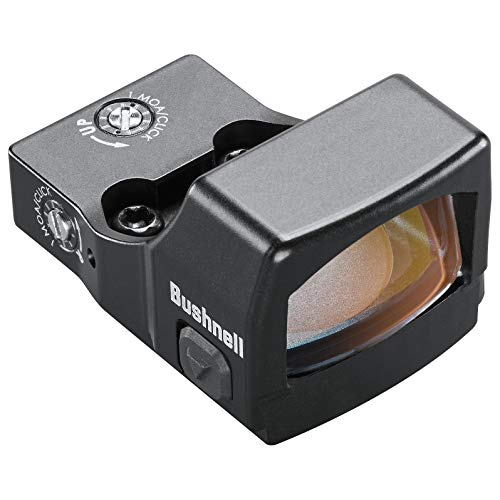
The Bushnell RXS 250 Reflex sight proposes class leading performance and incredible multi-platform versatility.
Rifle Scope Product Features
[BUSHNELL] is a leading Optics manufacturer based in the USA that has been serving the outdoor and wildlife enthusiast for more than 70 years.
[REFLEX SIGHT] RXS-250 has a clear 4 MOA dot with 10 brightness settings, fully-multi coated glass.
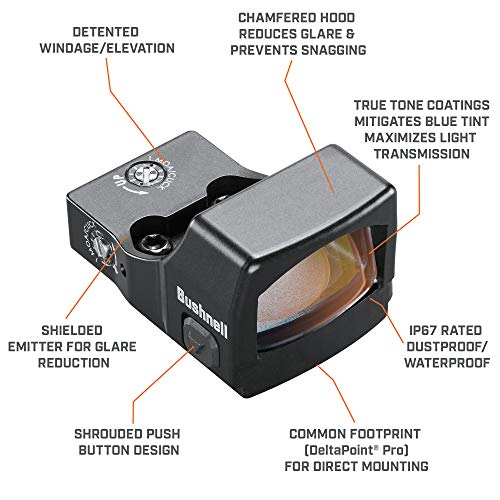
[ADDITIONAL FEATURES] Detented windage/elevation, top loading battery for easy replacement, mounts on an array of pistols, MSRs, and shotguns.
[PURPOSE BUILT QUALITY] Waterproof IP67 and rated dustproof, long lasting 50,000 hour (on midsetting) battery
[IDEAL FOR] Hoster/duty carry, training/target shooting, home defense, competition, hunting
DURABILITY
DURABLE HOUSING EXCEEDS MILSPEC DROP TESTING
The robust aluminum housing exceeds the requirements of MIL-STD-810 drop testing while mounted on a fully loaded pistol. Should your grip fail you, and drop optic first, The RXS-250 will do everything it can to mitigate the impact transferring energy to the lens or the electronics, keeping you in action.
IP67 RATED DUSTPROOF/WATERPROOF WITH SOLID ALUMINUM CONSTRUCTION – Rugged aluminum housing ensures the glass and electronic internals are protected during field use and IP67 rated sealing of the electronics allows the optic to be briefly submerged without damage.
CLEAR 4 MOA DOT WITH 10 BRIGHTNESS SETTINGS
The point source LED creates a clean beam that produces a strong dot without wasting battery life. 10 brightness settings allow for clear day light viewing and low settings for excellent nighttime visibility. This optic also works well when paired with night vision.
LONG LASTING BATTERY LIFE
With 50,000 hours (5+ years) on the mid setting (Setting 5) you won’t need to change the battery any time soon. The top loading battery is easy to replace and helps maintain your zero without the hassle of removing the sight from the firearm.
MOUNTS ON AN ARRAY OF PISTOLS, RIFLES AND SHOTGUNS
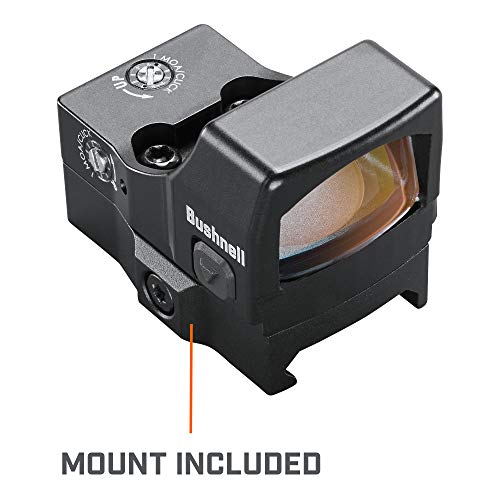
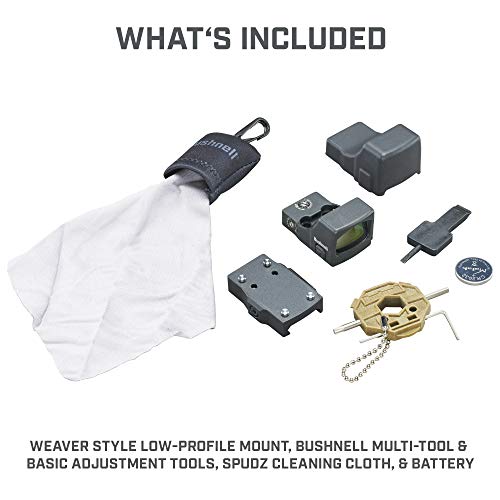
Works across all common red dot mounts with DeltaPoint footprint and included weaver style low-rise mount.
CONVENIENT LAYOUT AND DESIGN
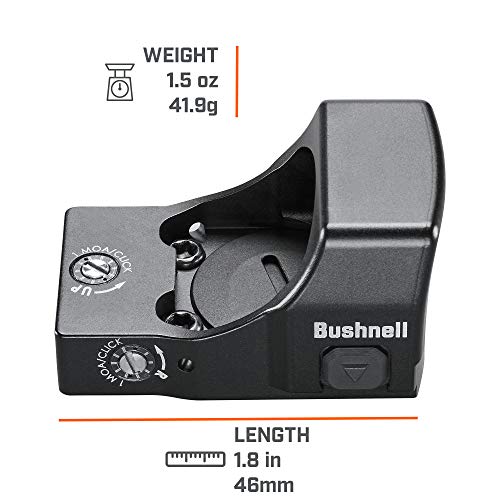
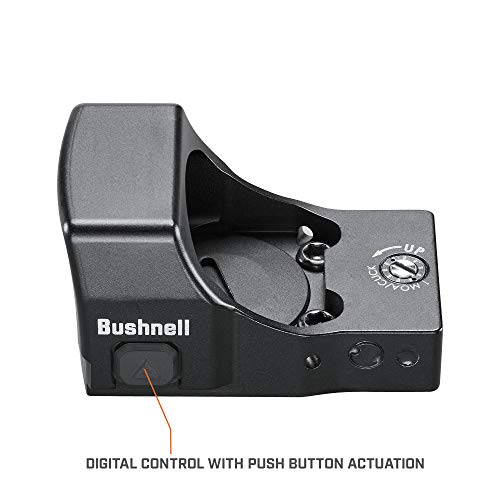
Detented Windage/Elevation adjustment with 1 MOA per click. Top loading battery (CR2032) for easy replacement. Easy access, shrouded push button design for brightness setting adjustment.
Chamfered hood edges protects the optic from the possibility of snags on clothing or environment. Includes protective form fit cover.
HOUSING DESIGN & CO-WITNESS CAPABLE
Optimized hood geometry and reflector lens design provide a large field of view without sacrificing durability.
Compatible with many factory optics-ready pistols and aftermarket suppressor height sights.
TRUE TONE VISIBILITY
Fully-Multi coated with True Tone color that doesn’t have a blue hue on the glass providing accurate color representation and high light transmission (avg. 86%). Coating system mitigates stray artifacts from secondary light sources.
PURPOSE-BUILT FOR:
Users that demand a bright, clear dot with long battery life and durability.
Ideal for, holster/duty carry, training/ target shooting, home defense, competition and hunting.
About the Bushnell Brand
Bushnell is a premium manufacturer for long gun scopes, optics, mounts, and other accessories used for guns like rifles and long guns. They create and supply their products working with elements which are long lasting and durable. This includes the Bushnell RXS250 Reflex Sight_RXS250 by Bushnell. For more shooting items, visit their site.
Information About Optics
Rifle scopes allow you to exactly align a rifle at different targets by lining up your eye with the target over a range. They accomplish this through magnifying the target by making use of a set of lenses inside the scope. The scope’s alignment can be adjusted for consideration of numerous ecological aspects like wind speed and elevation decreases to make up for bullet drop.
The scope’s purpose is to help the shooter understand exactly where the bullet will land based upon the sight picture you are viewing using the optic as you align the scope’s crosshair or reticle with the intended point of impact. Many modern rifle scopes and optics have about 11 parts which are found internally and on the exterior of the scope. These scope parts consist of the rifle scope’s body, lenses, adjustment turrets or dials, objective focus rings, and other parts. Learn about the eleven parts of optics.
About Rifle Scope Varieties
Rifle scopes can be either “first focal plane” or “second focal plane” style of scopes. The form of focal plane a scope has decides where the reticle or crosshair is located in regard to the scopes magnification. It literally suggests the reticle is situated behind or in front of the magnifying lens of the optic. Picking out the very best kind of rifle scope is based on what style of hunting or shooting you intend on undertaking.
First Focal Plane Glass Info
First focal plane optics (FFP) include the reticle in front of the magnifying lens. This induces the reticle to increase in size based on the level of zoom being used. The result is that the reticle measurements are the same at the enhanced distance as they are at the non amplified range. For example, one tick on a mil-dot reticle at one hundred yards without any “zoom” is still the very same tick at 100 yards using 5x “zoom”. These types of scopes are beneficial for:
- Quick acquisition, far away types of shooting
- Shooting circumstances where computations are low
- Experienced shooters who have an idea for their target “hold over” and also “lead” ratios for their firearms
- Shooters who do not mind the reticle is enlarged and uses up more visual sight room than a SFP reticle
About Second Focal Plane Optics
Second focal plane scopes (SFP) come with the reticle behind the zoom lens. In the FFP example with the SFP scope, the 5x “zoom” 100 yard tick would be 1/5th of the non “zoom” tick reticle measurement.
- Far away types of shooting where shooters have more time to make ballistic calculations
- Shooting where most of the shots occur within much shorter ranges and distances
- Shooters who like a clearer optic sight picture without area taken up by the larger size FFP reticle
Zoom for Scopes
The quantity of scope magnification you need on your scope is based on the type of shooting you desire to do. Virtually every style of rifle glass offers some level of zoom. The level of zoom a scope gives is determined by the dimension, density, and curves of the lenses within the rifle scope. The zoom of the optic is the “power” of the scope. This indicates what the shooter is looking at through the scope is magnified times the power element of what can typically be seen by human eyes.
Fixed Single Power Lens Rifle Glass Info
A single power rifle optic and scope comes with a magnification number designator like 4×32. This implies the magnification power of the scope is 4x power while the objective lens is 32mm. The magnification of this type of optic can not change considering that it is a set power scope.
Variable Power Lens Scope Facts
Variable power rifle scopes can be adjusted between magnification increments. These types of scopes will list the magnification degree in a format such as 2-10×32. These numbers indicate the magnification of the scope could be set between 2x and 10x power. This additionally includes the power levels in-between 2 and 10. The power adaptation is achieved by working with the power ring component of the scope near the back of the scope by the eye bell piece.
Scope Power Level and Range Correlation
Here are some recommended scope power levels and the ranges where they may be successfully used. Always remember that higher power scopes will not be as efficient as lower powered optics since excessive magnification can be a bad thing. The very same idea applies to longer ranges where the shooter needs enough power to see precisely where to properly aim the rifle.
Lens Covering for Scopes
All contemporary rifle optic lenses are coated. There are different types and qualities of finishes. Lens finishing can be a crucial element of a rifle when looking at luxury rifle optics and scope equipment. The lenses are one of the most significant pieces of the scope considering that they are what your eye looks through while sighting a rifle in on the point of impact. The finish on the lenses shields the lens exterior and also assists with anti glare from refracted light and color visibility.
HD Versus ED Rifle Scope Lens Coatings
Some rifle glass makers additionally use “HD” or high-def glass finishings which make the most of different procedures, polarizations, components, and chemicals to extract different colors and viewable definition through lenses. This high-definition coating is frequently used with greater density glass which lowers light’s chance to refract through the lens glass. Some scope manufacturers use “HD” to describe “ED” meaning extra-low dispersion glass. ED handles how colors are represented on the chroma spectrum and the chromatic aberration which is also called color distortion or fringing. Chromatic aberration can be obvious over items with well defined outlines as light hits the item from specific angles.
Single Finishing Versus Multi-Coating
Different optic lenses can even have different finishings applied to them. All lenses typically have at least some kind of treatment or covering applied to them prior to being used in a rifle scope or optic assembly. This is due to the fact that the lens isn’t simply a raw piece of glass. It becomes part of the finely tuned optic. It requires a coating to be applied to it so that it will be efficiently usable in many kinds of environments, degrees of light (full light VS shaded), and other shooting conditions.
Single covered lenses have a treatment applied to them which is usually a protective and enhancing multi-purpose treatment. This lens treatment can safeguard the lens from scratches while reducing glare and other less beneficial things experienced in the shooting environment while sighting in with the optic. The quality of a single coated lens depends on the scope company and how much money you spent paying for it. Both are indications of the lens quality.
Some scope makers also make it a point to specify if their optic lenses are layered or “multi” covered. This indicates the lens has multiple treatments applied to the surfaces of the glass. If a lens receives several treatments, it can show that a company is taking numerous steps to combat various natural elements like an anti-glare coating, a scratch resistant anti-abrasion finish, followed by a hydrophilic finish. This also doesn’t necessarily indicate the multi-coated lens will perform much better than a single layered lens. Being “much better” depends upon the producer’s lens treatment techniques and the quality of glass used in creating the rifle optic.
Anti-water Optic Lens Coating
Water on a lens doesn’t assist with keeping a clear sight picture through a scope at all. Lots of top of the line and military grade optic companies will coat their lenses with a hydrophilic or hydrophobic finishing which is water repellent.
Rifle Optic Installing Alternatives
Installing solutions for scopes are available in a few options. There are the standard scope rings which are individually mounted to the scope and one-piece scope mounts which cradle the scope. These different types of mounts also usually are made in quick release variations which use toss levers which permit rifle operators to rapidly install and dismount the scope.
Hex Key Glass Rings
Normal, clamp design mounting scope rings use hex head screws to mount to the flattop style Picatinny scope mount rails on rifles. These types of scope mounts use a couple of separate rings to support the optic, and are often made from 7075 T6 billet aluminum which is designed for long range precision shooting. This type of scope mount is excellent for rifles which need a long lasting, rock solid mount which will not move no matter how much the scope is moved or abuse the rifle takes.
Quick-Release Cantilever Rifle Glass Rings
These types of quick-release rifle scope mounts can be used to quickly remove a scope from a rifle and reattach it to a different rifle. A wide range of scopes can also be swapped out if they all use a complementary style mount. The quick detach mount style is CNC machined from anodized 6061 T6 aluminum and the mounting levers connect firmly to a flat top style Picatinny rail. This permits the scope to be sighted in while on the rifle, taken off of the rifle, and remounted back on the rifle while keeping the original sighting settings. These kinds of mounts are useful and practical for shooting platforms which are shipped a lot, to remove the glass from the rifle for protection, or for scopes which are used in between a number of rifles. An example of this mount type is the 30mm mount designed by Vortex Optics. It usually costs around $250 USD
Glass Tube Sealing and Gas Purging
Moisture inside your rifle glass can spoil a day on the range and your costly optic by causing fogging and producing residue inside of the scope’s tube. Most optics prevent humidity from entering the scope tube with a system of sealing O-rings which are waterproof. Normally, these water resistant scopes can be submerged under 20 or 30 feet of water before the water pressure can push moisture past the O-rings. This should be sufficient moisture content prevention for standard use rifles, unless you anticipate taking your rifle aboard watercrafts and are worried about the scope still working if it falls overboard and you can still retrieve the gun.
Info on Scope Tube Gas Purging
Another element of preventing the buildup of moisture inside of the rifle scope’s tube is filling the tube with a gas like nitrogen. Since this space is currently taken up by the gas, the glass is less influenced by temp alterations and pressure differences from the external environment which may potentially allow water vapor to leak in around the seals to fill the void which would otherwise be there. These are good qualities of a decent rifle scope to look for.


