Description
Rifle Scope Product Details
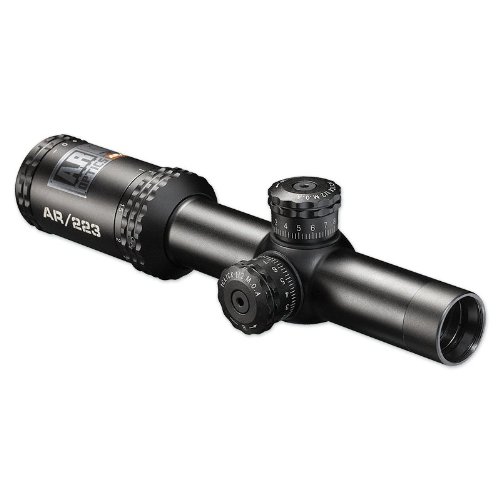
Bushnell Optics, Drop Zone Reticle Riflescope with Target Turrets, Matte Black, 1-4x/24mm
Max accuracy and reliability to master every tactical scenario. We took the bedrock precepts behind every riflescope we build ” optical precision, rugged reliability and uncompromising performance ” and pushed them even farther. The Bushnell Optics 1-4x 24mm Drop reticle riflescope features target turrets (0.1 mil click value) for pinpoint-precise adjustments, plus caliber-specific reticle to deliver every round with peerless accuracy. The scope features fully multi-coated optics for incredible brightness and the fast focus eyepiece delivering maximum accuracy and reliability. Zeroes at 100 yards, with aiming points out to 500 yards. Nitrogen purged to remove any vestige of internal moisture, and O-ring sealed to prevent the entry of dust or moisture. Made of high-durability aluminum alloy, anodize-finished and sealed to protect the inside from elements. Riflescope is rustproof, virtually scratchproof and a beautiful complement to even the most expensive firearm. Please note that the scope’s erector cap assembly (located on the bottom of the scope windage and elevation control housing) may limit the possibility to use extra-low or low scope rings. Most commonly, medium height rings provide the clearance necessary to eliminate contact with the cap and the scope base or receiver on most firearms. Please check the clearance necessary on your individual firearm prior to selecting scope rings.
Rifle Scope Product Features
About this item
30 millimeter tube dia
Drop zone reticle; Field of view (feet at 100 yard) 90 feet at 1X to 23 feet at 4X
Fully multicoated optics
Fast focus eyepiece
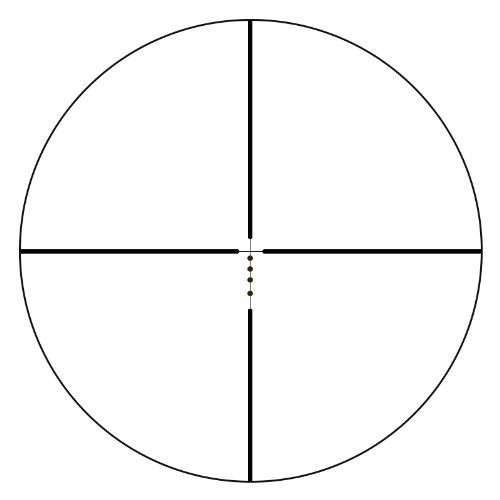
Outstanding close quarters accuracy, with a drop zone 223 BDC reticle for mid range precision
Drop zone 223 BDC ballistic reticle is calibrated for 55 to 62 grain, 223 REM/5.556 loads with aiming points out to 500 yards
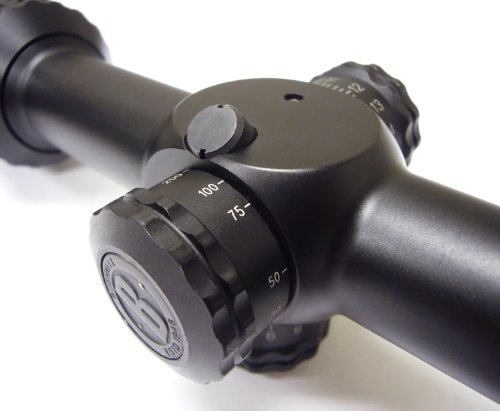
Target turrets (0.1 mil click value) for pinpoint precise adjustments
Bushnell AR Optics, Drop Zone Reticle Riflescope with Target Turrets
Compact, Rugged Design
A small, compact design makes the scope sleek and light, weighing in at just over one pound. Crafted from high-durability aluminum alloy and paired with an anodize-finish, and sealed to protect it from the elements.
Close/Midrange Accuracy
The AR Optics 1-4×24 offers superior close to midrange accuracy, giving you an edge in close quarters, but allowing you to reach out farther if needed.
Target Turrets
The AR Optics 1-4×24 features capped turrets, offering a lower profile, as well as precise, pinpoint adjustments.
Drop Zone Reticle
Designed to be sighted in at 100 yards, with aiming points every 100 yards, up to 500 yards. The top of the reticle’s bottom post represents approximately 600 yards. Scope must be set at the proper magnification for ballistic feature to function properly.
How to use the Drop Zone Reticle:
Sight at 100 yards at any magnification
Determine distance to target
Set the scope’s magnification to its highest power
Place the appropriate aiming point on the desired target
Unbox Bushnell
Bushnell AR Optics 1-4×24 Riflescope
Scope cover
Product manual
Allen wrenches for turret adjustment
Bushnell AR Optics, Drop Zone Reticle Riflescope with Target Turrets Bushnell AR Optics Throw Down PCL Scope
Reticle Drop Zone Illuminated BTR
Argon Purged Fog Proofing
Waterproof IPX-7 IPX-7
Fully Multi-Coated Optics
Anodize-Finished
Throw Down PCL Lever
Fast Focus Eyepiece
About the Bushnell Scope Maker
Bushnell is a premium producer for rifle scopes, optics, mounts, and other accessories used for guns like rifles and long guns. They design and make their mounts and related products using building materials which are long lasting and durable. This includes the Bushnell Optics, Drop Zone Reticle Riflescope with Target Turrets, Matte Black, 1-4x/24mm by Bushnell. For more shooting products, visit their website.
All About Glass
Rifle scopes permit you to specifically aim a rifle at different targets by aligning your eye with the target at range. They accomplish this through magnification using a set of lenses within the scope. The scope’s alignment can be adapted to account for separate ecological elements like wind speed and elevation increases or decreases to make up for bullet drop.
The scope’s function is to understand exactly where the bullet will land based upon the sight picture you are viewing via the optic as you align the scope’s crosshair or reticle with the intended target. A lot of modern rifle scopes and optics have around 11 parts which are found within and on the exterior of the scope body. These scope parts include the rifle scope’s body, lenses, elevation turrets or dials, objective focus rings, and other elements. Learn about the eleven parts of scopes.
Rifle Optic Styles
Rifle scopes can be either “first focal plane” or “second focal plane” type of scopes. Deciding upon the finest type of rifle scope is based around what type of shooting you plan to do.
About First Focal Plane Scopes
First focal plane optics (FFP) come with the reticle ahead of the magnifying lens. This causes the reticle to increase in size based on the extent of magnification being used. The outcome is that the reticle measurements are the same at the magnified distance as they are at the non magnified range. One tick on a mil-dot reticle at one hundred yards without “zoom” is still the same tick at one hundred yards by using 5x “zoom”. These kinds of scopes work for:
- Quick acquisition, far away kinds of shooting
- Shooting circumstances where calculations are very little
- Experienced shooters who have an idea for their target “hold over” plus “lead” relationships for their firearm
- Shooters who do not mind the reticle is bigger and takes up more visual eyesight room than a SFP reticle
Second Focal Plane Optics
Second focal plane scopes (SFP) include the reticle behind the magnification lens. This causes the reticle to stay at the very same scale relative to the level of zoom being used. The effect is that the reticle measurements change based on the zoom employed to shoot over lengthier distances given that the reticle markings represent distinct increments which vary with the zoom level. In the FFP example with the SFP glass, the 5x “zoom” 100 yard tick would be 1/5th of the non “zoom” tick reticle measurement. These particular sorts of glass work for:
- Far away forms of shooting where shooters have increased time to make ballistic calculations
- Shooting where most of the shots happen within much shorter ranges and spaces
- Shooters who prefer a clearer optic sight picture with less area used up by the larger sized FFP reticle
Optic Magnification
The quantity of scope magnification you require depends on the sort of shooting you want to do. Almost every kind of rifle optic provides some level of magnification. The quantity of zoom a scope offers is identified by the diameter, thickness, and curves of the lenses within the rifle scope. The zoom of the optic is the “power” of the glass. This suggests what the shooter is aiming at through the scope is magnified times the power aspect of what can generally be seen by human eyes.
Fixed Single Power Lens Scopes
A single power rifle optic uses a zoom number designator like 4×32. This means the magnification power of the scope is 4x power and the objective lens is 32mm. The zoom of this kind of optic can not change considering that it is fixed.
Adjustable Power Lens Glass Info
Variable power rifle scopes use variable power levels. The power adjustment is handled by the power ring part of the scope near the back of the scope by the eye bell.
The Power Level and Range of Scopes
Here are some recommended scope power levels and the distances where they can be efficiently used. High power rifle scope glass will not be as useful as lower magnification level rifle scope glass considering that too much magnification can be a bad thing. The same goes for longer distances where the shooter needs to have adequate power to see precisely where to best aim the rifle at the target.
About Lens Finishes
All contemporary rifle scope lenses are covered in special coatings. There are various types and qualities of lens coatings. Lens finish can be an essential aspect of a rifle when thinking about luxury rifle optics and targeting equipment. The lenses are one of the most important parts of the scope given that they are what your eye sees through while sighting a rifle in on the point of impact. The finishing on the lenses shields the lens exterior and also assists with anti glare capabilities from excess sunshine and color presence.
HD Versus ED Glass Lens Coatings
Some scope manufacturers also use “HD” or high-definition lens coverings which use different methods, polarizations, chemicals, and elements to draw out various colors and viewable quality through the lens. Some scope manufacturers use “HD” to refer to “ED” meaning extra-low dispersion glass.
Single Glass Lens Finishing Versus Multi-Coating
Various optic lenses can likewise have different finishings used to them. All lenses usually have at least some type of treatment or finishing used to them before being used in a rifle scope or optic.
Single covered lenses have a treatment applied to them which is normally a protective and enhancing multi-purpose treatment. This lens treatment can safeguard the lens from scratches while lowering glare and other less helpful things experienced in the shooting environment while sighting in with the optic. The quality of a single coated lens depends on the scope designer and how much you spent for it. Both the manufacturer and amount are signs of the lens quality.
Some scope makers similarly make it a point to specify if their optic lenses are coated or “multi” coated. Being “better” depends on the producer’s lens treatment innovation and the quality of products used in building the rifle scope.
Anti-water Finish for Rifle Scopes
Water on an optical lens doesn’t help with maintaining a clear sight picture through an optic whatsoever. Lots of top of the line or premium optic manufacturers will coat their lenses with a hydrophobic or hydrophilic finishing. The Steiner Optics Nano-Protection is a good example of this sort of treatment. It treats the surface of the Steiner optic lens so the H2O molecules can not bind to it or produce surface tension. The outcome is that the water beads move off of the scope to preserve a clear, water free sight picture.
Options for Installing Optics on Firearms
Mounting options for scopes can be found in a couple of options. There are the standard scope rings which are separately mounted to the optic and one-piece mounts which cradle the scope. These various types of mounts also typically come in quick release versions which use throw levers which allow rifle shooters to quickly mount and remove the optics.
Hex Key Rifle Glass Ring Mounts
Standard, clamp design mounting scope rings use hex head screws to mount to the flattop design Picatinny scope mount rails on rifles. These types of scope mounts use two different rings to support the optic, and are made from 7075 T6 billet aluminum which are developed for long distance accuracy shooting. This type of scope mount is great for rifles which require a long lasting, sound mounting solution which will not move no matter how much the scope is moved or abused.
Quick-Release Cantilever Rifle Optic Ring Mounting Solutions
These types of quick-release rifle scope mounts can be used to rapidly detach a scope and connect it to a different rifle. Numerous scopes can also be switched out if they all use a compatible style mount. These types of mounts are convenient for rifles which are transferred a lot, to remove the optic from the rifle for protection, or for scopes which are used between multiple rifles.
Scope Tube Sealing and Gas Purging
Moisture inside your rifle optic can ruin a day of shooting and your costly optic by causing fogging and creating residue inside of the scope tube. Many scopes avoid moisture from entering the scope tube with a system of sealing O-rings which are water resistant.
Gas Purged Optic Tubes
Another component of avoiding the buildup of moisture inside of the rifle scope tube is filling the tube with a gas like nitrogen. Since this space is already taken up by the gas, the glass is less impacted by temp alterations and pressure variations from the outdoor environment which may possibly permit water vapor to seep in around the seals to fill the vacuum which would otherwise be there. These are good qualities of a good rifle scope to look for.


