
Description
Rifle Scope Product Details
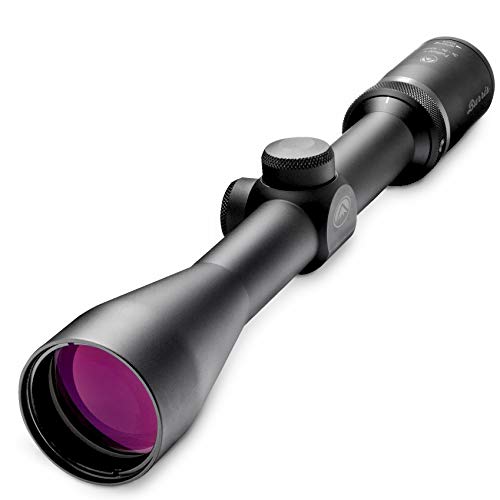
Burris 3-9 x 40mm Fullfield II Plex Rifle Scope
BSC200161 Features: -Extremely rugged outer tubes. -No-slip grips on the integrated eyepiece and focus adjustment. -To make a fair comparison with other brands, you’ll have to look at riflescopes costing hundreds of dollars more. -Clad in new Real tree All-Purpose camouflage, the 3X-9X and 2X-7X Full field II’s are perfect for muzzleloaders, slug guns and brush rifles. Magnification: -Medium (approx. 3X – 16X). Usage: -Tactical. Usage: -General Target/Plinking. Usage: -Hunting. Objective Lens Diameter: -31-40Mm. Tube Diameter: -1 Inch. Gun Type: -Air Rifle. Gun Type: -Rim fire Rifle. Gun Type: -Center fire Rifle. Finish: -Black.
Rifle Scope Product Features
Covered under warranty for life
Made using the highest quality materials
Tested for complete quality and reliability
Full field II variable power 3x-9x-40mm matte black plea
1-piece tube construction
Water, fog and shockproof
Reinforced quad-seal gas seals and Hi-Luma Multi-coated lenses
Fullfield II Riflescope
The most decorated scope in Burris history
The Fullfield II is one of the most recognized and awarded scopes in the shooting and hunting industry. Since its introduction in 1975, the original Fullfield has set the standard for accuracy, reliability, and affordability. The Fullfield II was introduced in the year 2000 as a continuation of that legacy, and stands as a testament of those qualities today. It’s still one of our most popular models with a wide selection of magnifications and features.
High-performance optical glass provides excellent clarity and contrast. Multi-coated, no-glare lenses let you hunt in all lighting conditions. The simple, integrated eyepiece and power ring has no-slip grip for quick adjustment. Positive, steel-on-steel click adjustment ensures repeatable settings for accuracy, on the range and in the field.
Specs:
Magnification: 3-9x, 4.5-14x, or 6.5-20x
Reticle: Ballistic Plex
Color: Matte black
Battery: none
Features
KNURLED KNOBS
The magnification/zoom ring is made of metal, and knurled for easy grip and a lifetime of use
FULL FEATURED
Waterproof, shockproof, fogproof and nitrogen filled.
IMPROVED LIGHT TRANSMISSION
Quality, precision-ground lenses are larger than those of comparable scopes, for better light transmission
…
INTEGRATED EYEPIECE with NO-SLIP GRIP
Durable, integrated-eyepiece design has no-slip grip for easy adjustment in the field
WITHSTANDS SHOCK
Durable, stress-free, solid 1-piece outer tube withstands shock and vibrations of even the heaviest-recoiling calibers
BURRIS FOREVER PROMISE
Guaranteed by Burris Forever
Fullfield II Riflescope 4.5-14x42mm Fullfield II Riflescope 6.5-20x50mm Fullfield II Riflescope 3-9x40mm
Magnification 4.5-14x 6.5-20x 3-9x
Objective Lens Diameter 56 mm 63 mm 45.5 mm
Clear Objective Lens Diameter 42 mm 50 mm 40 mm
Ocular Lens Diameter 39 mm 39 mm 39 mm
Field of View 22 low ” 7.5 high (ft. @ 100 yds.) 18 low ” 6 high (ft. @ 100 yds.) 33 low ” 13 high (ft. @ 100 yds.)
Exit Pupil 9 low ” 3 high (mm) 7.6 low ” 2.5 high (mm) 13 low ” 5 high (mm)
Elevation Adjustment, Total Capability 40 MOA 30 MOA 50 MOA
Windage Adjustment 40 MOA 30 MOA 50 MOA
Parallax/Focus Objective PA Objective PA None
Adjustable Parallax 50 yds. ” infinity 50 yds. ” infinity None
About the Burris Optics Company
Burris Optics is a premium company for firearm scopes, optics, mounts, and other accessories used for guns like rifles and long guns. They innovate and supply their products by making the most of materials which are durable and long lasting. This includes the Burris 3-9 x 40mm Fullfield II Plex Rifle Scope by Burris Optics. For additional shooting goods, visit their website.
Rifle Glass Details
Rifle scopes enable you to exactly aim a rifle at different targets by aligning your eye with the target at range. They accomplish this through magnification by utilizing a set of lenses within the scope. The scope’s positioning can be adapted for consideration of different natural aspects like wind speed and elevation increases or decreases to make up for bullet drop.
The scope’s function is to understand precisely where the bullet will hit based on the sight picture you are seeing via the scope as you align the scope’s crosshair or reticle with the intended target. Many modern-day rifle optics have around 11 parts which are arranged internally and externally on the scope. These optic pieces include the rifle scope’s body, lenses, adjustment turrets or dials, objective focus rings, and other elements. See all eleven parts of a scope.
The Varieties of Rifle Scopes
Rifle scopes can be either “first focal plane” or “second focal plane” type of scopes. Considering the finest type of rifle glass is based around what type of shooting you plan on doing.
First Focal Plane Glass Facts
Focal plane scopes (FFP) feature the reticle in front of the zoom lens. This causes the reticle to increase in size based on the amount of zoom being used. The result is that the reticle measurements are the same at the magnified distance as they are at the non magnified range. For example, one tick on a mil-dot reticle at one hundred yards with no “zoom” is still the exact same tick at 100 yards using 5x “zoom”. These kinds of scopes work for:
- Quick acquisition, long distance types of shooting
- Shooting circumstances where calculations are minimal
- Experienced shooters who recognize their aim point “hold over” and “lead” relationships for their firearms
- Shooters who do not mind the reticle is bigger and requires more visual sight area than a SFP reticle
Second Focal Plane Scopes
Second focal plane glass (SFP) come with the reticle to the rear of the magnifying lens. This triggers the reticle to stay at the exact same scale relative to the level of magnification being used. The effect is that the reticle dimensions change based on the magnification employed to shoot over greater distances since the reticle measurements represent various increments which fluctuate with the magnification. In the FFP illustration with the SFP optic, the 5x “zoom” one hundred yard tick reticle measurement would be 1/5th of the non “zoom” tick reticle measurement. These particular kinds of scopes are convenient for:
- Long distance kinds of shooting where shooters have extra time to make ballistic computations
- Shooting where most shots take place within much shorter ranges and proximities
- Shooters who choose a clearer optic sight picture with less area used up by the enlarged FFP reticle
Details on Optic Magnification
The amount of magnification a scope offers is figured out by the size, density, and curvatures of the lenses inside of the rifle scope. The magnification of the scope is the “power” of the scope.
Info About Single Power Lens Rifle Glass
A single power rifle scope and optic will have a magnification number designator like 4×32. This indicates the zoom power of the scope is 4x power while the objective lens is 32mm. The magnification of this type of optic can not change considering that it is a fixed power optic.
Variable Power Lens Optics
Variable power rifle scopes use enhanced power. The power change is achieved using the power ring part of the scope near the rear of the scope by the eye bell.
Glass Power Level and Ranges
Here are some advised scope power settings and the distances where they may be efficiently used. Highly magnified glass will not be as beneficial as lower magnification level optics since too much magnification can be a bad thing. The exact same idea goes for extended distances where the shooter needs to have enough power to see exactly where to best aim the rifle at the target.
Glass Lens Covering
All current rifle optic lenses are coated. Lens finishing is an important aspect of a shooting platform when purchasing high end rifle optics and scope equipment.
Details on Rifle Glass Lens Coatings – HD Versus ED
Some rifle scope suppliers even use “HD” or high-definition lens finishings which employ different processes, chemicals, polarizations, and elements to draw out separate colors and viewable target visibility through the lens. This high-definition covering is normally used with more costly, high density lens glass which lowers light’s capability to refract through the lens glass. Some scope suppliers use “HD” to describe “ED” suggesting extra-low dispersion glass. ED deals with how certain colors are presented on the chromatic spectrum and the chromatic aberration which is also called color distortion or fringing. Chromatic aberration can be obvious around objects with hard shapes as light hits the object from particular angles.
Single Coating Versus Multi-Coating
Various optic lenses can likewise have different finishes applied to them. All lenses usually have at least some type of treatment or coating applied to them prior to being used in a rifle scope or optic.
This lens treatment can safeguard the lens from scratches while decreasing glare and other less beneficial things experienced in the shooting environment while sighting in with the scope. The quality of a single coated lens depends on the scope manufacturer and how much you paid for it.
Some scope manufacturers also make it a point to define if their optic lenses are coated or “multi” covered. Being “better” depends on the producer’s lens treatment innovation and the quality of materials used in constructing the rifle scope.
Anti-water Lens Finish
Water on a lens does not help with keeping a clear sight picture through a scope at all. Numerous top of the line and high-end optic companies will coat their lenses with a hydrophilic or hydrophobic anti-water finish.
Scope Installing Options
Mounting approaches for scopes can be found in a couple of options. There are the standard scope rings which are separately mounted to the scope and one-piece scope mounts which cradle the scope. These different kinds of mounts also generally come in quick release versions which use manual levers which permit rifle shooters to quickly mount and dismount the scopes.
Hex Key Scope Rings
Standard, clamp style mounting scope rings use hex head screws to mount to the flattop style Picatinny scope installation rails on rifles. These types of scope mounts use two separate rings to support the optic, and are made from 7075 T6 billet aluminum which is designed for long distance accuracy shooting. This type of scope install is wonderful for rifles which require a resilient, sound mounting solution which will not move no matter how much the scope is moved or abused.
Quick-Release Cantilever Rifle Optic Ring Mounts
These types of quick-release rifle scope mounts can be used to rapidly remove a scope and connect it to a different rifle. Several scopes can also be swapped out if they all use a similar style mount. These types of mounts come in handy for rifle platforms which are carried a lot, to swap out the optic from the rifle for protection, or for optics which are used in between several rifles.
What to Know About Glass Tube Sealing and Gas Purging
Moisture inside your rifle glass can ruin a day on the range and your highly-priced optic by inducing fogging and generating residue within the scope’s tube. Many scopes protect against wetness from getting in the optical tube with a series of sealing O-rings which are waterproof. Usually, these optics can be immersed beneath 20 or 30 feet of water before the water pressure can push moisture past the O-rings. This should be sufficient moisture content prevention for standard use rifles for hunting and sporting purposes, unless you intend on taking your rifle sailing and are concerned about the scope still working if it falls overboard and you can still salvage the gun.
Details on Rifle Optic Tube Gas Purging
Another component of preventing the buildup of wetness within the rifle optic’s tube is filling the tube with a gas like nitrogen. Considering that this space is currently occupied by the gas, the glass is less impacted by temp alterations and pressure differences from the outside environment which could possibly allow water vapor to leak in around the seals to fill the vacuum which would otherwise be there. These are good qualities of a good rifle scope to look for.


