Description
Rifle Scope Product Details
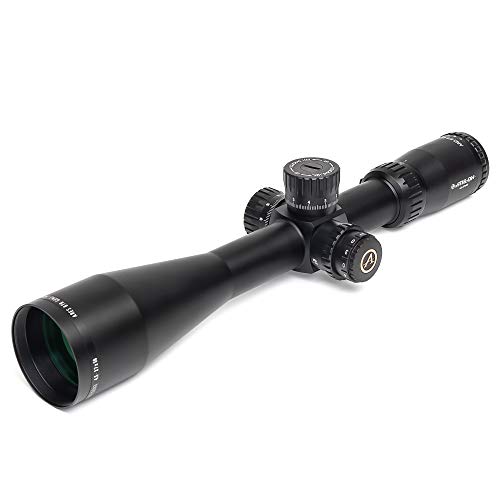
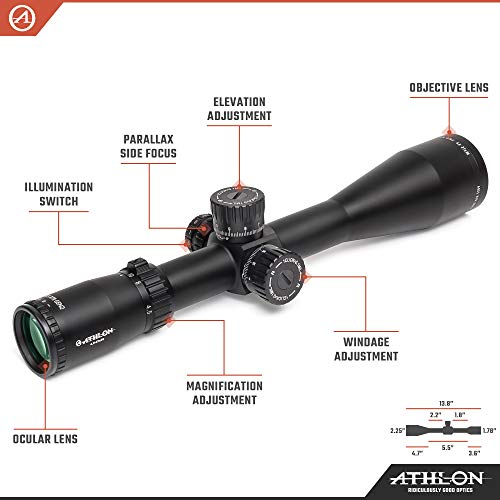
Athlon Optics Ares BTR GEN2 4.5-27×50 Riflescope – APLR3 FFP IR MIL
Rifle Scope Product Features
0. 1 MILClick Value, 24 MIL Total Elevation Adjustment, 25 Yard to Infinity Parallax Adjustment, 6 Illumination Settings.
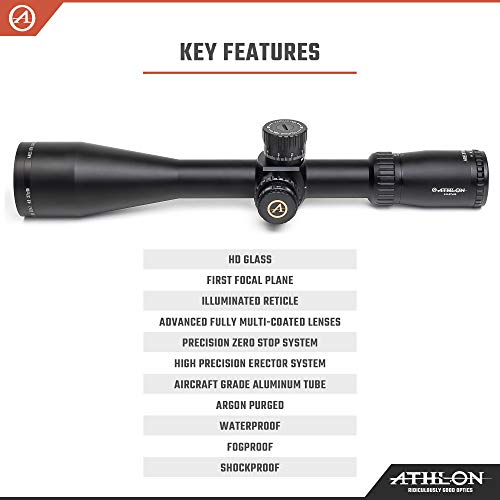
HD Glass gives you better light transmission, brighter, and sharper image. The illuminated reticle provides greater visibility during dusk and dawn and other low ambient light environment.
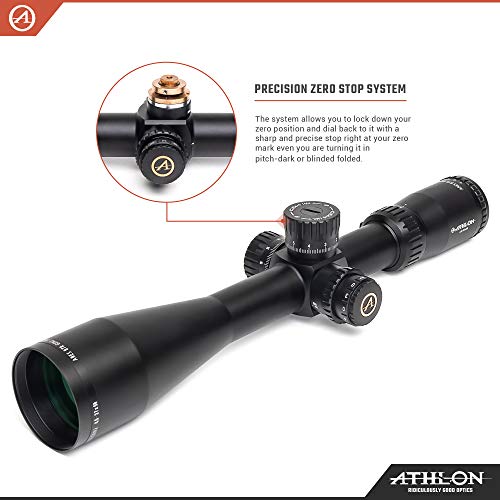
Precision Zero Stop System. The system allows you to lock down your zero position and dial back to it with a sharp and precise stop right at your zero mark even you are turning it in pitch-dark or blinded folded.
First focal plane reticle stays valid at all power settings allowing you to fully utilize the specially designed reticle that shrinks or grows along with your target as you zoom in or out.
Fully Multicoated optics effectively reduces reflected light and increases the transmission of light giving you a brighter image than normal single coated lenses
Ares BTR GEN2 HD
Built off the success of the 1st generation Ares BTR, the GEN2 is still a top-tier riflescope, without the cost. The Ares BTR GEN2 acquires a new stainless steel turret design, just like the Midas TAC and Ares ETR lines. The new turret design features sharper, more tactile clicks. Featuring HD glass, a new optical system provides an even brighter and clearer image throughout the magnification range. A one-piece, precision machined aircraft grade aluminum scope body, precision zero stop, and impeccable tracking will deliver precise, accurate results in any field.
Key Features
HD Glass
HD Glass gives you better light transmission, brighter, and sharper image.
Advanced Fully Multi-coated
Fully Multi-coated optics effectively reduces reflected light and increases the transmission of light giving you a brighter image than normal single coated lenses
XPL Coating
XPL Coating gives you an extra protection on the exterior lenses from dirt, oil and scratches.
Precision Zero Stop System
Precision Zero Stop System allows you to return to your zero position and dial back to it with a sharp and precise stop right at your zero location.
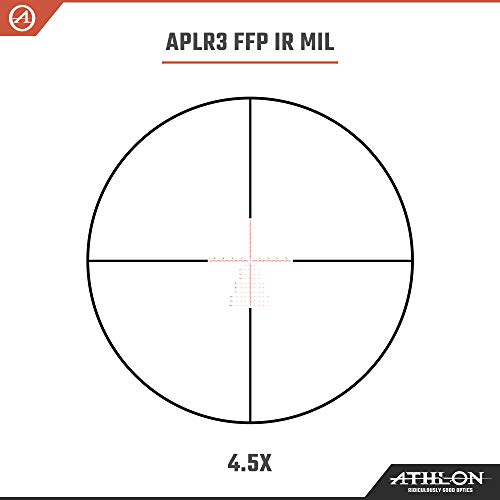
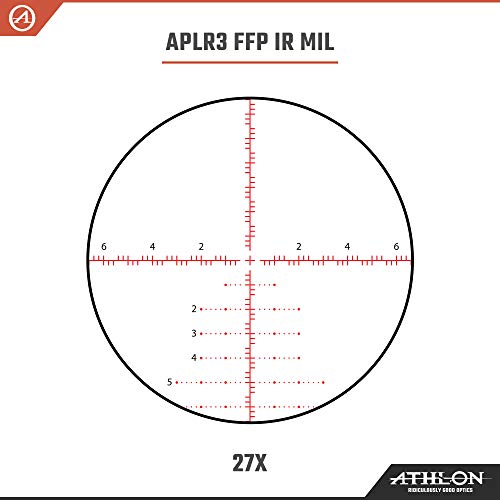
APLR3 FFP IR MIL
APLR3 FFP IR MIL reticle can help you quickly determine distance, holdover positions, windage correction and leads for a moving target. The unique design of fine .2 mil hash mark increments from center all the way to four directions helps the shooter set a precise holdover position for their targets within a blink of an eye. The illuminated fine reticle provides excellent low light visibility and windage holdovers on the bullet droplines all the way up to 10 mils with .2 mil marks increments in between.
Subtensions in MIL: A1 (0.04); A2 (0.5); B1 (0.4); B2 (0.2); B3 (0.2); C1 (0.2); C2 (0.5); C3 (0.2); C4 (1); D1 (0.05); D2 (0.1).
2.5-15×50 APLR3 MOA 2.5-15×50 APLR3 MIL 4.5-27×50 APLR3 MOA 4.5-27×50 APLR3 MIL 4.5-27×50 APRS5 MIL
Tube Diameter 30 mm 30 mm 30 mm 30 mm 30 mm
Focal Plane First First First First First
FoV at 100Y 41.8-6.8 ft 41.8-6.8 ft 22.7-3.8 ft 22.7-3.8 ft 22.7-3.8 ft
Eye Relief 3.9″ 3.9″ 3.9″ 3.9″ 3.9″
Turret Style Exposed & Locking Exposed & Locking Exposed & Locking Exposed & Locking Exposed & Locking
Length 13.8″ 13.8″ 13.8″ 13.8″ 13.8″
Weight 27.3 oz 27.3 oz 27.3 oz 27.3 oz 27.3 oz
About the Athlon Optics Company
Athlon Optics is a premium company for long gun scopes, optics, mounts, and other components used for firearms like rifles and long guns. They create and manufacture their mounts and related products using elements which are durable and long lasting. This includes the Athlon Optics Ares BTR GEN2 4.5-27×50 Riflescope – APLR3 FFP IR MIL by Athlon Optics. For more shooting items, visit their website.
All About Rifle Optics
Rifle scopes enable you to precisely aim a rifle at various targets by aligning your eye with the target at range. They do this through magnification by utilizing a series of lenses within the scope. The scope’s positioning can be adjusted to account for many natural aspects like wind speed and elevation to account for bullet drop.
The scope’s purpose is to help shooters understand precisely where the bullet will hit based upon the sight picture you are seeing using the scope as you line up the scope’s crosshair or reticle with the intended point of impact. The majority of modern rifle optics have around 11 parts which are located within and externally on the scope. These optic pieces consist of the rifle scope’s body, lenses, windage dials or turrets, objective focus rings, and other parts. See all eleven parts of optics.
About Rifle Glass Varieties
Rifle scopes can be either “first focal plane” or “second focal plane” style of scopes. The type of focal plane an optic has decides where the reticle or crosshair lies in regard to the optic’s magnifying adjustments. It simply means the reticle is situated behind or before the magnifying lens of the optic. Deciding on the very best kind of rifle scope depends on what variety of hunting or shooting you plan on doing.
First Focal Plane Scope Facts
Focal plane scopes (FFP) include the reticle in front of the zoom lens. These styles of scopes are useful for:
- Quick acquisition, long distance kinds of shooting
- Shooting circumstances where estimations are small
- Experienced shooters who know their aim point “hold over” plus “lead” ratios for their long gun
- Shooters who do not mind the reticle is bigger and uses up more visual eyesight room than a SFP reticle
About Second Focal Plane Optics
Second focal plane optics (SFP) come with the reticle behind the magnifying lens. This induces the reticle to remain at the exact same scale in relation to the quantity of zoom being used. The outcome is that the reticle dimensions adapt based upon the zoom chosen to shoot over lengthier ranges since the reticle measurements present distinct increments which differ with the magnification level. In the FFP illustration with the SFP glass, the 5x “zoom” 100 yard tick reticle measurement would be 1/5th of the non “zoom” tick. These sorts of scopes are convenient for:
- Far away forms of shooting where shooters have increased time to make ballistic computations
- Shooting where most of the shots occur within shorter ranges and proximities
- Shooters who prefer a clearer optic picture with less space taken up by the enlarged FFP reticle
About Optic Magnification
The extent of scope zoom you need on your glass depends upon the form of shooting you plan to do. Just about every type of rifle glass delivers some level of zoom. The level of zoom a scope supplies is identified by the diameter, thickness, and curvatures of the lens glass inside of the rifle scope. The magnification of the scope is the “power” of the scope. This denotes what the shooter is observing through the scope is amplified times the power element of what can usually be seen by human eyes.
Fixed Single Power Lens Rifle Glass Info
A single power rifle optic or scope will have a magnification number designator like 4×32. This suggests the magnification power of the scope is 4x power and the objective lens is 32mm. The zoom of this type of scope can not adjust since it is fixed.
Variable Power Lens Optics
Variable power rifle scopes use variable power levels. The power adjustment is achieved by the power ring part of the scope near the rear of the scope by the eye bell.
Power and Range
Here are some suggested scope powers and the distances where they could be successfully used. High power optics will not be as beneficial as lower powered optics considering that too much magnification can be a negative aspect depending on your shooting distance. The very same idea goes for longer distances where the shooter needs sufficient power to see exactly where to best aim the rifle at the target.
Info on Optic Lens Coating
All modern rifle glass lenses are coated. Lens finishing is an essential aspect of a shooting system when thinking about high end rifle optics and scope setups.
Details on Lens Coatings – HD Versus ED
Some scope producers also use “HD” or high-definition lens coverings which use various processes, elements, polarizations, and chemicals to draw out separate colors and viewable quality through the lens. Some scope makers use “HD” to refer to “ED” meaning extra-low dispersion glass.
Single Finish Versus Multi-Coating for Scopes
Various optic lenses can also have different finishings used to them. All lenses usually have at least some type of treatment or finish used to them before being used in a rifle scope or optic.
Single layered lenses have a treatment applied to them which is generally a protective and improving multi-purpose treatment. This lens treatment can shield the lens from scratches while minimizing glare and other less beneficial things experienced in the shooting environment while sighting in with the optic. The quality of a single covered lens depends upon the scope manufacturer and the amount you spent on it. Both the manufacturer and amount are indicators of the lens quality.
Some scope producers similarly make it a point to specify if their optic lenses are coated or “multi” covered. Being “much better” depends on the maker’s lens treatment technology and the quality of products used in developing the rifle scope.
Info on Anti-water Covering
Water on a lens doesn’t help with preserving a clear sight picture through a scope at all. Many top of the line and military grade scope makers will coat their lenses with a hydrophilic or hydrophobic anti-water coating.
Rifle Scope Installation Alternatives
Installing solutions for scopes come in a couple of choices. There are the standard scope rings which are individually installed to the scope and one-piece scope mounts which cradle the scope. These various types of mounts also normally are made in quick release variations which use toss levers which permit rifle shooters to rapidly install and dismount the scopes.
Hex Key Optic Ring Mounting Solutions
Standard, clamp-on type mounting optic rings use hex head screws to position to the flattop style Picatinny scope mount rails on the tops of rifles. These types of scope mounts use double individual rings to support the scope, and are usually constructed from 7075 T6 billet aluminum which are created for far away accuracy shooting. This type of scope mount is exceptional for rifles which are in need of a durable, rock solid mount which will not change regardless of how much the scope is moved about or abuse the rifle takes. These are the design of mounts you want for a faithful scope system on a reach out and touch someone scouting or competition firearm that will almost never need to be altered or recalibrated. Blue 242 Loctite threadlocker can also be used on screws to stop the hex screw threads from wiggling out after they are mounted tightly in position. An example of these rings are the 30mm style made by the Vortex Optics brand. The set generally costs around $200 USD
Scope Mounting Solutions with Quick-Release Cantilever Rings
These types of quick-release rifle scope mounts can be used to rapidly take off a scope and connect it to a different rifle. Numerous scopes can also be switched out if they all use a similar style mount. These types of mounts are handy for rifle platforms which are transferred a lot, to swap out the optic from the rifle for protecting the scope, or for scopes which are used in between several rifles or are situationally focused.
Info on Scope Tube Sealing and Gas Purging
Wetness inside your rifle optic can spoil a day of shooting and your expensive optic by causing fogging and creating residue within the scope’s tube. Most scopes prevent humidity from getting in the optical tube with a series of sealing O-rings which are waterproof. Typically, these water-resistant optics can be immersed under 20 or 30 feet of water before the water pressure can push moisture past the O-rings. This should be more than enough moisture avoidance for conventional use rifles, unless you anticipate taking your rifle boating and are concerned about the optic still functioning if it goes overboard and you can still recover the firearm.
Info Around Rifle Optic Tube Gas Purging
Another part of avoiding the buildup of wetness inside of the rifle scope tube is filling the tube with a gas like nitrogen. Because this area is already occupied by the gas, the glass is less altered by temp alterations and pressure differences from the external environment which could potentially allow water vapor to seep in around the seals to fill the vacuum which would otherwise exist. These are good qualities of a good rifle scope to seek out.


