Description
Rifle Scope Product Details
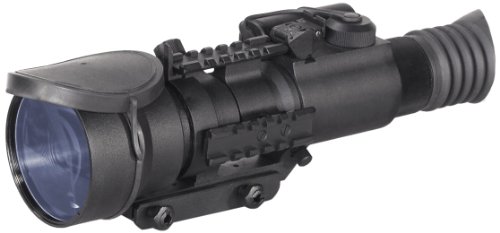
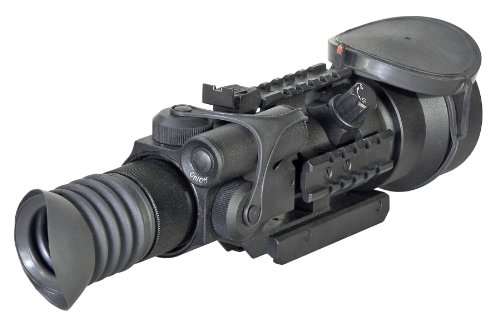
Armasight Nemesis4x-ID Gen 2+ Night Vision Rifle Scope w/4x Magnification
DESCRIPTION:
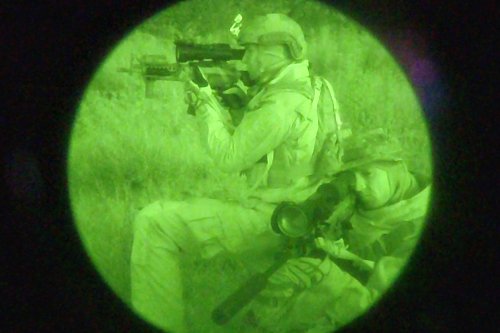
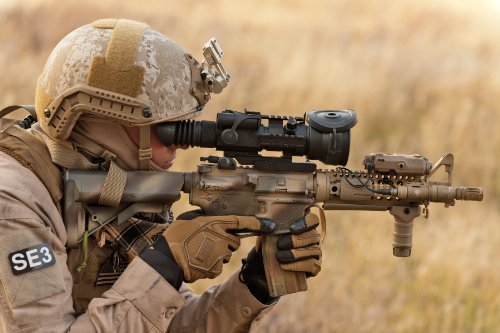
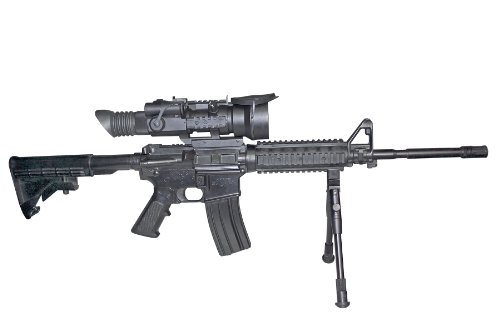
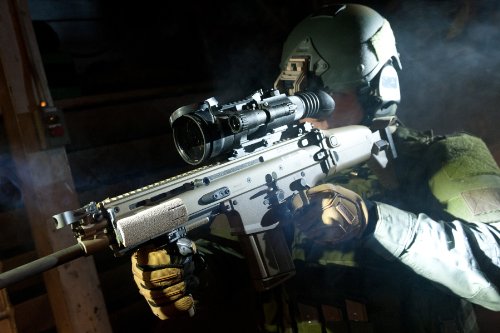
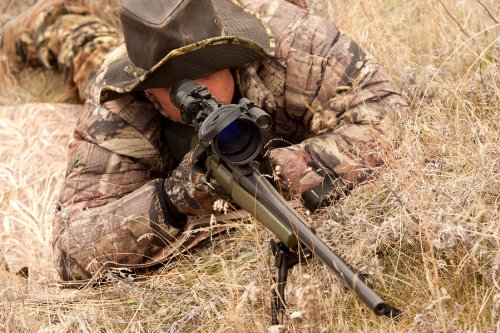
The Armasight Nemesis is the perfect solution for situations where the hunter needs greater distance between themselves and their target. Featuring a high-quality image intensifier tube, easy to use internal windage and elevation adjustments, and simple push button controls, the Armasight Nemesis 4X ID will allow you to see beyond the expected in nighttime conditions. The adjustable brightness illuminated reticle is unique; no other night vision rifle scope on the market has such well-defined (yet extremely thin) crosshairs that allow such precise shot placement, even on exceptionally small targets. The Nemesis is fitted with a Picatinny/Weaver mount that allows for highly accurate rail positioning, ensuring user comfort; three accessory mounting rails allow easy mounting of our included long-range IR illuminator and/or other compatible accessories. The Nemesis is water resistant, robust, lightweight, and engineered from aircraft aluminum. The Armasight Nemesis 4X ID is equipped with a high performance Improved Definition Gen 2+ tube which provides resolution of 47-54 lp/mm.
FEATURES:
4x Magnification with 10 degrees FOV
Shock Protected, all-glass IR transmission multicoated optics
Bright Source Protection, Auto Bright Control (ABC)
Illuminated center red cross reticle for optimal contrast
Controls and adjustments are simple and easy to operate
Water resistant design
Flip-up back-up iron sights
Mounts to standard Weaver rails
Variable reticle brightness
Limited Two-Year Warranty
Detachable infrared(IR) illuminator
SPECIFICATION:
IIT Generation Gen 2+
Resolution 47-54 lp/mm
Magnification 4x
Photocathode Type Multi-Alkali
Exit Pupil Diameter, mm 10
Eye Relief, mm 46
Lens System F1.5, F108 mm
FOV 10°
Range of Focus 25 m to infinity
Diopter Adjustment -6 to +2 dpt
Controls Digital
Automatic Brightness Control Yes
Infrared Illuminator Detachable IR
Low Battery Indicator Yes (in FOV)
Power Supply 1 x 3 V CR123A type battery
Battery Life 60 hours
Environmental Rating Water Resistant
Operating Temperature -40 to +50
Storage Temperature -50 to +70
Dimensions 305 x 102 x 71 mm / 12 x 4 x 2.8 in
Weight 1.2 kg / 2.7 lbs
Warranty 2 Years
Rifle Scope Product Features
Powerful 4x magnification with 10 degree FOV and shock protected optics
Features bright source protection and auto brightness control and illuminated center red cross reticle for optimal contrast with variable reticle brightness
Waterproof body with simple and easy to operate controls and adjustments
Mounts to standard weaver rail
Export of this product outside of the United States of America is not allowed and is controlled by the US Department of State
About the Armasight Scope Maker
Armasight is a premium producer for firearm scopes, optics, mounting solutions, and other components used for guns like rifles and long guns. They innovate and manufacture their products by applying materials which are durable and long lasting. This includes the Armasight Nemesis4x-ID Gen 2+ Night Vision Rifle Scope w/4x Magnification by Armasight. For more shooting goods, visit their website.
All About Rifle Scopes
Rifle scopes enable you to precisely aim a rifle at different targets by lining up your eye with the target over a range. They accomplish this through zoom by employing a series of lenses within the scope. The scope’s positioning can be dialed in to account for many natural aspects like wind and elevation increases to account for bullet drop.
The scope’s function is to help the shooter understand exactly where the bullet will hit based upon the sight picture you are seeing using the optic as you align the scope’s crosshair or reticle with the intended point of impact. Many modern-day rifle optics have about eleven parts which are located inside and on the exterior of the optic. These parts include the rifle scope’s body, lenses, windage dials or turrets, focus rings, and other components. Learn about the eleven parts of rifle glass.
Rifle Optic Styles
Rifle scopes can be either “first focal plane” or “second focal plane” style of scopes. The type of focal plane an optic has determines where the reticle or crosshair is located in regard to the optic’s magnifying adjustments. It actually means the reticle is situated behind or in front of the magnifying lens of the optic. Considering the most effective sort of rifle scope depends upon what sort of shooting or hunting you intend on doing.
Info on First Focal Plane Scopes
Focal plane scopes (FFP) include the reticle in front of the zoom lens. These styles of scopes are beneficial for:
- Quick acquisition, far away kinds of shooting
- Shooting scenarios where computations are marginal
- Experienced shooters who know their aim point “hold over” plus “lead” correlations for their long guns
- Shooters who do not mind the reticle is enlarged and requires more visual eyesight room than a SFP reticle
Info About Second Focal Plane Scopes
Second focal plane optics (SFP) include the reticle to the rear of the zoom lens. In the FFP example with the SFP scope, the 5x “zoom” 100 yard tick would be 1/5th of the non “zoom” tick measurement.
- Long distance styles of shooting where shooters have extra time to make ballistic computations
- Shooting where most shots occur within shorter ranges and spaces
- Shooters who choose a clearer optic picture with less space used up by the larger sized FFP reticle
Glass Magnification
The extent of scope magnification you need depends on the type of shooting you like to do. Almost every type of rifle glass gives some amount of zoom. The volume of magnification a scope supplies is established by the dimension, density, and curvatures of the lens glass within the rifle scope. The magnification of the scope is the “power” of the glass. This denotes what the shooter is looking at through the scope is magnified times the power aspect of what can typically be seen by human eyes.
Info About Single Power Lens Scopes
A single power rifle optic will have a magnification number designator like 4×32. This means the magnification power of the scope is 4x power and the objective lens is 32mm. The magnification of this kind of scope can not adjust considering that it is a set power scope.
Variable Power Lens Scope Facts
Variable power rifle scopes use enhanced power. The power adjustment is accomplished using the power ring part of the scope near the back of the scope by the eye bell.
Power and Range Correlations
Here are some suggested scope power levels and the ranges where they could be efficiently used. High power scopes will not be as effective as lower powered glass since too much zoom can be a negative aspect depending on your shooting distance. The very same idea goes for extended distances where the shooter needs adequate power to see exactly where to best aim the rifle at the target.
Rifle Glass Lens Finishing
All modern-day rifle optic lenses are layered. There are different types and qualities of glass finishings. Lens coating can be a crucial aspect of a rifle’s setup when looking at high end rifle optics and scope units. The glass lenses are one of the most critical pieces of the glass because they are what your eye looks through while sighting a rifle in on the target. The finish on the lenses shields the lens surface area and also improves anti glare from excess sunrays and color perception.
HD Versus ED Rifle Scope Lens Coatings
Some rifle scope manufacturers additionally use “HD” or high-def glass finishings that use different procedures, elements, chemical substances, and polarizations to extract different colors and viewable definition through the lens. This high-definition finishing is often used with increased density glass which reduces light’s opportunity to refract through the lens glass. Some scope corporations use “HD” to refer to “ED” suggesting extra-low dispersion glass. ED handles how certain colors are represented on the chromatic spectrum and the chromatic aberration or deviance which is also called color distortion or fringing. Chromatic aberration may be obvious over objects with hard shapes as light hits the item from various angles.
About Single Finish Versus Multi-Coating
Various optic lenses can even have different coatings applied to them. All lenses typically have at least some type of treatment or coating applied to them prior to being used in a rifle scope or optic assembly. This is due to the fact that the lens isn’t simply a raw piece of glass. It becomes part of the carefully tuned optic. It must have a coating put on it so that the lens will be optimally usable in numerous kinds of environments, degrees of sunshine (full light VS shaded), and other shooting conditions.
This lens treatment can safeguard the lens from scratches while lowering glare and other less beneficial things experienced in the shooting environment while sighting in with the scope. The quality of a single layered lens depends on the scope manufacturer and how much you paid for it.
Some scope manufacturers similarly make it a point to specify if their optic lenses are coated or “multi” coated. Being “much better” depends on the maker’s lens treatment innovation and the quality of materials used in constructing the rifle scope.
Anti-water Glass Lens Coating
Water on a lens does not assist with preserving a clear sight picture through a scope at all. Lots of top of the line and high-end scope companies will coat their lenses with a hydrophobic or hydrophilic finish.
Rifle Scope Mounting Alternatives
Installing solutions for scopes are available in a couple of choices. There are the standard scope rings which are individually installed to the optic and one-piece scope mounts which cradle the scope. These different kinds of mounts also usually are made in quick release variations which use manual levers which allow rifle shooters to rapidly install and dismount the scope.
Hex Key Optic Ring Mounts
Normal, clamp design mounting scope rings use hex head screws to mount to the flattop design Picatinny scope installation rails on rifles. These types of scope mounts use a couple of different rings to support the optic, and are made from 7075 T6 billet aluminum which is developed for long range precision shooting. This type of scope install is great for rifles which need a resilient, sound mounting solution which will not move no matter how much the scope is moved or abused.
Quick-Release Cantilever Rifle Optic Rings
These kinds of quick-release rifle scope mounts can be used to quickly detach a scope from a rifle and reattach it to a different rifle. Several scopes can also be swapped out if they all use a complementary style mount. The quick detach design is CNC machined from anodized 6061 T6 aluminum and the mounting levers attach securely to a flat top style Picatinny rail. This permits the scope to be sighted in while on the rifle, taken off of the rifle, and remounted while keeping precision. These kinds of mounts are useful and beneficial for shooting platforms which are moved a lot, to take off the scope glass from the rifle for protection, or for aiming systems which are utilized between a number of rifles. An example of this mount type is the 30mm mount from the Vortex Optics brand. It normally costs around $250 USD
Sealing and Gas Purging for Glass Tubes
Wetness inside your rifle scope can mess up a day of shooting and your costly optic by bringing about fogging and producing residue inside of the scope tube. Most scopes avoid moisture from entering the scope tube with a system of sealing O-rings which are waterproof.
Info Around Rifle Optic Tube Gas Purging
Another component of avoiding the accumulation of moisture inside of the rifle optic tube is filling the tube with a gas like nitrogen. Given that this space is currently occupied by the gas, the optic is less impacted by temp shifts and pressure distinctions from the outside environment which could possibly enable water vapor to seep in around the seals to fill the void which would otherwise exist. These are good qualities of a decent rifle scope to look for.


