



Description
Rifle Scope Product Details
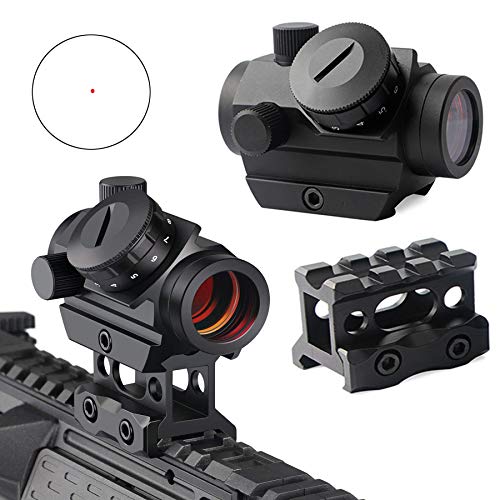
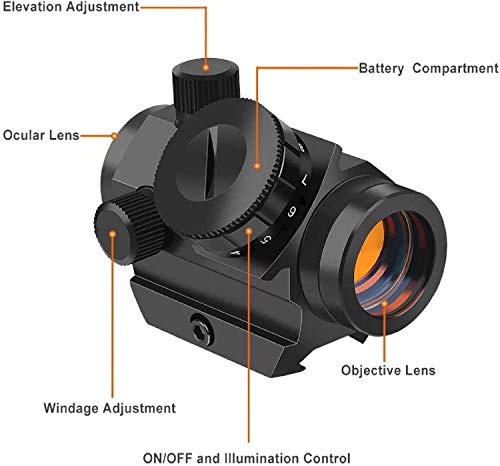
QILU 1x25mm Tactical Red Dot Sight | 3-4 MOA Compact Red Dot Scope | Reflex Rifle Optic with 11 Adjustable Brightness Settings | Reddot Gun Scope with 1 Inch Riser Mount
What’s In The Box
1 X Red Dot Sight
1 X Riser Mount
1 X Rubber Bikini Cover
1 X CR2032 Battery
1 X Allen Wrench
Rifle Scope Product Features
Durable & High-Quality Constrction – 100% Waterproof, Fog-proof And Shockproof Construction. Fully Waterproof With Sealed Housing. A Shockproof Aluminum Body Displays Extreme Durability And Resists Damage From Rough Handling. Matte Black Anodized Finish Resists Scratches While Keeping A Stealthy Profile.These Features Prevent Moisture, Dust And Debris From Penetrating For Reliable Performance In All Environments. Feel Free To Use Red Dot Rifle Scope To Hunt In Any Weather And Seasons.
High Image Clarity – Mini Red Dot Sights With Multiple Anti-reflective Coatings On All Air-to-glass Surfaces Increase Light Transmission. Bright Red Dot Display Is Highly Visible In Daylight.
Unrestricted Eye Relief – For Most Optic Sights, It Matters How Far Away The Shooter’s Eye Is From The Sight, , The Eye Relief Is Unlimited. With The Parallax-free Design, The Reflex Sight Scope Follows The Movement Of The Users Eye While Remaining Fixed On The Target, Eliminating Any Need For Centering.This Feature Allows For Faster Targeting, Because It Takes Away Part Of The Restraint Placed Upon Someone Who Is Aiming With Another Type Of Sight.
Precise Target – Red Dot Scope . Weighing Merely 0.25lbs, This Micro Red Dot Sight Allows Easy Operation And Convenient Transportation. Red Dot Sight Provides Clear Red Dot, Which Contributes To Peak Accuracy And Bright Enough To Hunt Even The Thickest Woods.
Widely Used – It Is Perfect For A Wide Range Of Daytime Applications Including Hunting, Tactical Scenarios, And Precision Shooting. Ideal For Close-range And General Shooting.
About the QILU Company
QILU is a premium company for firearm scopes, optics, mounting solutions, and other components used for firearms like rifles and long guns. They innovate and make their products making the most of materials which are durable and long lasting. This includes the QILU 1x25mm Tactical Red Dot Sight | 3-4 MOA Compact Red Dot Scope | Reflex Rifle Optic with 11 Adjustable Brightness Settings | Reddot Gun Scope with 1 Inch Riser Mount by QILU. For additional shooting products, visit their website.
Information Optics
Rifle scopes permit you to exactly aim a rifle at various targets by lining up your eye with the target at range. They do this through magnification by using a set of lenses within the scope. The scope’s alignment can be dialed in for consideration of many environmental elements like wind and elevation decreases to account for bullet drop.
The scope’s function is to help shooters understand exactly where the bullet will hit based upon the sight picture you are seeing through the scope as you align the scope’s crosshair or reticle with the intended point of impact. A lot of contemporary rifle scopes and optics have about eleven parts which are found within and externally on the scope. These scope parts consist of the rifle scope’s body, lenses, windage dials, focus rings, and other elements. Learn about the eleven parts of optics.
About Optic Styles
Rifle scopes can be either “first focal plane” or “second focal plane” type of optics. Going for the finest type of rifle optic is based on what type of shooting you plan on doing.
About First Focal Plane Scopes
Focal plane scopes (FFP) include the reticle in front of the magnification lens. These styles of scopes are beneficial for:
- Quick acquisition, long distance kinds of shooting
- Shooting situations where estimations are minor
- Experienced shooters who have an idea for their aim point “hold over” and also “lead” relationships for their firearm
- Shooters who do not mind the reticle is enlarged and takes up more visual sight area than a SFP reticle
About Second Focal Plane Optics
Second focal plane optics (SFP) include the reticle behind the magnification lens. In the FFP example with the SFP scope, the 5x “zoom” 100 yard tick reticle measurement would be 1/5th of the non “zoom” tick measurement.
- Long distance types of shooting where shooters have additional time to make ballistic calculations
- Shooting where most shots take place within shorter spaces and ranges
- Shooters who select a clearer optic sight picture with less space taken up by the larger sized FFP reticle
Rifle Glass Zoom
The amount of zoom a scope provides is identified by the size, thickness, and curvatures of the lenses inside of the rifle scope. The magnification of the scope is the “power” of the scope.
About Fixed Single Power Lens Rifle Scopes
A single power rifle scope comes with a magnification number designator like 4×32. This indicates the magnification power of the scope is 4x power and the objective lens is 32mm. The magnification of this type of optic can not fluctuate given that it is a set power scope.
Adjustable Power Lens Rifle Glass Details
Variable power rifle scopes can be changed between magnification levels. These types of scopes will list the magnification amount in a format such as 2-10×32. These numbers suggest the zoom of the scope could be adjusted in between 2x and 10x power. This additionally utilizes the powers in-between 2 and 10. The power adaptation is accomplished by working with the power ring part of the scope near the back of the scope by the eye bell piece.
Power Levels and Range
Here are some recommended scope powers and the ranges where they may be efficiently used. Consider that high magnification glass will not be as practical as lower powered scopes since excessive zoom can be a bad thing. The exact same concept applies to longer ranges where the shooter needs increased power to see precisely where to properly aim the rifle at the target.
Lens Coating for Scopes
All contemporary rifle scope and optic lenses are covered in special coatings. There are various types and qualities of coverings. When looking at luxury rifle scope setups, Lens covering can be an important aspect of a rifle. The glass lenses are one of the most critical parts of the glass given that they are what your eye looks through while sighting a rifle in on the target. The coating on the lenses protects the lens exterior and also assists with anti glare from refracted sunlight and color presence.
HD Versus ED Lenses
Some scope producers will also use “HD” or high-definition lense coatings which make the most of different procedures, aspects, chemical substances, and polarizations to draw out numerous colors and viewable target definition through lenses. This HD covering is frequently used with greater density lens glass which brings down light’s opportunity to refract by means of the lens glass. Some scope manufacturers use “HD” to refer to “ED” indicating extra-low dispersion glass. ED deals with how colors are represented on the chromatic spectrum and the chromatic aberration or deviance which is also called color distortion or fringing. Chromatic aberration is often noticeable around things with hard edges and outlines as light hits the object from certain angles.
Single Rifle Scope Lens Finishing Versus Multi-Coating
Various optic lenses can also have various coatings applied to them. All lenses normally have at least some type of treatment or coating applied to them prior to being used in a rifle scope or optic.
Single covered lenses have a treatment applied to them which is normally a protective and improving multi-purpose treatment. This lens treatment can safeguard the lens from scratches while decreasing glare and other less useful things experienced in the shooting environment while sighting in with the optic. The quality of a single coated lens depends upon the scope manufacturer and how much money you spent for it. Both the make and cost are indications of the lens quality.
Some scope makers likewise make it a point to define if their optic lenses are layered or “multi” coated. This suggests the lens has numerous treatments applied to them. If a lens gets multiple treatments, it can establish that a manufacturer is taking numerous actions to combat different natural factors like an anti-glare coating, a scratch resistant anti-abrasion coating, followed by a hydrophilic finishing. This additionally doesn’t necessarily mean the multi-coated lens will perform better than a single layered lens. Being “better” depends upon the manufacturer’s lens treatment technology and the quality of materials used in constructing the rifle glass.
What to Know About Anti-water Covering
Water on a lens does not assist with preserving a clear sight picture through a scope at all. Numerous top of the line and high-end optic companies will coat their lenses with a hydrophilic or hydrophobic finishing.
Rifle Glass Installation Options
Installing solutions for scopes can be found in a couple of options. There are the basic scope rings which are separately mounted to the scope and one-piece mounts which cradle the scope. These various types of mounts also typically come in quick release versions which use toss levers which allow rifle shooters to rapidly install and remove the glass.
Hex Key Glass Rings
Standard, clamp design mounting scope rings use hex head screws to mount to the flattop design Picatinny scope installation rails on rifles. These types of scope mounts use two separate rings to support the optic, and are often made from 7075 T6 billet aluminum which is designed for long range accuracy shooting. This type of scope mount is excellent for rifles which need a durable, sound mounting solution which will not move no matter how much the scope is moved or abuse the rifle takes.
Quick-Release Cantilever Optic Ring Mounts
These types of quick-release rifle scope mounts can be used to quickly take off a scope and attach it to a different rifle. Numerous scopes can also be switched out if they all use a compatible design mount. These types of mounts are convenient for rifle platforms which are transferred a lot, to swap out the optic from the rifle for protection, or for scopes which are used in between several rifles or are situationally focused.
Rifle Scope Tube Sealing and Gas Purging
Wetness inside your rifle optic can mess up a day of shooting and your costly optic by bringing about fogging and producing residue inside of the scope tube. Many scopes prevent wetness from getting in the scope tube with a system of sealing O-rings which are water resistant.
Gas Purged Rifle Glass Tubes
Another element of avoiding the buildup of wetness within the rifle optic tube is filling the tube with a gas like nitrogen. Considering that this area is already occupied by the gas, the glass is less altered by temp changes and pressure distinctions from the external environment which may potentially enable water vapor to seep in around the seals to fill the vacuum which would otherwise be there. These are good qualities of a decent rifle scope to look for.


