

Description
Rifle Scope Product Details
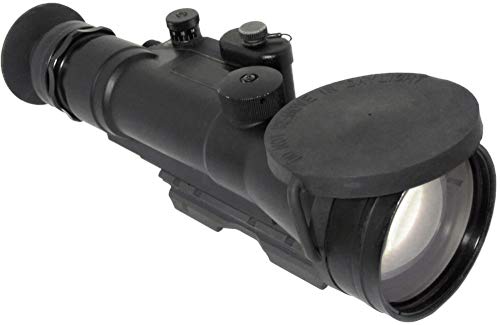
PRG Defense 15WOP422353011 Model Wolverine Pro 4 NL1 Gen 2+”Level 1″ Night Vision Rifle Scope, 4X Magnification, 125mm Objective Lens, 8° FOV, 25m to Infinity Focus Range, 30mm Eye Relief
PRG Defense 15WOP422353011 Model Wolverine Pro 4 NL1 Gen 2+ “Level 1” Night Vision Rifle Scope, 4x Magnification, 125mm Objective Lens, 8° FOV, 25m to Infinity Focus Range, 30mm Eye Relief
The Wolverine Pro 4 is a night vision weapon sight based upon the military nomenclature AN/PVS-12/12A. The Wolverine Pro 4 utilizes a high strength aluminum design to service the rugged day to day requirements and ever changing environments. Except for the optical elements, all external surfaces utilize a non-reflective matte black finish. Controls and adjustments are easy to operate and include power on/off switch, reticle brightness, eyepiece focus, range (distance) focus, plus windage and elevation adjustments.
Key Features
Easy to operate
Automatic brightness control
Adjustable projected reticle
Powered by 2 AA batteries
60 hour continuous operation
Specifications
Image Intensifier Tube: Gen 2+ “level 1″
Magnification: 4x
Objective lens: 125mm
FOV: 8°
Focus range: 25m to infinity
Diopter adjustment: -5 to +2 dpt
Eye relief: 30mm
Reticle color: Red
Infrared Illuminator: Detachable, long-range
Battery Type: 2 AA Batteries
Battery Life (Operating): Up to 60 hours at 20
Overall Dimensions: 262 x 87 x 87 mm (10.3″ x 3.4″ x 3.4”)
Weight: 1.74 kg (3.8 lbs)
Rifle Scope Product Features
4x Magnification, 125mm Objective Lens, 8° FOV, 25m to Infinity Focus Range
Automatic brightness control, Adjustable projected reticle
Powered by 2 AA batteries, 60 hour continuous operation
Detachable, long-range Infrared Illuminator
ITAR Compliance: *Export of this product outside of the United States of America is not allowed and is controlled by the US Department of State. By adding to Cart, You confirm that You are a U.S. Person and agree that You do not intend to Export this product. You also understand this product is regulated by the International Traffic in Arms Regulations (ITAR).
About the PRG Defense Scope Maker
PRG Defense is a premium supplier for firearm scopes, optics, mounts, and other components used for firearms like rifles and long guns. They innovate and make their mounts and related products working with elements which are durable and long lasting. This includes the PRG Defense 15WOP422353011 Model Wolverine Pro 4 NL1 Gen 2+”Level 1″ Night Vision Rifle Scope, 4X Magnification, 125mm Objective Lens, 8° FOV, 25m to Infinity Focus Range, 30mm Eye Relief by PRG Defense. For additional shooting items, visit their site.
What You Need to Know About Rifle Scopes
Rifle scopes enable you to specifically align a rifle at various targets by aligning your eye with the target at range. They accomplish this through magnification using a set of lenses within the scope. The scope’s alignment can be adapted for consideration of many natural considerations like wind and elevation to account for bullet drop.
The scope’s purpose is to help the shooter understand precisely where the bullet will hit based on the sight picture you are seeing through the optic as you align the scope’s crosshair or reticle with the intended target. The majority of modern rifle scopes and optics have about eleven parts which are arranged inside and externally on the scope. These scope parts consist of the rifle scope’s body, lenses, windage dials or turrets, objective focus rings, and other parts. Learn about the eleven parts of optics.
Rifle Scope Types
Rifle scopes can be either “first focal plane” or “second focal plane” kind of scopes. The style of focal plane an optic has establishes where the reticle or crosshair is located in regard to the scopes magnifying adjustments. It literally means the reticle is situated behind or ahead of the magnifying lens of the scope. Selecting the very best type of rifle scope is based on what sort of shooting or hunting you intend on doing.
First Focal Plane Optics
Focal plane scopes (FFP) include the reticle in front of the zoom lens. These kinds of scopes are helpful for:
- Quick acquisition, long distance types of shooting
- Shooting scenarios where calculations are small
- Experienced shooters who understand their target “hold over” and also “lead” correlations for their firearm
- Shooters who don’t mind the reticle is bigger and takes up more visual eyesight area than a SFP reticle
Second Focal Plane Optics
Second focal plane scopes (SFP) include the reticle behind the magnification lens. In the FFP example with the SFP scope, the 5x “zoom” one hundred yard tick measurement would be 1/5th of the non “zoom” tick.
- Far away kinds of shooting where shooters have additional time to make ballistic calculations
- Shooting where most of the shots occur within much shorter ranges and distances
- Shooters who select a clearer optic sight picture with less area taken up by the enlarged FFP reticle
Ins and Outs of Glass Zoom
The amount of magnification a scope supplies is identified by the size, thickness, and curvatures of the lenses inside of the rifle scope. The magnification of the scope is the “power” of the scope.
Fixed Single Power Lens Glass
A single power rifle scope comes with a magnification number designator like 4×32. This implies the zoom power of the scope is 4x power while the objective lens is 32mm. The magnification of this type of scope can not change because it is set from the factory.
Variable Power Lens Rifle Scope Facts
Variable power rifle scopes can be adjusted between magnification levels. These types of scopes will list the magnification level in a format like 2-10×32. These numbers indicate the zoom of the scope could be changed in between 2x and 10x power. This additionally incorporates the power levels in-between 2 and 10. The power adaptation is achieved by working with the power ring part of the scope near the rear of the scope by the eye bell.
Power and Range Correlations
Here are some suggested scope power levels and the ranges where they may be efficiently used. High power rifle scope glass will not be as beneficial as lower powered rifle scope glass given that too much zoom can be a negative aspect depending on your shooting distance. The same relates to extended distances where the shooter needs adequate power to see precisely where to best aim the rifle.
About Optic Lens Covering
All modern-day rifle scope and optic lenses are coated. Lens coating can be a vital aspect of a rifle’s setup when thinking about high end rifle optics and scope systems.
HD Versus ED Lenses
Some scope manufacturers even use “HD” or high-def lense coatings that apply different procedures, rare earth compounds, polarizations, and aspects to draw out numerous colors and viewable target definition through the lens. This high-def coating is typically used with higher density glass which decreases light’s capability to refract through the lens glass. Some scope suppliers use “HD” to describe “ED” implying extra-low dispersion glass. ED deals with how colors are represented on the chroma spectrum and the chromatic aberration or difference which is similarly called color distortion or fringing. Chromatic aberration is often obvious around things with hard edges and shapes as light hits the object from various angles.
Single Coating Versus Multi-Coating for Rifle Glass
Different optic lenses can also have different coatings applied to them. All lenses typically have at least some type of treatment or finishing applied to them prior to being used in a rifle scope or optic assembly. Because the lens isn’t just a raw piece of glass, they require performance enhancing coatings. It is part of the carefully tuned optic. It requires a coating to be applied to it so that it will be optimally usable in many types of environments, degrees of light (full light VS shaded), and other shooting conditions.
Single covered lenses have a treatment applied to them which is normally a protective and improving multi-purpose treatment. This lens treatment can shield the lens from scratches while reducing glare and other less useful things experienced in the shooting environment while sighting in with the optic. The quality of a single layered lens depends on the scope designer and how much money you spent for it. Both are indications of the lens quality.
Some scope makers similarly make it a point to define if their optic lenses are covered or “multi” covered. Being “much better” depends on the producer’s lens treatment innovation and the quality of materials used in constructing the rifle scope.
Anti-water Glass Lens Coating
Water on a scope lens does not improve preserving a clear sight picture through a scope at all. Numerous top of the line or premium optic makers will coat their lenses with a hydrophilic or hydrophobic covering. The Steiner Optics Nano-Protection is a fine example of this kind of treatment. It treats the surface of the Steiner scope lens so the water particles can not bind to it or produce surface tension. The result is that the water beads roll off of the scope to maintain a clear, water free sight picture.
Alternatives for Installing Scopes on Firearms
Installing approaches for scopes are available in a few choices. There are the standard scope rings which are individually installed to the scope and one-piece scope mounts which cradle the scope. These various types of mounts also generally come in quick release versions which use toss levers which enable rifle shooters to rapidly mount and dismount the optics.
Hex Key Rifle Scope Rings
Standard, clamp-on design mounting optic rings use hex head screws to install to the flattop design Picatinny scope mount rails on the tops of rifles. These types of scope mounts use two independent rings to support the optic, and are made from 7075 T6 billet aluminum or similar materials which are manufactured for far away accuracy shooting. This kind of scope mount is exceptional for rifle systems which require a resilient, rock solid mount which will not change regardless of how much the scope is moved about or abuse the rifle takes. These are the style of mounts you want for a devoted optics system on a far away scouting or sniper competition firearm which will hardly ever need to be changed or adjusted. Blue 242 Loctite threadlocker can additionally be used on the scope mount’s screws to stop the hex screw threads from backing out after they are installed tightly in position. An example of these rings are the 30mm style made by the Vortex Optics brand. The set generally costs around $200 USD
Quick-Release Cantilever Rifle Glass Ring Mounting Solutions
These kinds of quick-release rifle scope mounts can be used to rapidly connect and take off a scope from a rifle. Several scopes can also be switched out if they all use a complementary designed mount. The quick detach design is CNC machined from anodized 6061 T6 aluminum and the mounting levers attach tightly to a flat top type Picatinny rail. This permits the scope to be sighted in while on the rifle, removed from the rifle, and remounted back on the rifle while preserving the original sighting settings. These kinds of mounts come in practical for shooting platforms which are transferred a lot, to take off the scope glass from the rifle for protection, or for sight systems which are employed in between several rifles. An example of this mount type is the 30mm mount from Vortex Optics. It typically costs around $250 USD
Sealing and Gas Purging for Scope Tubes
Wetness inside your rifle scope can spoil a day of shooting and your pricey optic by triggering fogging and creating residue inside of the scope’s tube. Many optics protect against humidity from getting in the optical tube with a series of sealing O-rings which are waterproof. Normally, these scopes can be submerged beneath 20 or 30 feet of water before the water pressure can push moisture past the O-rings. This should be ample wetness prevention for common use rifles, unless you anticipate taking your rifle aboard a watercraft and are concerned about the scope still functioning if it falls overboard and you can still retrieve the firearm.
Details on Rifle Scope Tube Gas Purging
Another part of avoiding the buildup of wetness inside of the rifle optic tube is filling the tube with a gas like nitrogen. Considering that this space is currently taken up by the gas, the optic is less altered by temperature level changes and pressure differences from the outside environment which could possibly enable water vapor to seep in around the seals to fill the void which would otherwise be there. These are good qualities of a decent rifle scope to seek out.


