Description
Rifle Scope Product Details
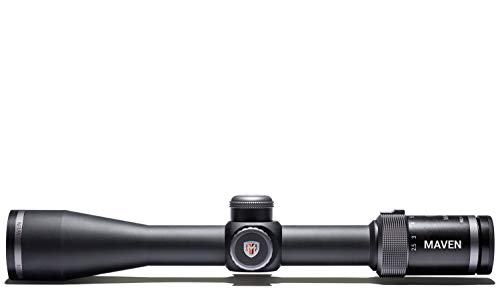
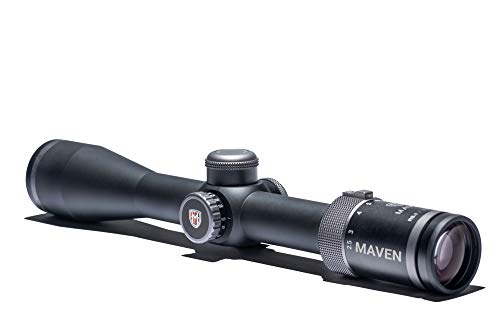
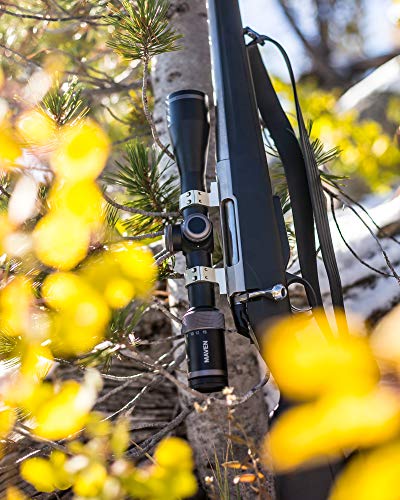
Maven RS.1 2.5-15 x 44 mm FFP Hunting Rifle Scope MOA Reticle
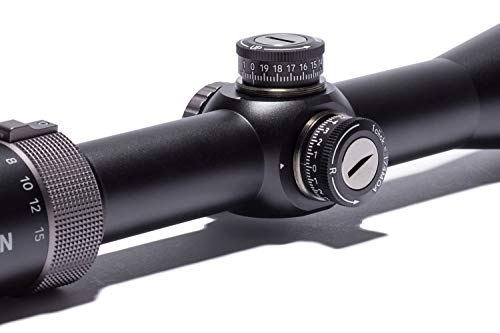
The new RS.1 features a generous 2.5X ” 15X zoom and a first focal plane reticle, meaning your holdovers are accurate at the lowest power, the highest power”and everywhere in between. In simple terms, this means whether you choose our proprietary MOA-1 Reticle or our SHR (Simplified Holdover Reticle), you won’t need separate calculations depending on power. We use ED glass for true color rendering and maximum light transmission through a 44mm objective lens, and we offer some of the best eye relief in the business. On the outside we have capped MOA turrets with 0.25 MOA per click, a precise side parallax adjustment, and buttery smooth zoom adjustments. The durable anodizing resists wear, and the precision-milled adjustments are easy to grab with gloves on those cold late-season mornings. With a broad magnification range, top-level optical performance, and accessories like a protective objective lens filter, the RS.1 can top any gun in your safe, and maybe even give you an excuse to buy a few more. Includes neoprene cover. Maven optics are made with a commitment to you, our customer. All Maven optics come with an unconditional life-time warranty. If your optic becomes damaged or is at all defective (not including deliberate or cosmetic damage that does not hinder product performance), contact us immediately for repair or replacement. We don’t care where or when you bought it or if it was your fault or not ” if it’s Mavenbuilt, we will take care of it.
Rifle Scope Product Features
About this item
Precise MOA Reticle has 30 minutes of elevation holds plus windage marks for exact shot placement
With a broad magnification range, top-level optical performance, and accessories like a protective objective lens filter, the RS.1 can top any gun in your safe, and maybe even give you an excuse to buy a few more.
Built to top the most accurate rifles in the world and designed to compete with premium scopes costing much more, RS Series rifle scopes bring unmatched value to a true premium scope, while leaving you enough money for that hunt of a lifetime
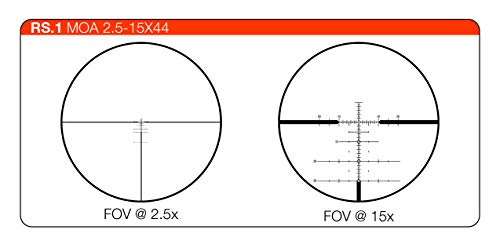
The new RS.1 features a generous 2.5X ” 15X zoom and a first focal plane reticle, meaning your holdovers are accurate at the lowest power, the highest power”and everywhere in between. In simple terms, this means whether you choose our proprietary MOA-1 Reticle or our SHR (Simplified Holdover Reticle), you won’t need separate calculations depending on power.
We use ED glass for true color rendering and maximum light transmission through a 44mm objective lens, and we offer some of the best eye relief in the business.
We’re focused on performance, so you can focus on your passion. Our passion is great glass ” so when it came time to design RS Series Riflescopes we knew they had to be bright, clear, and durable. World class Japanese glass is the foundation of our premium optics, and the RS Series is no different. Built in single-piece aluminum tubes with precision machined adjustments, the RS Series Riflescopes are made to undergo years of precise dialing.
A pronghorn hunt in a 95 degree dust bowl followed by a high-mountain elk hunt at 0 degrees in blowing snow ” Wyoming is famous for unforgivable weather conditions. Maven hunting rifle scopes are constructed to withstand years of use and abuse in the harshest of climates.
Built to top the most accurate rifles in the world and designed to compete with premium scopes costing much more, RS Series Riflescopes bring unmatched value to a true premium scope, while leaving you enough money for that hunt of a lifetime.
Maven RS Series Riflescopes ” world class optics”designed for the hunter.
A reticle for every situation
The Maven MOA-1 reticle has all the data you need, without all of the clutter from some of the overly complex target scopes. Designed with the hunter in mind there are minute marks to 30 MOA in elevation, and windage to 20 MOA. And since it’s First Focal Plane (FFP) the lines are accurate, no matter what zoom you are on.
RS.1 Riflescope Custom Turret
The Custom Ballistics Turret is a user-installed replacement for the stock elevation turret on the Maven RS.1. Customized to your ballistics and shooting environment, the Custom Ballistics Turret provides one full rotation (20 MOA) of custom yardage marks. Markings are limited to one rotation and max distance will vary depending on users ballistics.
The design provides a functional zero-stop* once installed.
Built by Wyoming Arms.
-Dimensions: 7/8 in. -Weight: 0.9 oz
About the Maven Scope Maker
Maven is a premium producer for long gun scopes, optics, mounts, and other accessories used for firearms like rifles and long guns. They create and build their mounts and related products by using building materials which are durable and long lasting. This includes the Maven RS.1 2.5-15 x 44 mm FFP Hunting Rifle Scope MOA Reticle by Maven. For additional shooting products, visit their site.
What You Need to Know About Glass
Rifle scopes enable you to precisely align a rifle at various targets by aligning your eye with the target at range. They do this through magnifying the target by utilizing a set of lenses within the scope. The scope’s positioning can be adapted to account for different environmental things like wind and elevation decreases to make up for bullet drop.
The scope’s function is to help shooters understand precisely where the bullet will hit based upon the sight picture you are viewing using the optic as you align the scope’s crosshair or reticle with the intended target. The majority of contemporary rifle optics have about 11 parts which are located internally and on the exterior of the scope. These scope parts consist of the rifle scope’s body, lenses, windage turrets or dials, objective focus rings, and other elements. Learn about the eleven parts of optics.
Rifle Scope Varieties
Rifle scopes can be either “first focal plane” or “second focal plane” style of scopes. The kind of focal plane an optic has decides where the reticle or crosshair lies in connection with the optic’s magnifying adjustments. It simply suggests the reticle is situated behind or ahead of the magnifying lens of the optic. Picking out the most desired style of rifle scope depends on what sort of shooting or hunting you intend on doing.
First Focal Plane Scopes
First focal plane scopes (FFP) feature the reticle in front of the magnifying lens. This causes the reticle to increase in size based on the level of zoom being used. The outcome is that the reticle measurements are the same at the magnified distance as they are at the non amplified distance. For example, one tick on a mil-dot reticle at 100 yards without having “zoom” is still the same tick at 100 yards using 5x “zoom”. These kinds of scopes are valuable for:
- Quick acquisition, long distance kinds of shooting
- Shooting situations where computations are minimal
- Experienced shooters who recognize their target “hold over” and also “lead” equations for their long guns
- Shooters who don’t mind the reticle is enlarged and uses up more visual eyesight room than a SFP reticle
Second Focal Plane Glass Info
Second focal plane optics (SFP) include the reticle behind the magnification lens. In the FFP example with the SFP scope, the 5x “zoom” 100 yard tick would be 1/5th of the non “zoom” tick reticle measurement.
- Far away types of shooting where shooters have additional time to make ballistic computations
- Shooting where most shots happen within much shorter ranges and proximities
- Shooters who prefer a clearer optic sight picture with less space used up by the bigger FFP reticle
Rifle Glass Zoom
The level of scope zoom you need depends on the style of shooting you plan to do. Almost every style of rifle glass offers some degree of magnification. The amount of magnification a scope offers is established by the diameter, density, and curvatures of the lenses within the rifle optic. The magnifying level of the optic is the “power” of the opic. This means what the shooter is aiming at through the scope is magnified times the power aspect of what can typically be seen by human eyes.
Fixed Single Power Lens Rifle Optics
A single power rifle optic and scope comes with a magnification number designator like 4×32. This means the zoom power of the scope is 4x power while the objective lens is 32mm. The magnification of this type of optic can not adjust given that it is a set power scope.
Adjustable Power Lens Rifle Scopes
Variable power rifle scopes use variable power levels. The power modification is handled using the power ring part of the scope near the back of the scope by the eye bell.
The Power Level and Range of Scopes
Here are some suggested scope power levels and the ranges where they can be efficiently used. Highly magnified optics will not be as beneficial as lower magnification level optics because too much magnification can be a bad thing. The same concept relates to longer ranges where the shooter needs increased power to see exactly where to best aim the rifle at the target.
About Rifle Glass Lens Finishing
All contemporary rifle scope and optic lenses are coated. There are different types and qualities of finishings. When looking at luxury rifle optics and scope systems, Lens covering can be a very important element of defining the rifle’s capability. The glass lenses are one of the most crucial pieces of the optic considering that they are what your eye looks through while sighting a rifle in on the point of impact. The finish on the lenses safeguards the lens surface as well as helps with anti glare capabilities from excess light and color exposure.
ED Versus HD Glass
Some scope manufacturers also use “HD” or high-definition lens finishes which use different processes, polarizations, components, and chemicals to draw out different colors and viewable definition through the lens. Some scope makers use “HD” to refer to “ED” to signify the lens has extra-low dispersion glass.
Single Covering Versus Multi-Coating for Optics
Various scope lenses can also have various coatings applied to them. All lenses generally have at least some kind of treatment or coating applied to them before being used in a rifle scope or optic. Since the lens isn’t just a raw piece of glass, they require performance enhancing coatings. It is part of the finely tuned optic. It must have a covering put on it so that the lens will be optimally functional in numerous types of environments, degrees of light (full VS shaded), and other shooting conditions.
This lens treatment can offer protection to the lens from scratches while reducing glare and other less beneficial things experienced in the shooting environment while sighting in with the scope. The quality of a single covered lens depends on the scope maker and how much you paid for it.
Some scope manufacturers also make it a point to specify if their optic lenses are coated or “multi” covered. Being “better” depends on the producer’s lens treatment innovation and the quality of products used in constructing the rifle scope.
Anti-water Lens Finish
Water on a scope’s lens doesn’t improve maintaining a clear sight picture through an optic in any way. Numerous top of the line or premium scope producers will coat their lenses with a hydrophobic or hydrophilic coating. The Steiner Optics Nano-Protection is a good example of this type of treatment. It treats the exterior surfaces of the Steiner scope lens so the H2O molecules can not bind to it or create surface tension. The result is that the water beads sheet off of the scope to maintain a clear, water free sight picture.
Rifle Glass Installing Choices
Installing options for scopes are available in a few options. There are the basic scope rings which are individually installed to the scope and one-piece scope mounts which cradle the scope. These various kinds of mounts also typically are made in quick release variations which use manual levers which permit rifle shooters to quickly install and remove the scope.
Hex Key Rifle Scope Rings
Normal, clamp style mounting scope rings use hex head screws to mount to the flattop design Picatinny scope mount rails on rifles. These types of scope mounts use a couple of separate rings to support the optic, and are made from 7075 T6 billet aluminum which is designed for long range precision shooting. This type of scope install is perfect for rifles which require a durable, rock solid mounting solution which will not move no matter how much the scope is moved or abused.
Rifle Optic Mounts with Quick-Release Cantilever Rings
These types of quick-release rifle scope mounts can be used to quickly remove a scope from a rifle and reattach it to a different rifle. If they all use a comparable design mount, multiple scopes can also be swapped out in the field. The quick detach design is CNC crafted from anodized 6061 T6 aluminum and the mounting levers fasten securely to a flat top style Picatinny rail. This lets the scope to be sighted in while on the rifle, removed from the rifle, and remounted back on the rifle while maintaining precision. These types of mounts are useful and practical for rifles which are carried a lot, to remove the scope from the rifle for protection, or for scopes which are utilized in between multiple rifles. An example of this mount type is the 30mm mount designed by Vortex Optics. It usually costs around $250 USD
Rifle Glass Tube Sealing and Gas Purging
Moisture inside your rifle scope can destroy a day on the range and your highly-priced optic by resulting in fogging and developing residue within the scope tube. Most optics protect against wetness from entering the scope tube with a system of sealing O-rings which are waterproof. Normally, these scopes can be submerged within 20 or 30 feet of water before the water pressure can force moisture past the O-rings. This should be ample moisture content prevention for standard use rifles for hunting and sporting purposes, unless you intend on taking your rifle sailing and are worried about the scope still working if it goes over the side and you can still retrieve the firearm.
Gas Purged Rifle Optic Tubes
Another part of preventing the accumulation of wetness within the rifle scope’s tube is filling the tube with a gas like nitrogen. Since this area is already taken up by the gas, the scope is less altered by climate alterations and pressure differences from the external environment which could possibly enable water vapor to leak in around the seals to fill the vacuum which would otherwise be there. These are good qualities of a decent rifle scope to look for.


