Description
Rifle Scope Product Details
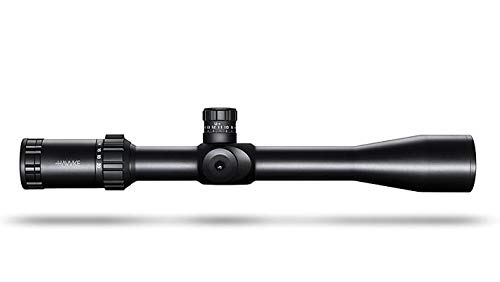
Hawke Sidewinder SF IR Riflescope 30mm
Rifle Scope Product Features
SPECIALLY DESIGNED GUN SCOPE FOR LONG RANGE SHOOTING ” robust build quality to withstand the pressures of long range firing
INCREDIBLE VISION – 18 layer Fully Multi-Coated optics for superior clarity with 30mm objective lens size
SIDE FOCUS CONTROL with 2 inch (50mm) side wheel for parallax adjustment to infinity and 1/4 MOA exposed, locking and resettable turrets
20X HALF MIL DOT RETICLE – Gives true mil spacing at 20x magnification. Fully floating glass etched reticle with red/green illumination.
HAWKE LIFETIME WORLDWIDE WARRANTY ” genuine product from the brand leader in affordable, high performance rifle scopes, spotting scopes and binoculars
Sidewinder gun scopes from Hawke are specially designed to meet the very specific needs for long-range shooting. As industry leaders, these rifle scopes deliver performance and features at an almost unbelievable value.
A 30mm mono-tube chassis is machined from a single piece of lightweight, aircraft-grade aluminum. This provides a strong, stable platform for the optics, even when used on heavyweight long-range calibers like the .338 Lapua.
Exposed turrets allow for quick yet precise adjustments. and a fast focus ocular quickly achieves sharp reticle focus which can be locked to avoid accidentally adjusting the dioptre setting. Waterproof and shockproof the optics are nitrogen-purged optics to prevent fogging and misting.
20x MIL DOT RETICLE
It comes with a fully floating glass etched 20x Mil-Dot reticle which offers true mil spacing at 20x magnification. The hollow bars are calibrated for 0.2 mil spacing and mil spacing.
One of the additional benefits of the 20x Half Mil-Dot reticle is the mil spacing segments of the hollow bars which can be used to accurately range find targets. It also has a choice of red or green illumination with five levels of brightness, adjusted by a rheostat on the saddle to suit every type of cover and light condition.
FULLY MULTI-COATED LENS
Model 17 110, the Hawke Sidewinder 6.5-20×42 SF IR rifle scope offers incredible vision with 18 layer fully multi-coated optics for superior clarity. A side wheel is used for focusing for parallax adjustment to infinity, with attachable 2″ or 4″ sidewheel.
NO FAULT PEACE OF MIND
British brand Hawke makes innovative, feature-rich precision instruments that offer great value for money. Exceptional engineering and build quality means that Hawke rifle scopes give you the accurate and precise vision you need. In the event your product becomes damaged or defective Hawke will repair it at no charge to you.
WHAT’S IN THE BOX
6.5-20×42 Riflescope 30mm
2 inch wheel
4 inch sunshade
Pointer
Flip-up Cover
CR2032 Battery
Lens Cloth
TECHNICAL
Model No: 17 110
Chassis: 30mm Mono-tube
Optical System: 6.5-20x
Objective: 42mm
Reticle: 20x Mil Dot
Illumination: Red / Green – 5 Levels
Focus/Parallax: Side Focus – 9m / 10yds to Infinity
Field of View: m @100m / ft @100yds 5.6 – 1.8m / 16.8 – 5.5ft
Eye relief: 89mm / 3.5″
Length: 391mm / 15.4″
FULL FEATURE LIST
High precision long range optical systems
18 layer fully multi-coated optics for superior clarity
Side focus control for parallax adjustment to infinity
30mm mono-tube chassis for superior strength
Glass etched reticle with red and green illumination
Rheostat on saddle offers 5 levels of brightness
14 MOA exposed, locking and resettable turrets
Locking ocular and high torque zoom ring
About the Hawke Company
Hawke is a premium producer for rifle scopes, optics, mounts, and other accessories used for firearms like rifles and long guns. They innovate and build their scopes and related products choosing materials which are durable and long lasting. This includes the Hawke Sidewinder SF IR Riflescope 30mm by Hawke. For more shooting items, visit their site.
Rifle Glass Information
Rifle scopes permit you to specifically aim a rifle at various targets by lining up your eye with the target over a distance. They accomplish this through magnification using a series of lenses within the scope. The scope’s alignment can be dialed in to account for different environmental considerations like wind and elevation decreases to account for bullet drop.
The scope’s function is to understand exactly where the bullet will hit based on the sight picture you are seeing with the optic as you align the scope’s crosshair or reticle with the intended point of impact. Many modern rifle scopes and optics have about eleven parts which are found internally and on the exterior of the scope body. These parts consist of the rifle scope’s body, lenses, modification turrets, objective focus rings, and other elements. See all eleven parts of a scope.
Rifle Glass Types
Rifle scopes can be either “first focal plane” or “second focal plane” style of scopes. The kind of focal plane an optic has identifies where the reticle or crosshair lies relative to the optic’s zoom. It simply indicates the reticle is located behind or before the magnification lens of the optic. Considering the very best form of rifle scope depends upon what style of hunting or shooting you anticipate doing.
First Focal Plane Optics
Focal plane scopes (FFP) include the reticle in front of the magnification lens. These kinds of scopes are beneficial for:
- Quick acquisition, far away kinds of shooting
- Shooting scenarios where computations are marginal
- Experienced shooters who recognize their target “hold over” as well as “lead” correlations for their firearms
- Shooters who do not mind the reticle is bigger and occupies more visual eyesight room than a SFP reticle
About Second Focal Plane Optics
Second focal plane optics (SFP) include the reticle to the rear of the magnifying lens. This triggers the reticle to stay at the very same dimensions in relation to the level of magnification being used. The end result is that the reticle dimensions alter based on the zoom employed to shoot over lengthier distances given that the markings represent different increments which fluctuate with the magnification level. In the FFP example with the SFP optic, the 5x “zoom” 100 yard tick measurement would be 1/5th of the non “zoom” tick reticle measurement. These particular kinds of scopes work for:
- Far away styles of shooting where shooters have additional time to make ballistic computations
- Shooting where most of the shots take place within much shorter distances and ranges
- Shooters who want a clearer optic picture without room taken up by the larger sized FFP reticle
Details on Rifle Scope Zoom
The quantity of zoom a scope provides is figured out by the size, thickness, and curvatures of the lenses inside of the rifle scope. The magnification of the scope is the “power” of the scope.
Info on Single Power Lens Scopes
A single power rifle scope comes with a zoom number designator like 4×32. This indicates the zoom power of the scope is 4x power and the objective lens is 32mm. The zoom of this kind of scope can not change given that it is a fixed power optic.
Variable Power Lens Rifle Scope Facts
Variable power rifle scopes use enhanced power. The power modification is performed using the power ring part of the scope near the back of the scope by the eye bell.
Power and Range
Here are some advised scope power levels and the distances where they may be successfully used. Bear in mind that higher magnification glass will not be as practical as lower magnification level scope and optics since too much zoom can be a bad thing. The same concept relates to longer distances where the shooter needs sufficient power to see precisely where to best aim the rifle.
Details on Scope Lens Coating
All top of the line rifle optic lenses are coated. Lens finishing is an essential aspect of a shooting platform when buying high end rifle optics and scope systems.
About Rifle Glass Lens Coatings – HD Versus ED
Some scope makers also use “HD” or high-definition lens coverings which use various techniques, polarizations, aspects, and chemicals to draw out various colors and viewable quality through the lens. Some scope producers use “HD” to refer to “ED” indicating extra-low dispersion glass.
What to Know About Single Finishing Versus Multi-Coating
Various scope lenses can even have different finishings applied to them. All lenses normally have at least some kind of treatment or coating applied to them prior to being used in a rifle scope or optic. Due to the fact that the lens isn’t simply a raw piece of glass, they require performance enhancing coatings. It becomes part of the finely tuned optic. It needs to have a finishing placed on it so that it will be optimally usable in many types of environments, degrees of light (full light VS shaded), and other shooting conditions.
Single covered lenses have a treatment applied to them which is normally a protective and boosting multi-purpose treatment. This lens treatment can protect the lens from scratches while reducing glare and other less useful things experienced in the shooting environment while sighting in with the scope. The quality of a single layered lens depends upon the scope producer and how much you paid for it. The scope’s maker and cost are signs of the lens quality.
Some scope makers similarly make it a point to specify if their optic lenses are coated or “multi” coated. Being “better” depends on the manufacturer’s lens treatment innovation and the quality of materials used in building the rifle scope.
About Anti-water Covering
Water on a lens does not help with maintaining a clear sight picture through a scope at all. Many top of the line and military grade scope makers will coat their lenses with a hydrophobic or hydrophilic covering which is water repellent.
Options for Mounting Scopes on Long Guns
Mounting approaches for scopes can be found in a couple of choices. There are the standard scope rings which are separately installed to the scope and one-piece mounts which cradle the scope. These various kinds of mounts also typically are made in quick release variations which use throw levers which enable rifle shooters to rapidly mount and dismount the optics.
Hex Key Glass Ring Mounting Solutions
Basic, clamp-on type mounting optic rings use hex head screws to position to the flattop design Picatinny scope mounting rails on rifles. These kinds of scope mounts use a pair of separate rings to support the scope, and are usually constructed from 7075 T6 billet aluminum or similar materials which are designed for long distance precision shooting. This kind of scope mount is very good for rifle systems which require a durable, unfailing mount which will not shift no matter how much the scope is moved or abuse the rifle takes. These are the type of mounts you should get for a faithful optics setup on a far away scouting or interdiction long gun that will seldom need to be altered or recalibrated. Blue 242 Loctite threadlocker can additionally be used on the screws to keep the hex screw threads from wiggling out after they are mounted securely in place. An example of these mounting rings are the 30mm style made by the Vortex Optics brand. The set typically costs around $200 USD
Quick-Release Cantilever Glass Rings
These kinds of quick-release rifle scope mounts can be used to rapidly connect and detach a scope from a rifle. If they all use a similar style mount, several scopes can often be swapped in the field. The quick detach design is CNC machined from anodized 6061 T6 aluminum and the mounting levers fasten tightly to a flat top style Picatinny rail. This permits the scope to be sighted in while on the rifle, taken off of the rifle, and remounted back on the rifle while maintaining the original sighting settings. These types of mounts come in beneficial for rifles which are transferred a lot, to remove the scope from the rifle for protection, or for scopes which are employed in between multiple rifles. An example of this mount style is the 30mm mount designed by the Vortex Optics manufacturer. It generally costs around $250 USD
Sealing and Gas Purging for Rifle Optic Tubes
Moisture inside your rifle optic can wreck a day on the range and your expensive optic by causing fogging and generating residue within the scope tube. Most scopes protect against moisture from getting in the scope tube with a series of sealing O-rings which are waterproof. Normally, these optics can be submerged under 20 or 30 feet of water before the water pressure can push moisture past the O-rings. This should be more than enough humidity avoidance for common use rifles for hunting and sporting purposes, unless you intend on taking your rifle boating and are concerned about the scope still performing if it is submerged in water and you can still retrieve the gun.
What to Know About Optic Tube Gas Purging
Another part of avoiding the accumulation of moisture inside of the rifle scope’s tube is filling the tube with a gas like nitrogen. Considering that this space is already occupied by the gas, the scope is less affected by climate alterations and pressure distinctions from the outdoor environment which may possibly allow water vapor to leak in around the seals to fill the vacuum which would otherwise exist. These are good qualities of a decent rifle scope to seek out.


