

Description
Rifle Scope Product Details
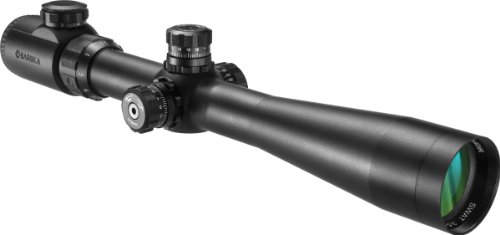
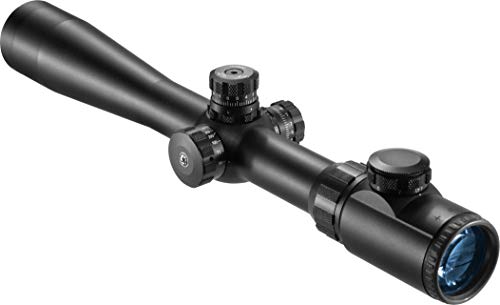
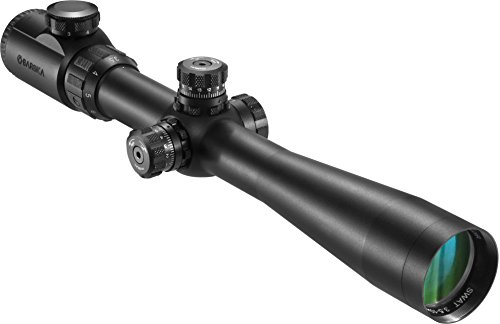
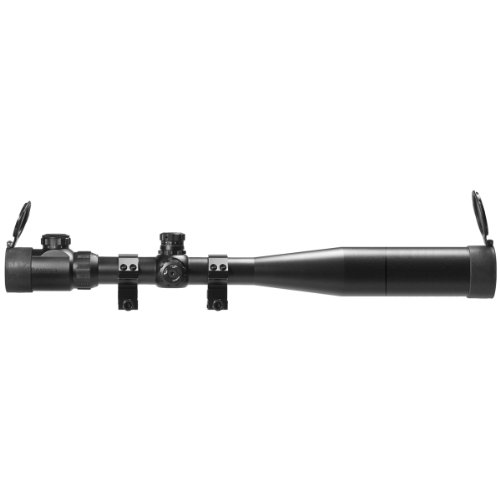
BARSKA 3.5-10×40 SWAT Tactical 30-mm IR Mil-Dot Riflescope
Product Description
Fully Multi-Coated Optics
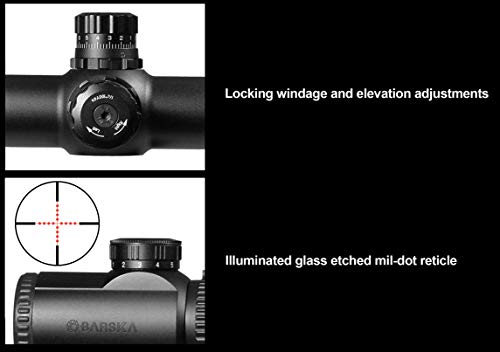
Illuminated Glass Etched Mil-Dot Reticle
Adjustable Reticle Brightness
30mm Monotube Construction
Side Adjustable Parallax
Lockable Windage and Elevation Adjustments
1/4 MOA Click Adjustments
Includes 5″ Sunshade and Flip-up Scope Caps
Amazon.com
The Barska 3.5-10×40 SWAT Tactical 30 mm IR Mil-Dot Rifle Scope provides precision accuracy, even in the toughest of weather conditions. The large 40mm objective lens offers 3.5 to 10 times variable magnification, allowing for rapid target acquisition. This rifle scope, designed specifically for the military, is 100% fog-proof and waterproof. The multi-coated optics with illuminated Mil-Dot glass-etched reticles allows for enhanced performance, even in low-light conditions. You will achieve even more control and accuracy from the rigid, shockproof construction along with the turret-mounted focus knob and easy-to-grip, target-style windage. The 0.5 caliber proofed elevation adjustment feature allows you to use the Rifle Scope at any altitude or terrain. Bonus accessories include flip-up covers for lens protection, 5/8-inch see-through rings, and 5-inch shades to reduce glare.
Rifle Scope Product Features
About this item
Precision Aiming: The 3.5-10x magnification scope features 1/4 MOA click adjustments and side parralax for precision accuracy.
Quality Construction: The scope comes with fully multi-coated optics, providing impressive viewing clarity. Tube diameter 30mm.
Illuminated Reticle: The glass-etched illuminated mil-dot reticle with adjustable brightness can be used to target with ease.
External Locking Knobs: The external locking windage and elevation prevents the knobs from accidental adjustments.
Robust Design: The scope is built with extra-rigid construction, being waterproof, fogproof, and shockproof. Cantilever mount included.
AC10814
FOV: 29.3ft / 9.8m @3.5x, 9.4ft / 3.1m @10x
Tube Diameter: 30mm
Eye Relief: 3.3 in
Exit Pupil: 11.43mm – 4mm
Focal Plane: Second
Parallax Adjustment: Yes
3.5-10x40mm IR SWAT Rifle Scope
By Barska
Built to operate under the most demanding conditions, the SWAT Series of Barska riflescopes delivers premium performance at extreme distances. The SWAT 3.5-10x40mm IR rifle scope features advanced multi-coated optics for an extremely clear view, and an adjustable illuminated Mil-Dot reticle keeps you on target in any lighting situation. The 30mm mono tube construction allows for greater light transmission and provides the scope with a shockproof construction.
Illuminated Glass Etched Mil-Dot Reticle
Adjustable Reticle Brightness
30mm Monotube Construction
Side Adjustable Parallax
Lockable Windage and Elevation Adjustments
Features
Side Parallax & Turret Adjustment
Parallax Adjustment allows user to adjust according to distance they are shooting at and comes with external lockable 1/4 MOA Windage and Elevation.
Accessories
Includes Flip up Scope caps, sunshade, and picatinny rings.
Zoom Adjustment
3.5-10x Adjustable zoom allows user to get up close to the target.
Reticle
Illuminated Glass Etched Mil-Dot IR Reticle with adjustable brightness.
AC10814 AC10700 AC10550 AC10366
Magnification 3.5x – 10x 6x – 24x 10x – 40x 6x – 24x
Objective Lens 40mm 60mm 50mm 44mm
Lens Coating Fully Multi-Coated Fully Multi-Coated Fully Multi-Coated Fully Multi-Coated
Click Value (MOA) 1/4 1/8 1/8 1/8
Length (in) 15 15.75 16.25 16
Product Weight (oz) 24.16 28.9 31.4 24
About the BARSKA Manufacturer
BARSKA is a premium producer for long gun scopes, optics, mounts, and other add-ons used for guns like rifles and long guns. They innovate and manufacture their mounts, scopes, and related products making the most of materials which are resilient and long lasting. This includes the BARSKA 3.5-10×40 SWAT Tactical 30-mm IR Mil-Dot Riflescope by BARSKA. For additional shooting goods, visit their site.
Glass Facts
Rifle scopes enable you to precisely align a rifle at different targets by lining up your eye with the target at range. They accomplish this through magnifying the target by employing a set of lenses inside the scope. The scope’s positioning can be dialed in for the consideration of different natural factors like wind and elevation to make up for bullet drop.
The scope’s function is to help the shooter understand exactly where the bullet will land based upon the sight picture you are seeing with the optic as you align the scope’s crosshair or reticle with the intended point of impact. A lot of modern rifle scopes have about eleven parts which are located within and on the exterior of the scope. These optic pieces include the rifle scope’s body, lenses, windage dials or turrets, objective focus rings, and other components. Learn about the eleven parts of rifle scopes.
About Rifle Glass Varieties
Rifle scopes can be either “first focal plane” or “second focal plane” style of scopes. The type of focal plane a scope has identifies where the reticle or crosshair is located relative to the optic’s magnification. It literally suggests the reticle is located behind or ahead of the magnifying lens of the scope. Picking out the most beneficial form of rifle optic is based upon what kind of hunting or shooting you plan on doing.
First Focal Plane Glass Info
Focal plane scopes (FFP) feature the reticle in front of the magnification lens. These styles of scopes are helpful for:
- Quick acquisition, far away types of shooting
- Shooting scenarios where estimations are marginal
- Experienced shooters who know their aim point “hold over” and also “lead” equations for their rifles
- Shooters who don’t mind the reticle is enlarged and takes up more visual eyesight area than a SFP reticle
Second Focal Plane Glass
Second focal plane optics (SFP) feature the reticle to the rear of the zoom lens. In the FFP example with the SFP scope, the 5x “zoom” one hundred yard tick measurement would be 1/5th of the non “zoom” tick reticle measurement.
- Far away kinds of shooting where shooters have increased time to make ballistic computations
- Shooting where most of the shots occur within much shorter spaces and ranges
- Shooters who would like a clearer optic sight picture with less room used up by the larger size FFP reticle
Magnification for Rifle Optics
The quantity of zoom a scope provides is identified by the size, density, and curvatures of the lenses inside of the rifle scope. The magnification of the scope is the “power” of the scope.
About Fixed Single Power Lens Rifle Glass
A single power rifle scope uses a zoom number designator like 4×32. This indicates the magnification power of the scope is 4x power while the objective lens is 32mm. The magnification of this type of scope can not fluctuate considering that it is a set power scope.
Adjustable Power Lens Rifle Optic Details
Variable power rifle scopes can be changed between magnification increments. It will note the magnification amount in a configuration such as 2-10×32. These numbers imply the zoom of the scope could be set between 2x and 10x power. This always includes the powers in-between 2 and 10. The power modification is achieved by working with the power ring component of the scope near the rear of the scope by the eye bell.
Glass Power and Range Correlation
Here are some suggested scope powers and the distances where they can be effectively used. High power glass will not be as useful as lower magnification glass since too much magnification can be a negative aspect depending on your shooting distance. The same concept applies to extended distances where the shooter needs enough power to see precisely where to properly aim the rifle at the target.
Rifle Glass Lens Coating
All modern rifle scope and optic lenses are layered. There are different types and qualities of coatings. When considering luxury rifle targeting units, Lens finish can be an important aspect of defining the capability of the rifle. The glass lenses are one of the most crucial parts of the glass because they are what your eye looks through while sighting a rifle in on the point of impact. The covering on the lenses safeguards the lens exterior as well as assists with anti glare from refracted daylight and color recognition.
Details on Lens Coatings – HD Versus ED
Some scope producers also use “HD” or high-definition lens finishes which use different techniques, polarizations, components, and chemicals to draw out a wide range of colors and viewable quality through the lens. Some scope producers use “HD” to refer to “ED” meaning extra-low dispersion glass.
Single Finishing Versus Multi-Coating
Different optic lenses can also have different coverings used to them. All lenses usually have at least some type of treatment or covering applied to them prior to being used in a rifle scope or optic.
This lens treatment can offer protection to the lens from scratches while lowering glare and other less beneficial things experienced in the shooting environment while sighting in with the scope. The quality of a single covered lens depends on the scope manufacturer and how much you paid for it.
Some scope manufacturers similarly make it a point to define if their optic lenses are coated or “multi” covered. Being “better” depends on the maker’s lens treatment innovation and the quality of products used in constructing the rifle scope.
Rifle Glass Lens Hydrophobic Covering
Water on a scope lens does not improve maintaining a clear sight picture through an optic whatsoever. Many top of the line or premium optic producers will coat their lenses with a hydrophilic or hydrophobic coating. The Steiner Optics Nano-Protection is a fine example of this kind of treatment. It provides protection for the exterior of the Steiner scope lens so the water particles can not bind to it or develop surface tension. The outcome is that the water beads sheet off of the scope to keep a clear, water free sight picture.
Choices for Installing Rifle Optics on Firearms
Installing options for scopes can be found in a couple of choices. There are the basic scope rings which are separately mounted to the optic and one-piece mounts which cradle the scope. These various kinds of mounts also usually can be found in quick release variations which use manual levers which permit rifle operators to quickly mount and dismount the scopes.
Hex Key Scope Rings
Basic, clamp-on type mounting optic rings use hex head screws to fix to the flattop design Picatinny scope mounting rails on the tops of rifles. These varieties of scope mounts use double detached rings to support the optic, and are normally made from 7075 T6 billet aluminum which are designed for long distance precision shooting. This form of scope mount is very good for rifle systems which are in need of a durable, hard use mount which will not move despite just how much the scope is moved about or abuse the rifle takes. These are the type of mounts you should get for a specialized scope system on a far away scouting or hard target interdiction rifle that will hardly ever need to be modified or recalibrated. Blue 242 Loctite threadlocker can also be used on the scope mount screws to keep the hex screw threads from wiggling out after they are installed tightly in place. An example of these rings are the 30mm style from the Vortex Optics brand. The set normally costs around $200 USD
Quick-Release Cantilever Rifle Scope Rings
These kinds of quick-release rifle scope mounts can be used to quickly connect and take off a scope from a rifle. If they all use a similar style mount, several scopes can also be switched in the field. The quick detach mount style is CNC machined from anodized 6061 T6 aluminum and the mounting levers connect nicely to a flat top design Picatinny rail. This lets the scope to be sighted in while on the rifle, taken off of the rifle, and remounted back on the rifle while maintaining the original sighting settings. These kinds of mounts are useful and practical for rifles which are transferred between vehicles a lot, to take off the scope glass from the rifle for protection, or for aiming systems which are employed between a number of rifles. An example of this mount style is the 30mm mount from Vortex Optics. It usually costs around $250 USD
Sealing and Gas Purging for Rifle Glass Tubes
Wetness inside your rifle scope can mess up a day of shooting and your pricey optic by triggering fogging and producing residue inside of the scope tube. Most scopes prevent wetness from getting in the scope tube with a system of sealing O-rings which are water resistant.
Optic Gas Purging
Another element of avoiding the accumulation of wetness inside of the rifle scope tube is filling the tube with a gas like nitrogen. Given that this space is already occupied by the gas, the scope is less altered by climate shifts and pressure variations from the outdoor environment which may possibly enable water vapor to leak in around the seals to fill the void which would otherwise be there. These are good qualities of a good rifle scope to look for.


