



Description
Rifle Scope Product Details
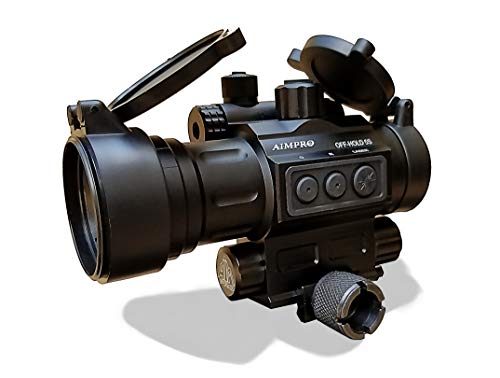
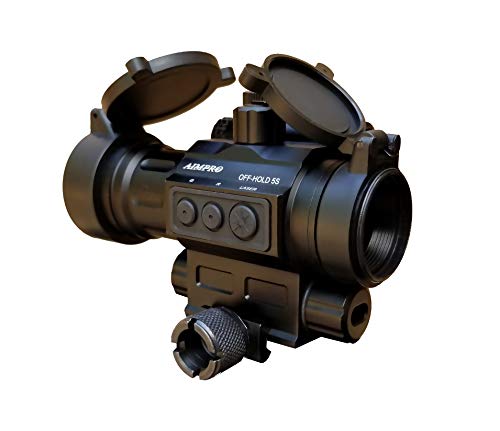
AIMPRO Tactical Red Dot Reflex Sight with Red Laser Combo
Rifle Scope Product Features
Crisp 4 MOA Red or Green Dot with 1/2 MOA per Click W/E Adjustments and Precise digital controls with 8 Brightness Levels, Perfect for Close Quarters Situations, Home Defense or any Scenario Where Magnification is not Needed.
Powerful Red Targeting Laser with Precise Tool-Free W/E Adjustments of 1 MOA Per Click. Class IIIA Laser Product, 5mW power output
Sealed and Nitrogen Filled, Waterproof, Fog Proof and Shockproof, Rated for 800G of Impact so its Ideal for Heavy Recoil Shotgun or Rifle Applications, Wont loose Zero
Designed for Both Eye’s Open Shooting Giving the Shooter a Unlimited Field of View and fast Target Acquisition
Control the Laser and Red Dot Independently with Digital Push Button Controls, The Red Dot and Laser are Powered by 1 CR2 Battery With ACET Technology for Long Battery Life
Aimpro ALFA Red Dot Scope with Red Laser
Features
Red and Green Dot
Digital Push Button Controls
Flip up Lens Covers
Rock Solid Construction
Built in Red Laser
Single Battery Power Supply
Fast Target Acquisition
Multi-coated Lens
Integrated Picatinny Mount
Rugged and Durable
SPECIFICATIONS:
Length – 128mm
Width – 62mm
height – 85mm (40mm to Center of Optic)
weight – 11.3 oz
finish – Anodized
Temp Range – -30F to +140F
Waterproof – IP65
Aimpro Precision Optics
Trusted, Proven, Reliable
The Aimpro ALFA Sight is the Newest Addition to our line of Red Dot Rifle Scopes, using the latest Advanced Circuit Efficiency technology ACET which provides superior reliability and battery life. Designed for the avid sportsmen all Aimpro products are built to the highest degree of precision unmatched by our competitors. The Aimpro Alfa is a testament for all our hard work and research offering the latest in ergonomics, function and reliability.
Crisp 4 MOA Red or Green Dot with 1/2 MOA per Click W/E Adjustments and Precise digital controls with 8 Brightness Levels.
Powerful Built in Red Targeting Laser with Precise Tool-Free W/E Adjustments of 1 MOA Per Click. Class IIIa Laser, 5mW power output.
Sealed and Nitrogen Filled, Waterproof, Fog Proof and Shockproof, Rated for 800G of Impact so its Ideal for Heavy Recoil Shotgun or Rifle Applications, Wont loose Zero
Designed for Both Eye’s Open Shooting Giving the Shooter a Unlimited Field of View and fast Target Acquisition
Modes of Operation: Red Dot only, Red Dot with Laser, Green Dot only, Green Dot with Laser, 8 Brightness Levels for Red and Green Dot.
Control the Laser and Red Dot Independently with Digital Push Button Controls, The Red Dot and Laser are Powered by 1 CR2 Battery With ACET Technology for Long Battery Life
About the AIMPRO Manufacturer
AIMPRO is a premium maker for long gun scopes, optics, mounts, and other components used for guns like rifles and long guns. They style and make their products using elements which are long lasting and resilient. This includes the AIMPRO Tactical Red Dot Reflex Sight with Red Laser Combo by AIMPRO. For additional shooting items, visit their website.
Rifle Glass Info
Rifle scopes allow you to precisely align a rifle at different targets by aligning your eye with the target at range. They do this through zoom by employing a set of lenses inside the scope. The scope’s positioning can be dialed in for the consideration of numerous environmental factors like wind and elevation to make up for bullet drop.
The scope’s purpose is to understand exactly where the bullet will hit based upon the sight picture you are viewing via the scope as you line up the scope’s crosshair or reticle with the intended target. Many contemporary rifle scopes have about eleven parts which are found inside and on the exterior of the scope. These parts include the rifle scope’s body, lenses, elevation dials, focus rings, and other parts. See all eleven parts of optics.
Rifle Optic Varieties
Rifle scopes can be either “first focal plane” or “second focal plane” type of optics. Going for the finest type of rifle optic is based around what type of shooting you plan to do.
First Focal Plane Optics
First focal plane glass (FFP) come with the reticle before the magnification lens. This induces the reticle to increase in size based on the amount of magnification being used. The outcome is that the reticle measurements are the same at the magnified distance as they are at the non magnified range. As an example, one tick on a mil-dot reticle at 100 yards without “zoom” is still the same tick at one hundred yards using 5x “zoom”. These types of scopes are beneficial for:
- Quick acquisition, far away types of shooting
- Shooting circumstances where calculations are marginal
- Experienced shooters who know their aim point “hold over” plus “lead” equations for their firearms
- Shooters who do not mind the reticle is enlarged and uses up more visual eyesight room than a SFP reticle
About Second Focal Plane Scopes
Second focal plane optics (SFP) feature the reticle to the rear of the magnifying lens. This triggers the reticle to stay at the exact same size in relation to the quantity of zoom being used. The outcome is that the reticle dimensions change based on the zoom chosen to shoot over greater distances since the reticle measurements present various increments which vary with the zoom. In the FFP illustration with the SFP glass, the 5x “zoom” one hundred yard tick reticle measurement would be 1/5th of the non “zoom” tick. These particular sorts of glass work for:
- Far away types of shooting where shooters have extra time to make ballistic estimations
- Shooting where most shots occur within shorter spaces and ranges
- Shooters who would like a clearer optic sight picture without room taken up by the bigger FFP reticle
About Rifle Optic Zoom
The amount of scope zoom you need on your glass is based on the kind of shooting you would like to do. Almost every type of rifle scope gives some amount of magnification. The amount of magnification a scope offers is established by the dimension, thickness, and curves of the lens glass within the rifle optic. The magnification level of the scope is the “power” of the opic. This implies what the shooter is looking at through the scope is amplified times the power element of what can normally be seen by human eyes.
Fixed Power Lens Rifle Optics
A single power rifle scope and optic will have a zoom number designator like 4×32. This means the zoom power of the scope is 4x power and the objective lens is 32mm. The magnification of this kind of optic can not change given that it is a fixed power scope.
Adjustable Power Lens Optics
Variable power rifle scopes use enhanced power. The power change is achieved using the power ring part of the scope near the back of the scope by the eye bell.
The Power Level and Range of Rifle Scopes
Here are some suggested scope power levels and the distances where they can be successfully used. Highly magnified glass will not be as beneficial as lower magnification level optics since too much magnification can be a bad thing. The same concept relates to extended distances where the shooter needs to have enough power to see exactly where to properly aim the rifle at the target.
Rifle Glass Lens Finish
All contemporary rifle scope lenses are layered. There are various types and qualities of finishings. Lens finishing is a crucial element of a rifle when contemplating luxury rifle optics and targeting units. The glass lenses are among the most vital parts of the glass as they are what your eye sees through while sighting a rifle in on the target. The finishing on the lenses safeguards the lens exterior and also helps with anti glare capabilities from excess sunlight and color perception.
HD Versus ED Lenses
Some scope producers likewise use “HD” or high-definition lens finishings which use different procedures, chemicals, polarizations, and components to draw out different colors and viewable definition through the lens. Some scope manufacturers use “HD” to refer to “ED” meaning extra-low dispersion glass.
Rifle Glass Lens Single Finish Versus Multi-Coating
Different optic lenses can also have various finishings used to them. All lenses normally have at least some type of treatment or covering used to them prior to being used in a rifle scope or optic.
This lens treatment can protect the lens from scratches while lowering glare and other less helpful things experienced in the shooting environment while sighting in with the scope. The quality of a single layered lens depends on the scope maker and how much you paid for it.
Some scope manufacturers also make it a point to specify if their optic lenses are layered or “multi” covered. Being “better” depends on the manufacturer’s lens treatment technology and the quality of materials used in building the rifle scope.
Anti-water Rifle Glass Lens Covering
Water on a scope lens doesn’t help with maintaining a clear sight picture through an optic in any way. Lots of top of the line or high-end optic makers will coat their lenses with a hydrophobic or hydrophilic finish. The Steiner Optics Nano-Protection is a good example of this sort of treatment. It provides protection for the exterior of the Steiner optic lens so the water particles can not bind to it or develop surface tension. The result is that the water beads slide off of the scope to maintain a clear, water free sight picture.
Glass Installation Options
Installing approaches for scopes are available in a couple of choices. There are the standard scope rings which are separately installed to the scope and one-piece mounts which cradle the scope. These various types of mounts also generally are made in quick release variations which use manual levers which allow rifle shooters to quickly mount and remove the scope.
Hex Key Scope Ring Mounting Solutions
Basic, clamp style mounting optic rings use hex head screws to mount to the flattop style Picatinny scope mount rails on rifles. These varieties of scope mounts use double separate rings to support the optic, and are usually constructed from 7075 T6 billet aluminum which are manufactured for far away accuracy shooting. This form of scope mount is great for rifle systems which are in need of a resilient, hard use mount which will not change regardless of just how much the scope is moved or jarring the rifle takes. These are the design of mounts you should have for a dedicated optics setup on a long distance hunting or competitors firearm that will hardly ever need to be altered or recalibrated. Blue 242 Loctite threadlocker can also be used on the scope mount screws to protect against the hex screws from wiggling out after they are mounted firmly in place. An example of these rings are the 30mm style made by Vortex Optics. The set generally costs around $200 USD
Quick-Release Cantilever Glass Ring Mounting Solutions
These types of quick-release rifle scope mounts can be used to rapidly detach a scope and connect it to a different rifle. Multiple scopes can even be swapped out if they all use a similar style mount. These types of mounts are handy for long guns which are transferred a lot, to remove the optic from the rifle for protection, or for scopes which are used in between several rifles.
Rifle Scope Tube Sealing and Gas Purging
Wetness inside your rifle glass can ruin a day of shooting and your costly optic by triggering fogging and creating residue within the scope’s tube. The majority of optics prevent wetness from going into the scope tube with a system of sealing O-rings which are waterproof. Usually, these water resistant scopes can be immersed within 20 or 30 feet of water before the water pressure can push moisture past the O-rings. This should be ample wetness prevention for basic use rifles, unless you plan on taking your rifle aboard a watercraft and are worried about the optic still performing if it falls overboard and you can still salvage the rifle.
Info on Glass Tube Gas Purging
Another component of avoiding the accumulation of moisture within the rifle optic’s tube is filling the tube with a gas like nitrogen. Given that this space is currently occupied by the gas, the optic is less impacted by temperature level shifts and pressure variations from the outside environment which might possibly allow water vapor to seep in around the seals to fill the vacuum which would otherwise exist. These are good qualities of a decent rifle scope to look for.


