
Description
Rifle Scope Product Details
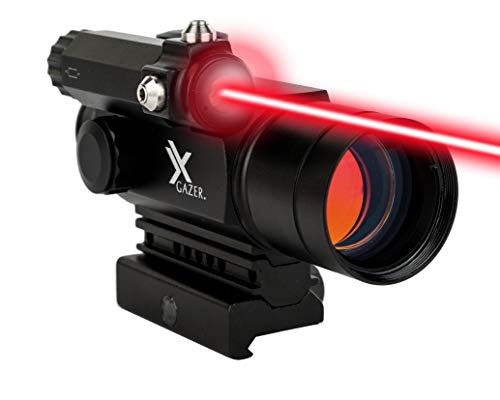
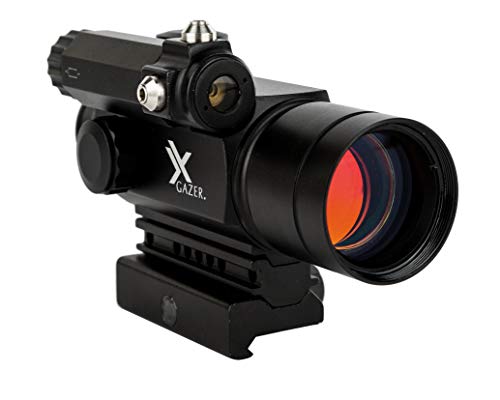
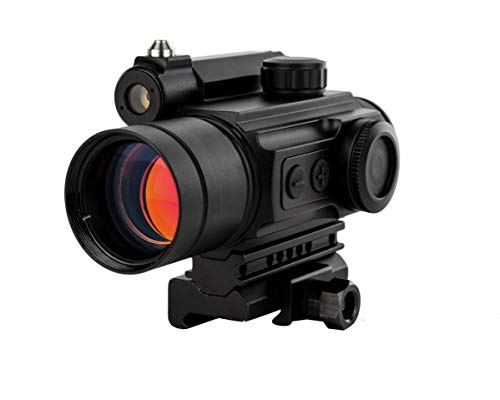
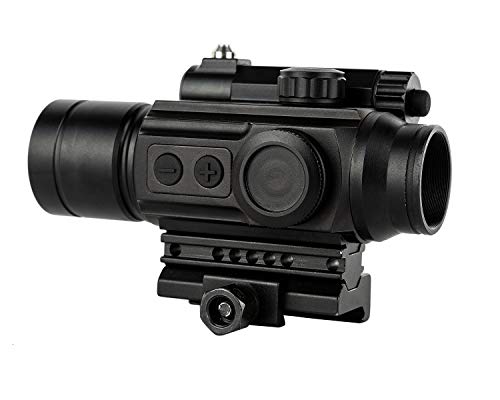
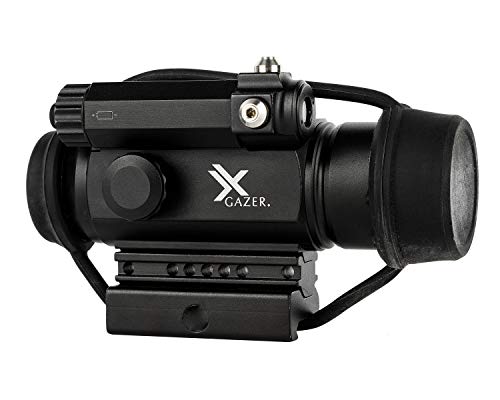
Xgazer Optics Point View Red Dot Sight with Laser ” 2 MOA Dot Laser Sight ” Fully Multy-Coated Lens ” Shockproof, Fog Proof, and Waterproof
XGazer Optics Point View Red Dot Sight with Laser ” Providing you with the precision and accuracy you need to always make your target
When you’re looking for perfect accuracy and pin-point precision at close ranges and for general shooting, no other red dot scope comes close to the XGazer. Weighing only 350g, it’s extremely lightweight, ultracompact, fast-on-target, and insanely durable.
Bright 2 MOA Dot and Laser
Featuring an amazingly bright 2-MOA dot, it’s incredibly easy to scope out your target and rapidly engage them from a distance. Its precision offers a click value MOA at 50 yards as well as an adjustment range MOA at 50 yards 60. Our red dot sight is also combined with a bright red laser that helps increase precision at short range. With 8 levels intense levels of brightness, shooters can cater the intensity to the situation at hand.
Precision Built
Our Red Laser Sight combines aesthetics with functionality to provide you with an improved hunting experience. It’s hard oxide finish looks great and its fully multi-coated lens gives you a point of view that is clean and unobscured. We’ve also made our laser sight shock resistant, able to hold recoil from calibers .223/5.56 and .308/7.62. This red dot scope is also nitrogen filled to help make it so the lens won’t fog up, as well as making it waterproof.
XGazer Red Dot Sight Specs:
Finish: Hard oxide
Power x Obj.Lens(mm):1×29
Laser Class: Class 2
laser power is Less then 5mW
Brightness setting: Red:8
Lens Coating: Fully Multi Coated
Click value moa@50yds: 1MOA
Adj. range moa@50yds:60
Parallax:3′
Net Weight: 350g
Shock Resistant: Hold recoil from caliber .223/5.56 and .308/7.62
Waterproof: Yes
Fogproof: Nitrogen fill
Accessories: Dust cotton, Allen key, protected cap, CR2032, CR2 battery
Rifle Scope Product Features
About this item
2 MOA DOT WITH LASER” Our advanced 2 moa and parallax free red dot sight offers precise engagement of targets with a click value MOA at 50yds and adjustment range MOA at 50yds60. It also includes a daylight bright red laser with 8 levels of brightness.
SHOCK RESISTANT AND WATERPROOF ” Made with a shockproof hard oxide body for extreme durability. Our laser sight is also nitrogen filled which provides proofing against fog as well as making the red dot sight waterproof.
FULLY MULTI COATED LENS ” Our red dot scope features a fully multi-coated lens that provides you with a clean, bright, and unobscured point of view. This gives you unlimited eye relief and allows for rapid acquisition of your target.
DESIGNED FOR FUNCTIONALITY ” We’ve made the XGazer optics point view red dot sight with both aesthetics and functionality in mind. Run by a powerful CR2 battery, it provides you with long lasting precision and accuracy.
SATISFACTION GUARANTEED ” We’re so confident in our product that if for any reason you’re not 100% satisfied with your red laser scope, then simply contact our friendly customer service experts for a new replacement or full refund. No questions asked.
About the Xgazer Optics Manufacturer
Xgazer Optics is a premium manufacturer for firearm scopes, optics, mounts, and other components used for guns like rifles and long guns. They design and supply their scopes, mounts, and related products working with materials which are long lasting and resilient. This includes the Xgazer Optics Point View Red Dot Sight with Laser ” 2 MOA Dot Laser Sight ” Fully Multy-Coated Lens ” Shockproof, Fog Proof, and Waterproof by Xgazer Optics. For more shooting products, visit their website.
What You Need to Know About Scopes
Rifle scopes enable you to specifically aim a rifle at various targets by lining up your eye with the target over a distance. They accomplish this through magnification by employing a set of lenses inside the scope. The scope’s positioning can be adapted for consideration of different natural considerations like wind and elevation to make up for bullet drop.
The scope’s function is to help shooters understand precisely where the bullet will land based upon the sight picture you are seeing via the optic as you align the scope’s crosshair or reticle with the target. Many modern rifle optics have about 11 parts which are found inside and on the exterior of the optic. These parts consist of the rifle scope’s body, lenses, elevation turrets or dials, objective focus rings, and other parts. See all eleven parts of optics.
About Glass Types
Rifle scopes can be either “first focal plane” or “second focal plane” type of scopes. The style of focal plane an optic has identifies where the reticle or crosshair lies relative to the scopes zoom. It actually implies the reticle is behind or in front of the magnification lens of the optic. Selecting the most effective kind of rifle glass depends upon what style of shooting you intend on undertaking.
First Focal Plane Optic Facts
First focal plane scopes (FFP) include the reticle before the magnification lens. This triggers the reticle to increase in size based on the extent of magnification being used. The benefit is that the reticle measurements are the same at the enhanced distance as they are at the non magnified distance. One tick on a mil-dot reticle at one hundred yards without “zoom” is still the identical tick at 100 yards with 5x “zoom”. These types of scopes work for:
- Quick acquisition, long distance kinds of shooting
- Shooting scenarios where computations are very little
- Experienced shooters who understand their aim point “hold over” plus “lead” equations for their firearm
- Shooters who don’t mind the reticle is enlarged and uses up more visual sight room than a SFP reticle
Second Focal Plane Scope Info
Second focal plane scopes (SFP) include the reticle behind the magnifying lens. This causes the reticle to stay at the very same dimensions in connection with the volume of magnification being used. The final result is that the reticle dimensions shift based upon the zoom employed to shoot over greater distances given that the markings present various increments which change with the magnification. In the FFP example with the SFP optic, the 5x “zoom” 100 yard tick would be 1/5th of the non “zoom” tick. These particular varieties of optics work for:
- Far away forms of shooting where shooters have additional time to make ballistic computations
- Shooting where most shots occur within shorter distances and ranges
- Shooters who desire a clearer optic picture without space taken up by the larger sized FFP reticle
Scope Zoom
The amount of zoom a scope supplies is determined by the diameter, density, and curvatures of the lenses inside of the rifle scope. The magnification of the scope is the “power” of the scope.
Fixed Power Lens Glass Info
A single power rifle scope comes with a magnification number designator like 4×32. This suggests the magnification power of the scope is 4x power and the objective lens is 32mm. The zoom of this type of scope can not fluctuate considering that it is fixed.
Variable Power Lens Optic Details
Variable power rifle scopes use variable power levels. The power modification is handled using the power ring part of the scope near the back of the scope by the eye bell.
Power and Range Correlations
Here are some recommended scope power levels and the distances where they could be effectively used. High power scopes will not be as effective as lower magnification glass given that too much magnification can be a negative aspect depending on your shooting distance. The same concept goes for longer ranges where the shooter needs to have increased power to see precisely where to properly aim the rifle at the target.
Details on Glass Lens Coatings
All modern-day rifle scope and optic lenses are coated. Lens finish is an important aspect of a shooting platform when looking at high end rifle optics and scope equipment.
Info on Lens Coatings – HD Versus ED
Some scope makers likewise use “HD” or high-definition lens finishes which use different techniques, chemicals, aspects, and polarizations to draw out different colors and viewable quality through the lens. Some scope manufacturers use “HD” to refer to “ED” meaning extra-low dispersion glass.
Single Finishing Versus Multi-Coating for Rifle Scopes
Various scope lenses can also have different coverings applied to them. All lenses usually have at least some kind of treatment or finishing applied to them before being used in a rifle scope or optic. This is due to the fact that the lens isn’t just a raw piece of glass. It is part of the carefully tuned optic. It needs to have a covering applied to it so that it will be efficiently functional in lots of types of environments, degrees of light (full VS shade), and other shooting conditions.
Single layered lenses have a treatment applied to them which is usually a protective and boosting multi-purpose treatment. This lens treatment can shield the lens from scratches while reducing glare and other less beneficial things experienced in the shooting environment while sighting in with the scope. The quality of a single layered lens depends upon the scope producer and how much you spent for it. Both are signs of the lens quality.
Some scope producers similarly make it a point to specify if their optic lenses are layered or “multi” coated. Being “much better” depends on the maker’s lens treatment technology and the quality of materials used in constructing the rifle scope.
Hydrophobic Rifle Optic Lens Covering
Water on a lens does not improve keeping a clear sight picture through a scope in any way. Lots of top of the line or high-end scope manufacturers will coat their lenses with a hydrophilic or hydrophobic finishing. The Steiner Optics Nano-Protection is a fine example of this sort of treatment. It treats the surface area of the Steiner optic lens so the water molecules can not bind to it or develop surface tension. The outcome is that the water beads sheet off of the scope to maintain a clear, water free sight picture.
Rifle Glass Installing Options
Installing options for scopes can be found in a few choices. There are the basic scope rings which are separately installed to the optic and one-piece mounts which cradle the scope. These various types of mounts also generally can be found in quick release versions which use manual levers which allow rifle shooters to rapidly mount and dismount the optics.
Hex Key Rifle Glass Rings
Normal, clamp design mounting scope rings use hex head screws to mount to the flattop style Picatinny scope mount rails on rifles. These types of scope mounts use a couple of separate rings to support the optic, and are often made from 7075 T6 billet aluminum which is developed for long range accuracy shooting. This type of scope install is perfect for rifles which require a long lasting, rock solid mounting solution which will not move no matter how much the scope is moved or abuse the rifle takes.
Quick-Release Cantilever Rifle Optic Ring Mounts
These types of quick-release rifle scope mounts can be used to rapidly attach and take off a scope from a rifle before reattaching it to a different rifle. Several scopes can also be switched out if they all use a compatible style mount. These types of mounts are convenient for long guns which are carried a lot, to swap out the optic from the rifle for protecting the scope, or for optics which are used in between numerous rifles or are situationally focused.
About Rifle Scope Tube Sealing and Gas Purging
Wetness inside your rifle optic can spoil a day on the range and your costly optic by triggering fogging and generating residue inside of the scope tube. Most scopes prevent wetness from going into the scope tube with a system of sealing O-rings which are waterproof. Generally, these water-resistant scopes can be immersed under 20 or 30 feet of water before the water pressure can push moisture past the O-rings. This should be ample wetness prevention for basic use rifles, unless you plan on taking your rifle on boats and are worried about the optic still performing if it goes overboard and you can still retrieve the firearm.
What to Know About Optic Tube Gas Purging
Another part of preventing the buildup of moisture within the rifle scope tube is filling the tube with a gas like nitrogen. Considering that this space is already occupied by the gas, the optic is less impacted by condition alterations and pressure variations from the external environment which might potentially enable water vapor to seep in around the seals to fill the void which would otherwise exist. These are good qualities of a good rifle scope to seek out.


