Description
Rifle Scope Product Details
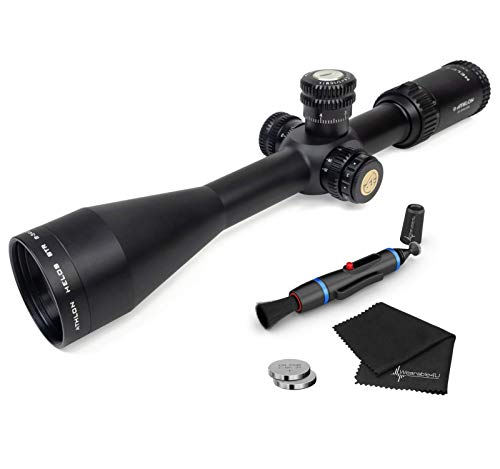
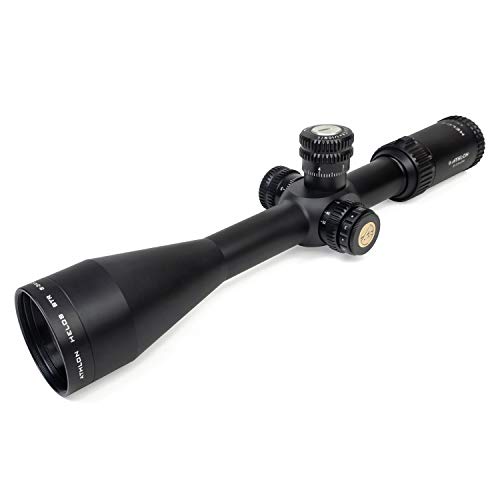
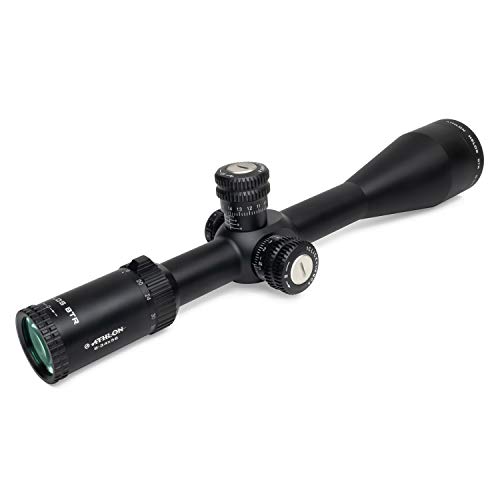
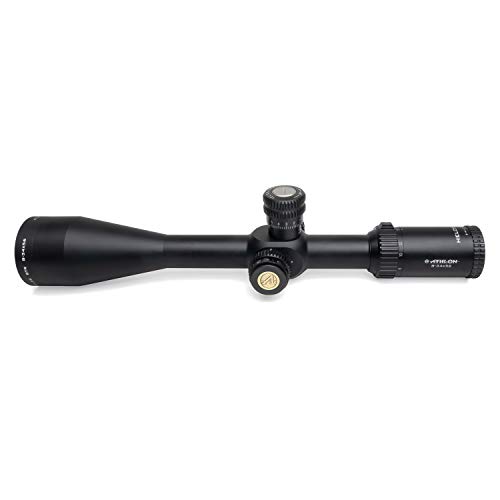
Athlon Optics Helos BTR 8-34×56, Direct Dial, Side Focus, 30mm, First Focal Plane Riflescope with Included Extra Battery CR2032 and Wearable4U Lens Cleaning Pen and Lens Cleaning Cloth Bundle
Rifle Scope Product Features
IN THE BOX: 1 x Athlon Optics Helos BTR 8-34×56, Direct Dial, Side Focus, 30mm, FFP, APLR2 IR MOA Reticle Riflescope; 1 x Allen Wrench; 1 x Extra Battery CR2032; 1 x Wearable4U Lens Cleaning Pen; 1 x Lens Cleaning Cloth
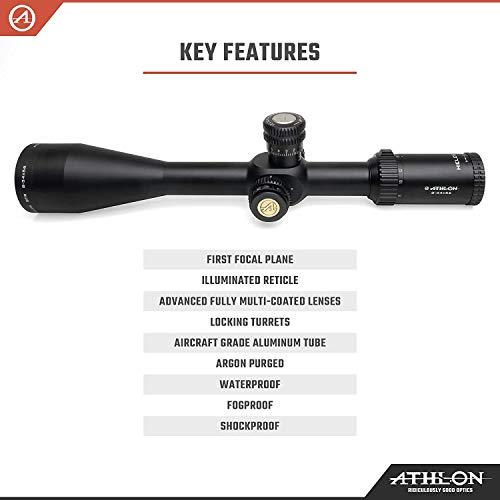
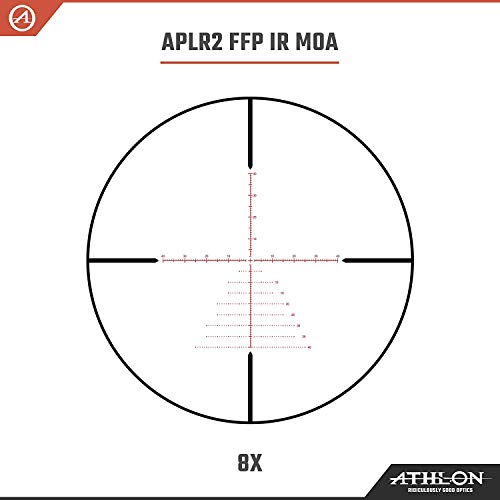
First focal plane reticle stays valid at all power settings allowing you to fully utilize the specially designed reticle that shrinks or grows along with your target as you zoom in or out
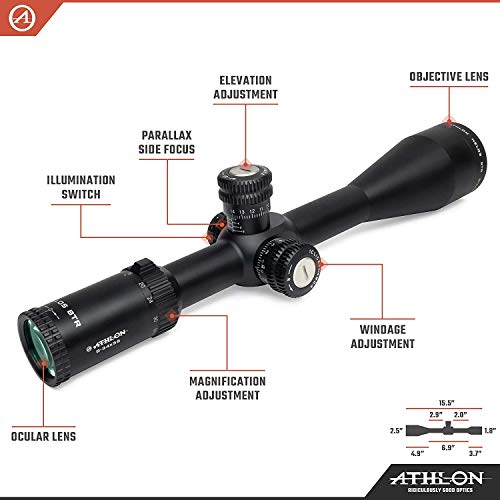
Locking feature on both elevation and wind age turrets allows you to simply pull up the turrets to Dial and push down the turrets to lock them in place. Fully multicoated optics effectively reduces reflected light and increases the transmission of light giving you a Brighter image than Normal single coated lenses
Argon purging uses the inertia gas with bigger size molecules to purge any moisture out of the tube giving you better waterproofing and thermal stability. The illuminated reticle provides greater visibility during dusk and dawn and other low ambient light environment.
Wearable4U Lens Cleaning Pen and Lens Cleaning Cloth – perfect set for removing fingerprints, dust, and other debris that may compromise your image.
Athlon Optics Helos BTR 8-34×56 APLR2 FFP IR MOA
When you hear first focal plane rifle scope, the best rifle scopes on the market come to mind. With crisp locking turrets, advanced fully multi-coated optics, and built from a one piece tube made of aircraft-grade 6061-T6 aluminum. That is not the case. This is exactly why we introduced the Helos BTR family. Feature rich but won’t break the bank.
Waterproof. Fog proof. Shockproof.
Features
First Focal Plane Reticle
Locking Turrets
Illuminated Reticle
Etched Glass Reticle
Advanced Fully Multicoated
6061 T6 Aluminum
Heat Treated One Piece Tube Construction
Argon Purged
Athlon Optics Helos BTR 8-34×56 APLR2 FFP IR MOA Specifications
Magnification 8-34
Objective Lens Diameter 56 mm
Reticle APLR2 FFP IR MOA, Glass Etched
Surface Finish Matte
Lens Coating Wide Band Fully Multicoated
Extra Coating Xtra Protective Coating
Tube Material 6061 Aluminium
Tube Diameter 30 mm
Exit Pupil 7-1.7 mm
Eye Relief 3.3 inches
Field of View @100 yards 12.5-3 feet
Click Value 0.25 MOA
Adjustment range per rotation 15MOA
Purging Material Argon
Length 15.5 inches
Weight 32.5 ounces
In the Box Athlon Optics Helos BTR 8-34×56 APLR2 FFP IR MOA Riflescope and Wearable4U Bundle:
Lens Cleaning Cloth
Lens Cleaning Pen
Extra Battery CR2032
About the Wearable4U Manufacturer
Wearable4U is a premium producer for firearm scopes, optics, mounting solutions, and other accessories used for guns like rifles and long guns. They innovate and make their mounts and related products using building materials which are resilient and long lasting. This includes the Athlon Optics Helos BTR 8-34×56, Direct Dial, Side Focus, 30mm, First Focal Plane Riflescope with Included Extra Battery CR2032 and Wearable4U Lens Cleaning Pen and Lens Cleaning Cloth Bundle by Wearable4U. For additional shooting goods, visit their website.
Rifle Glass Information
Rifle scopes enable you to exactly align a rifle at different targets by aligning your eye with the target over a range. They accomplish this through magnifying the target using a set of lenses inside the scope. The scope’s alignment can be dialed in to account for many natural aspects like wind and elevation decreases to make up for bullet drop.
The scope’s function is to help shooters understand precisely where the bullet will land based upon the sight picture you are seeing with the optic as you align the scope’s crosshair or reticle with the intended point of impact. Many contemporary rifle scopes and optics have about eleven parts which are located within and externally on the optic. These scope parts include the rifle scope’s body, lenses, adjustment dials, objective focus rings, and other components. Learn about the eleven parts of rifle optics.
About Glass Varieties
Rifle scopes can be either “first focal plane” or “second focal plane” type of scopes. Picking the perfect type of rifle scope is based on what type of shooting you plan on doing.
First Focal Plane Glass Details
Focal plane scopes (FFP) include the reticle in front of the magnification lens. These styles of scopes are helpful for:
- Quick acquisition, far away types of shooting
- Shooting scenarios where calculations are low
- Experienced shooters who recognize their aim point “hold over” plus “lead” equations for their weapon
- Shooters who don’t mind the reticle is enlarged and requires more visual sight space than a SFP reticle
About Second Focal Plane Glass
Second focal plane scopes (SFP) come with the reticle to the rear of the magnification lens. In the FFP example with the SFP scope, the 5x “zoom” 100 yard tick measurement would be 1/5th of the non “zoom” tick reticle measurement.
- Far away forms of shooting where shooters have additional time to make ballistic calculations
- Shooting where most of the shots happen within much shorter ranges and spaces
- Shooters who want a clearer optic picture without room used up by the enlarged FFP reticle
Rifle Glass Magnification
The amount of magnification a scope supplies is identified by the diameter, density, and curvatures of the lenses inside of the rifle scope. The magnification of the scope is the “power” of the scope.
About Single Power Lens Optics
A single power rifle scope will have a zoom number designator like 4×32. This means the zoom power of the scope is 4x power while the objective lens is 32mm. The magnification of this type of scope can not fluctuate because it is a set power scope.
Info About Adjustable Power Lens Scopes
Variable power rifle scopes can be tweaked between magnified settings. The power change is performed by using the power ring part of the scope near the back of the scope by the eye bell.
The Power Level and Range of Rifle Scopes
Here are some suggested scope power levels and the ranges where they may be effectively used. Keep in mind that high magnification optics and scopes will not be as practical as lower magnification level optics because too much zoom can be a detractor. The same idea goes for extended distances where the shooter needs to have increased power to see where to properly aim the rifle at the target.
Lens Covering for Optics
All contemporary rifle optic and scope lenses are coated. Lens covering is a significant aspect of a shooting platform when looking at high end rifle optics and scope systems.
HD Versus ED Lenses
Some scope producers likewise use “HD” or high-definition lens finishes which use different techniques, polarizations, chemicals, and aspects to draw out a wide range of colors and viewable quality through the lens. Some scope makers use “HD” to refer to “ED” indicating extra-low dispersion glass.
Single Finish Versus Multi-Coating
Different optic lenses can also have various coatings applied to them. All lenses generally have at least some type of treatment or finishing applied to them before they are used in a rifle scope or optic.
Single covered lenses have a treatment applied to them which is generally a protective and enhancing multi-purpose treatment. This lens treatment can protect the lens from scratches while lowering glare and other less useful things experienced in the shooting environment while sighting in with the optic. The quality of a single covered lens depends on the scope manufacturer and how much you paid for it. Both are indicators of the lens quality.
Some scope makers similarly make it a point to specify if their optic lenses are layered or “multi” coated. Being “much better” depends on the maker’s lens treatment innovation and the quality of materials used in developing the rifle scope.
Anti-water Lens Coverings
Water on a lens does not assist with maintaining a clear sight picture through a scope at all. Numerous top of the line and military grade scope makers will coat their lenses with a hydrophilic or hydrophobic finishing.
Optic Mounting Choices
Installing solutions for scopes are available in a couple of choices. There are the basic scope rings which are separately installed to the scope and one-piece mounts which cradle the scope. These different types of mounts also usually come in quick release variations which use manual levers which allow rifle operators to quickly install and dismount the scopes.
Hex Key Rifle Glass Rings
Basic, clamp-on style mounting scope rings use hex head screws to fix to the flattop style Picatinny scope mount rails on the tops of rifles. These kinds of scope mounts use a pair of detached rings to support the scope, and are made from 7075 T6 billet aluminum or similar materials which are made for long distance precision shooting. This kind of scope mount is excellent for rifles which require a resilient, hard use mount which will not shift regardless of how much the scope is moved about or jarring the rifle takes. These are the style of mounts you really want to have for a faithful scope system on a far away hunting or sniper competition firearm that will hardly ever need to be changed or recalibrated. Blue 242 Loctite threadlocker can also be used on screws to stop the hex screws from wiggling out after they are installed firmly in position. An example of these mounting rings are the 30mm type from the Vortex Optics company. The set typically costs around $200 USD
Quick-Release Cantilever Scope Rings
These types of quick-release rifle scope mounts can be used to quickly remove a scope and connect it to a different rifle. Several scopes can even be swapped out if they all use a similar style mount. These types of mounts are convenient for rifles which are transported a lot, to swap out the optic from the rifle for protection, or for optics which are used between numerous rifles or are situationally focused.
What to Know About Rifle Glass Tube Sealing and Gas Purging
Moisture inside your rifle optic can ruin a day of shooting and your costly optic by causing fogging and developing residue inside of the scope tube. The majority of scopes avoid wetness from getting in the scope tube with a system of sealing O-rings which are waterproof.
Details on Glass Tube Gas Purging
Another element of preventing the buildup of wetness inside of the rifle scope tube is filling the tube with a gas like nitrogen. Since this space is already taken up by the gas, the glass is less altered by temperature level changes and pressure differences from the outside environment which might possibly permit water vapor to leak in around the seals to fill the void which would otherwise exist. These are good qualities of a good rifle scope to look for.


