


Description
Rifle Scope Product Details
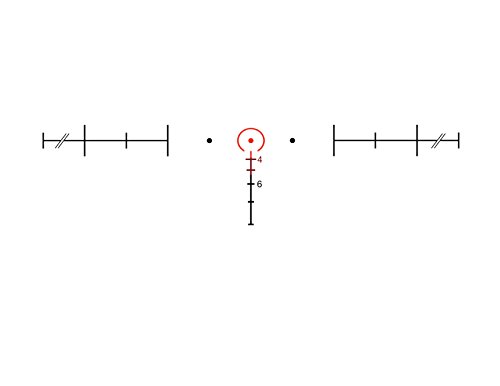
Trijicon ACOG 4 X 32 Scope Dual Illuminated Horseshoe Dot .223 Ballistic Reticle, Red
ACOG 4×32 – Red Horseshoe Dot .223 Ballistic w/TA51Manufacture ID: TA31HACOG 4×32 Scope with Red Horseshoe BAC Reticle-includes Flattop Adapter. Features dual illumination (Fiber optics provides daylight illumination and tritium illuminates reticle at night). The ranging reticle is calibrated for 5.56 (.223 cal.) flattop rifles out to 800 meters.The TA31H also includes: – 1 Flattop Mount- 1 4×32 Scopecoat- 1 Lens Pen- 1 Lanyard Assembly for Adjuster Caps- 1 Trijicon Logo Sticker- 1 ACOG Manual- 1 Warranty Card Specifications: – Magnification: 4x – Objective Size: 32mm – Bullet Drop Compensator: Yes – Length: 5.80″ – Weight: 9.9 oz. without mount – Illumination Source: Fiber Optics & Tritium – Reticle Pattern: Horseshoe with Target Reference System – Day Reticle Color: Red – Night Reticle Color: Red – Calibration: 0.223 – Bindon Aiming Concept: Yes – Eye Relief: 1.50″ – Exit Pupil: 8.00mm – Field of View (degrees): 7.00 – Field of View at 100 yards: 36.80′ – Adjustment at 100 yards (clicks/in): 3 – Tube Size: N/A – Mount: TA51 – Mount On/Comes With: Flattop – Housing Material: Forged Aluminum
Rifle Scope Product Features
About this item
BATTERY-FREE ILLUMINATION: Features a tritium/fiber optic illuminated reticle that automatically adjusts the brightness based on available light
RUGGED ALUMINUM-ALLOY HOUSING: Forged 7075-T6 aircraft-aluminum-alloy housing provides for a nearly indestructible sighting system
“BOTH EYES OPEN” DESIGN: The ACOG can be used as a CQB sight when shooting “both eyes open,” utilizing the Bindon Aiming Concept
COMBAT PROVEN: No other magnifed optic has been used more in combat than the ACOG.Field of View @ 100 yards (ft) – 36.8
BULLET DROP COMPENSATING & RANGING RETICLES: The red Horseshoe reticle ranges out to 800 meters for 5.56 (.223 cal)
Trijicon ACOG 4×32 BAC
Advanced Combat Optical Gunsight.
ACOG 4×32 BAC
Magnification 4x
Objective Lens 32mm
Eye Relief 1.5 in
Field of View (Degrees) 7.0
Field of View 36.6 ft. @ 100 yards
Adjustments (Per Inch @ 100 Yards) 2 Clicks
Dimension (L x W x H) Without Mount 5.9 x 2.0 x 2.5 in.
Weight Without Mount 10.5 oz. (297.5g)
Illumination Source Fiber Optics & Tritium
Reticle Calibration .223 / .308 / M193 / 300 BLK / 6.8 SPC
The Scope That Changed Everything
The Trijicon ACOG (Advanced Combat Optical Gunsight) 4×32 BAC is a fixed power, compact riflescope with a dual-illuminated reticle (tritium and fiber optics) for domination in bright to low/no light. It comes with legendary durability and reliability and offers reticle patterns for numerous calibers. BAC stands for Bindon Aiming Concept, which means the ACOG’s illuminated reticle allows aiming with ‘both eyes open’ for superior situational awareness.
There’s a reason one million ACOG 4×32 scopes have been trusted by the United States Marine Corps, United States Army, United States Navy, United States Air Force, United States Special Operations Forces, allies around the world and hundreds of thousands of civilian enthusiasts.
Brilliant Aiming Solutions
Trijicon has led the industry in the development of superior any-light aiming systems since the company’s founding in 1981. World-renowned for its innovative applications of tritium and advanced fiber-optics, Trijicon manufactures the most advanced riflescopes and sights for tactical and sporting applications.
Backed by a Limited-Lifetime Warranty, Trijicon’s aiming systems are proven on the range and in the field. As a result, Trijicon has earned the trust of those who are most in need of aiming accuracy and dependability. The company is proud to count as our customers the United States Marine Corps, United States Army, United States Special Operations Forces, United States Government, and state and local Law Enforcement, just to name a few. Trijicon is fast becoming the preferred scope among dedicated hunters for all types of game, as well as shooting enthusiasts worldwide.
Combat Proven
Increased Hit Potential in All Lighting Conditions.
About the Trijicon Brand
Trijicon is a premium maker for rifle scopes, optics, mounts, and other accessories used for firearms like rifles and long guns. They innovate and build their scopes, mounts, and related products by applying materials which are long lasting and resilient. This includes the Trijicon ACOG 4 X 32 Scope Dual Illuminated Horseshoe Dot .223 Ballistic Reticle, Red by Trijicon. For more shooting goods, visit their site.
What You Need to Know About Rifle Scopes
Rifle scopes permit you to precisely aim a rifle at various targets by lining up your eye with the target over a distance. They do this through magnifying the target by making use of a set of lenses within the scope. The scope’s positioning can be adapted for consideration of various natural aspects like wind speed and elevation increases or decreases to account for bullet drop.
The scope’s purpose is to understand precisely where the bullet will hit based on the sight picture you are seeing using the scope as you align the scope’s crosshair or reticle with the target. Many modern rifle scopes have around eleven parts which are located inside and externally on the optic. These scope parts consist of the rifle scope’s body, lenses, modification dials, focus rings, and other elements. Learn about the eleven parts of glass.
The Varieties of Rifle Scopes
Rifle scopes can be either “first focal plane” or “second focal plane” kind of scopes. The style of focal plane a scope has determines where the reticle or crosshair is located in connection with the scopes magnification. It simply means the reticle is behind or in front of the magnification lens of the scope. Selecting the most effective sort of rifle scope is based upon what style of shooting you anticipate doing.
First Focal Plane Optics
Focal plane scopes (FFP) feature the reticle in front of the zoom lens. These styles of scopes are helpful for:
- Quick acquisition, long distance kinds of shooting
- Shooting circumstances where calculations are marginal
- Experienced shooters who recognize their aim point “hold over” and “lead” correlations for their weapon
- Shooters who do not mind the reticle is enlarged and requires more visual sight room than a SFP reticle
Info on Second Focal Plane Glass
Second focal plane scopes (SFP) feature the reticle to the rear of the zoom lens. In the FFP example with the SFP scope, the 5x “zoom” 100 yard tick measurement would be 1/5th of the non “zoom” tick reticle measurement.
- Far away forms of shooting where shooters have additional time to make ballistic calculations
- Shooting where most of the shots occur within much shorter ranges and distances
- Shooters who want a clearer optic picture with less area taken up by the bigger FFP reticle
Details on Rifle Optic Magnification
The measure of scope magnification you need is based on the kind of shooting you desire to do. Almost every type of rifle scope provides some degree of magnification. The quantity of magnification a scope delivers is established by the size, density, and curves of the lens glass within the rifle scope. The magnifying level of the scope is the “power” of the glass. This suggests what the shooter is looking at through the scope is amplified times the power factor of what can normally be seen by human eyes.
About Single Power Lens Rifle Glass
A single power rifle scope will have a magnification number designator like 4×32. This indicates the zoom power of the scope is 4x power while the objective lens is 32mm. The magnification of this kind of optic can not change since it is a fixed power scope.
Variable Power Lens Rifle Optics
Variable power rifle scopes use variable power levels. The power change is performed by making use of the power ring part of the scope near the rear of the scope by the eye bell.
The Power Level and Range of Rifle Scopes
Here are some recommended scope power levels and the distances where they may be effectively used. Highly magnified scopes will not be as useful as lower magnification level glass since too much zoom can be a bad thing. The very same idea relates to longer distances where the shooter needs increased power to see where to properly aim the rifle.
Rifle Glass Lens Coating
All contemporary rifle optic lenses are coated. There are various types and qualities of glass lens finishes. When considering luxury rifle scope devices, Lens covering can be an essential element of defining the capability of the rifle. The glass lenses are one of the most key pieces of the glass as they are what your eye looks through while sighting a rifle in on the point of impact. The covering on the lenses protects the lens exterior and helps with anti glare capabilities from excess daylight and color exposure.
HD Versus ED Lens Coatings
Some scope makers also use “HD” or high-definition lens coverings which use different methods, elements, chemicals, and polarizations to draw out different colors and viewable definition through the lens. Some scope producers use “HD” to refer to “ED” implying extra-low dispersion glass.
Details on Single Finish Versus Multi-Coating
Different optic lenses can also have different finishes applied to them. All lenses normally have at least some type of treatment or covering used to them before being used in a rifle scope or optic.
Single layered lenses have a treatment applied to them which is generally a protective and improving multi-purpose treatment. This lens treatment can preserve the lens from scratches while lowering glare and other less advantageous things experienced in the shooting environment while sighting in with the optic. The quality of a single covered lens depends on the scope designer and the amount you paid for it. Both the make and cost are indicators of the lens quality.
Some scope producers likewise make it a point to define if their optic lenses are layered or “multi” coated. This means the lens has had several treatments applied to the surfaces. If a lens receives multiple treatments, it can show that a manufacturer is taking numerous actions to fight different environmental elements like an anti-glare coating, a scratch resistant anti-abrasion finishing, followed by a hydrophilic coating. This also does not always imply the multi-coated lens is much better than a single coated lens. Being “better” is dependent on the producer’s lens treatment innovation and the quality of materials used in developing the rifle scope.
Hydrophobic Glass Lens Coating
Water on an optical lens does not help with retaining a clear sight picture through a scope at all. Numerous top of the line and high-end optic makers will coat their lenses with a hydrophobic or hydrophilic finishing. The Steiner Optics Nano-Protection is a fine example of this type of treatment. It treats the surface area of the Steiner glass lens so the H2O particles can not bind to it or create surface tension. The outcome is that the water beads roll off of the scope to preserve a clear, water free sight picture.
Choices for Installing Glass on Long Guns
Mounting options for scopes come in a few options. There are the standard scope rings which are individually mounted to the optic and one-piece mounts which cradle the scope. These different types of mounts also usually come in quick release versions which use manual levers which allow rifle operators to quickly install and dismount the glass.
Hex Key Optic Ring Mounting Solutions
Standard, clamp type mounting scope rings use hex head screws to mount to the flattop style Picatinny scope mount rails on rifles. These types of scope mounts use double detached rings to support the optic, and are normally made from 7075 T6 billet aluminum or similar materials which are created for long distance accuracy shooting. This form of scope mount is excellent for rifles which need a durable, unfailing mount which will not change regardless of just how much the scope is moved about or jarring the rifle takes. These are the style of mounts you should have for a faithful optics system on a reach out and touch someone hunting or competitors rifle which will pretty much never need to be modified or adjusted. Blue 242 Loctite threadlocker can additionally be used to stop the hex screws from wiggling out after they are installed securely in place. An example of these rings are the 30mm type from the Vortex Optics company. The set typically costs around $200 USD
Rifle Optic Mounts with Quick-Release Cantilever Rings
These types of quick-release rifle scope mounts can be used to rapidly attach and remove a scope from a rifle before reattaching it to a different rifle. Multiple scopes can even be swapped out if they all use a similar design mount. These types of mounts are convenient for rifle platforms which are carried a lot, to remove the optic from the rifle for protecting the scope, or for optics which are used between several rifles or are situationally focused.
Sealing and Gas Purging for Scope Tubes
Wetness inside your rifle scope can mess up a day on the range and your expensive optic by triggering fogging and producing residue inside of the scope tube. A lot of scopes protect against wetness from going into the scope tube with a system of sealing O-rings which are water resistant. Typically, these optics can be immersed underneath 20 or 30 feet of water before the water pressure can push moisture past the O-rings. This should be more than enough moisture content prevention for basic use rifles, unless you plan on taking your rifle boating and are concerned about the optic still performing if it goes over the side and you can still recover the rifle.
About Optic Tube Gas Purging
Another component of avoiding the buildup of wetness inside of the rifle optic’s tube is filling the tube with a gas like nitrogen. Because this space is already occupied by the gas, the optic is less influenced by condition changes and pressure variations from the outdoor environment which may possibly enable water vapor to leak in around the seals to fill the void which would otherwise be there. These are good qualities of a good rifle scope to look for.


