Description
Rifle Scope Product Details
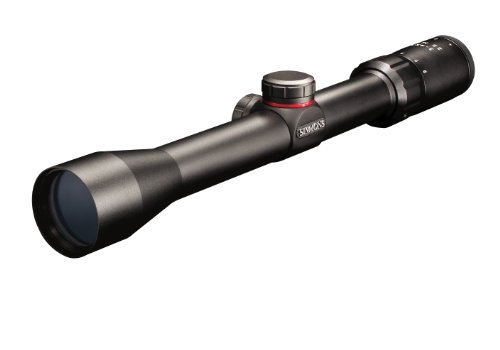
Simmons Truplex .22 Mag Riflescope (4X32, Matte) with Rings
Product Description
Acquire your target faster and easier with this .22, Rim fire riflescope from SIMMONS. It has everything you need to make acquiring your target easier like a qta (quick target acquisition) eyepiece and sure grip adjustments for easy fine-tuning, even with gloves. This riflescope is also waterproof, fog proof and shockproof for a better hunt regardless of the weather conditions. Mounting rings are also included.
Amazon.com
A RIMFIRE RIFLESCOPE THAT DELIVERS BIG-GAME PERFORMANCE.
How do you improve America’s most popular rimfire scope By adding some of the innovative features that distinguish Simmons® from all the rest. Like our QTA (Quick Target Acquisition) eyepiece with plenty of eye relief to make acquiring targets a snap. And our SureGrip adjustments for easy adjustment, even while wearing gloves. Add our fully coated optics and complete set of mounting rings, and you’ve got one of the finest, most reliable rimfire riflescopes available anywhere ” at any price. For big-game optics in a rimfire riflescope Simmons .22 MAG is in a class all its own.
Features:
One-piece tube construction for lighter handling, greater strength and durability
Fully coated high-quality optical glass for bright, sharp images and high contrast
Waterproof, fogproof and shockproof
About Simmons
Established in 1983, Simmons Optics offers a wide range of innovative, value-priced riflescopes and binoculars for hunting and other outdoor pursuits.
Rifle Scope Product Features
About this item
4 inch Eye relief
Trueplex reticle
Waterproof, Fog proof & shockproof
Fully coated optics
High-quality optical glass and fully-coated optics deliver bright, sharp images
HydroShield lens coating helps maintain a clear sight picture, regardless of weather conditions
Simmons’ SureGrip rubber surfaces for easy adusting in any shooting conditions
About the Simmons Brand
Simmons is a premium company for long gun scopes, optics, mounting solutions, and other accessories used for guns like rifles and long guns. They design and manufacture their scopes and related products making the most of elements which are durable and long lasting. This includes the Simmons Truplex .22 Mag Riflescope (4X32, Matte) with Rings by Simmons. For more shooting items, visit their website.
Scope Details
Rifle scopes enable you to exactly aim a rifle at various targets by aligning your eye with the target at range. They do this through zoom by utilizing a set of lenses inside the scope. The scope’s alignment can be adjusted for the consideration of separate environmental elements like wind speed and elevation decreases to make up for bullet drop.
The scope’s purpose is to help shooters understand precisely where the bullet will land based upon the sight picture you are viewing through the optic as you align the scope’s crosshair or reticle with the intended point of impact. Many modern rifle scopes and optics have about 11 parts which are found inside and outside of the scope body. These parts include the rifle scope’s body, lenses, elevation dials or turrets, objective focus rings, and other elements. See all eleven parts of an optic.
The Styles of Rifle Scopes
Rifle scopes can be either “first focal plane” or “second focal plane” type of scopes. The type of focal plane a scope has identifies where the reticle or crosshair lies in regard to the scopes magnifying adjustments. It literally suggests the reticle is situated behind or before the magnification lens of the scope. Picking out the best kind of rifle scope depends upon what form of shooting you intend on undertaking.
First Focal Plane Optics
Focal plane scopes (FFP) come with the reticle in front of the magnification lens. This causes the reticle to increase in size based on the amount of magnification being used. The outcome is that the reticle measurements are the same at the enhanced distance as they are at the non magnified range. For example, one tick on a mil-dot reticle at one hundred yards with no “zoom” is still the corresponding tick at 100 yards with 5x “zoom”. These kinds of scopes work for:
- Quick acquisition, long distance types of shooting
- Shooting circumstances where estimations are low
- Experienced shooters who recognize their target “hold over” and also “lead” relationships for their long gun
- Shooters who don’t mind the reticle is bigger and requires more visual sight room than a SFP reticle
Second Focal Plane Glass Details
Second focal plane scopes (SFP) feature the reticle behind the zoom lens. This triggers the reticle to stay at the very same scale in relation to the quantity of zoom being used. The result is that the reticle dimensions change based upon the zoom chosen to shoot over longer ranges given that the reticle measurements present different increments which can vary with the magnification. In the FFP illustration with the SFP glass, the 5x “zoom” 100 yard tick reticle measurement would be 1/5th of the non “zoom” tick. These sorts of scopes work for:
- Far away forms of shooting where shooters have more time to make ballistic computations
- Shooting where most of the shots occur within shorter spaces and ranges
- Shooters who prefer a clearer optic sight picture with less area taken up by the bigger FFP reticle
Glass Magnification
The quantity of scope magnification you need on your glass depends on the kind of shooting you intend to do. Nearly every style of rifle scope delivers some degree of zoom. The level of magnification a scope offers is established by the diameter, thickness, and curvatures of the lenses within the rifle scope. The magnification of the scope is the “power” of the glass. This denotes what the shooter is observing through the scope is magnified times the power factor of what can typically be seen by human eyes.
Info on Single Power Lens Optics
A single power rifle optic and scope uses a magnification number designator like 4×32. This suggests the magnification power of the scope is 4x power while the objective lens is 32mm. The zoom of this type of scope can not fluctuate since it is a fixed power scope.
Variable Power Lens Rifle Glass
Variable power rifle scopes have adjustable power. It will list the zoom degree in a configuration like 2-10×32. These numbers indicate the zoom of the scope can be set between 2x and 10x power. This always incorporates the powers in-between 2 and 10. The power shift is accomplished by making use of the power ring component of the scope near the rear of the scope by the eye bell.
The Power and Range Correlation of Glass
Here are some advised scope power settings and the ranges where they could be successfully used. Highly magnified glass will not be as beneficial as lower magnification rifle scope glass because too much zoom can be a negative aspect depending on your shooting distance. The exact same concept applies to extended distances where the shooter needs increased power to see precisely where to best aim the rifle.
Lens Finish for Rifle Scopes
All contemporary rifle optic and scope lenses are covered in special coatings. There are different types and qualities of lens coatings. When shopping for luxury rifle optics and scope setups, Lens finishing can be a significant element of a rifle. The lenses are one of the most crucial pieces of the scope considering that they are what your eye sees through while sighting a rifle in on the target. The coating on the lenses shields the lens surface and also assists with anti glare capabilities from refracted sunlight and color exposure.
Info on Glass Lens Coatings – HD Versus ED
Some scope producers also use “HD” or high-definition lens finishings which use various methods, elements, polarizations, and chemicals to draw out a wide range of colors and viewable quality through the lens. Some scope producers use “HD” to refer to “ED” implying extra-low dispersion glass.
What to Know About Single Finish Versus Multi-Coating
Different optic lenses can also have various finishings used to them. All lenses typically have at least some type of treatment or finishing applied to them before being used in a rifle scope or optic.
Single coated lenses have a treatment applied to them which is usually a protective and enhancing multi-purpose treatment. This lens treatment can protect the lens from scratches while lowering glare and other less advantageous things experienced in the shooting environment while sighting in with the optic. The quality of a single coated lens depends upon the scope maker and the amount you spent for it. Both are indicators of the lens quality.
Some scope makers likewise make it a point to specify if their optic lenses are layered or “multi” coated. This means the lens has several treatments applied to the surfaces. If a lens receives numerous treatments, it can establish that a producer is taking multiple actions to fight different environmental elements like an anti-glare covering, a scratch resistant anti-abrasion covering, followed by a hydrophilic finishing. This also does not necessarily imply the multi-coated lens is much better than a single coated lens. Being “much better” depends on the maker’s lens treatment technology and the quality of materials used in building the rifle scope.
Details on Hydrophobic Finish
Water on a scope’s lens doesn’t assist with keeping a clear sight picture through a scope at all. Many top of the line and premium optic makers will coat their lenses with a hydrophobic or hydrophilic finish. The Steiner Optics Nano-Protection is a good example of this kind of treatment. It treats the exterior surfaces of the Steiner glass lens so the water particles can not bind to it or produce surface tension. The outcome is that the water beads roll off of the scope to keep a clear, water free sight picture.
Optic Mounting Options
Installing options for scopes are available in a couple of choices. There are the standard scope rings which are individually installed to the optic and one-piece mounts which cradle the scope. These various kinds of mounts also typically come in quick release variations which use throw levers which enable rifle operators to rapidly mount and dismount the scopes.
Hex Key Rifle Scope Ring Mounting Solutions
Standard, clamp design mounting optic rings use hex head screws to fix to the flattop design Picatinny scope mount rails on the tops of rifles. These styles of scope mounts use double individual rings to support the optic, and are usually constructed from 7075 T6 billet aluminum which are designed for far away precision shooting. This kind of scope mount is very good for rifle systems which need a durable, hard use mount which will not shift no matter just how much the scope is moved about or jarring the rifle takes. These are the type of mounts you want for a faithful optics setup on a long distance scouting or competitors firearm which will rarely need to be altered or adjusted. Blue 242 Loctite threadlocker can additionally be used on the scope mount’s screws to prevent the hex screws from wiggling out after they are installed securely in place. An example of these mounting rings are the 30mm style made by Vortex Optics. The set normally costs around $200 USD
Quick-Release Cantilever Optic Ring Mounting Solutions
These types of quick-release rifle scope mounts can be used to rapidly remove a scope and attach it to a different rifle. Multiple scopes can even be switched out if they all use a compatible design mount. These types of mounts come in handy for long guns which are transferred a lot, to remove the optic from the rifle for protection, or for scopes which are used between numerous rifles or are situationally focused.
Rifle Optic Tube Sealing and Gas Purging
Moisture inside your rifle scope can mess up a day of shooting and your pricey optic by bringing about fogging and creating residue inside of the scope tube. A lot of scopes avoid moisture from entering the scope tube with a system of sealing O-rings which are water resistant.
Gas Purged Glass Tubes
Another part of avoiding the buildup of moisture within the rifle optic’s tube is filling the tube with a gas like nitrogen. Because this area is currently taken up by the gas, the optic is less influenced by condition alterations and pressure differences from the outside environment which might possibly allow water vapor to seep in around the seals to fill the vacuum which would otherwise exist. These are good qualities of a good rifle scope to look for.


