Description
Rifle Scope Product Details
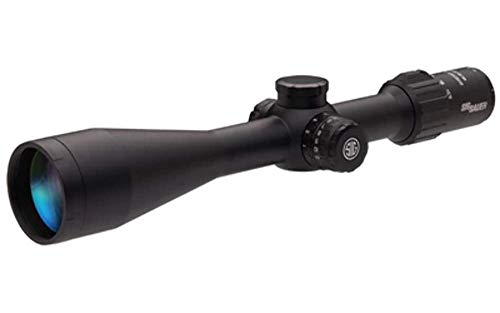
Sig Sauer 5270-1287 Rifle Scopes, black
Sig Sauer Sosbdx36111 Sierra3BDX. Rifle scope, 6.5-20X52mm, 30mm, SFP. Scopes. This product is manufactured in Philippines.
Rifle Scope Product Features
Sig Sauer Sosbdx36111 Sierra3BDX
Rifle scope, 6.5-20X52mm, 30mm, SFP
Rifle scope, 6.5-20X52mm, 30mm, SFP. Department – unisex-adult. Included Components – 1554 rifle-scopes. Material – Plastic.
Disguised within the form factor of a traditional riflescope lies the power of the SIG SAUER BDX
The SIERRA3BDX riflescope provides the hunter an illuminated auto-holdover dot on targets when coupled with a BDX capable KILO rangefinder. Featuring exceptional SpectraCoat lenses, LevelPlex digital anti-cant, and KinETHIC kinetic energy transfer indicator, the SIERRA3BDX is incredibly simple to use. Range a target, put the holdover dot on target, pull the trigger, impact. SIG SAUER’s BDX, just connect the dot.
Auto LevelPlex, automatically increases digital level sensitivity on longer shots.
Dependable waterproof and fog-proof performance.
A New Hampshire-based weapons systems provider
SIG SAUER world renowned firearms are the weapons of choice for many of the premier global military, law enforcement and commercial users.
Headquartered in Newington, New Hampshire, SIG SAUER is a company with over 1,200 employees. SIG SAUER is the member of a worldwide business group of firearms manufacturers that includes J.P. Sauer & Sohn and Blaser, Gmbh. in Germany.
High quality, ultimate reliability and unmatched performance have always been hallmarks of the SIG SAUER brand.
SIG SAUER
Electro-Optics transforms hunting with the unprecedented simplicity and accuracy of BDX
The BDX rangefinder and riflescope system is simple, fast, and intuitive. Simply download the ‘SIG BDX’ app available for Android or iOS smartphones, pair the KILO BDX rangefinder and SIERRA3BDX riflescope, set up a basic ballistic profile, and then you’re ready to shoot or hunt.
Download the SIG BDX app
Configure your bullet profile
Sync the app with your rangefinder
Press the Range button to measure the distance of your target
Use the app to bond the rangefinder with the riflescope
Once the riflescope is turned on, range the target and the new hold is lit up out to 800 yards
Levelplex digital anti-cant system
The LevelPlex digital anti-cant system utilizes an integrated digital level with cant indicators located inside of the riflescope. 6 times more accurate than a typical bubble level, LevelPlex allows the shooter to remove unwanted cant from the system to +/- 0.5° of accuracy.
Stealth ID
Electro-Optics industrial design inspired by our legendary firearms; deflection armor trapezoidal surfacing breaks up the shape and visibility of the optic along with pistol slide serrations and grip checkering to add function to the form of all SIG SAUER electro-optics.
HDX
Advanced optical systems comprising both High Definition (ED) and High Transmittance (HT) glass for ultra-high resolution, optical performance and light transmission.
SpectraCoat
Highly efficient, ultra-wide broadband, anti-reflection lens coatings reduce surface reflections to extremely low levels across the entire visible spectrum providing superior light transmission.
Sig Sauer Sierra3BDX rifle scope, 6.5-20X52mm Sig Sauer Sierra3BDX rifle scope, 4.5-14X50mm Sig Sauer Sierra3BDX Rifle Scope, 3.5-10X42mm
Adjustment increments 0.25 MOA 0.25 MOA 0.25 MOA
Magnification 6.5-20x 4.5-14x 3.5-10x
Objective clear aperture 30 mm 30 mm 30 mm
Battery (2) CR2032 (2) CR2032 (2) CR2032
Focal plane Second Second Second
Illumination
Reticle BDX-R1 Digital BDX-R1 Digital BDX-R1 Digital
Tube diameter 30mm 30mm 30mm
About the Sig Sauer Brand
Sig Sauer is a premium maker for long gun scopes, optics, mounts, and other components used for firearms like rifles and long guns. They innovate and build their scopes and related products by making the most of building materials which are resilient and long lasting. This includes the Sig Sauer 5270-1287 Rifle Scopes, black by Sig Sauer. For additional shooting items, visit their website.
Information About Scopes
Rifle scopes enable you to precisely align a rifle at different targets by aligning your eye with the target over a range. They do this through magnification by using a series of lenses within the scope. The scope’s positioning can be adjusted to take into account different environmental aspects like wind and elevation increases to make up for bullet drop.
The scope’s purpose is to help shooters understand exactly where the bullet will hit based on the sight picture you are seeing through the optic as you line up the scope’s crosshair or reticle with the target. Most modern rifle scopes and optics have around eleven parts which are arranged internally and externally on the scope body. These scope parts include the rifle scope’s body, lenses, elevation dials, objective focus rings, and other components. Learn about the eleven parts of glass.
Rifle Scope Varieties
Rifle scopes can be either “first focal plane” or “second focal plane” type of optics. Deciding on the perfect type of rifle optic is based around what type of shooting you plan on doing.
First Focal Plane Glass Info
First focal plane glass (FFP) feature the reticle ahead of the magnification lens. This triggers the reticle to increase in size based on the extent of zoom being used. The result is that the reticle measurements are the same at the enhanced distance as they are at the non magnified distance. One tick on a mil-dot reticle at one hundred yards with no “zoom” is still the same tick at one hundred yards with 5x “zoom”. These kinds of scopes are practical for:
- Quick acquisition, long distance types of shooting
- Shooting situations where estimations are minimal
- Experienced shooters who understand their aim point “hold over” plus “lead” correlations for their weapon
- Shooters who do not mind the reticle is bigger and occupies more visual sight room than a SFP reticle
About Second Focal Plane Glass
Second focal plane glass (SFP) come with the reticle to the rear of the zoom lens. This triggers the reticle to remain at the same overall size in connection with the quantity of zoom being used. The end result is that the reticle measurements adapt based on the magnification applied to shoot over longer ranges since the reticle markings represent various increments which differ with the zoom level. In the FFP illustration with the SFP scope, the 5x “zoom” one hundred yard tick measurement would be 1/5th of the non “zoom” tick measurement. These particular kinds of scopes are useful for:
- Long distance kinds of shooting where shooters have increased time to make ballistic computations
- Shooting where most of the shots occur within much shorter distances and ranges
- Shooters who prefer a clearer optic sight picture without room used up by the larger sized FFP reticle
Rifle Optic Magnification
The amount of zoom a scope provides is figured out by the size, density, and curvatures of the lenses inside of the rifle scope. The zoom of the scope is the “power” of the scope.
Info About Fixed Power Lens Glass
A single power rifle optic or scope comes with a magnification number designator like 4×32. This implies the zoom power of the scope is 4x power and the objective lens is 32mm. The zoom of this type of scope can not fluctuate considering that it is a fixed power optic.
Variable Power Lens Optic Info
Variable power rifle scopes can be modified between magnified settings. The power adjustment is performed by using the power ring part of the scope near the back of the scope by the eye bell.
The Power and Range Correlation of Glass
Here are some suggested scope power settings and the distances where they may be effectively used. High power optics will not be as efficient as lower magnification level glass given that too much zoom can be a negative aspect depending on your shooting distance. The same applies to extended distances where the shooter needs enough power to see exactly where to best aim the rifle at the target.
Details on Lens Finish
All modern rifle optic and scope lenses are coated. There are different types and qualities of finishes. Lens finishing can be an important aspect of a rifle’s setup when looking at luxury rifle optics and targeting systems. The glass lenses are one of the most essential components of the scope considering that they are what your eye looks through while sighting a rifle in on the target. The coating on the lenses protects the lens exterior as well as improves anti glare from excess sunrays and color visibility.
Details on Lens Coatings – HD Versus ED
Some scope makers likewise use “HD” or high-definition lens finishes which use different procedures, polarizations, chemicals, and components to draw out separate colors and viewable definition through the lens. Some scope manufacturers use “HD” to refer to “ED” implying extra-low dispersion glass.
Single Rifle Scope Lens Finishing Versus Multi-Coating
Various scope lenses can also have different finishings applied to them. All lenses normally have at least some kind of treatment or finish applied to them before being used in a rifle scope or optic assembly. This is since the lens isn’t simply a raw piece of glass. It is part of the finely tuned optic. It requires a coating to be applied to it so that the lens will be efficiently functional in lots of types of environments, degrees of light (full light VS shaded), and other shooting conditions.
This lens treatment can safeguard the lens from scratches while reducing glare and other less beneficial things experienced in the shooting environment while sighting in with the scope. The quality of a single coated lens depends on the scope producer and how much you paid for it.
Some scope producers likewise make it a point to define if their optic lenses are coated or “multi” coated. This suggests the lens has had numerous treatments applied to the surfaces. If a lens gets multiple treatments, it can indicate that a maker is taking numerous steps to fight various natural aspects like an anti-glare covering, a scratch resistant anti-abrasion finish, followed by a hydrophilic finishing. This additionally does not necessarily indicate the multi-coated lens will perform better than a single covered lens. Being “better” hinges on the maker’s lens treatment innovation and the quality of glass used in developing the rifle glass.
Anti-water Covering for Rifle Scopes
Water on an optic’s lens does not improve keeping a clear sight picture through an optic in any way. Lots of top of the line and high-end scope manufacturers will coat their lenses with a hydrophobic or hydrophilic finish. The Steiner Optics Nano-Protection is a fine example of this type of treatment. It provides protection for the surface area of the Steiner glass lens so the water molecules can not bind to it or produce surface tension. The outcome is that the water beads move off of the scope to preserve a clear, water free sight picture.
Choices for Mounting Glass on Long Guns
Mounting approaches for scopes are available in a couple of choices. There are the standard scope rings which are separately mounted to the scope and one-piece mounts which cradle the scope. These different kinds of mounts also typically can be found in quick release versions which use throw levers which permit rifle shooters to rapidly mount and dismount the optics.
Hex Key Rifle Scope Rings
Standard, clamp style mounting scope rings use hex head screws to mount to the flattop design Picatinny scope mount rails on rifles. These types of scope mounts use two different rings to support the optic, and are often made from 7075 T6 billet aluminum which are developed for long range precision shooting. This type of scope install is fine for rifles which require a durable, sound mount which will not move no matter how much the scope is moved or abused.
Quick-Release Cantilever Scope Rings
These types of quick-release rifle scope mounts can be used to quickly detach a scope and connect it to a different rifle. Several scopes can even be switched out if they all use a compatible style mount. These types of mounts are handy for long guns which are transferred a lot, to swap out the optic from the rifle for protection, or for scopes which are used in between several rifles.
Sealing and Gas Purging for Rifle Optic Tubes
Wetness inside your rifle scope can ruin a day of shooting and your costly optic by causing fogging and developing residue inside of the scope tube. Most scopes prevent moisture from getting in the scope tube with a system of sealing O-rings which are water resistant.
What to Know About Scope Tube Gas Purging
Another element of preventing the buildup of wetness within the rifle scope tube is filling the tube with a gas like nitrogen. Since this area is currently occupied by the gas, the optic is less altered by temperature shifts and pressure distinctions from the outdoor environment which might possibly permit water vapor to leak in around the seals to fill the void which would otherwise be there. These are good qualities of a good rifle scope to look for.


